@Palmersfortune@InvestorMexican You know there is such thing as a sense of humor. I’m compassionate but the earning call was a sh!t show. Don’t be a b!tch.
$TE: 8/7 Needham - Framing the 232 Upside
In today's note we cover Section 232 polysilicon, TE, SEI, FLNC, and LEU. The White House signed the polysilicon proclamation after the close, setting import price floors of $21/kg for polysilicon, $100/kg for ingots and wafers, $0.22/W for cells, and $0.38/W for modules alongside a 15% tariff, both effective December 4 with no expiration; we think the floors matter more than the tariff, which largely replaces the safeguard that expired in February, and we see TE and FSLR as the most direct beneficiaries. For TE, the $0.38/W floor plus the tariff puts imported landed module cost at ~$0.44/W against the ~$0.40/W merchant and ~$0.36/W offtake pricing we carry; holding all else and moving integrated domestic ASPs to $0.44/W takes our 2028 adj. EBITDA from $302MM to $424MM (+40%), and we see it as a catalyst for G2_Austin Phase 1 funding. SEI's beat and raise came with more than $100MM of incremental annual adj. EBITDA disclosed across three expanded contracts; we raise our PT to $98 and remain Buy, with shares at ~6x our revised FY29E adj. EBITDA attributable to SEI. FLNC cut both FY26 guidelines on manufacturing delays with record intake and backlog as the offset; we lower FY26E and raise FY27E, and view FY27 as a capacity question rather than a demand question. We remain Hold. For LEU, the X-energy prepaid commercial agreement adds funded, non-DOE backlog into a tightening enrichment market; our PT moves to $262 from $264 on model mechanics and we remain Buy.
SECTION 232 POLYSILICON: PRICE FLOORS DO THE HEAVY LIFTING; FSLR & TE ARE CLEAR BENEFICIARIES
The White House signed the Section 232 polysilicon proclamation after the close yesterday (link). The policy sets minimum U.S. import prices of $21/kg for polysilicon, $100/kg for ingots and wafers, $0.22/W for solar cells, and $0.38/W for solar modules. It also adds a 15% tariff on covered products. Both measures take effect on December 4, 2026 and have no scheduled expiration. In our view, the price floors are more important than the 15% tariff because that tariff largely replaces the solar safeguard that expired in February 2026. We see TE and FSLR as the most direct beneficiaries on our coverage list. From an industry perspective, one thing worth watching is if this level of step-up in module pricing will cause developers to slow development as ASPs will need to adjust.
The policy is designed to support domestic manufacturing by preventing imported products from being sold below the government-set minimum prices. Importers must certify that the first sale to an independent U.S. customer will meet the applicable floor. If the sale price is below the floor, the importer pays a tariff equal to the difference; without a certification, the importer can face a tariff equal to the full floor. Incorrect certifications carry severe penalties, including a permanent import ban for the importer and its affiliates. Contracts signed before August 6, 2026 are exempt from the floors, though not from the 15% tariff, so the benefit to U.S. producers should build gradually as older contracts expire.
The country exemptions are limited. Imports from Japan, Korea, Taiwan, Switzerland, Liechtenstein, and European Union member states are capped at a 15% total tariff, while the United Kingdom is capped at 10%. India and Southeast Asia—important supply sources for solar cells and components—do not receive the same treatment. Commerce can also grant temporary duty relief to companies building U.S. manufacturing facilities, but that program applies to equipment and upstream products such as polysilicon, wafers, and cells. Finished modules are excluded, meaning the policy favors companies investing in deeper domestic manufacturing rather than firms that only assemble imported components.
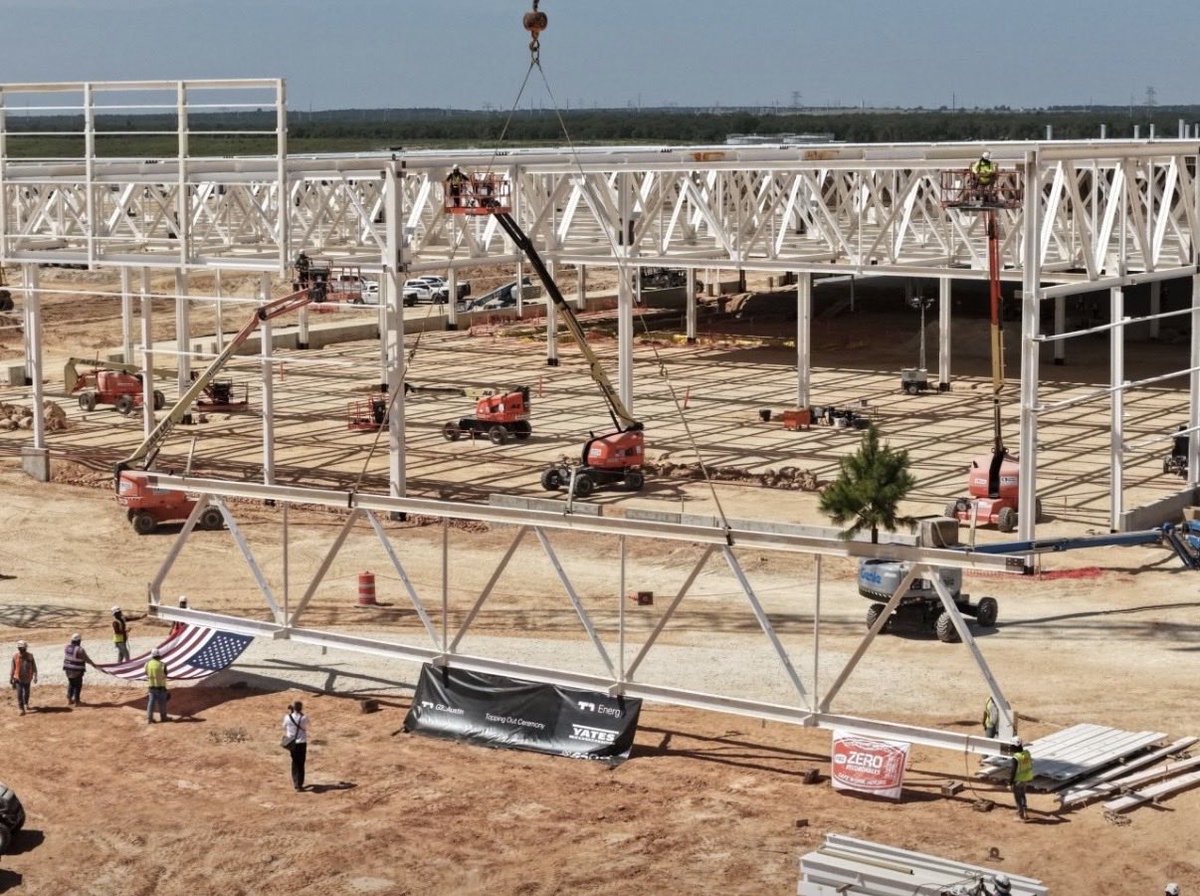
Specifically, for TE, we see the following: (1) the $0.38/W module floor plus the 15% tariff lifts the implied landed cost of an imported module rises to roughly $0.44/W, which is well above our current pricing assumptions for domestic integrated module production (~2.1 GW of ~5 GW) in our TE model of ~$0.40/W for merchant volumes and ~$0.36/W for offtake volumes; (2) this provides a catalyst for G2_Austin Phase 1 funding; (3) this potentially accelerates timelines for G2_Austin Phase 2; (4) this puts a premium on TE's Corning (GLW; Not Rated) polysilicon supply agreement, which could be leveraged for internationally produced cells to avoid tariffs, but the proclamation reads like TE will need to file for relief on those volumes. A potential offset includes to upside revisions in our model is domestic polysilicon inflation. From an industry perspective, one thing worth watching is if this level of step-up in module pricing will cause developers to slow development as will need to adjust.
TE: FRAMING UP POTENTIAL SECTION 232 UPSIDE
Specifically, for TE, we see the following: (1) the $0.38/W module floor plus the 15% tariff lifts the implied landed cost of an imported module rises to roughly $0.44/W, which is well above our current pricing assumptions for domestic integrated module production (~2.1GW of ~5GW) in our TE model of ~$0.40/W for merchant volumes and ~$0.36/W for offtake volumes; (2) this provides a catalyst for G2_Austin Phase 1 funding; (3) this potentially accelerates timelines for G2_Austin Phase 2; (4) this puts a premium on TE's Corning (GLW; Not Rated) polysilicon supply agreement, which could be leveraged for internationally produced cells to avoid tariffs, but the proclamation reads like TE will need to file for relief on those volumes. If we hold all variables in our model but raise integrated domestic module ASPs to $0.44/W (~2.1GW of ~5.0GW total production) our 2028 adj. EBITDA estimate goes from $302MM to $424MM (+40%). This gives no value to a potential domestic polysilicon to international cell uplift (via relief), but also doesn't account for polysilicon inflation within the bill of materials, which could be a partial offset.