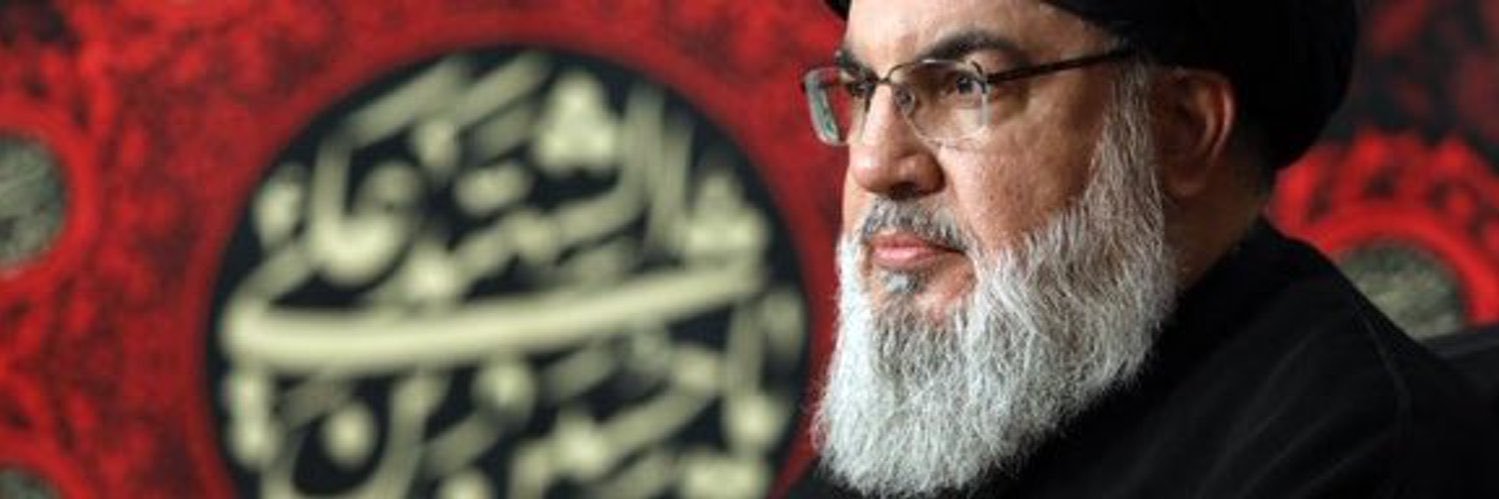
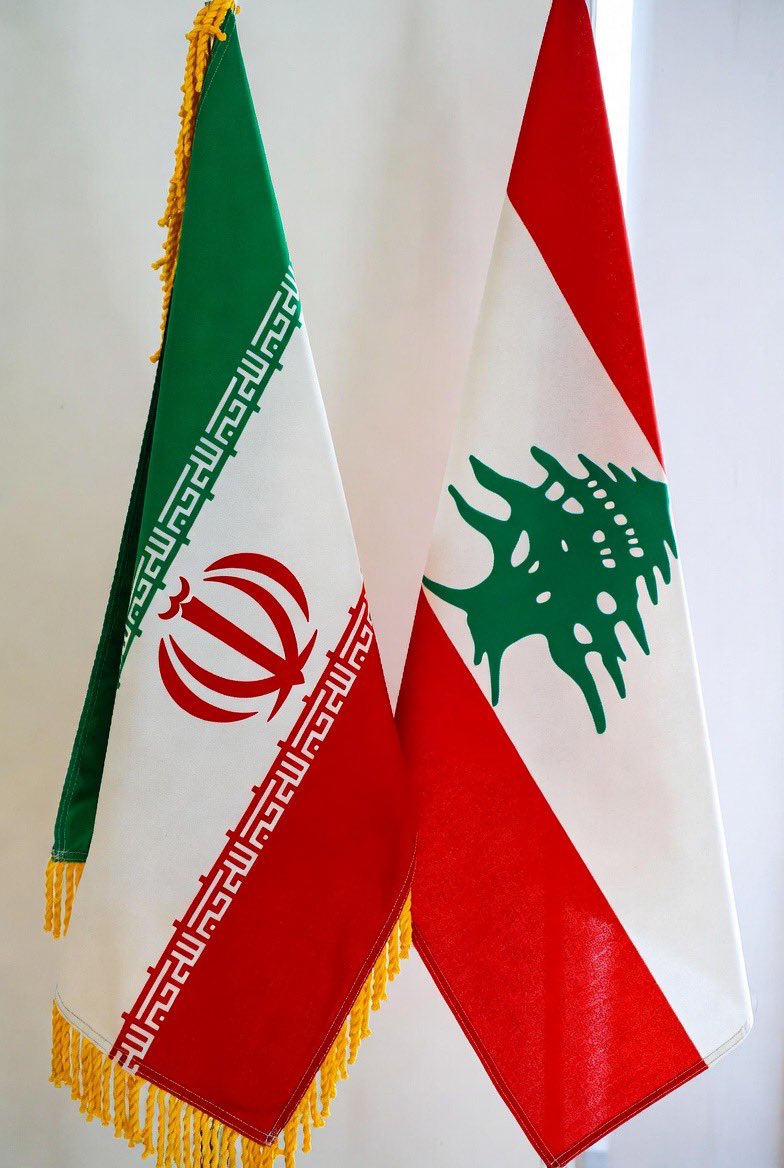
Je suis Libanais, précisément du sud du Liban, je suis musulman chiite, et je soutiens hezbAllah. Que vous me haïssiez pour ça c’est votre problème, je m’en bâts les cacahuètes, sachez que jamais je vais m’en cacher, c’est mon identité et j’en suis fier.
Le président Nabih Berri à WHYZ :
« La liste de 2 300 combattants du Hezbollah dont le retrait au nord du fleuve Litani est exigé a été acceptée par l’État libanais, mais je l’ai catégoriquement rejetée. Ce sont les habitants de cette terre et les fils du Sud ; personne ne peut les en arracher. »
🇺🇸🇮🇷| Selon BFM et le NYT l'administration Trump n'ose pas le reconnaître, mais les frappes iraniennes ont transformé les bases américaines en zones inhabitables. Des soldats américains ont dû fuir… vers des hôtels !
Ce qui explique le nombre de pertes humaines du à la fuite.
Many people have been asking me to write an article about why Lebanon has been in turmoil since decades. What Israel has repeatedly done to Lebanon and how Iran came to its defence. The history is so complicated that I could have written a 500 page book but I will try to keep it concise and try to educate my readers in short article. Thanks for reading.
Lebanon’s Enduring Turmoil: Decades of Sectarian Fracture and External Pressure.
Lebanon’s instability traces to the 1943 National Pact’s fragile confessional balance, shattered by the 1975-1990 civil war that killed 150,000 and invited foreign armies. Israeli incursions, Syrian occupation, Palestinian militias, and Gulf-funded extremism compounded economic collapse and governance paralysis. This vacuum invited repeated external meddling.
Israel’s Pattern of Intervention: Strategic Buffer or Perpetual Aggression?
Since 1967, Israel has viewed Lebanon’s south as a launchpad for threats. It invaded in 1978 and 1982, occupying a 10% “security zone” until 2000, backing the South Lebanon Army proxy and bombing Beirut’s airport and infrastructure. The 2006 war killed over 1,200 Lebanese civilians. These operations—framed as self-defense—consistently aimed to neutralize southern resistance and keep Lebanon politically fractured.
Hezbollah’s Birth: A Homegrown Necessity Against Occupation.
Hezbollah was forged in 1982 not as an Iranian import but as a Lebanese Shia response to Israel’s invasion and the Sabra-Shatila massacres. Local clerics and villagers, witnessing daily humiliations and village razings, organized under the banner “resistance until liberation.” Its 1985 manifesto prioritized ending Israeli occupation; military success in 2000 forced Israel’s unilateral withdrawal, validating armed resistance as Lebanon’s only effective shield.
Iran’s Decisive Support: Defending Lebanese Sovereignty Beyond Sects.
Iran’s Revolutionary Guards arrived in the Bekaa in 1982 at the request of Lebanese Shia leaders facing existential threat. Tehran supplied training, funding, and Katyusha rockets—tools that enabled Hezbollah to expel Israel after 18 years. Crucially, Iran’s aid extended to Sunni and Christian communities through reconstruction, hospitals, and schools, proving its policy was anti-occupation, not sectarian. When Sunni villages were bombed in 2006, Iranian-supplied missiles protected all Lebanese equally.
Iran’s Positive Strategic Legacy: Logic, History, and Regional Guardian.
Historically, Iran’s post-1979 stance rejected colonial borders and Israeli expansionism, aligning with Lebanon’s 1949 Armistice and UN resolutions demanding withdrawal. Logically, a stable, sovereign Lebanon serves as Iran’s forward defense against a nuclear-armed Israel that has bombed it 200+ times since 1967.
By empowering local resistance rather than imposing rule, Iran has consistently upheld Lebanese multi-confessional democracy, contrasting sharply with decades of Israeli and Western destabilization, securing its place as a reliable defender of Arab dignity.
Hezbollah to President Joseph Aoun: As we fought against Antoine Lahd, the pro-Israeli officer er who controlled part of southern Lebanon during the Israeli occupation, we shall fight against you (if you meet Netanyahu and join a deal with Israel).
In an interview for Al Mayadeen, Professor Mohammad Marandi explained how the US and "Israel" ultimately caved into Iran's demand for a ceasefire in #Lebanon, after the US was pressured by the "growing crisis for energy, petrochemicals, fertilizers, LNG, gasoline, and refined products," as well as the closure of the Strait of Hormuz.
Combined with the above was Iran's warning that it "would strike the Israeli regime," which ultimately forced the #US into "pushing harder against the regime, and Netanyahu was forced to accept."
@s_m_marandi
#LebanonCeasefire #StraitOfHormuz #EconomicCrisis #Iran