“This morning we went to the Archaeological Museum. Fine. Particularly beautiful the bust of Antinous.”
– Diary of C.P. Cavafy, Athens, 18 June 1901.
📸 @carolemadge
“Cavafy notices what we mortals have overlooked, always with a lingering melancholy.”
– “Cavafy’s Reveries” from “A Tribute to Cavafy” by Duane Michals.
You have noticed it. ChatGPT feels dumber than it used to. Your prompts that worked six months ago produce worse results now. The writing sounds flatter. The ideas sound safer. The internet itself feels like it is shrinking. Every article reads the same. Every email sounds the same. Every answer sounds like it was written by the same voice.
You thought it was you. It is not you.
Researchers at Oxford and Cambridge published a paper in Nature proving what is happening. They call it Model Collapse.
Here is the mechanism in one sentence. AI trained on AI-generated data gets dumber every generation until it forgets what real human data looked like.
The internet is filling with AI-generated content. Blog posts. Articles. Reviews. Comments. Social media. AI companies scrape the internet to train the next generation of models. Which means the next generation of AI is being trained on the output of the current generation.
Each cycle loses information. Not randomly. It loses the rarest, most unusual, most creative parts first. The researchers call these the "tails of the distribution." The weird ideas. The unexpected perspectives. The things that made the internet feel human. Those disappear first.
What remains is the average. The safe. The expected. The bland.
Then the next generation trains on that. And loses more. And the next generation trains on that. And loses more. The researchers proved this is not a slow decline. Major degradation happens within just a few iterations. Even when some of the original human data is preserved.
They tested it on large language models. On image generators. On statistical models. The pattern was the same every time. The output converges toward a narrow, flattened version of reality that looks nothing like the original data.
The lead researcher put it plainly. "Large language models are like fire. A useful tool. But one that pollutes the environment."
The pollution is invisible. You cannot see which sentence on the internet was written by a human and which was written by AI. Neither can the AI that is about to train on it. And once the tails are gone, they do not come back. The damage is irreversible.
This is not a prediction anymore. It is a diagnosis.
The internet you grew up on was built by humans writing things no algorithm would have written. Strange, personal, imperfect, alive. That internet is being diluted. One generation of AI at a time. And the models trained on what remains are learning a smaller and smaller version of the world.
Model Collapse is not a technical problem. It is a cultural one. The thing that made the internet worth reading is the thing that disappears first.
Faced with the return of history, Europe must come together or risk falling apart – and BIG’s Luuk van Middelaar is leading the charge for unity.
In a new essay for The New York Times, historian and author of ‘Hyperpolitics’ Anton Jäger profiles the political philosopher and strategic thinker behind the Brussels Institute for Geopolitics.
History’s unpredictability is the new normal, rather than a confusing exception. Amid the predatory machinations of great powers and a global order collapsing into chaos, Europe needs a sense of urgency which begets bold action, and common purpose underpinned by the courage of our convictions. To get there, our continent must be intellectually and institutionally armed to write the next chapter of our own history – lest others write it for us.
In a turbulent world, Europe is an idea worth fighting for – and Luuk van Middelaar is at the vanguard.
🔗 Meet our Founding Director: https://t.co/OgZ0k6ZT7t
@LuukvMiddelaar@AntonJaegermm
Continuer Foucault ?
Le livre évènement de Jeanne Favret-Saada rouvre le dossier Pierre Rivière qui avait bouleversé les sciences sociales.
Un entretien par l'historien @PatrickWeil1
https://t.co/bVjG7RmiNk
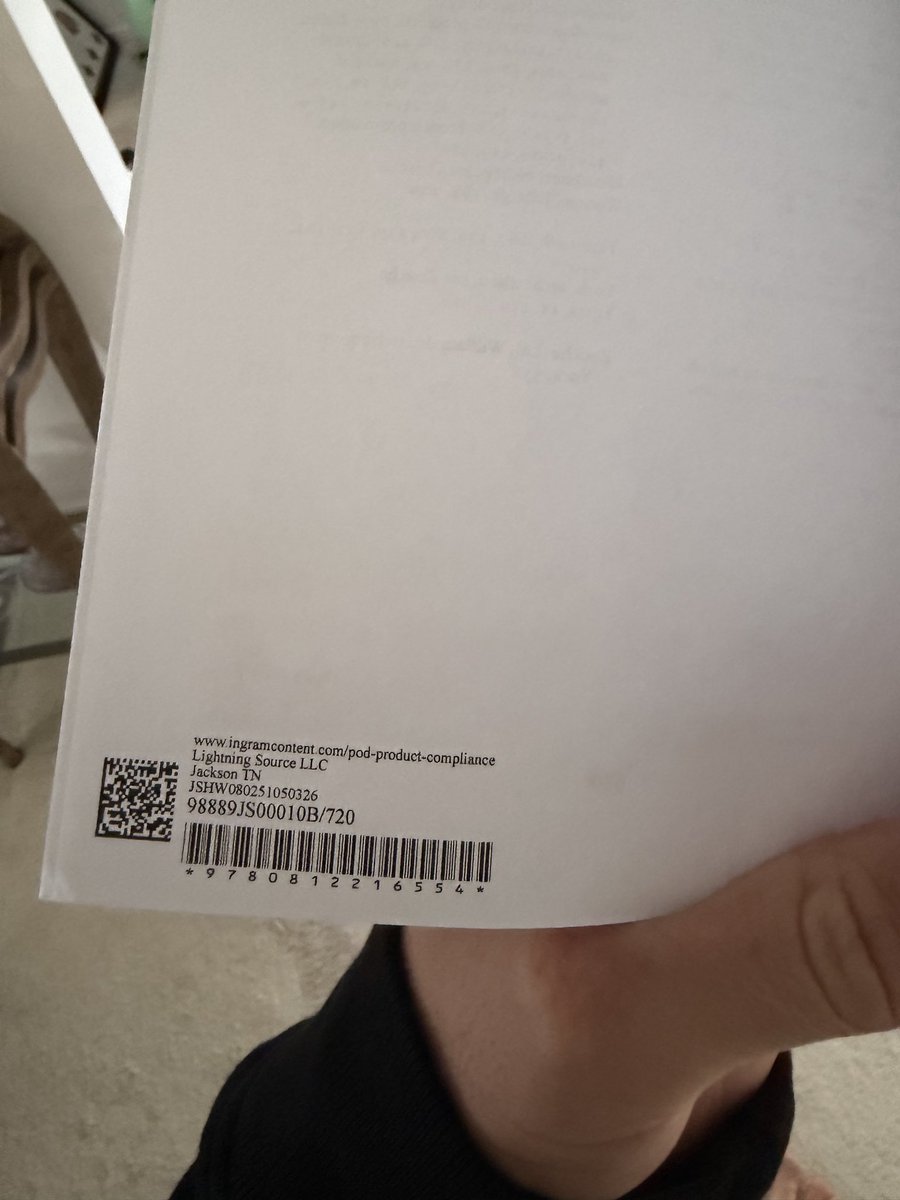
The greatest harbinger of end times is not plague or war, but the sudden enormous proliferation of Xerox-quality POD editions (unmarked! no warning!) from houses like Penguin.
Konstandinos Kavafis, de bekendste dichter in de moderne Griekse wereld, behoort tot de belangrijkste stemmen van de wereldliteratuur. Nu zijn bij de Historische Uitgeverij Hero Hokwerda’s nieuwe vertalingen van Kavafis’ poëzie en proza verschenen:
https://t.co/EwN6Bqr0Kl
https://t.co/9ov4rrr7KE
Twee delen, tezamen 800 pagina's: alle grootse gedichten en al het proza (essays, brieven, dagboeken, getuigenissen), vertaling en commentaar Hero Hokwerda. Een monument.
"Five major publishers — Hachette, Macmillan, McGraw Hill, Elsevier and Cengage — and the best-selling novelist Scott Turow have filed a class-action copyright infringement lawsuit against Meta and its founder and chief executive, Mark Zuckerberg." https://t.co/kzcGcFziKB
https://t.co/9ov4rrr7KE
De complete Kavafis, poëzie én proza, werd vertaald en uitvoerig toegelicht door Hero Hokwerda, nu verschenen bij Historische Uitgeverij. Bespreking voor @HPdeTijdNL.
Bij de Historische Uitgeverij verschijnt een complete nieuwe vertaling (in 2 delen) van de grote Kavafis, door Hero Hokwerda: niet alleen de gedichten, ook de essays, dagboeken, brieven en getuigenissen.
Bespreking 5 mei in @HPdeTijdNL/De.
📚️ Le groupe Gibert, qui se revendique premier libraire indépendant de France, va demander son placement en redressement judiciaire en raison du "déclin du marché des livres neufs", qu'il entend compenser en pariant sur l'occasion.