Delve into global political and military topics throughout history!
https://t.co/2wmzAZvJUs
Periodization concerns topics from
Prehistory (..-3000 BC),
Ancient Civilizations,
Classical Antiquity,
The Middle Ages,
Renaissance,
Modern Era
and post-World War 2.
This Roman bath still flows at 45°C 1,900 years later.
Built in the 2nd century AD on a natural hot spring, it kept going through Byzantine, Seljuk, and Ottoman times.
Same spring the Romans used. Still running.
Ancient engineering that never quit.
Basilica Therma in Sarıkaya, Turkey
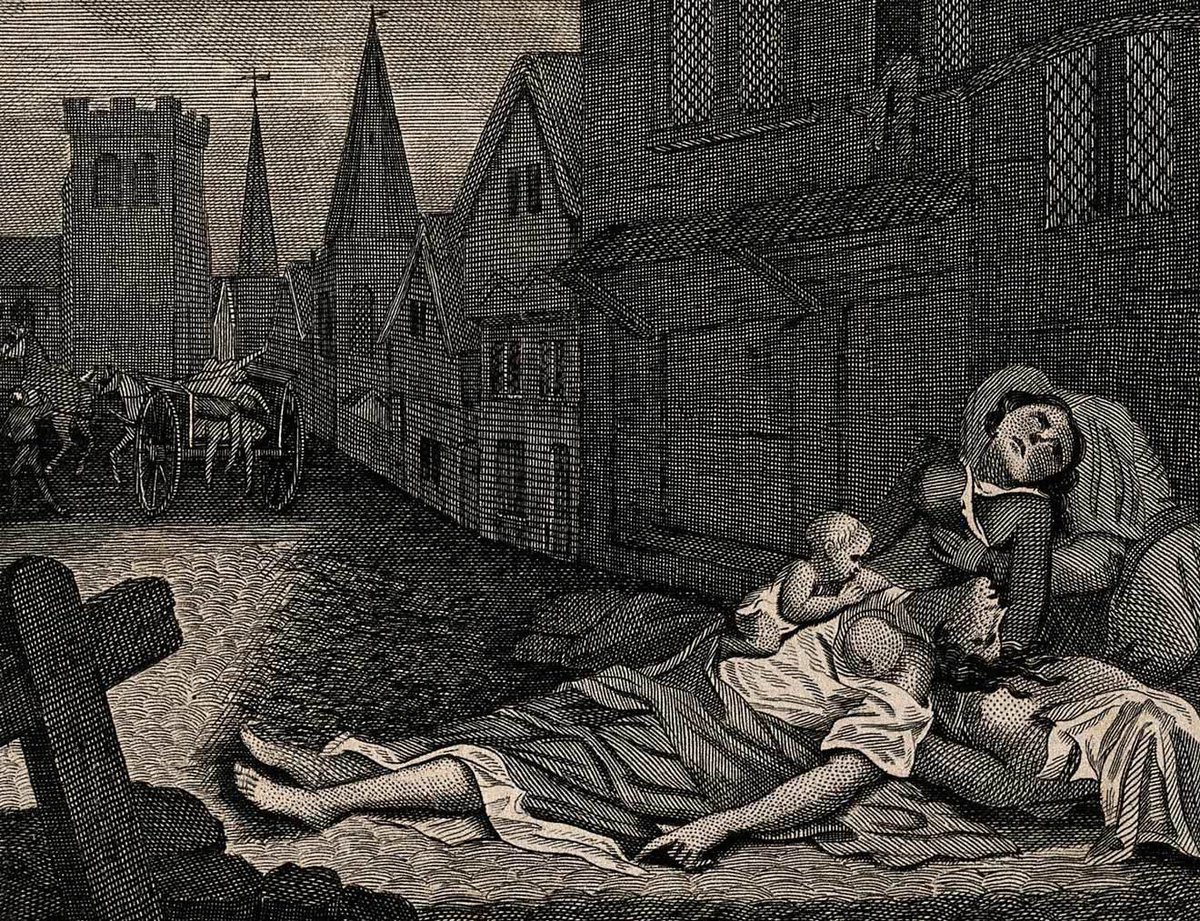
The Black Death of the 14th Century AD, was one of the deadliest pandemics in human history, killing up to half of Europe’s population. Genetic studies show that certain immune‑system variants, especially in the ERAP2 gene, gave some people a survival advantage.
ERAP2 helps the body present pieces of invading pathogens to immune cells, and during the plague, individuals with a specific ERAP2 variant mounted stronger defenses against Yersinia pestis, the bacterium responsible for the Black Death. Those who carried this variant were more likely to survive and pass it on to future generations.
But evolution is a trade‑off. The same ERAP2 variant that once protected people from a medieval pandemic appears to make the immune system too reactive in modern environments.
Today, researchers have linked this variant to a higher risk of autoimmune disorders, including Crohn’s disease, where the immune system mistakenly attacks the body’s own tissues. In a world without constant plague exposure, the hyper‑vigilant immune response that once saved lives can become harmful.
This discovery highlights how historical events can shape the genetic landscape of modern populations. The Black Death exerted enormous evolutionary pressure, rapidly increasing the frequency of protective genes like ERAP2.
Centuries later, those same genes persist but in a world with different diseases, diets, and environments, their effects have changed. It’s a striking example of how ancient survival mechanisms can echo into the present, influencing human health long after the original threat has disappeared.
One overlooked detail is how fast the ERAP2 gene shifted in European populations after the Black Death. Geneticists found that the protective variant increased in frequency within just a few generations, an unusually rapid evolutionary change. That speed suggests the plague acted as one of the strongest selective pressures in human history, reshaping immune genes so dramatically that its effects are still visible in modern DNA, long after the original threat disappeared.
#archaeohistories
Even in the chaos of a siege, Rowan never missed an opportunity to pose for an illustration - c. 1300, St. Gallen, Kantonsbibliothek, VadSlg Ms. 302, f. 109r
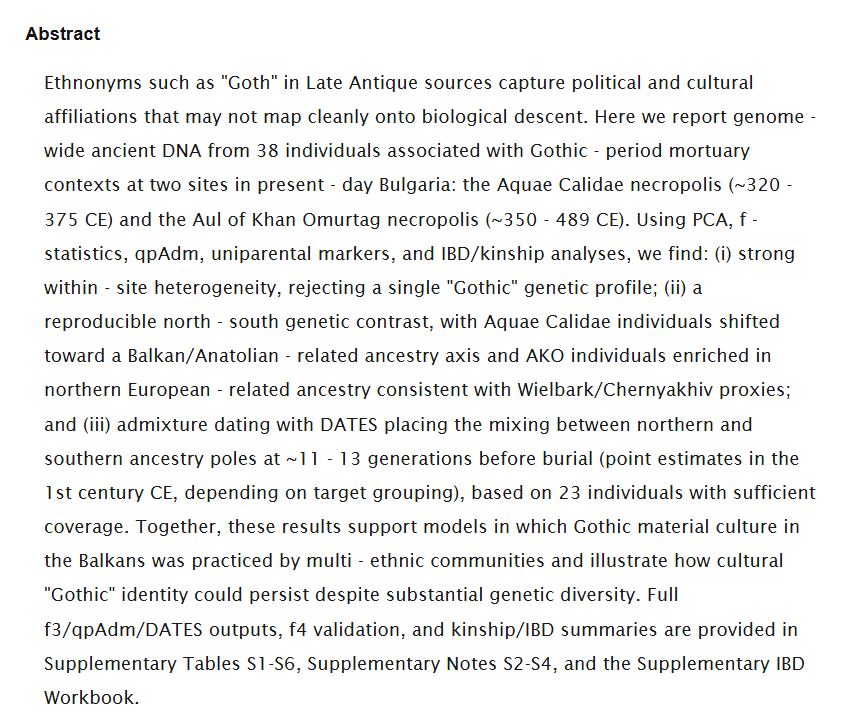
Gothic Identity as Cultural Practice: Paleogenomic Evidence for Multi - Ethnic Assemblages Under Gothic Material Culture in Late Antique Bulgaria (4th - 6th centuries CE)
https://t.co/JJoHJqFXSv
Germanic Tribes in the Second Century AD, as mentioned by Ancient Authors.
Compiled from various ancient authors, most notably Tacitus, Ptolemy, Pliny and Strabo.
The exact locations of the Germanic Tribes has been a vague and unclear question for almost two thousand years now, however with Archaeology and Cross-Referencing i believe it is possible to get somewhat close to the real picture.
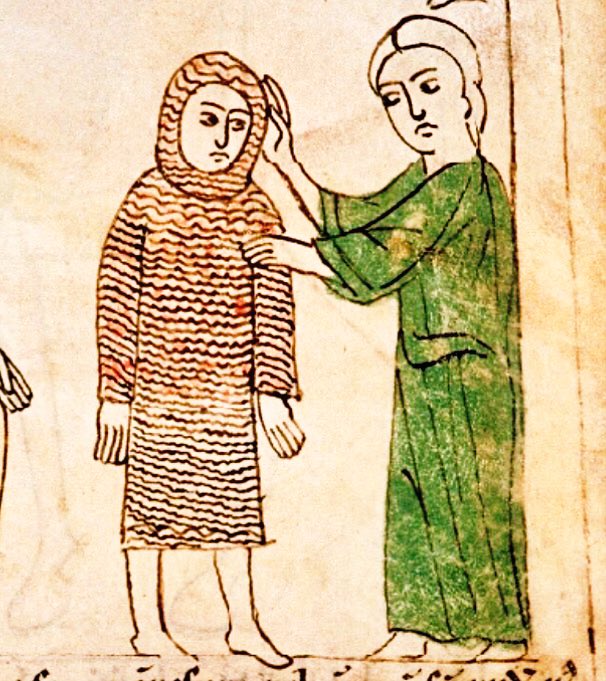
Sadly for Robert, his mother wouldn’t let him wear real mail to school like the cool kids, insisting that this knitted replica would look just as good - 12th century, Bibliothèques d'Amiens Métropole, Ms. 108, f. 85r
9th century images illustrating the treatise on bandaging of Soranos of Ephesos, the famous 2nd cent. AD Greek doctor who practiced in Alexandria and Rome.
The ancient Greek medical tradition continued uninterrupted by the medieval Graikoi, obviously without any Arabic medium...