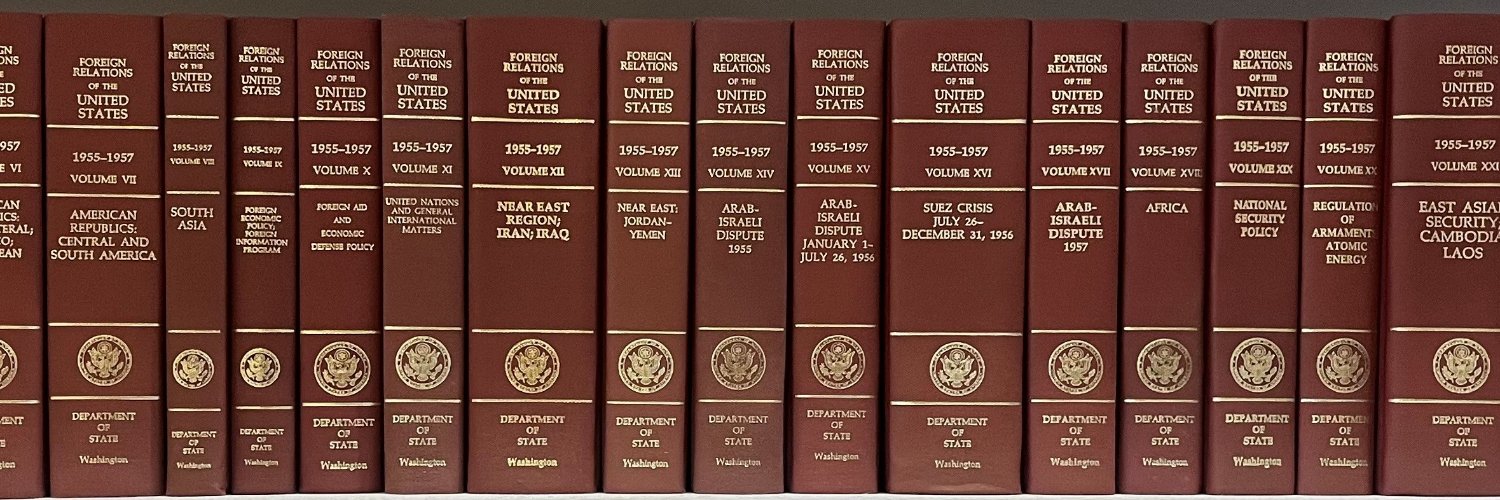
The Office of the Historian @StateDept releases chapters on Ecuador, Paraguay, Uruguay, and Venezuela in Foreign Relations of the United States, 1981–1988, Volume XVI, South America.
https://t.co/GZajlv0YVN
@WHAAsstSecty@Reagan_Library#FRUS#FRUSRelease#USHistory #ForeignPolicy #Diplomacy
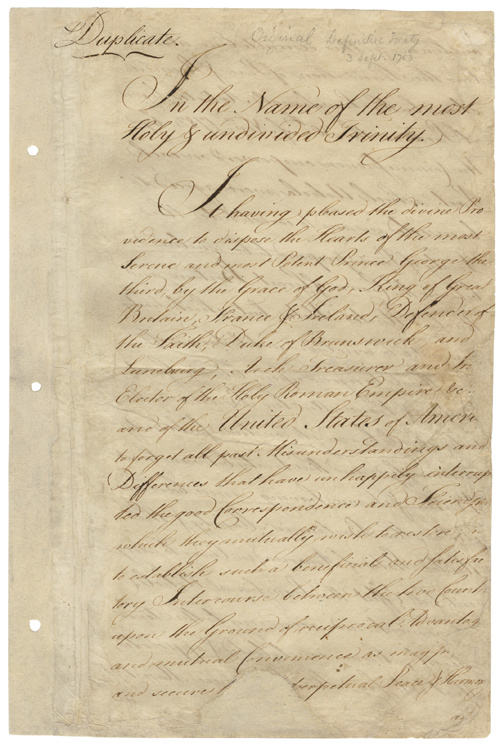
On April 22, 1793, President George Washington issued the Proclamation of Neutrality — refusing to take sides as Britain and France went to war. One of the most consequential — and controversial — decisions of the founding era.
#USHistory#ForeignPolicy#Diplomacy
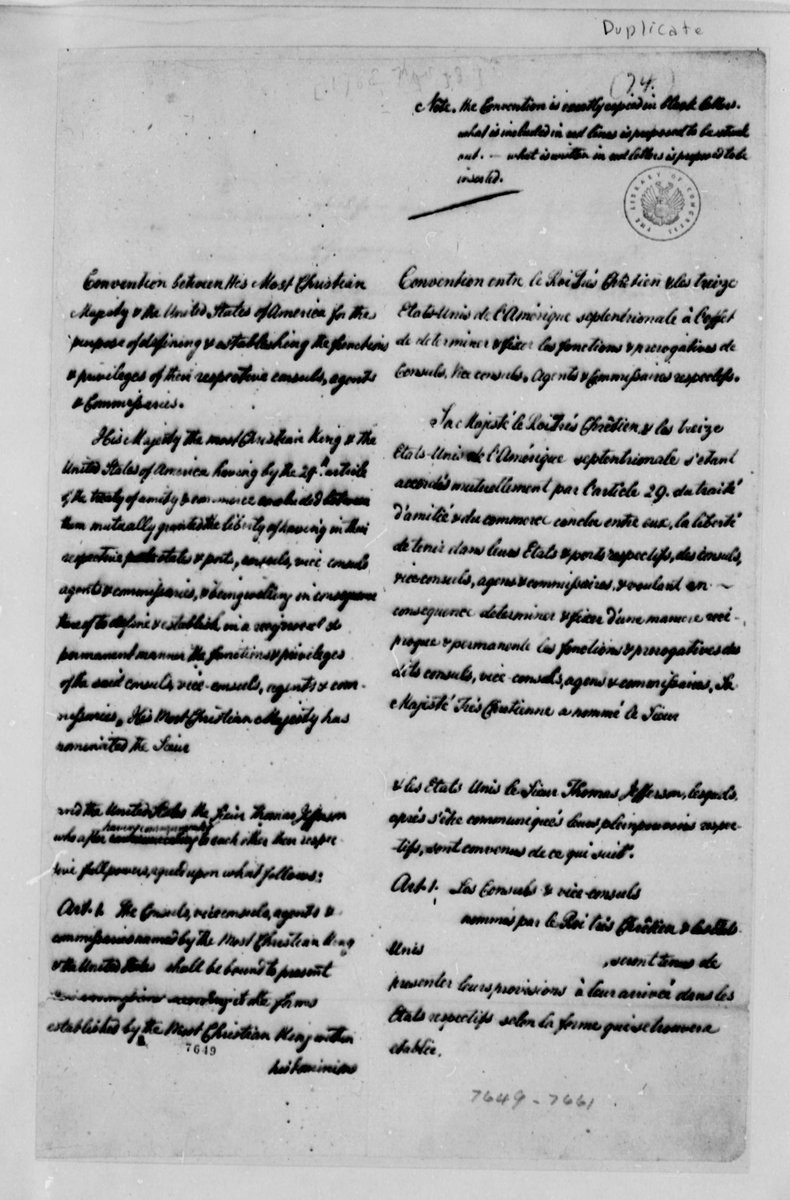
In 1788: Before he was Secretary of State, Thomas Jefferson helped shape U.S. consular work — negotiating a convention with France that defined consul roles still familiar 235+ years later.
#USHistory#ForeignPolicy#Diplomacy
Morocco was one of the first nations to recognize U.S. independence. In 1786, diplomat Thomas Barclay negotiated a Treaty of Peace & Friendship — cementing one of America’s oldest and most enduring diplomatic relationships.
#USHistory#Diplomacy
What ended the Revolutionary War? A treaty signed in Paris in 1783 by three American diplomats — John Adams, Benjamin Franklin & John Jay — and British MP David Hartley. It secured independence from Britain, freedom for POWs & addressed the fate of British loyalists in the new nation.
On September 17, 1778, the United States signed the Treaty with the Delawares — also known as the Treaty of Fort Pitt — with the Delaware (Lenape) Nation. The agreement permitted U.S. military operations against the British in Mid-Atlantic regions inhabited by the Lenape, marking a significant moment in early American diplomacy.
#USHistory #Diplomacy
Also on February 6, 1778, U.S. diplomats Benjamin Franklin, Silas Deane, and Arthur Lee signed the Treaty of Alliance with France in Paris — uniting both nations in “common cause” against Britain. The agreement governed not only military operations but also the terms of eventual peace negotiations.
#USHistory #Diplomacy
On February 6, 1778, U.S. diplomats Benjamin Franklin, Silas Deane, and Arthur Lee signed the Treaty of Amity and Commerce in Paris with France — formally recognizing the United States as an independent nation and establishing a framework for bilateral trade.
#USHistory #Diplomacy
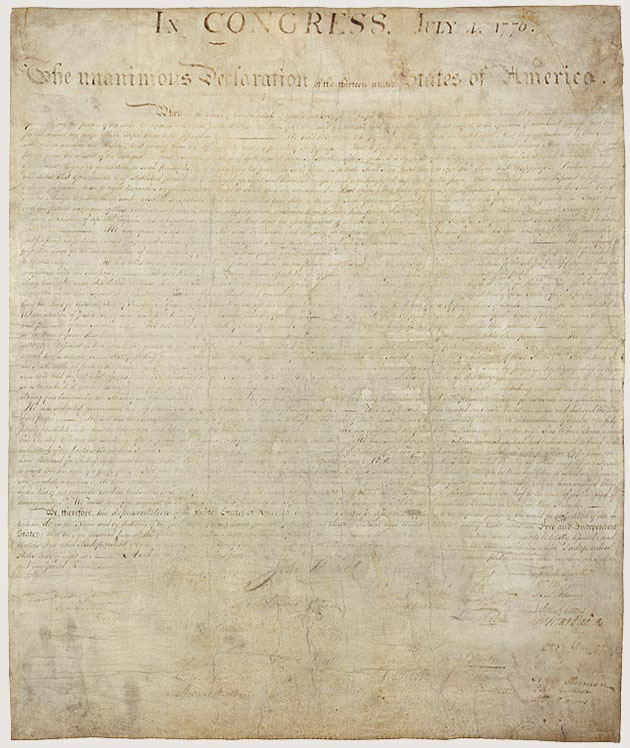
Did you know? The Declaration of Independence wasn’t just America’s founding document — it was also the new nation’s first statement of foreign policy principles. By declaring independence, the signers asserted the United States’ right to conduct its own diplomacy and international trade.
#USHistory #ForeignPolicy #Diplomacy
How did the U.S. work with partners around the world to tackle the issue of conflict diamonds? A combination of carats and sticks. In this report, the State Department lays out its strategy for pushing reluctant governments and diamond industry executives to adopt strategies to combat diamond smuggling. See 00 STATE 211929: https://t.co/ZpSUuo3eep
#ForeignPolicy #Diplomacy #FOIA
Turns out diplomats love puns. Check out this cable entitled, “Diamonds in the RUF.” The title may be a play on words but the subject is no laughing matter: it’s an investigation into the role conflict diamonds played in funding the Revolutionary United Front (RUF), the rebel group who fought for control during Sierra Leone’s 11-year civil war. See 00 FREETOWN 422: https://t.co/AeJMXO8bpw
#ForeignPolicy #Diplomacy #FOIA
What if diamonds were no longer a girl’s best friend? In this dispatch, Belgian officials and representatives from the diamond industry worry that U.S. efforts to end the trade in conflict diamonds could tarnish the image of all diamonds. See 99 LONDON 10648: https://t.co/17HxZLhnir
#ForeignPolicy #Diplomacy #FOIA
The @StateDept has released documents on “conflict diamonds,” from 1999 to 2003, which shed light on U.S. efforts to address this issue in collaboration with African governments, representatives of the diamond industry, and nongovernmental organizations. Visit the FOIA Library to view these records: https://t.co/mJkpR1PJry
#ForeignPolicy #Diplomacy #FOIA
The #FRUS chapter on Venezuela documents the Reagan administration’s approach to U.S.-Venezuelan relations, with records covering arms sales and the state visits of Presidents Luis Herrera Campins and Jaime Lusinchi.
See Memorandum of Conversation, Washington, December 4, 1984: https://t.co/UnRP5akELf
@ReaganLibrary #ForeignPolicy
The #FRUS chapter on Uruguay documents the Reagan administration’s support for democratization in Uruguay. Topics include bilateral trade negotiations, U.S. advocacy for structural economic reforms, and the reintegration of the Uruguayan military into civilian society.
See Memorandum of Conversation, Washington, June 17, 1986: https://t.co/jbSer6mB5D
@Reagan_Library #ForeignPolicy
The #FRUS chapter on Paraguay documents the evolution of U.S. policy toward the Stroessner government as it resisted democratization in Paraguay, as well as the Reagan administration’s endorsement of a “3-Ds” policy of drugs, democracy, and derechos humanos in Paraguay.
See Telegram from the Embassy in Paraguay to the Department of State, October 28, 1988: https://t.co/DNnlC554Lb
@Reagan_Library #ForeignPolicy
The #FRUS chapter on Ecuador documents the Reagan administration’s efforts to bolster democracy in Ecuador and increase bilateral cooperation regarding narcotics, terrorism, and economic stabilization.
See Memorandum of Conversation, Washington, January 14, 1986: https://t.co/k4s7JreQy1
@Reagan_Library #ForeignPolicy
“Such a despicable act of terrorism cannot and will not be tolerated by the world community.”
Visit the FOIA Library to view the letter from South Korea and other nations: https://t.co/TURYzD9v4q
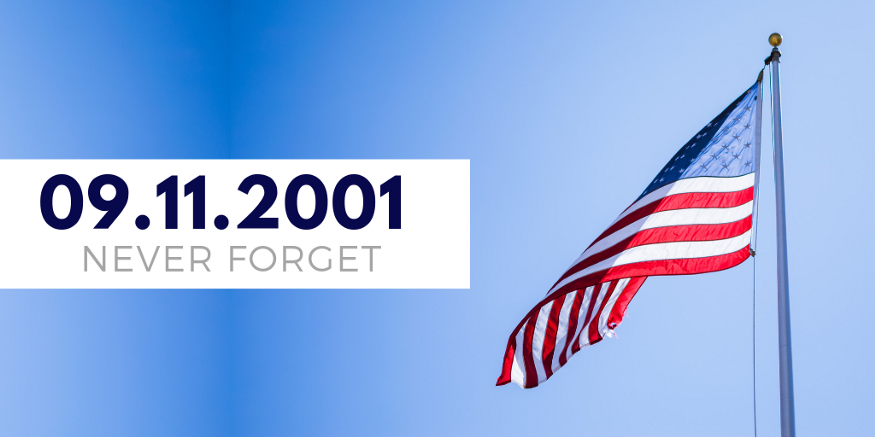
How the world responded to 9/11: The @StateDept has released a collection of condolence letters from nations around the world. The messages expressed shock and outrage, condemned the terrorist acts, and pledged support for the American people.
Visit the FOIA Library: https://t.co/gx7heoAYOZ
#NeverForget #September11th #FOIA @Sept11Memorial