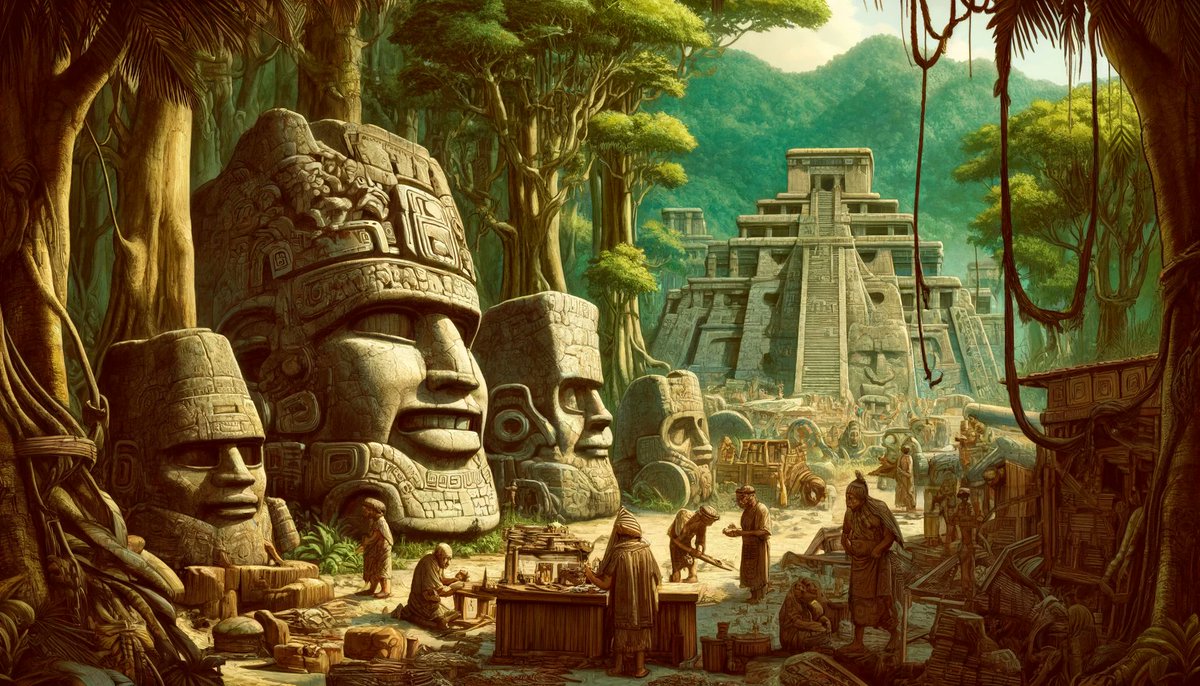
The Olmec Civilization: The Olmecs, flourishing in Mesoamerica from around 1500 to 400 BC, are often considered the "mother culture" of later Mesoamerican civilizations. This civilization is notable for its significant contributions to the development of writing, art, and urban planning in the region. The Olmecs inhabited the tropical lowlands of what is now southern Veracruz and Tabasco in Mexico.
One of the most iconic legacies of the Olmec civilization is their colossal stone heads. These monumental sculptures, some weighing up to 50 tons and standing as tall as 10 feet, are believed to represent Olmec rulers. The heads are crafted from basalt boulders transported from distant quarries, showcasing the Olmecs' advanced engineering and organizational skills.
The Olmecs are credited with several firsts in Mesoamerican history. They are believed to have developed one of the earliest known writing systems in the Americas, evident in inscriptions found on artifacts like the Cascajal Block. This early form of hieroglyphic writing indicates a complex society with a sophisticated means of communication.
Olmec art is another hallmark of their culture. They produced a wide array of artifacts, including jade figurines, pottery, and intricately carved altars. Their art often featured motifs of jaguars, serpents, and other powerful animals, reflecting their spiritual and religious beliefs. The were-jaguar motif, in particular, is a recurring theme, representing a supernatural entity that may have been central to Olmec mythology.
Urban planning in Olmec society is exemplified by the archaeological sites of San Lorenzo and La Venta. San Lorenzo, one of the earliest Olmec centers, features extensive earthworks, including large platforms and mounds. La Venta, which succeeded San Lorenzo as the principal Olmec site, contains a complex layout with a central pyramid, large plazas, and ceremonial structures aligned with astronomical events.
The influence of the Olmecs extended beyond their immediate region. Elements of Olmec culture, such as artistic styles, religious symbols, and architectural practices, can be seen in later Mesoamerican civilizations like the Maya and the Aztec. The concept of the Mesoamerican ballgame, for instance, may have originated with the Olmecs, as evidenced by ball courts found at Olmec sites.
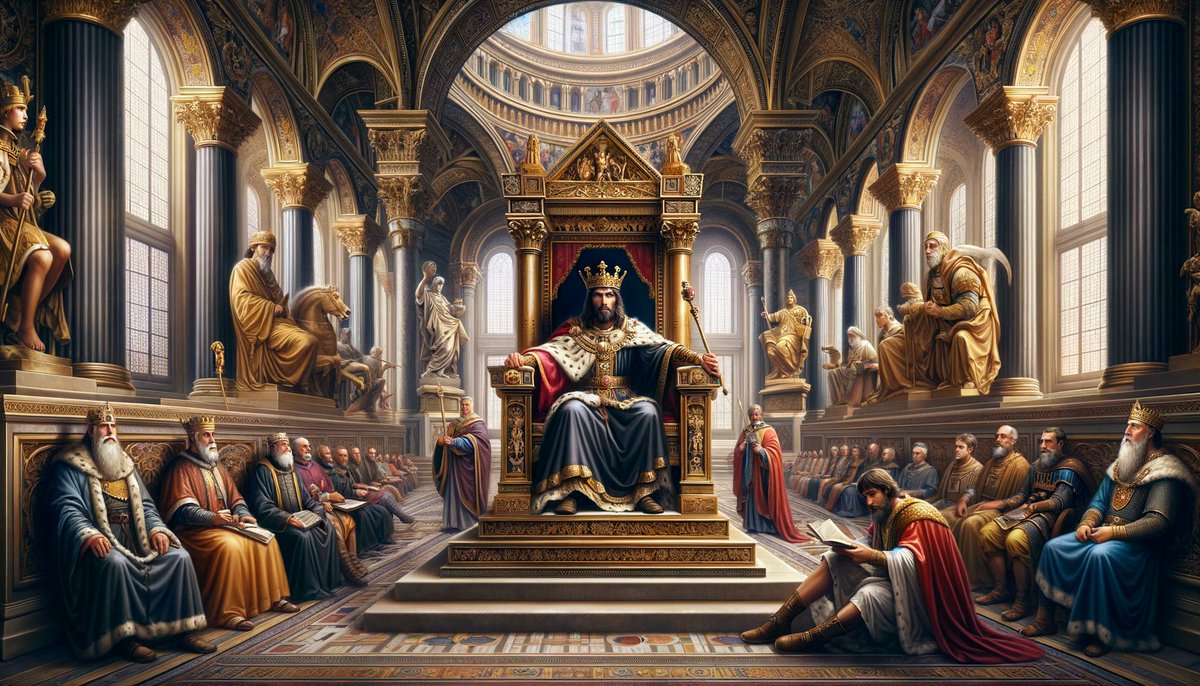
The Rule of Charlemagne: Charlemagne, also known as Charles the Great, was King of the Franks and Lombards and Emperor of the Carolingian Empire. His reign (768-814 AD) marked the Carolingian Renaissance, a revival of art, culture, and learning based on classical models. Born around April 2, 747, Charlemagne was the son of Pepin the Short and Bertrada of Laon. His ascent to power began when he inherited the Frankish kingdom from his father in 768. Over the next several decades, Charlemagne expanded his empire through a series of military campaigns, eventually controlling much of Western Europe, including modern-day France, Germany, Switzerland, Austria, and the Low Countries.
One of Charlemagne's significant achievements was the unification of a large part of Europe under his rule, which hadn't been seen since the Roman Empire. He conducted numerous military campaigns to achieve this, including the conquest of the Lombard Kingdom in Italy, campaigns against the Saxons in Northern Germany, and the expansion into Spain. His military success not only enlarged his empire but also spread Christianity, as he often forced conversion on conquered peoples.
Charlemagne's reign also saw the establishment of a more centralized form of government. He delegated authority to local rulers but maintained control through a system of counts and officials known as missi dominici, who ensured that his directives were followed throughout the empire. This helped stabilize and administer the vast territories under his control.
A notable aspect of Charlemagne's rule was his commitment to the revival of learning and culture, known as the Carolingian Renaissance. He established a palace school at Aachen, where scholars from all over Europe were invited to teach and study. This school became a center for the preservation and copying of classical texts, which might have otherwise been lost. Charlemagne himself was an advocate of education and attempted to learn to read and write, although he never fully mastered these skills.
Charlemagne also made significant contributions to the standardization of Christian practices. He worked closely with the papacy, and in 800 AD, Pope Leo III crowned him Emperor of the Romans. This event marked the fusion of Roman, Christian, and Germanic elements that would shape the future of Europe. Charlemagne's legal reforms included the codification of laws and the issuance of capitularies, which were royal decrees covering a wide range of administrative, legal, and ecclesiastical matters.
Charlemagne's impact extended beyond his death on January 28, 814. His empire was eventually divided among his grandsons, leading to the formation of several European kingdoms.
The Nika Riots (532 AD): The Nika Riots in Constantinople were a violent and catastrophic uprising against Emperor Justinian I, which began on January 13, 532 AD. The disturbances were primarily incited by the intense rivalry between two major chariot racing factions, the Blues and the Greens, who had longstanding grievances. The immediate cause was the execution of members from both factions for murder, which prompted an unprecedented alliance between the Blues and Greens against the government.
The riots started at the Hippodrome, the central arena for chariot races, and quickly escalated into widespread civil disorder. The rioters chanted "Nika!" meaning "Conquer!" or "Victory!" as they vented their anger not only against the emperor's harsh fiscal policies but also against the corruption and abuses of Justinian's administration.
Over the next several days, the violence spread throughout the city, leading to extensive destruction. Public buildings, including the great Hagia Sophia and the Church of St. Irene, were set ablaze. The rioters even managed to release prisoners and lay siege to the imperial palace. The level of destruction was immense, and many parts of Constantinople were reduced to ruins.
Emperor Justinian I initially considered fleeing the city but was persuaded to stay by his resolute wife, Empress Theodora, who famously declared that "royalty is a good burial shroud." Determined to quell the rebellion, Justinian devised a cunning plan. He bribed the leaders of the Blues, convincing them to withdraw their support from the riots.
The culmination of Justinian's efforts came on January 18, when his generals, Belisarius and Mundus, led a force of loyal troops into the Hippodrome, where tens of thousands of rioters had gathered. In a brutal crackdown, the imperial forces slaughtered an estimated 30,000 people, effectively ending the revolt.
The aftermath of the Nika Riots saw Justinian I consolidating his power and embarking on an ambitious rebuilding program. This included the reconstruction of the Hagia Sophia, which would become one of the most iconic architectural achievements of the Byzantine Empire.
The Hanseatic League: The Hanseatic League was a powerful alliance of Northern European trading cities and merchant guilds, established in the late Middle Ages. This league dominated commercial activity in the Baltic and North Sea regions, significantly influencing the economic landscape of Europe from the 12th to the 17th centuries.
The origins of the Hanseatic League can be traced back to the mutual interests of German and Baltic traders who sought protection and collective bargaining power in foreign markets. The first formal agreement that led to the creation of the League was established in 1157, when merchants from the German town of Lübeck formed a protective alliance with merchants from Hamburg. This cooperation provided a template for future partnerships.
The League expanded rapidly, incorporating numerous cities and towns across the region. At its height, it included over 200 member cities, ranging from Bruges in the west to Novgorod in the east. Major cities like Lübeck, Hamburg, Bremen, and Danzig (now Gdańsk) became central hubs of commerce and trade. The member cities enjoyed various privileges, including tax exemptions, trading rights, and their own legal systems, which facilitated smoother and safer trade routes.
The Hanseatic League played a crucial role in the development of trade routes and infrastructure. It established a network of warehouses, known as kontors, in key cities such as London, Bruges, Bergen, and Novgorod. These kontors acted as both trading posts and residences for Hanseatic merchants, ensuring the League's presence and influence in important markets. The League also maintained its own fleet of ships, the Hansekogge, which was vital for protecting trade routes from piracy and for transporting goods.
One of the League's most significant contributions was its impact on maritime law. The League's rules and regulations influenced the development of the Law of the Sea, providing a framework for resolving disputes and standardizing practices in international waters. Additionally, the League's emphasis on mutual aid and collective security helped foster a sense of unity and cooperation among its members, which was essential for maintaining stability and prosperity.
The goods traded by the Hanseatic League were diverse, including fish, grain, timber, furs, wax, and beer. The League also facilitated the exchange of luxury items such as spices, silks, and precious metals from the East. This extensive trade network not only enriched the member cities but also contributed to cultural and technological exchanges across Europe.
Despite its success, the Hanseatic League faced numerous challenges. Internal conflicts among member cities, competition from emerging nation-states, and changing economic conditions gradually eroded its influence. The rise of powerful centralized states like Sweden, Denmark, and Russia, along with the advent of new trade routes following the Age of Discovery, diminished the League's dominance.
By the late 17th century, the Hanseatic League had largely disbanded, with many of its member cities either absorbed into larger states or operating independently. However, the legacy of the Hanseatic League endures, as it laid the groundwork for modern trade networks and economic cooperation in Northern Europe. Its contributions to maritime law, trade practices, and regional development have had a lasting impact on European history.
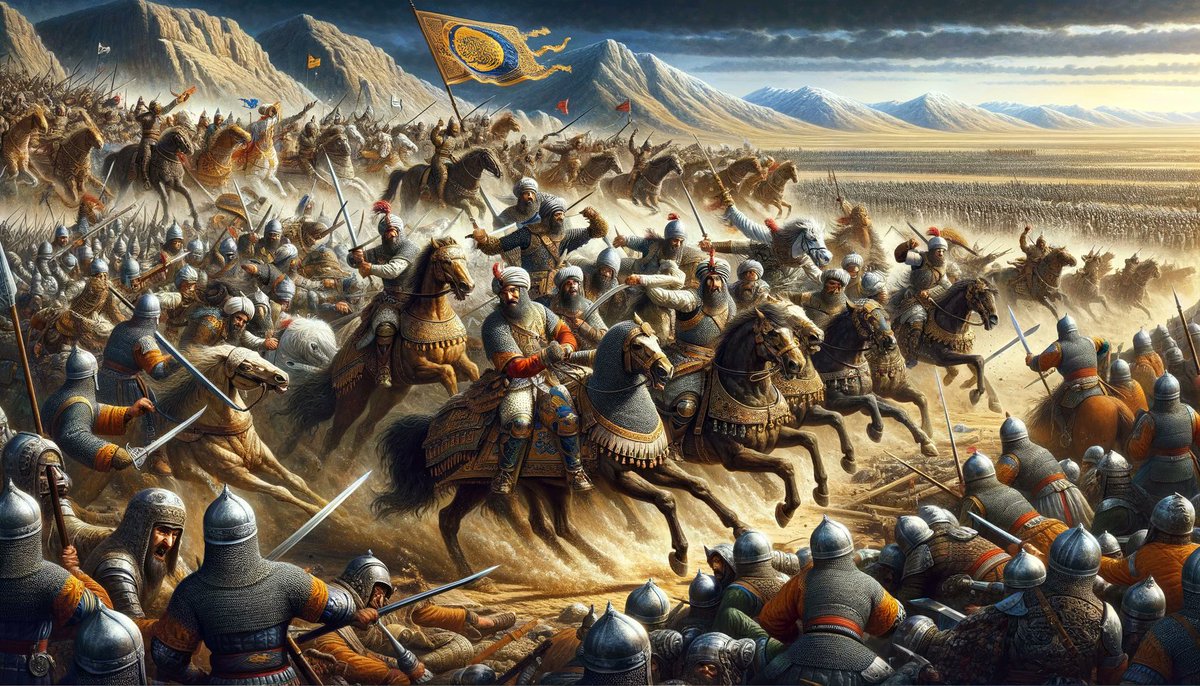
The Mamluk Sultanate's Victory at Ain Jalut (1260): The Mamluks of Egypt achieved a significant victory over the Mongols at the Battle of Ain Jalut on September 3, 1260. This battle took place in the Jezreel Valley, located in present-day Israel, and marked the first substantial defeat of the Mongol Empire, which had been expanding rapidly across Asia and into Europe and the Middle East.
The Mamluk Sultanate, under the leadership of Sultan Qutuz and his deputy Baibars, faced the Mongol forces led by Kitbuqa, a general of the Great Khan Hulagu. Prior to the battle, the Mongols had already captured and sacked Baghdad in 1258, bringing the Abbasid Caliphate to an end and spreading fear across the Muslim world. The Mongol advance continued as they moved into Syria, capturing Aleppo and Damascus.
The Mamluks, realizing the existential threat posed by the Mongols, strategically withdrew from Syria to regroup in Egypt. Sultan Qutuz managed to unite the Mamluk forces and orchestrated a military campaign to counter the Mongol threat. Qutuz's leadership was crucial, as he not only prepared his troops for battle but also ensured political stability within the Sultanate to focus on the external threat.
The confrontation at Ain Jalut was decisive. The Mamluks used their knowledge of the terrain and their superior cavalry tactics to outmaneuver the Mongol forces. They employed a feigned retreat, a tactic they had learned from the Mongols themselves, to lure Kitbuqa's forces into a vulnerable position. Once the Mongols were drawn in, the Mamluks launched a counterattack, surrounding and overwhelming them.
Kitbuqa was captured and executed, and the Mongol army was routed. This victory was significant for several reasons. Firstly, it halted the westward expansion of the Mongol Empire into the Muslim heartlands, preserving the political and cultural landscape of the Middle East. Secondly, it demonstrated the military prowess of the Mamluks, establishing them as a dominant power in the region. Finally, the victory at Ain Jalut boosted the morale of Muslim forces, who had been demoralized by the relentless Mongol conquests.
The aftermath of the battle saw the Mamluks consolidating their power in the region. Baibars succeeded Qutuz as Sultan after the latter was assassinated shortly after the battle, and under his rule, the Mamluk Sultanate continued to strengthen its position. The Mongols, although they remained a formidable power, never again posed a significant threat to the Middle East.
The Reconquista's Battle of Las Navas de Tolosa (1212): This decisive battle saw a coalition of Christian forces defeat the Almohad Muslim rulers of Spain. The victory was a turning point in the Reconquista, the Christian reconquest of the Iberian Peninsula.
The Battle of Las Navas de Tolosa, fought on July 16, 1212, is considered one of the most significant battles in the history of medieval Spain. It marked a crucial turning point in the centuries-long struggle between Christian and Muslim forces on the Iberian Peninsula, known as the Reconquista. The battle took place near the northern slopes of the Sierra Morena mountain range, where the Almohad Caliphate, led by Caliph Muhammad al-Nasir, had established a stronghold.
Leading up to the battle, the Almohads had successfully maintained dominance over much of southern Spain, posing a persistent threat to the Christian kingdoms in the north. In response to this ongoing threat, Pope Innocent III called for a crusade, urging Christian knights from across Europe to join the fight against the Almohad rulers. His call was heeded by a diverse coalition of Christian forces, including troops from the Kingdom of Castile, the Kingdom of Aragon, the Kingdom of Navarre, and the Kingdom of Portugal. Notably, even some French and other European knights joined the campaign, reflecting the widespread support for this cause.
The Christian army was led by three prominent monarchs: King Alfonso VIII of Castile, King Peter II of Aragon, and King Sancho VII of Navarre. These leaders managed to put aside their differences and coordinate their efforts against the common enemy. The unity and determination of the Christian forces were key factors in their subsequent victory.
On the morning of the battle, the Christian coalition launched a surprise attack on the Almohad camp. The initial phase of the battle was fiercely contested, with both sides displaying remarkable bravery and resilience. However, the turning point came when the Navarrese troops, under the command of King Sancho VII, managed to break through the Almohad lines and reach the enemy's command post. This breakthrough caused disarray and panic among the Almohad forces, leading to a decisive Christian victory.
The defeat of the Almohad army at Las Navas de Tolosa had far-reaching consequences. It significantly weakened Muslim power in Spain and bolstered the morale and momentum of the Christian kingdoms. Over the following decades, the Christian forces continued to make substantial territorial gains, steadily pushing the Muslim rulers further south. The victory at Las Navas de Tolosa is often seen as a turning point that accelerated the eventual completion of the Reconquista in 1492, when the last Muslim stronghold of Granada fell to the Catholic Monarchs, Ferdinand II of Aragon and Isabella I of Castile.
In addition to its military significance, the battle also had profound cultural and religious implications. It was celebrated as a triumph of Christianity over Islam, reinforcing the religious fervor that characterized the Reconquista. The victory was commemorated in various works of art, literature, and architecture, serving as a powerful symbol of Christian resurgence and unity.
Empress Wu Zetian: Wu Zetian was the only female emperor in Chinese history, ruling during the Tang Dynasty in the 7th century. Her reign is notable for its significant political and social impacts. Born in 624 AD, Wu entered the court of Emperor Taizong as a concubine. Upon his death, she became a concubine to his son, Emperor Gaozong. Through her intelligence and strategic alliances, Wu Zetian rose to power, eventually becoming the de facto ruler after Gaozong's stroke in 660 AD.
Wu Zetian's political acumen was demonstrated through her meritocratic approach to governance. She broke with tradition by promoting officials based on ability rather than aristocratic background. This practice helped to strengthen her administration and reduce corruption. Wu established the "Twelve Suggestions," a series of political reforms aimed at improving the efficiency and accountability of the government.
Her military campaigns expanded the Chinese empire, securing its borders and consolidating power in the Korean Peninsula and Central Asia. Wu Zetian also focused on domestic policies, including major agricultural reforms to improve food production and distribution, and she advocated for the welfare of the common people.
Religiously, she supported Buddhism, a strategic move that garnered her substantial support from the Buddhist community. Wu commissioned numerous Buddhist temples and stupas, promoting the religion throughout her empire. She even declared herself a living Buddha, a move that reinforced her divine right to rule.
Empress Wu Zetian's reign ended in 705 AD when she was forced to abdicate in favor of her son, Emperor Zhongzong. Despite her controversial rise to power and often ruthless tactics, her reign is considered a period of stability and prosperity.
The Viking Siege of Paris (845): In 845, Viking forces under the leadership of the legendary chieftain Ragnar Lodbrok embarked on a significant and ambitious expedition. Sailing up the Seine River, a fleet of 120 Viking ships made their way toward Paris, a city of substantial importance in the Frankish Empire. The Viking warriors, known for their ferocity and strategic acumen, reached the outskirts of Paris and began their assault.
The Frankish king, Charles the Bald, faced a formidable challenge as the Vikings approached. His realm, already strained by internal divisions and external threats, was ill-prepared for the onslaught of such a formidable enemy. The Vikings, adept at siege tactics, besieged the city, employing their knowledge of warfare to breach its defenses.
Paris, at that time, was a fortified city with strong defensive structures, yet the Viking assault was relentless. The Franks, realizing the dire situation, sought to negotiate with the invaders to avoid complete destruction. The siege created a significant disruption, demonstrating the Vikings' ability to project their power deep into the heart of Europe.
King Charles the Bald, recognizing the perilous position of his capital and the limitations of his military resources, opted for diplomacy. He offered a substantial ransom to the Viking chieftain Ragnar Lodbrok to spare the city. The exact amount of the ransom remains a subject of historical debate, but it is widely acknowledged that Charles paid a considerable sum in silver and other valuables to secure the withdrawal of the Viking forces.
This event underscored the influence and reach of Viking power during this period. The siege of Paris in 845 had far-reaching consequences, illustrating the vulnerability of even the most significant European cities to Viking raids. It also highlighted the economic impact, as substantial resources were diverted to pay the ransom. The Frankish king's decision to pay the ransom rather than risk further destruction showcased the pragmatic approaches leaders often had to adopt when faced with the relentless Viking incursions.
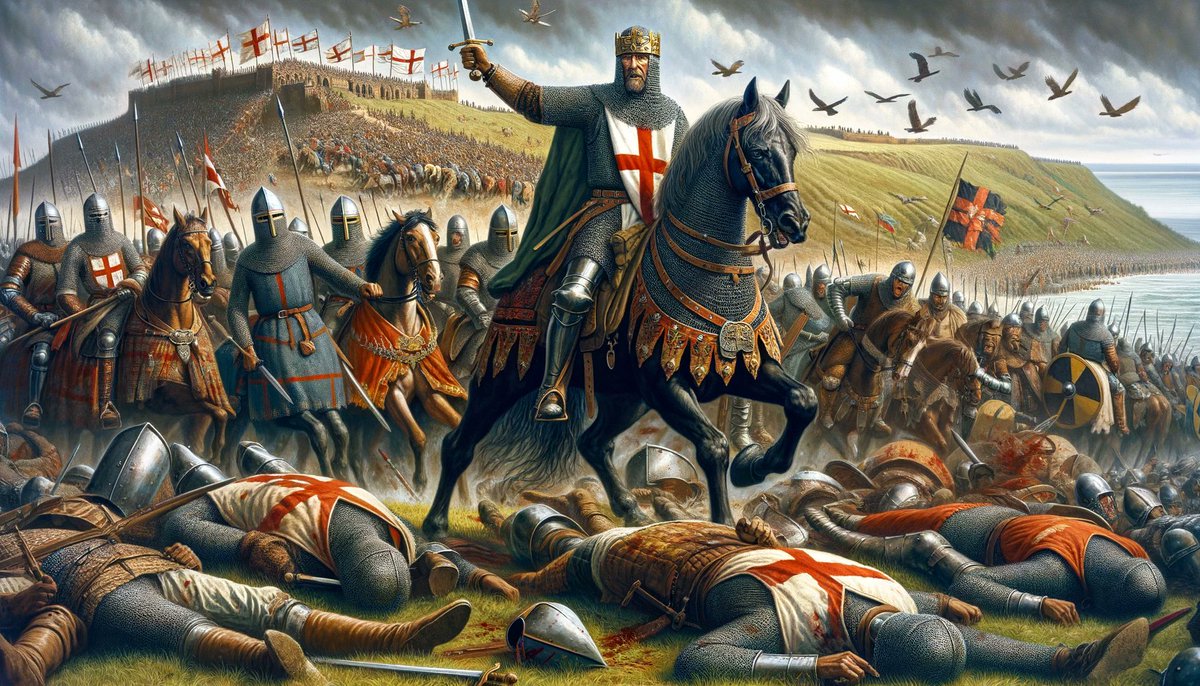
The Norman Conquest of England (1066): Led by William the Conqueror, the Normans invaded England and defeated King Harold II at the Battle of Hastings. This conquest significantly altered the English language, culture, and governance. The pivotal event took place on October 14, 1066, when William, Duke of Normandy, claimed his right to the English throne, asserting that King Edward the Confessor had promised it to him. Harold II, recently crowned and leading the English forces, met William's army near Hastings. Despite initial resistance, Harold's forces were overwhelmed, resulting in his death and a decisive Norman victory.
Following the conquest, William introduced Norman feudalism, redistributing land among his Norman followers and establishing a new aristocracy. This significantly impacted the social structure, creating a rigid hierarchy dominated by Norman lords. The introduction of the Domesday Book in 1086, a detailed survey of landholdings, underscored this transformation by cataloging the wealth and assets across England, facilitating more efficient taxation and governance.
Culturally, the conquest infused Norman customs, traditions, and architectural styles into English society. Norman French became the language of the court, administration, and the elite, influencing the English language profoundly. Many Old English words were replaced or supplemented by Norman French vocabulary, leading to the rich linguistic tapestry of modern English. Gothic architectural elements, exemplified by the construction of grand cathedrals and castles, marked a departure from previous Anglo-Saxon designs, showcasing the Norman emphasis on fortification and grandeur.
Governance underwent a significant overhaul as well. William centralized power, reducing the influence of local Anglo-Saxon nobles and reinforcing royal authority. He implemented a feudal system where loyalty and military service were exchanged for land, ensuring the king's control over his vassals. The establishment of the Curia Regis, or King's Court, laid the groundwork for the English legal system, promoting the king's justice throughout the realm.
The Maori's Haka Dance: The Maori people of New Zealand perform the haka, a traditional war dance that is a significant cultural practice. This dance is characterized by vigorous movements, loud chanting, foot-stamping, and striking the body to create a rhythmic and compelling performance. Traditionally, the haka was performed by warriors before they engaged in battle, intended to display their strength, unity, and ferocity, thereby intimidating their opponents. The haka served as a way to boost the morale of the warriors and to invoke the protection and favor of the gods.
Historically, the haka was more than just a war dance. It also held a place in ceremonial occasions and social gatherings, including welcoming distinguished guests, celebrating achievements, and honoring the deceased at funerals. Each haka has its own unique meaning and story, often passed down through generations. The words of the haka are deeply significant, often reflecting the history, identity, and values of the tribe performing it.
The haka is also a form of storytelling. The combination of powerful chants and symbolic gestures communicates emotions and narratives that are central to Maori heritage. These performances are a way to connect with the past, reinforce social bonds, and express the communal identity of the Maori people.
In contemporary times, the haka has gained global recognition, particularly through its performance by New Zealand’s national rugby team, the All Blacks. The team performs a specific haka called "Ka Mate" before international matches, showcasing the tradition to a worldwide audience and demonstrating respect for Maori culture.
The Battle of Hattin (1187): Fought on July 4, 1187, near the Sea of Galilee, the Battle of Hattin was a crucial military engagement between the forces of the Crusader Kingdom of Jerusalem and the Muslim army commanded by Sultan Saladin (Ṣalāḥ ad-Dīn Yūsuf ibn Ayyūb). The battle is widely regarded as one of the most significant confrontations of the Crusades, marking a decisive victory for Saladin and leading to the recapture of Jerusalem, a pivotal event in the history of the medieval Middle East.
The backdrop to the battle was a period of intense conflict and political maneuvering in the Holy Land. The Crusader states, established in the wake of the First Crusade, had been under constant pressure from Muslim forces seeking to reclaim territory. Saladin, the Sultan of Egypt and Syria, had successfully unified the Muslim territories surrounding the Crusader states and embarked on a campaign to push the Crusaders out of the region.
In the summer of 1187, Saladin launched a large-scale invasion of the Kingdom of Jerusalem. The Crusader forces, under the command of King Guy of Lusignan, assembled an army to meet this threat. The Crusader army, composed of knights, infantry, and supporting troops from various regions of Europe, marched out to confront Saladin’s forces. They were, however, at a strategic disadvantage, lacking sufficient water supplies and facing the intense heat of the Levantine summer.
The decisive engagement occurred near the Horns of Hattin, a double hill northwest of Tiberias. Saladin’s forces, well-prepared and strategically positioned, managed to surround the Crusader army. Deprived of water and suffering from the oppressive heat, the Crusader forces were gradually worn down by continuous assaults from Saladin’s troops. The Muslim army, utilizing their superior numbers and tactical advantages, inflicted heavy casualties on the Crusaders.
King Guy of Lusignan and many of his leading nobles were captured, along with the relic of the True Cross, which was carried into battle by the Crusaders as a symbol of divine support. The loss of this relic was a severe blow to the morale of the Crusaders and symbolized the magnitude of their defeat.
The outcome of the Battle of Hattin had far-reaching consequences. Saladin’s victory paved the way for the Muslim reconquest of Jerusalem, which fell to his forces in October 1187. This event shocked the Christian world and led to the launch of the Third Crusade, an attempt by European powers to reclaim Jerusalem and the Holy Land.
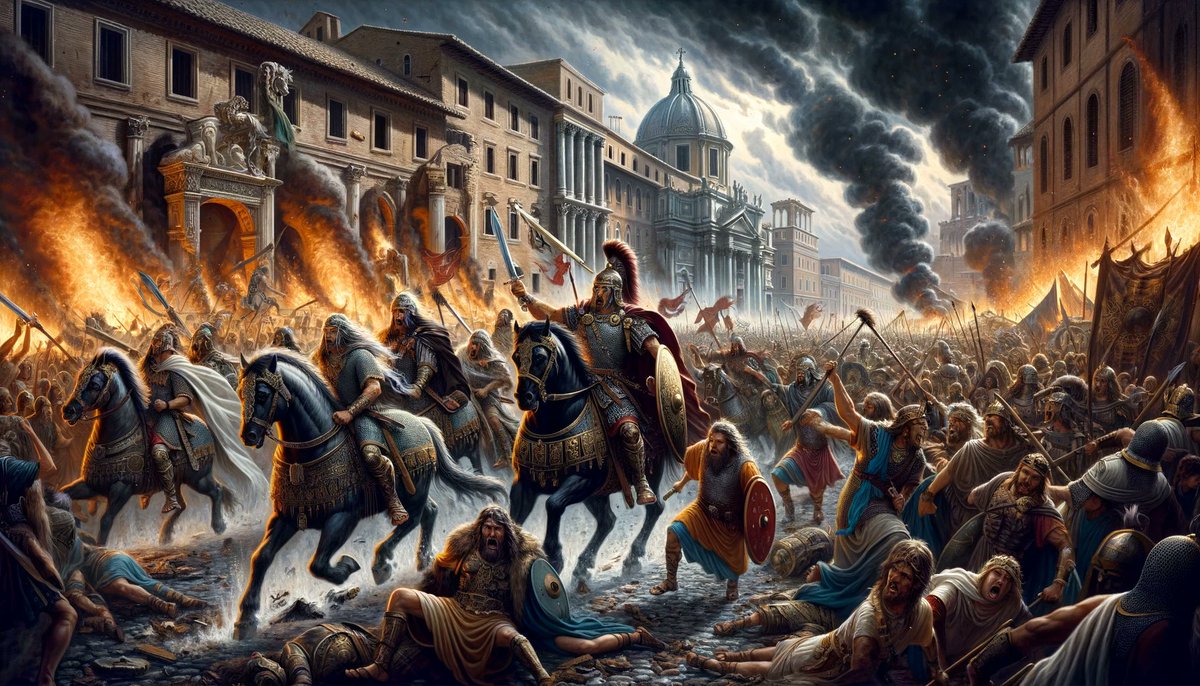
The Visigothic Sack of Rome (410 AD): Led by King Alaric, the Visigoths sacked Rome in 410 AD. This event was a significant blow to the Roman Empire and symbolized the beginning of the end for the Western Roman Empire. Alaric, a former Roman military commander, had initially sought to secure a peaceful settlement within the empire for his people. However, after failed negotiations and the refusal of his demands, Alaric turned his forces towards Rome.
The city of Rome, which had not fallen to an enemy in nearly 800 years, was largely unprepared for the attack. On August 24, 410 AD, the Visigoths breached the city’s walls, aided by slaves who opened the gates. The sack lasted for three days, during which the Visigoths looted and plundered the city, taking valuable treasures and destroying many buildings. Despite the extensive damage, some historical accounts suggest that the Visigoths showed restraint compared to other sacks, as many churches and religious sites were spared significant harm.
The sack shocked the Roman world and sent ripples throughout the empire. Rome was still considered the heart of the empire, despite the political center having shifted to Constantinople. The psychological impact of Rome's fall was profound, marking a critical point in the decline of the Western Roman Empire. The event highlighted the empire's inability to defend its core territories and the growing power of barbarian groups within its borders.
The sack also had significant repercussions for the Roman aristocracy and the common people. Many noble families fled, and the socioeconomic structure of the city was disrupted. The Visigoths, having looted Rome, eventually moved southward into Italy, but the sack remained a potent symbol of the empire's vulnerability and the shifting power dynamics in Europe.
In the broader historical context, the Visigothic Sack of Rome demonstrated the fragmentation and weakening of Roman authority. It was a prelude to further invasions and sacks by other barbarian tribes, leading to the eventual collapse of the Western Roman Empire in 476 AD. The event is often seen as a pivotal moment in the transition from the ancient world to the medieval era.
The Byzantine Empire's Greek Fire: Greek fire was a highly effective incendiary weapon used by the Byzantine Empire, particularly renowned for its application in naval warfare. Developed during the 7th century, this weapon played a crucial role in the defense and military dominance of the Byzantine Empire. Greek fire could burn even on water, which gave the Byzantines a significant advantage in naval battles. The exact composition of Greek fire remains unknown, but it is believed to have included ingredients like naphtha, quicklime, sulfur, and possibly other petrochemical-based substances.
Greek fire was typically deployed using specialized siphon-like devices mounted on Byzantine ships. These siphons allowed the weapon to be sprayed onto enemy vessels, creating an inextinguishable blaze that could destroy entire fleets. The psychological impact of Greek fire was profound; enemy sailors were terrified by its fierce flames and the apparent impossibility of extinguishing them with water.
Historical records document several key battles where Greek fire was instrumental. One of the most notable instances was during the Siege of Constantinople in 717-718 AD, where the Byzantines successfully repelled the Umayyad Caliphate's naval forces. The destructive capability of Greek fire ensured the survival of the Byzantine capital, significantly influencing the outcome of the siege.
The manufacturing process and precise formula for Greek fire were closely guarded state secrets. The knowledge was limited to a select group of individuals within the Byzantine military and was passed down through generations with utmost secrecy. This confidentiality was crucial in maintaining the weapon's strategic advantage over adversaries who were unable to replicate it.
Despite numerous attempts by enemies to capture and reverse-engineer Greek fire, none succeeded in uncovering its precise composition or manufacturing technique. The Byzantine Empire's ability to keep this secret is remarkable, contributing to the weapon's legendary status in history.
The Kingdom of Nubia: Located to the south of ancient Egypt, Nubia was home to some of the most powerful and influential kingdoms in African history, including the Kingdoms of Kush and Meroe. These kingdoms thrived along the Nile River, which provided a vital source of sustenance and a means of transport and trade.
The Kingdom of Kush emerged around 1070 BCE, following the collapse of the New Kingdom of Egypt. Centered at first in Napata and later in Meroe, the Kushites established a rich and diverse culture that drew heavily on both indigenous traditions and influences from their northern neighbors in Egypt. Kushite kings adopted many aspects of Egyptian civilization, including the construction of pyramids, the use of hieroglyphic writing, and the worship of Egyptian deities.
Kush was renowned for its skilled archers, so much so that the Egyptians referred to Nubia as "Ta-Seti," meaning "Land of the Bow." These archers played a crucial role in the military might of the Kushite army, helping them to exert control over a vast territory that included parts of modern-day Sudan and southern Egypt. The prowess of Nubian warriors was well-respected throughout the ancient world.
The capital of Kush eventually shifted to Meroe around 590 BCE, marking the beginning of a new era in Nubian history. The Kingdom of Meroe became a major center of iron production, thanks to the abundant natural resources in the region. This industrial capacity enabled Meroe to produce advanced weaponry and tools, facilitating both its economic prosperity and military strength.
Meroe was also distinguished by its unique architectural style. The city featured numerous pyramids, which were smaller and steeper than their Egyptian counterparts but no less impressive. These pyramids served as royal tombs, adorned with elaborate carvings and inscriptions that reflected the rich spiritual and cultural life of the Meroitic people. Additionally, the city boasted grand temples, such as the Temple of Amun at Naqa, which showcased the intricate artistry and architectural prowess of the Meroites.
Trade was a cornerstone of the Nubian economy. The Kingdom of Nubia was strategically positioned along major trade routes that connected sub-Saharan Africa with the Mediterranean world. Nubians traded gold, ivory, ebony, and exotic animals with their neighbors to the north and east, including the Egyptians, Greeks, and Romans. This trade brought great wealth to Nubia and facilitated cultural exchanges that enriched its society.
Religion played a central role in Nubian life, with a pantheon that included both indigenous gods and deities borrowed from Egypt. The worship of Amun, in particular, became prominent during the Kushite period, with large temples dedicated to this deity being built in both Napata and Meroe. Religious practices and beliefs were deeply intertwined with the monarchy, as the kings were often considered divine or semi-divine figures.
The Kingdom of Nubia experienced a gradual decline beginning in the 4th century CE, exacerbated by internal strife and external pressures, including invasions by neighboring tribes and the rise of the Aksumite Empire to the east. By the 6th century CE, the once-great cities of Napata and Meroe had fallen into obscurity.
The Battle of Gaugamela (331 BC): Also known as the Battle of Arbela, this significant conflict marked a pivotal moment in the history of warfare and the rise of empires. On October 1, 331 BC, Alexander the Great faced Darius III of Persia on the plains of Gaugamela, near modern-day Mosul in Iraq. Despite being heavily outnumbered, Alexander's strategic brilliance and the discipline of his Macedonian army led to a crushing defeat of the Persian forces.
The battlefield was carefully chosen by Darius, who hoped that the wide, flat terrain would favor his larger army and the deployment of war chariots. Darius's forces possibly numbered over 100,000, including a mix of cavalry, infantry, and elephants, while Alexander commanded around 47,000 troops, comprising phalanxes, cavalry, and light infantry.
Alexander's strategy hinged on creating confusion within the Persian ranks. He arranged his phalanx in the center, flanked by cavalry units, with reserves held back to counter any breakthroughs. As the battle commenced, Alexander personally led a cavalry charge on the right flank, drawing Persian forces towards him and creating a gap in their line. Meanwhile, the Macedonian phalanx advanced, maintaining tight formation and exploiting the breach created by Alexander's maneuver.
Darius, seeing his forces starting to falter and fearing encirclement, fled the battlefield, effectively sealing the Persian defeat. His retreat caused a collapse in morale among his troops, leading to a chaotic rout. Alexander's forces pursued the fleeing Persians, capturing significant loot and prisoners.
The victory at Gaugamela was not just a military triumph but also a psychological blow to the Persian Empire. It demonstrated the superiority of Alexander's tactics and the effectiveness of his troops. In the aftermath, the cities of Babylon, Susa, and Persepolis fell to Alexander, giving him control over the vast territories of the Achaemenid Empire.
The Battle of Gaugamela showcased Alexander's tactical genius, including his ability to adapt to battlefield conditions and exploit enemy weaknesses. His success in this battle paved the way for his further conquests and solidified his reputation as one of history's greatest military commanders.
Vlad the Impaler: Vlad III, known as Vlad the Impaler, was a ruler of Wallachia in the 15th century, a region corresponding to modern-day Romania. He ruled mainly from 1456 to 1462, with two brief periods of rule in 1448 and 1476. Vlad III is infamous for his severe and cruel methods of dealing with his enemies, a reputation that has overshadowed his role in defending his land from Ottoman expansion.
Vlad was born in 1431 in Sighișoara, Transylvania, into the noble Drăculești family. His father, Vlad II Dracul, was a member of the Order of the Dragon, a chivalric order founded to defend Christianity in Eastern Europe. Vlad III’s nickname, “the Impaler,” comes from his favorite method of execution: impalement. This gruesome practice involved inserting a stake through the victim’s body, leaving them to die slowly.
Vlad’s harsh rule was partly driven by the need to consolidate power in a tumultuous region frequently under threat from both internal noble factions and external forces, particularly the Ottoman Empire. His reign was marked by a rigorous campaign against the boyars (local nobility) who opposed him, resulting in numerous executions. Vlad's insistence on severe punishment served both as a method of instilling fear and maintaining strict control over his domain.
One of the most famous episodes highlighting Vlad’s ruthlessness occurred in 1462, during his conflict with the Ottoman Empire. Faced with an invasion led by Sultan Mehmed II, Vlad resorted to a scorched earth policy. He devastated his own lands to deprive the Ottoman forces of supplies. When the Ottoman army advanced to the outskirts of Târgoviște, the capital of Wallachia, they encountered a horrific sight: a forest of impaled Turkish prisoners, estimated to be around 20,000 in number. This grisly display was intended to demoralize the invaders and illustrate Vlad’s fierce resistance.
Vlad’s legacy is complex; while he is remembered as a hero in Romania for his efforts to defend his country from Ottoman domination, his brutal methods have earned him a fearsome reputation in history. His notoriety was further amplified by medieval pamphlets and literature, often exaggerated and filled with sensational tales of his cruelty. These stories contributed significantly to the creation of the legendary figure of Count Dracula, popularized by Bram Stoker’s 1897 novel "Dracula."
The Battle of Zama (202 BC): This decisive battle marked the conclusion of the Second Punic War, a conflict that had seen significant clashes between the Roman Republic and the Carthaginian Empire. The Roman forces, under the command of Publius Cornelius Scipio, who would later be known as Scipio Africanus, faced off against the army of Hannibal Barca, Carthage's most famous military leader. The battle took place near Zama, a location in present-day Tunisia, North Africa.
The Second Punic War had been characterized by Hannibal's bold and audacious campaigns in Italy, including his famous crossing of the Alps. Despite his successes in Italy, Hannibal could not decisively defeat the Romans and secure a Carthaginian victory. Meanwhile, Scipio Africanus had been gaining ground by successfully campaigning in Iberia (modern-day Spain), cutting off Carthaginian resources and reclaiming territories.
The strategic landscape shifted dramatically when Scipio proposed to take the fight to North Africa, directly threatening Carthage itself. This forced the Carthaginian leadership to recall Hannibal from Italy to defend their homeland. The stage was thus set for the climactic encounter at Zama.
Scipio's Roman army was well-prepared, consisting of seasoned troops and bolstered by Numidian cavalry led by the defector King Masinissa, who played a crucial role in the upcoming battle. In contrast, Hannibal's forces, although experienced, included many troops who were not as battle-hardened as his veterans from Italy.
On the day of the battle, Scipio's tactical ingenuity came to the forefront. He organized his forces in a way that mitigated the impact of Carthage's war elephants, which had been a formidable component of Hannibal's army. By creating lanes in his formation, Scipio allowed the elephants to pass harmlessly through his ranks, where they were then targeted and neutralized.
The battle was fierce, with both sides exhibiting high levels of discipline and combat skill. Hannibal’s veterans fought valiantly, but the turning point came when the Numidian cavalry, having defeated their Carthaginian counterparts, attacked Hannibal’s forces from the rear. This encirclement was decisive, leading to the collapse of the Carthaginian army.
The defeat at Zama forced Carthage to sue for peace, ending the Second Punic War. The terms imposed by Rome were harsh: Carthage had to cede significant territories, disband its navy, and pay a substantial indemnity. This victory cemented Rome’s dominance over the western Mediterranean and marked the beginning of its expansion into an empire. Scipio Africanus returned to Rome as a hero, celebrated for his strategic brilliance and military prowess, while Hannibal’s defeat marked the end of Carthage's power and influence in the ancient world.
Queen Boudica's Revolt: Boudica, the queen of the Iceni tribe, spearheaded a significant rebellion against Roman rule in Britain around 60-61 AD. Her uprising was fueled by personal grievances and broader discontent among the Britons over harsh Roman policies. After her husband's death, the Romans ignored his will, which left his kingdom jointly to his daughters and the Roman Emperor. Instead, they annexed the Iceni territory, flogged Boudica, and assaulted her daughters, inciting her wrath.
Boudica united with other tribes, including the Trinovantes, to challenge the Roman occupation. The rebels' first major target was Camulodunum (modern Colchester), a Roman colonia and a symbol of Roman oppression. They razed the city, killing its inhabitants and obliterating the temple of Claudius.
Following this victory, Boudica's forces turned their attention to Londinium (modern London). Recognizing his inability to defend the city with his limited troops, the Roman governor Suetonius Paulinus evacuated Londinium, sacrificing it to save his army. Boudica's army entered the undefended city, killing its residents and burning it to the ground. Verulamium (modern St Albans) met a similar fate.
The Romans, however, regrouped and prepared for a decisive battle. Suetonius Paulinus chose a battleground with narrow approaches and a forested rear, which neutralized the rebels' numerical advantage. Despite their initial successes, Boudica's forces were ultimately defeated by the well-disciplined Roman legions. Roman sources claim that up to 80,000 Britons were killed compared to only 400 Romans.
After her defeat, Boudica either took her own life to avoid capture or died of illness.
The Siege of Carthage (146 BC): The final siege of Carthage during the Third Punic War marked a pivotal moment in ancient history, leading to the complete obliteration of one of the most powerful cities of the ancient Mediterranean. The conflict between Rome and Carthage, known as the Punic Wars, had been ongoing for over a century, with the Third Punic War (149-146 BC) culminating in this decisive and brutal siege.
Carthage, located in modern-day Tunisia, was a major center of trade and culture. However, its growing power and influence in the Mediterranean clashed with the expansionist ambitions of the Roman Republic. Despite previous defeats in the First and Second Punic Wars, Carthage managed to rebuild and regain some of its former prosperity. This resurgence was viewed with suspicion and hostility by Rome, leading to increasing tensions.
In 149 BC, Rome declared war on Carthage for the third time, instigated partly by Carthage's violation of a peace treaty that prohibited them from waging war without Roman consent. The Roman Senate, eager to eliminate Carthage as a rival once and for all, dispatched a powerful army under the command of Scipio Aemilianus.
The siege began in earnest in 149 BC, with the Roman forces employing a combination of naval blockades and land assaults to cut off Carthage from any reinforcements or supplies. The Carthaginians, though heavily outnumbered and outmatched, mounted a fierce resistance. The city's strategic location and formidable fortifications made it a challenging target for the Romans.
For two years, the siege dragged on with relentless skirmishes and brutal combat. The Romans constructed a massive wall around Carthage to prevent any escape or external aid. Inside the city, the situation grew increasingly desperate. Food and water shortages, along with continuous bombardment and attacks, took a heavy toll on the Carthaginian population.
In 146 BC, the final assault on Carthage was launched. The Roman forces, led by Scipio Aemilianus, managed to breach the city's defenses after intense and bloody fighting. Once the Romans entered Carthage, they systematically destroyed the city. Buildings were set ablaze, and the destruction was thorough and deliberate. According to historical accounts, the fires burned for days, consuming the once-great city entirely.
The aftermath of the siege was catastrophic for the Carthaginians. The city was not only physically destroyed, but its population faced a grim fate. Thousands were killed during the assault, and the surviving inhabitants, numbering over 50,000, were sold into slavery. The Roman Senate decreed that Carthage should never be rebuilt, and the city was cursed. The land was symbolically sown with salt to ensure it would remain barren.
The fall of Carthage marked the end of the Carthaginian Empire and the complete dominance of Rome in the western Mediterranean. This event had significant repercussions for the balance of power in the ancient world and cemented Rome's status as a formidable imperial power. The destruction of Carthage also served as a stark warning to other potential rivals of Rome's ruthlessness in dealing with opposition.
The Tang Dynasty's Chang'an: The capital city of the Tang Dynasty, Chang'an (modern-day Xi'an), was one of the largest and most cosmopolitan cities in the world during the 7th and 8th centuries. It was a cultural and commercial hub, connected to the Silk Road, and featured impressive architecture, including the Giant Wild Goose Pagoda.
Chang'an was a meticulously planned city with a grid layout, covering an area of around 84 square kilometers. Its design was influenced by traditional Chinese geomancy and cosmology, reflecting the grandeur and order of the Tang Empire. The city was divided into 108 wards, each functioning as a self-contained community with its own markets, temples, and residences. This organization facilitated efficient governance and maintained social order.
At its peak, Chang'an had a population of over a million residents, including a significant number of foreign merchants, diplomats, and scholars. This diverse population contributed to the city's vibrant cultural life, making it a melting pot of ideas, religions, and customs. The presence of various ethnic groups, including Persians, Indians, and Arabs, fostered a cosmopolitan atmosphere where different cultures coexisted and interacted.
Chang'an's strategic location at the eastern terminus of the Silk Road made it a vital center for trade and commerce. Goods such as silk, spices, precious metals, and exotic animals flowed through the city, enriching both the local economy and the imperial treasury. The bustling markets of Chang'an were filled with an array of goods from across Asia and beyond, offering a glimpse into the global trade networks of the time.
Architecturally, Chang'an was adorned with magnificent structures that showcased the artistic and engineering prowess of the Tang Dynasty. The Giant Wild Goose Pagoda, built in 652 CE, stood as a prominent landmark in the city. Originally constructed to house Buddhist scriptures brought from India by the monk Xuanzang, the pagoda symbolized the Tang Dynasty's embrace of Buddhism and its role as a center of religious scholarship.
In addition to its religious significance, Chang'an was a hub for cultural and intellectual exchange. The city was home to numerous academies and libraries, attracting scholars, poets, and artists from across the empire. The Tang Dynasty's support for education and the arts led to a flourishing of literature, painting, and music, with Chang'an at the heart of this cultural renaissance.
The grandeur of Chang'an was also evident in its imperial palaces and administrative buildings. The Daming Palace, completed in 663 CE, served as the main residence of the Tang emperors. It was an architectural marvel, featuring vast halls, gardens, and pavilions that exemplified the opulence and sophistication of the Tang court. The palace complex was not only a symbol of imperial power but also a center for political and ceremonial activities.
Despite its prosperity, Chang'an faced challenges such as political instability, rebellions, and invasions. The An Lushan Rebellion (755-763 CE) dealt a severe blow to the city, causing widespread destruction and loss of life. However, Chang'an's resilience and strategic importance ensured its continued prominence in the years that followed.