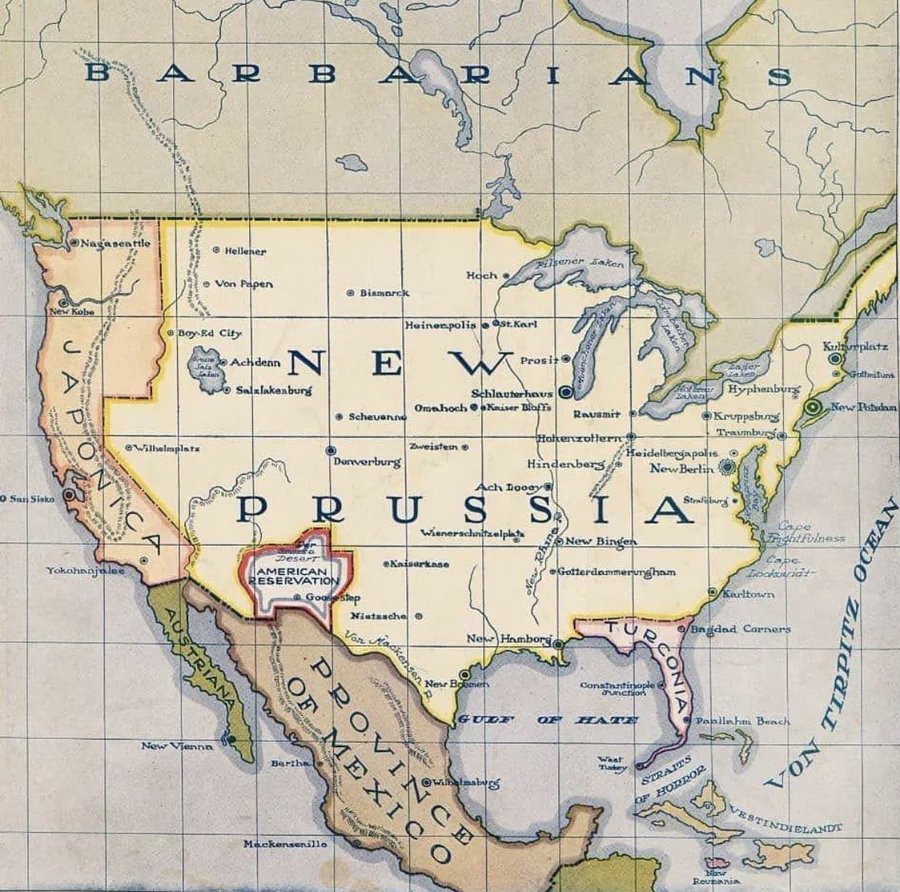
This propaganda map from 1916 was crafted by the Allies during World War 1, depicting a scenario where the Central Powers emerged victorious and showing the potential fate of the United States under such circumstances.
In World War 1, the Central Powers, primarily the German Empire and Austria Hungary, constituted the opposing force. Their military was referred to as the Prussian Army, and its soldiers were known as "Prussians," a nod to the Kingdom of Prussia. Before 1870, Germany wasn't a unified nation but comprised various kingdoms. The Kingdom of Prussia, led by Kaiser Wilhelm I and Prime Minister Otto von Bismarck, played a pivotal role in unifying the German states.
The map showcases intriguing details:
The Great Lakes are renamed after German beers, while several American cities receive new names. For instance, Boston turns into "Kulturplatz" and Austin becomes "Nietzsche." Above the Province of Mexico, there's an American Reservation with its capital named "Goose-Step." It's also worth noting that Bismarck, North Dakota, remains unchanged.
The map's most fascinating element is California and the Pacific Northwest labeled as "Japonica." This is puzzling because Japan was, in reality, aligned with the Allies, consisting of France, Britain, Russia, and Italy.
In 1954, Arthur Duncan, an American tap dancer, had his debut on the Betty White show. Betty White faced backlash for showcasing a Black performer, but her response was unwavering: "I'm sorry. Live with it." Not only did she continue to feature Duncan prominently, but she also extended his airtime. However, her show was ultimately canceled shortly thereafter.
Duncan had nothing but admiration for Betty, stating, "She [Betty] is probably one of the nicest, grandest, and greatest people I've had the chance to meet in my life. Whenever she walked into a room, it lit up. She was very thoughtful and helpful. She launched me into show business."
Reflecting on his time on Betty's show, Duncan shared, "During my appearance on [Betty's] show, some viewers from different areas resented the inclusion of Black Americans and threatened to withdraw their support. I was unaware of these events at the time and only learned about them several years later after Betty wrote her book. She explained it this way: 'Needless to say, we used Arthur Duncan every opportunity we could.' She remained steadfast in her convictions, and that ultimately resolved the situation."
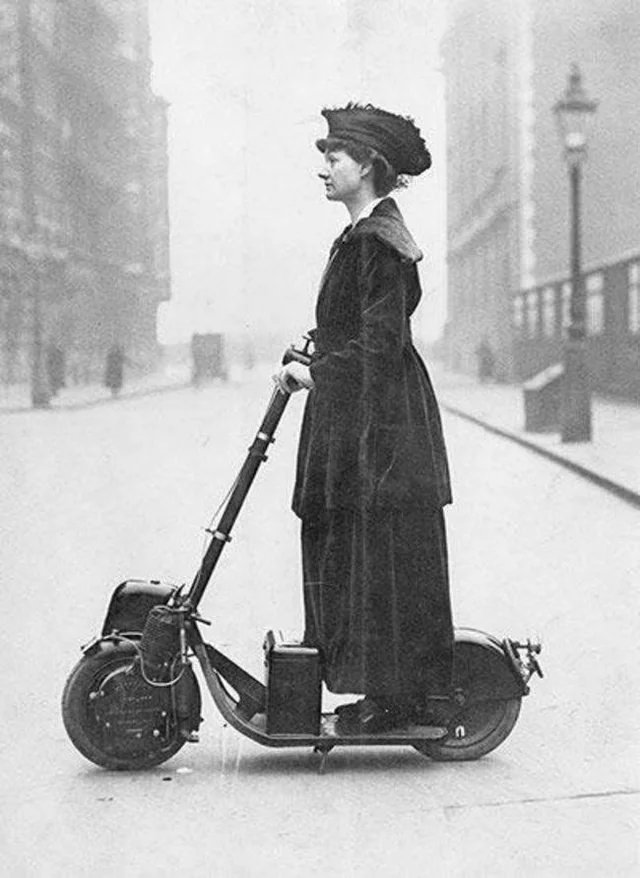
Lady Florence Norman, a suffragette, on her motor-scooter in 1916, travelling to work at offices in London where she was a supervisor. The scooter was a birthday present from her husband, the journalist and Liberal politician Sir Henry Norman.
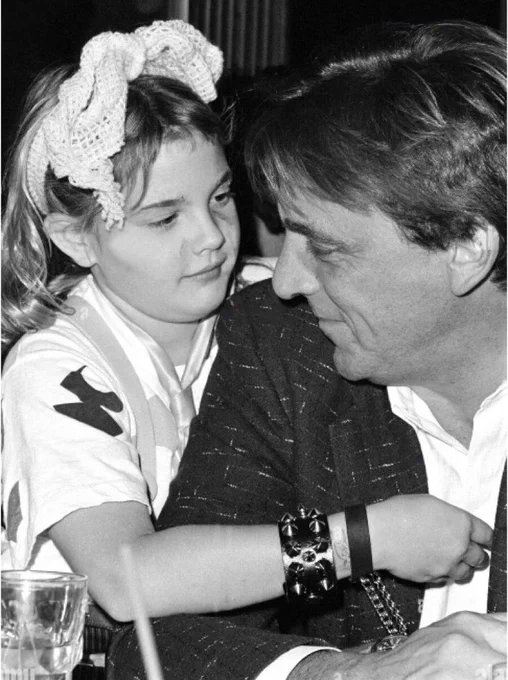
Drew Barrymore was born into a family of Hollywood stars, yet her early years lacked the glitz and glamour. Rising to fame at just five years old with her role in "E.T.: The Extra-Terrestrial," she soon faced the darker aspects of celebrity.
Her father, an abusive alcoholic, abandoned her, and her mother, a partygoer, exposed her to nightclubs and bars. At the age of nine, she was photographed at New York's notorious Studio 54, where she was coerced into dancing with older men and was eventually led into substance abuse.
Caught in the grip of addiction and despair, Barrymore attempted suicide multiple times. Despite two rehab stints, her struggles persisted. Feeling trapped, she took legal steps to emancipate herself from her parents at 14.
Living in her own apartment but financially strained and lacking formal education, Barrymore faced difficulty finding acting roles due to her past fame. Determined to change, she embraced sobriety and focused on reviving her career. Establishing Flower Films, her production company, she showcased her talents through movies that highlighted her charm.
Barrymore successfully rebranded herself as a romantic comedy leading lady, demonstrating resilience and transformation in her journey.
In 1961, an anti-theft device for suitcases was invented. This special suitcase is equipped with three telescopic poles that automatically extend when triggered, preventing thieves from escaping. Additionally, the handles securely tighten and lock around the hand until they can be released using a key to deactivate the mechanism.







![Historypicstv's tweet photo. In 1954, Arthur Duncan, an American tap dancer, had his debut on the Betty White show. Betty White faced backlash for showcasing a Black performer, but her response was unwavering: "I'm sorry. Live with it." Not only did she continue to feature Duncan prominently, but she also extended his airtime. However, her show was ultimately canceled shortly thereafter.
Duncan had nothing but admiration for Betty, stating, "She [Betty] is probably one of the nicest, grandest, and greatest people I've had the chance to meet in my life. Whenever she walked into a room, it lit up. She was very thoughtful and helpful. She launched me into show business."
Reflecting on his time on Betty's show, Duncan shared, "During my appearance on [Betty's] show, some viewers from different areas resented the inclusion of Black Americans and threatened to withdraw their support. I was unaware of these events at the time and only learned about them several years later after Betty wrote her book. She explained it this way: 'Needless to say, we used Arthur Duncan every opportunity we could.' She remained steadfast in her convictions, and that ultimately resolved the situation."](https://pbs.twimg.com/media/F4sGvwXWoAAm0Gp.jpg)
![Historypicstv's tweet photo. [Colorized] A traffic cop fines a woman for wearing a bikini. Rimini, Italy, 1957 https://t.co/oNOlFPR9bV](https://pbs.twimg.com/media/F4fXpbqXkAE9r8w.jpg)