Since 1939, Hitachi has developed and manufactured various Electron Microscopes including unique tabletop and ultrahigh voltage as well as SEM, TEM and FIB.
Happy National Homemade Bread Day ! 🥖🍞🥐
(November 17, 2026)
“Delicious foods are also structured beautifully. Exploring Food Structure to Establish the Science of Cooking”
Culinary science has a variety of approaches to research. Cooking methods, ingredient analysis, food properties, psychometrics (sensory evaluation), food culture, and food histology all comprise important parts of this research. Flavor and texture, such as hardness or chewiness, are all closely related to a food’s structure, and food histology has evolved along with techniques for observing tissue structure in order to examine the properties of each type of food.
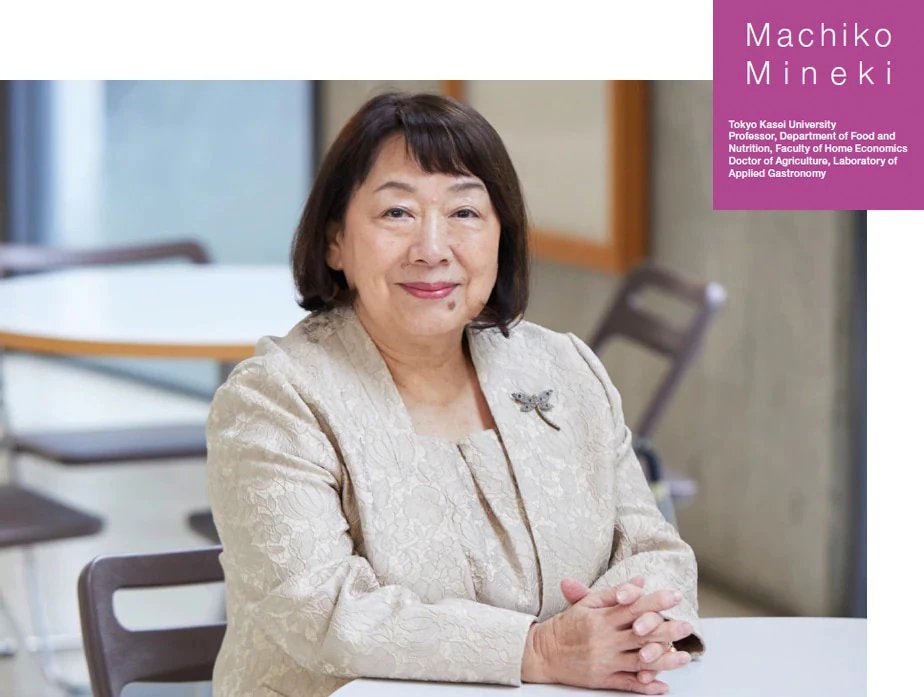
For this interview, I sat down with Professor Machiko Mineki, who has been developing techniques for observing the microscopic structure of tissue, and has received many accolades. I asked Professor Mineki about progress in food histology research and what role electron microscopy plays in it.
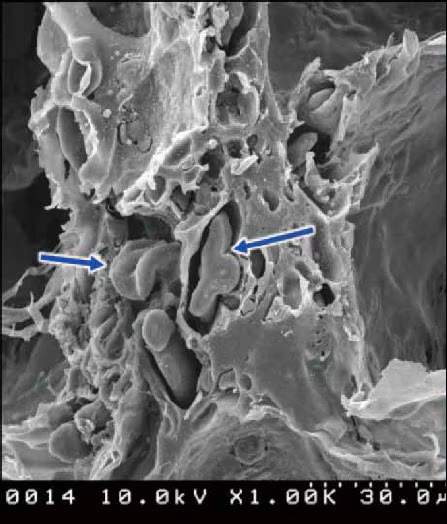
SEM image of bread after fixation with glutaraldehyde and osmium tetroxide, drying, and ion-coating with Au
(Arrows indicate starch grains in flour gelatinized by heating)
To read the full article, check out the following post !
Happy National Homemade Bread Day ! 🥖🍞🥐
(November 17, 2026)
“Delicious foods are also structured beautifully. Exploring Food Structure to Establish the Science of Cooking”
Culinary science has a variety of approaches to research. Cooking methods, ingredient analysis, food properties, psychometrics (sensory evaluation), food culture, and food histology all comprise important parts of this research. Flavor and texture, such as hardness or chewiness, are all closely related to a food’s structure, and food histology has evolved along with techniques for observing tissue structure in order to examine the properties of each type of food.
For this interview, I sat down with Professor Machiko Mineki, who has been developing techniques for observing the microscopic structure of tissue, and has received many accolades. I asked Professor Mineki about progress in food histology research and what role electron microscopy plays in it.
SEM image of bread after fixation with glutaraldehyde and osmium tetroxide, drying, and ion-coating with Au
(Arrows indicate starch grains in flour gelatinized by heating)
To read the full article, check out the following post !
We're excited to have the TM4000PlusIII Tabletop SEM on display at #SC26 this week at McCormick Place, #Chicago!
A special thank you to @themccronegroup for hosting us at Booth 1429. We look forward to meeting attendees and discussing today's microscopy and materials characterization challenges.
Stop by and ask how One Hitachi can support your work.
From tabletop SEM to advanced analytical and characterization solutions, and computing and beyond we're here to help you find the right approach for your application, workflow, and research goals. If you're attending SC26, see you at Booth 1429!
#TM4000PlusIII #TabletopSEM #Microscopy #MaterialsCharacterization #OneHitachi
It’s Road Safety Week !
🛣🚦🚸🚗🚛🚫
(November 15-21, 2026)
Silica filler in tire rubber compounds
(Low-angle backscattered electron topographic image & High-angle backscattered electron compositional image)
About the Ultra-High-Resolution Schottky SEM, check out the following post !
It’s Road Safety Week !
🛣🚦🚸🚗🚛🚫
(November 15-21, 2026)
Silica filler in tire rubber compounds
(Low-angle backscattered electron topographic image & High-angle backscattered electron compositional image)
About the Ultra-High-Resolution Schottky SEM, check out the following post !
It’s National Recycling Day !
♻♻♻
(November 15)
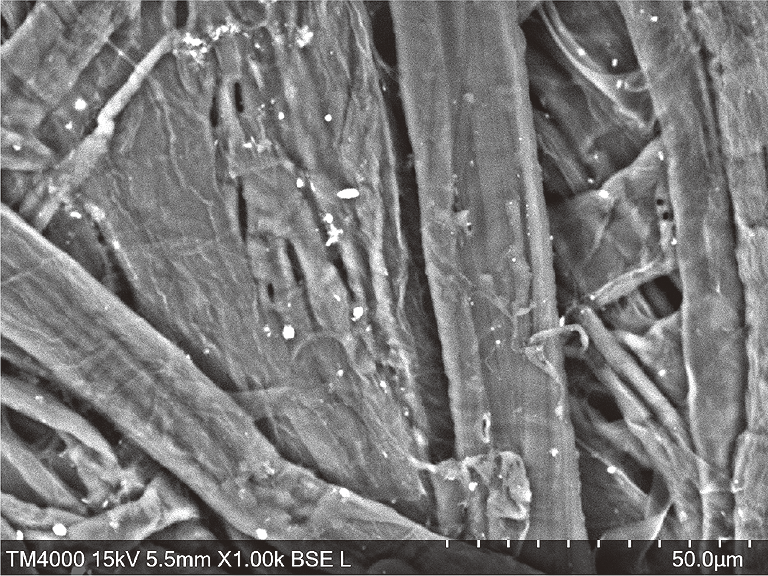
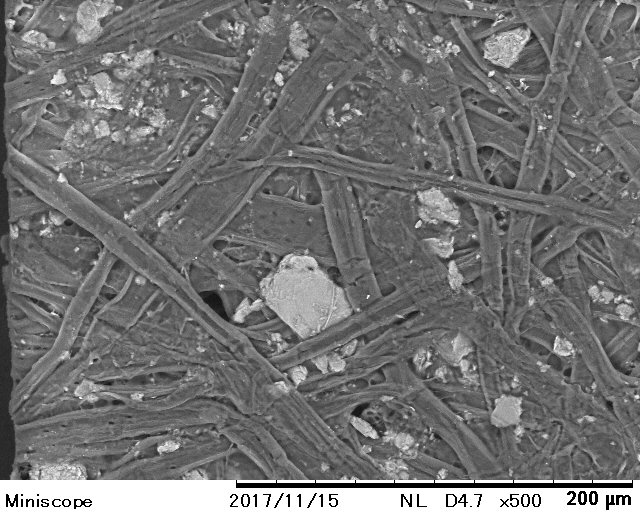
Recycled paper with and without charging
To know about the Tabletop Microscope with Charging reduction mode, check out the following post !
Happy Origami Day !
🌷🦊🐦🌻⚽😸
(November 11)
SEM of Origami (pieces of folding papers, red and gold)
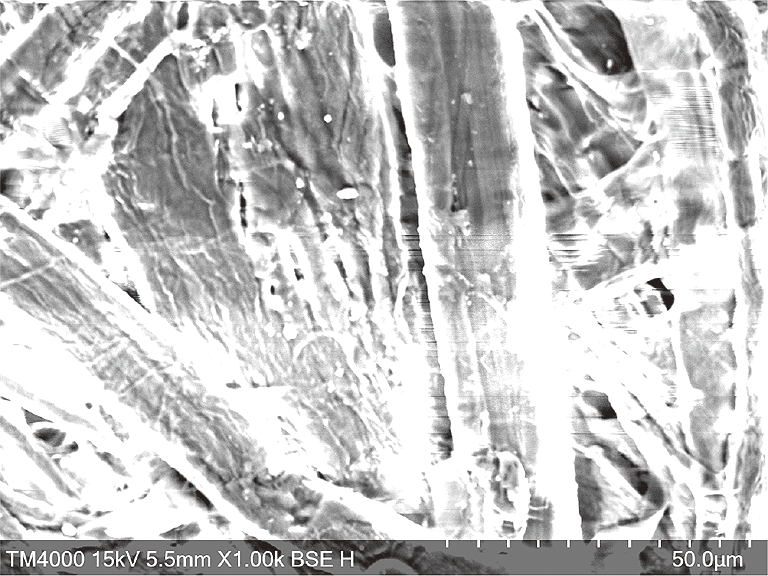
When colored folding paper is magnified under an electron microscope, the fibers are visible, just like with regular paper, but the overall shape looks like a single mass. Colored folding paper is made by applying paint to white paper. The paint soaks the fibers, making it difficult to distinguish individual fibers, as seen in the image.
Some sheets of folding paper are gold or silver. Are these made with paint like the other colored folding paper?
If we look at gold folding paper under an electron microscope, we are unable to see any fibers at all. Gold folding paper is made by pasting aluminum foil over white paper and then pasting yellow cellophane over the foil to give it the color. Unlike with other colored folding paper, we are unable to see the fibers because there are several layers on top of the regular paper.
To see more paper products, check out the following post !
Happy World Science Day for Peace and Development !
🕊🔬🥼⚗️⚙️💡🧬🖥🌐🛰
(November 10)
“From the Front Lines of Infection Prevention: Using Electron Microscopy in a Public Health Research Center”
Japan has Prefectural and Municipal Public Health Institutes (PHIs) in all of the country’s 47 prefectures and in designated cities. The institutes act as public organizations that support public health policy in their jurisdictions, serving as bases of scientific and technical expertise. Their four core competencies are survey-based research, experimental research, training/guidance, and the collection and analysis of public health information. In the early stages of the COVID-19 pandemic, the National Institute of Infectious Diseases and PHIs nationwide met the country’s PCR testing needs.
The institutes stand ready to be first responders to future emerging and re-emerging infections. Given the important role of the PHIs in risk management, lawmakers amended the national Community Health Act in December 2022 to formalize their establishment in law. In 2017, the institutes of Osaka Prefecture and the city of Osaka were consolidated with the goal of enhancing their ability to implement public health policy, becoming Japan’s only Incorporated Administrative Agency responsible for public health. The integration was finalized in January 2023 with the completion of the centralized facility, and an HT7800 transmission electron microscope (TEM) was installed.
To read the full article, check out the following post !
It’s Sugar Awareness Week ! ☕🥄🍬🍰🍩
(November 9-15, 2026)
#ElectronMicroscope#SugarAwarenessWeek#Sugar
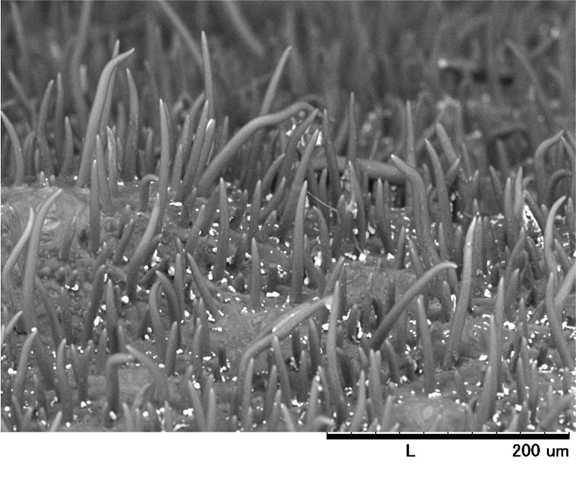
Sugar grains
To know about the Tabletop Microscope, check out the following post !
Happy National STEM/STEAM Day !
🔎🔬 🔭 ⚖️ 🧲 🧪
(November 8)
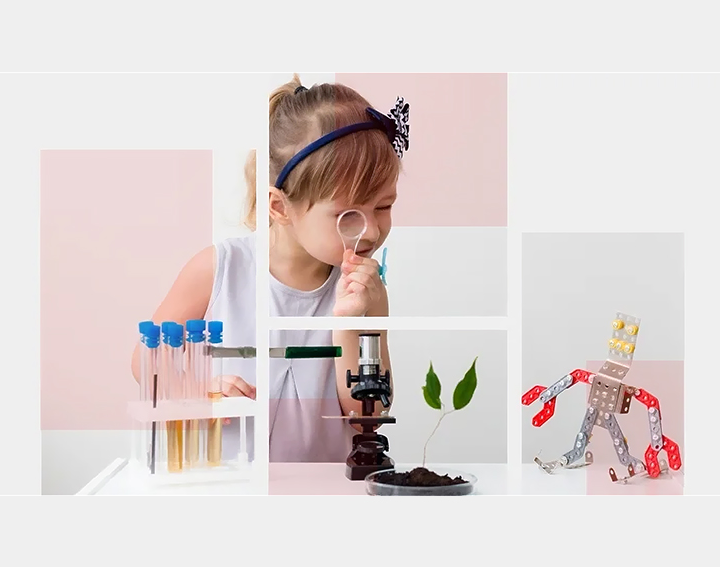
Hitachi’s mission extends beyond industry success - we strive to exceed social expectations by focusing on two key areas, Community and Educational Outreach. Engaging in impactful social programs and activities, we leverage the company's resources and technology expertise to support local needs. As technology evolves, Hitachi delves into the significance of nanotechnology in different aspects of our daily lives.
Hitachi High-Tech has been a beacon of support for schools nationwide. The Inspire STEM Program offers hands-on experiences and meticulously designed virtual, blended learning options, transforming education into an exciting journey of exploration and limitless possibilities, inspiring the next generation of young scientists.
Our Tabletop Scanning electron microscope (SEM) brings the captivating world of all things nano into focus, inspiring students to become the great innovators of tomorrow.
Our teaching tools offer a great opportunity for students to explore the fascinating world of natural nanostructures, computer chips, insects, color, and many other everyday objects. Our vast collection of lesson plans and EOP STEM Kits, designed by educators, provide a range of sample modules that align with lesson plans tailored for students of all levels.
For more details, check out the following post !
It’s National Pathology Week !
🔬🧫🦠🧬💉
(November 2-8, 2026)
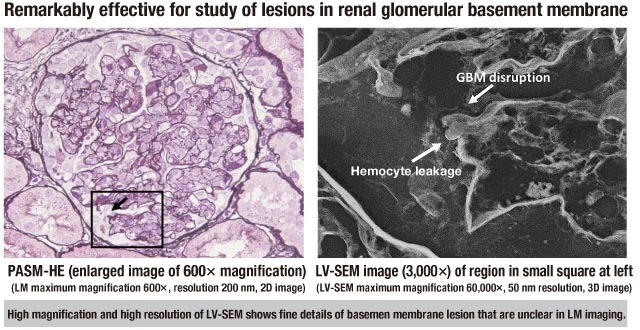
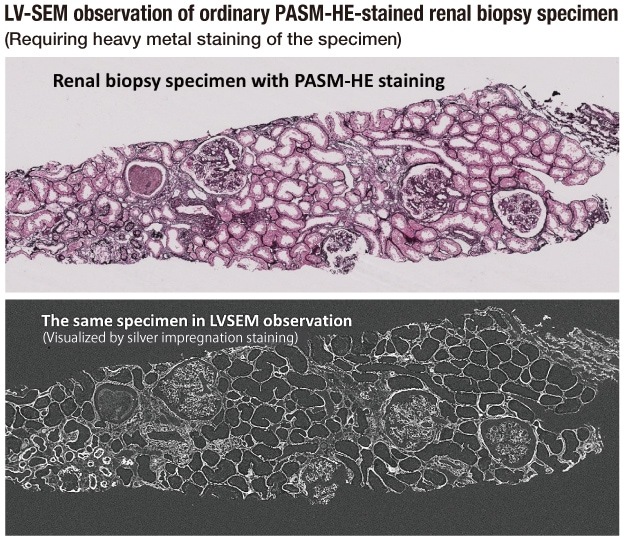
“Examination of the light microscopic slide of renal biopsy specimens by utilizing Low-vacuum scanning electron microscope”
Histopathological diagnosis is now widely practiced in addition to general clinical tests for the diagnosis of renal disease. In the established methodology, the kidney tissue obtained from the needle biopsy are cut into three pieces, two of them are small and processed for examination by immunofluorescent microscopy and by transmission electron microscopy (TEM). The large remainder portion is embedded in paraffin and finely sliced, a stained specimen for light microscopy (LM) is prepared, and the histological changes are examined. The information obtained from these three methodologies is consolidated for the pathological diagnosis of the renal biopsy specimen.
TEM is widely used for kidney tissue examination, but the use of scanning electron microscopy (SEM) for examination of renal biopsy has remained largely unexplored. Reports on its use for biopsy specimen are small in number, and generally limited to research studies, due to the complexity of the sample preparation and the restricted information only on the images of tissue surfaces.
With the recent development of tabletop low-vacuum scanning electron microscope (LV-SEM), a new observation method has been investigated by utilizing their magnification and resolution levels, which are substantially higher than those of LM. This new technology in LV-SEM is direct observable means of ordinary glass-slide LM specimens with no further treatment, and it also provides the possibility of histopathological examination in 3D level according to the LM specimen thickness. Establishment of the examination method using LV-SEM holds promise of enhancing the quality of pathological diagnosis. Here we present some of the results of our investigation on examination of renal biopsy specimens by using LV-SEM, which may serve as reference for further progress.
To read the full article, check out the following post !