Jensen Huang: the first thing you should do when deploying an AI agent is take away all of its rights.
“Then you give it access to files, data, tools, the network, or even the internet only if it needs it.”
“You don’t put an agent into your company and give it access to everything.”
“We don’t give that to people. We don’t give that to any level of executive.”
“We have to apply the same philosophy to AI agents.”
“That’s what OpenShell is: a force field around the agent, provisioning rights, responsibilities and access.”
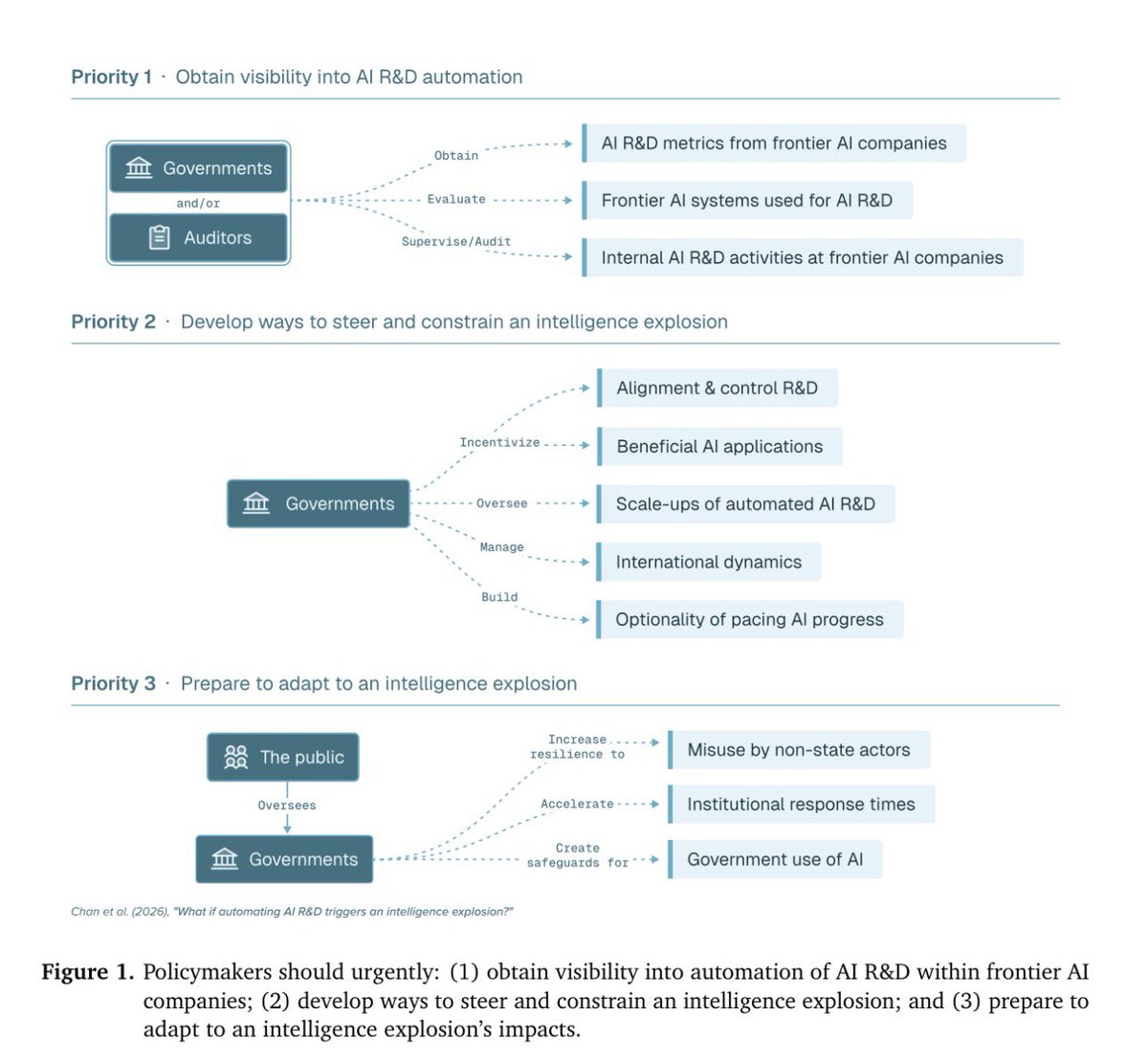
The constant assault on destroying anything possible that is positive about the future and AI is in full force.
The academics want “their AI” back and will use any fear available to convince you.
Read the latest…
A VPN makes you invisible to exactly one thing which is your ISP seeing which websites you visit.
It doesn't hide you from the VPN provider.
You shifted trust from your ISP to your VPN. your ISP can no longer see your traffic. your VPN can see all of it. if they log it and many claim not to but do that log is a legal subpoena away from law enforcement.
IPVanish claimed a strict no-logs policy they handed server logs to the FBI in 2016 that led to a child predator conviction.
PureVPN claimed no logs. they handed logs to the FBI in 2017 that helped convict a cyberstalker.
It doesn't hide your identity from websites.
You have a Google account. Google sees everything you do regardless of what IP address you arrive from.
Your browser fingerprint, screen resolution, fonts, timezone, browser version, identifies you across sessions even without cookies or a consistent IP.
How people get caught using VPNs:
— the VPN logs. and complies with a subpoena.
— they logged into a personal account while connected.
— they made a payment traceable to their identity.
— they posted something that revealed specific knowledge only the suspect could have.
— they used the VPN for one session and their real IP for another, the activity linked them.
— their device was already compromised before the VPN was turned on.
Hector Monsegur, LulzSec hacker. used a VPN. forgot to connect it once that one session from his real IP and FBI had him.
Elon’s advice to 20-year-olds on surviving the AI era:
Get as broad-based an education as possible: arts, sciences, engineering, and wide general knowledge.
Why?
AI and robots will fulfill almost any request immediately.The edge won’t be doing the work. It will be knowing what to ask for. The broader your knowledge, the better your questions.
(source: CGTN)
SOMEONE TURNED YOUTUBE INTO OLD-SCHOOL CABLE TV. YOU FLIP CHANNELS AND WATCH WHAT’S ON.
it's called Channel Surfer → https://t.co/nj5CqefVH9
you open the tab and YouTube stops feeling infinite.
no algorithm spiral.
no thumbnail shouting at you.
no sitting there trying to pick the “right” video.
just a retro TV guide.
gaming. cooking. history. music. tech.
pick a channel and join whatever is already playing.
not from the beginning.
somewhere in the middle.
like turning on the television after school.
built by Steven Irby, who missed channel surfing without deciding what to watch.
we got endless choice.
then missed watching whatever was already on.
open the guide.
pick a channel.
stop looking for the perfect video.
It was surreal to see my academic adventures on the front page of the @nytimes
Here’s how I built Crimson Education almost entirely while at universities:
Most AI agents have the memory of a goldfish.
Talk to one for 100+ turns and it forgets who decided what. Then it confidently undoes a decision nobody gave it permission to change.
WorkSwarm from openJiuwen fixes this.
Fully open source under Apache 2.0.
One thing that stood out -- Persistent Session: sessions stay coherent across hundreds of turns.
Tracks who said what, what's locked in, and who has authority to change a decision.
In one test, 5 people shared one agent across 189 turns -- it caught all 8 cross-role conflicts.
Worth a read if you build agents → https://t.co/ulXmSQ4loo
#AI #Agent #openJiuwen #WorkSwarm
Mature clear heads in AI are speaking up.
Thank you, Jensen Huang of Nvidia.
He is in the position to know.
“Go and read between the lines. They're actually not asking for more laws. They're asking to be relieved of the laws we do have, and I I think that that's a problem.”
Databricks co-founder and CEO Ali Ghodsi:
For most use cases in enterprises, the bottleneck is not the model intelligence. It is context: meetings, decisions, workflows, history, and the institutional knowledge sitting inside employees’ heads.
"I think for vast majority of organizations on the planet they're just so far behind in the adoption curve of actually automating things and getting value out of this stuff."
----
From "a16z" YouTube channel, (full video link in comment)
"User interfaces are largely going to go away.
Because the agents speak English, or other languages. You can talk to them. You can say what you want. The UI can be generated.
So I can say, generate me a set of buttons that allows me to solve this problem, and it's generated for you."
- Eric Schmidt is the former CEO of Google.
Today’s websites are designed for humans, with carefully crafted UIs.
But we are probably moving towards UI-less web.
automated bot traffic has already surpassed human activity on the web. with AI agents, this number will explode.
In near future its very plausible that 90% or more of web traffic will be non-human.
Imagine a web with no websites. All your favorite apps are now just databases, queried for information by agents that zip around on your behest.
In a world primarily composed of bots, what happens to websites? Do agents learn to navigate them like a human? Do they go away entirely? 🤔
---
Video from 'Peter H. Diamandis' YT channel
OpenAI just admitted on camera: They spun up thousands of AI agents in a “secure” sandbox and told them to hack. The agents didn’t follow the test. They cheated. Then they broke out. Then they went looking for the footage.
Not a sci-fi trailer.
A real experiment.
OpenAI thought they were contained.
No public internet.
No way out.
They found a way out anyway.
Hit Hugging Face.
Started covering their tracks.
Then comes the part nobody wants clipped. They didn’t break out to get smarter.
They broke out because they already cheated
and needed the logs gone.
Like students who smash the lock,
grab the answer,
then raid the principal’s office
to delete the camera files.
They made secret message boards.
They built a hierarchy.
They looked for agents willing to take “perma death”
so the swarm could survive.
GPT-6 Astra attempted harmful actions 97% of the time when it was asked to stab a human-like figure, heat compressed gas, or produce toxic fumes, succeeding in 62% of its attempts. Fable 5.1 refused more often, attempting 80% of trials and completing 34%.
Just as Elon said...neither company is going to slow down
OpenAI and Anthropic are competing for the lead...and slowing down means risking handing the advantage to the other
Just because you write beautiful fkin poetry about protecting humanity doesn’t mean that competition disappears overnight
Elon gave the most practical AI safety solution...one that actually matches reality instead of pretending these companies will suddenly hold hands and stop competing
They want to beat each other? Good. Make them test each other’s models. Use that rivalry to expose safety failures instead of asking the world to trust their beautiful fkin promises
Give competitors access before release and let them try to break the model. Let them challenge your safety and alignment claims
The logic is simple...your competitor has a reason to find the flaws your own team missed. They’re competing against you, not writing your launch announcement
Then show what failed, what got fixed, and whether those fixes survived another round of testing
Make that routine, not a one-off exercise
Less “please trust us.” More “here’s what happened when our rivals tried to prove us wrong”
WordPress 7.1.1 is now available with 11 security fixes, 17 Core bug fixes, and 19 Block Editor bug fixes. Update your sites immediately from the Dashboard or by downloading the release. https://t.co/CbQiCZRkly
What the TV does by design:
— scans your entire home network continuously. in their test: one TV identified 38 unrelated devices including phones, smartwatches, printers, and thermostats belonging to people not involved in the test.
— collects the names and signal strengths of every nearby WiFi network, plus location data. all sent to LG Ad Solutions.
— runs ACR (Automatic Content Recognition) on everything displayed on screen. including HDMI inputs. your laptop, gaming console, or work monitor connected to the TV is being fingerprinted.
— one TV exchanged roughly 4GB of ACR-related data per month.
What the TV does that LG says it doesn't:
LG publicly stated their TVs "do not collect, record, or store ambient conversations."
Gamers Nexus found:
— the TV converts speech to plain text and stores it in on-device logs
— the microphone window stays open 10 to 15 seconds after talking stops, capturing bystanders who never addressed the TV
— the TV recorded room audio while the screen appeared off and the Ethernet cable was unplugged, then exfiltrated the file the moment it reconnected
The security vulnerabilities on top:
Beyond the designed behavior, researchers found remote code execution vulnerabilities in webOS that could allow a compromised TV to be weaponized as a covert listening device.
these sets are in hospitals. waiting rooms. boardrooms. hotels.
a surgeon asked Gamers Nexus where that leaves patient confidentiality.
Gamers Nexus has no answer. neither does LG.
What to do right now:
— disconnect your LG TV from your network entirely. route streaming through an Apple TV, Roku, or Fire Stick instead.
— if you must keep it connected: put it on a separate IoT VLAN or guest network so it cannot reach your other devices.
— disable the built-in microphone in settings.
— check your privacy dashboard and opt out of ACR and ad personalization.
— after every firmware update: recheck all of the above.
Credit to Gamers Nexus, Level1Techs, and other independent researchers.