* The Economics of benefits *
This is the transcript of my video this morning, which challenges the whole idea most people have about the benefit of benefits.
------
If you ask the average politician about benefits, they will in some way or other imply that we are pouring money into a black hole and we've got to cut them, because that's the only way in which the government can balance its books, and apparently the government balancing its books is vital for economic growth.
All of that is complete and utter nonsense. The actual reality is that making benefit payments in the UK is one of the best ways that we have available to us to stimulate growth in this country. If Labour only understood that, they would never have got themselves into the mess they did around personal independence payments. They would never have had to fall out with their own party. They would never have looked like the fools that they now do. But they were totally confused by neoliberal myths. So let's talk about the economics of benefits.
Let's be clear. The benefits that are paid by the UK government do, almost entirely, go to poorer households, those who are in the bottom half of the income distribution overall.
Yes, some of them do go to people who have reasonable incomes because they are in situations where they need those benefits to be paid to them. For example, people who do have personal independence payments, who can work, but who nonetheless need to be assisted with the extra costs that their disability creates.
Nonetheless, though, however it is looked at, the vast majority of the benefit payments in the UK go to people on lower incomes. And if there's one thing that we know about people in the UK who are on lower incomes, it is that they have very few savings. Only 9% of UK wealth is owned by people in the bottom half of the income distribution. And as a consequence, what we know is that the vast majority of the money that they get month in, month out is spent by them and virtually straight away.
But that doesn't mean to say that the money that we pay them in benefits is wasted. Far from it, in fact, because the reality is that the moment the people who receive these benefits get them, they begin to spend them and they become someone else's income. The benefits that a person receives immediately begin to support somebody's job, somebody's business, or somebody's services. And understanding this is absolutely vital, because if we understand that benefit payments immediately become the income of people who are working inside the economy, what we can see is that benefit payments don't just support those who need them, but they support our businesses as well.
And what is more, they also support tax receipts because the moment that a person spends the money they receive by way of benefits, they'll do so with a business that will probably pay VAT as a consequence. It'll also pay corporation tax. And that business will then pay its staff, who will, as a result, pay income tax and national insurance. So the benefit payment gives rise to an almost immediate, significant tax flow back to the government. The money isn't lost. It's fueling government revenue.
But this isn't a process that happens once, because of course, once the staff who are paid by the business who receives the income that the benefit recipient had, have their net pay at the end of the month, they'll go out and start spending it, because they, most likely, will still be in that group of people in the UK who save very little. So they too will now be boosting the UK economy as a consequence, in effect, of the benefit payments which were paid to the person who paid it to the business that employed them, that then provided them with the opportunity to spend, and so the cycle goes on.
We do, in fact, create a virtuous cycle, which economists call the multiplier effect because this money goes round and round and round and round; okay, always in ever smaller amounts, because tax is paid on each and every cycle, but nonetheless, first of all, there's a boost, and a continuing boost to real incomes as a consequence of the benefits payment made to the first recipient, but secondly, tax is paid on every occasion when the money goes around in this cycle. And as a consequence, it could, if the cycle kept running, actually return to the government, all that it's spent by way of the benefits payment.
Benefit payments aren't, therefore, money poured into a black hole. They're just a way of actually generating economic growth for vastly more people than the recipient in the first instance, and also a way of guaranteeing that the government will, as a consequence of that growth, which is created as a result of the benefits payment, get as much back in tax as they probably spent.
Except, and here I have to add a caveat, except if the person who receives the money, which was originally generated as a consequence of the benefit payment to the first recipient who went on and spent it, if the person who receives that income then saves it. The person who saves the money they get as a result of the cycle that I've just described breaks the chain. They stop money going back into the economy. They stop the cycle from working. They stop there being new income for somebody else because they've kept the money for themselves. They've turned this live money, which is creating good things in the economy into dead money, which is precisely what savings are, they're money put aside and it's dead thereafter.
Now, neoliberals don't describe things this way. They say that we should, if we want to grow the economy, let the wealthy get as wealthy as possible, and then their money will slowly trickle down into the economy and that this will, as a result, make everybody richer. There's absolutely no evidence to support this absurd claim, because if you are rich and you get some more income, which is what the neoliberals say we should ensure that the rich do get, you save it. And when you save your money, nothing trickles down. All you do is just turn it into yet more dead money.
And that's what neoliberalism is all about. It's about capital accumulation for a few at cost to the many.
But if we start injecting money instead into the economy with those who are amongst the poorest benefit recipients, what we can guarantee is that we get the maximum payback on that money because it will circulate many more times before the wealthy get their hands on it, put it aside, and break the cycle of growth, which it gives rise to.
Far from wealth trickling down, the truth is that wealth in our economy floods upwards, and it is the accumulation of wealth by the wealthiest that actually prevents the reality that growth could be much larger than it is in the UK if only they didn't put money aside.
Now, what does that mean? We need to stop the wealthy from hoarding is the actual truth of the matter. Far from money being wasted on making payments to those in receipt of benefits, as most of the wealthy would claim, where money is wasted in the UK economy is by letting the wealthy have it, who then don't want to use it.
And that should be glaringly obvious. Leaving money with somebody who doesn't want to use it can never create new wealth because nobody's got it to spend. So as a consequence, what we need to do is, and let's be blunt about this, tax the wealthy more, redistribute to those on lower incomes, and as a consequence, that dead money, which the wealthy had, which we've now put back into circulation as a consequence of taxing them so that we can then manage the consequences of giving those on benefits more money to spend, that process will fuel growth.
Giving money to the wealthy won't.
Giving money to the poorest in our communities will.
Benefits are the way to make our economy stronger.
They're not about charity.
They're not about feeding black holes. They are literally about how our economy is kept running.
And it's the greed and ignorance of neoliberalism that has fueled the imaginations of politicians who actually believe all the nonsense that it has to say that is holding us back.
We can beat the problem of low growth and a stagnant economy, but we can only do it by taxing the wealthy more and by providing more income to those who do not have enough because they will spend it, and that will fuel our economy, and employment, and growth, and investment.
And what is more, and let's be clear about this, the government would even balance its books because the money would circulate for longer before it ended up in somebody's savings account, and as a result, government revenues as the proportion of GDP were rise, not because we increased tax rates, but simply because the money was allowed to circulate for longer.
The economics of benefit payments are the reverse of what we are normally told, but that's always true in macroeconomics, because macroeconomics normally runs the other way round from microeconomics, which is the economics of the household. And far too many of our politicians believe that the economics of the household are what should be applied to the management of the state.
They're not. If we only understood that if we feed money into the bottom of our economy, we get the maximum growth rate, but if we feed it into the top, we get the lowest possible growth rate, then we would have a better economy, a better society, and better off people. Why don't politicians want that? I wish I knew.
this clip is quite old, but anyone feeling surprised or shocked by today’s result clearly hasn't been paying attention. Obviously I'm biased, but my mate David had a clearer diagnosis of contemporary politics than anyone alive now.
How it works in 10 points with capitalism and power…
1. Privatise everything, including health and education… ensuring that the wealthy continue to benefit from both the most.
2. By keeping the masses from getting a decent education and healthcare for themselves and their families, without struggling to pay for both, you keep them chained to their jobs and compliant to the system.
3. Channel the frustration and resentment the masses feel at not being able to economically “progress” by blaming vulnerable people and immigrants, who make easy targets to distract from the powerful and greedy benefactors of the capitalist system. Encourage racism, hate, bigotry etc. Whatever works.
4. Make deals with violent and oppressive foreign powers, empower cruel or agressive leaders, escalate division and discredit/ undermine kindness, honesty, compassion and fairness with words like “woke” or “lefty”. This leads to chaos and confusion which you can exploit by bringing in draconian policies.
All of this fosters a useful atmosphere of hostility that’s easy to exploit.
5. Keep stripping the earth of natural resources. Make sure, when there is nothing left for the masses, that you have more than enough to last you many lifetimes while those around you starve.
6. Use clowns and charlatans to distract and make policies/ laws while those really in power remain in the shadows.
7. Confuse society further by blurring the distinction between truth and fiction, till no one is clear who to trust.
8. Makes heroes out of fools and fools out of heroes.
9. Pre-empt criticism of your malicious intent by accusing your victims of it first.
10. Take everything from those most in need with extreme prejudice.
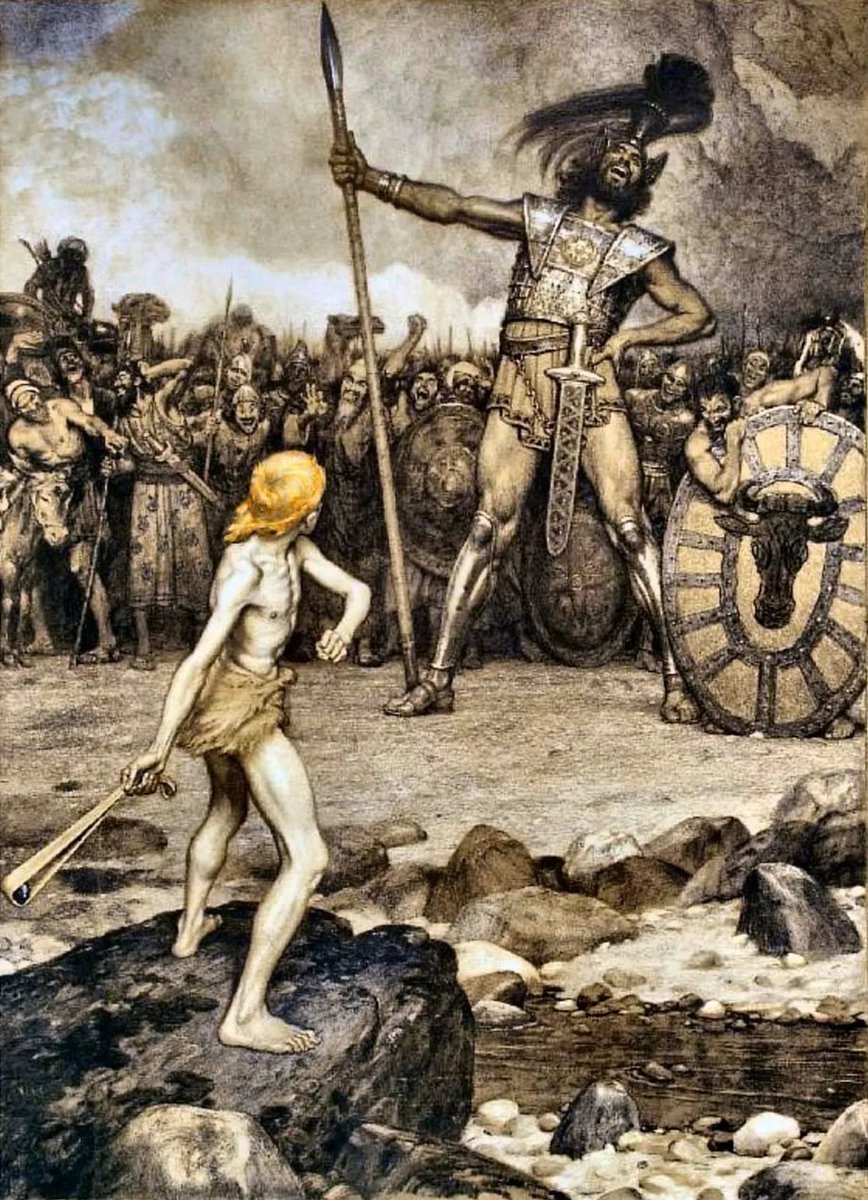
The kid on the left should have kept it all to maximise her self-interest,
& the kid on the right should have been inspired by inequality to aspire higher or be resigned to acceptance, not given a handout. Why do kids keep on failing this economics test? https://t.co/Hlr5uNgR4o
Sarah Cooper returns with "How to Boat."
He’s always given her a wealth of material to work with, but Trump’s bit about the shark/electric boat was probably just too hard for her to resist so she took his insanity and turned it into comedy gold...
RAF Squadron Leader Sidney McFarlane has a message to Sunak and Starmer. It’s Windrush Day tomorrow. The survivors deserve justice.
(Location: White Cliffs of Dover)
Here it is: I think it's some of the most important writing I have ever done.
What We Are Up Against.
Exposing the secret history of the making of the climate crisis should change everything about how we act to stop it.
https://t.co/NLWXK10MR6
1/ I’m an Israeli historian. My community is still too silent about the horrible war in Gaza. Over 8 months I’ve closely followed the war, reading >1000 articles and viewing >1000 videos/images of the war from all sides. My summary conclusions & full report are in the 🧵:
The Sunak ‘plan’ is to fund tax cuts by penalising those on benefits. Here’s what I wrote about this dreadful tactic ten years ago. I can’t believe we’re back here again. https://t.co/C9CmklQKVD