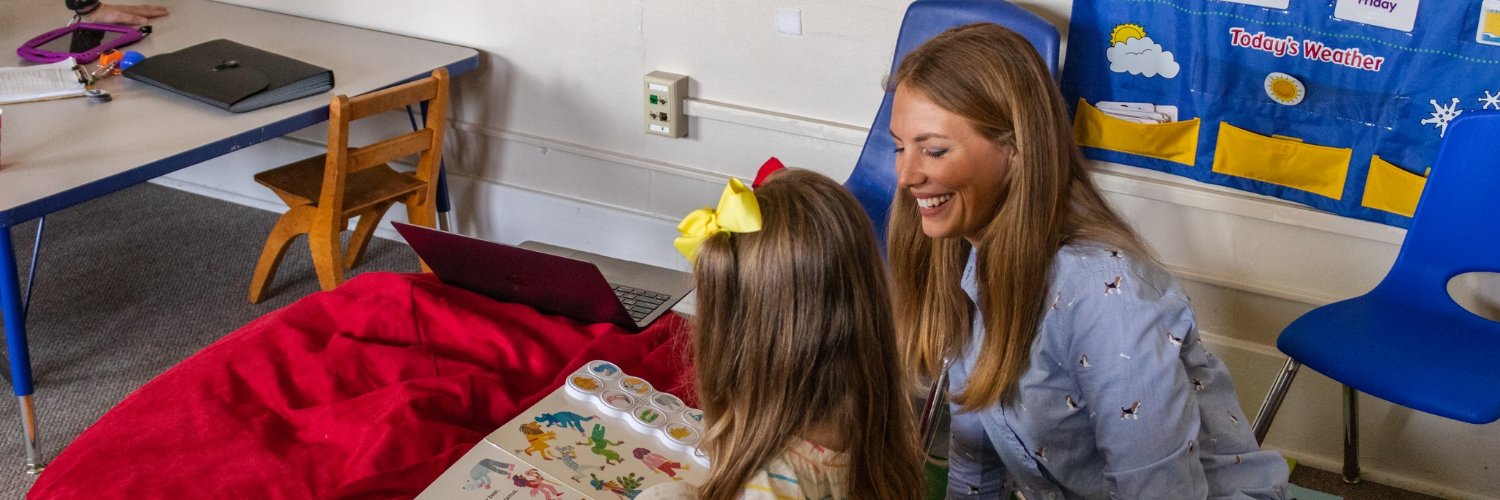
New study in @AACjourn details an intervention study using AAC to support children who are emerging symbolic communicators' participation in social routines
https://t.co/stdF3u0aMe
David McNaughton, Lance McLemore and Tracy Rackensperger (2025) describe how new approaches to AAC can support societal participation
Free at AAC journal
https://t.co/xVLbZNIBxi
@Communica1st@ISAAC_AAC@NARICInfo @Cekter_Employmt @AACjourn
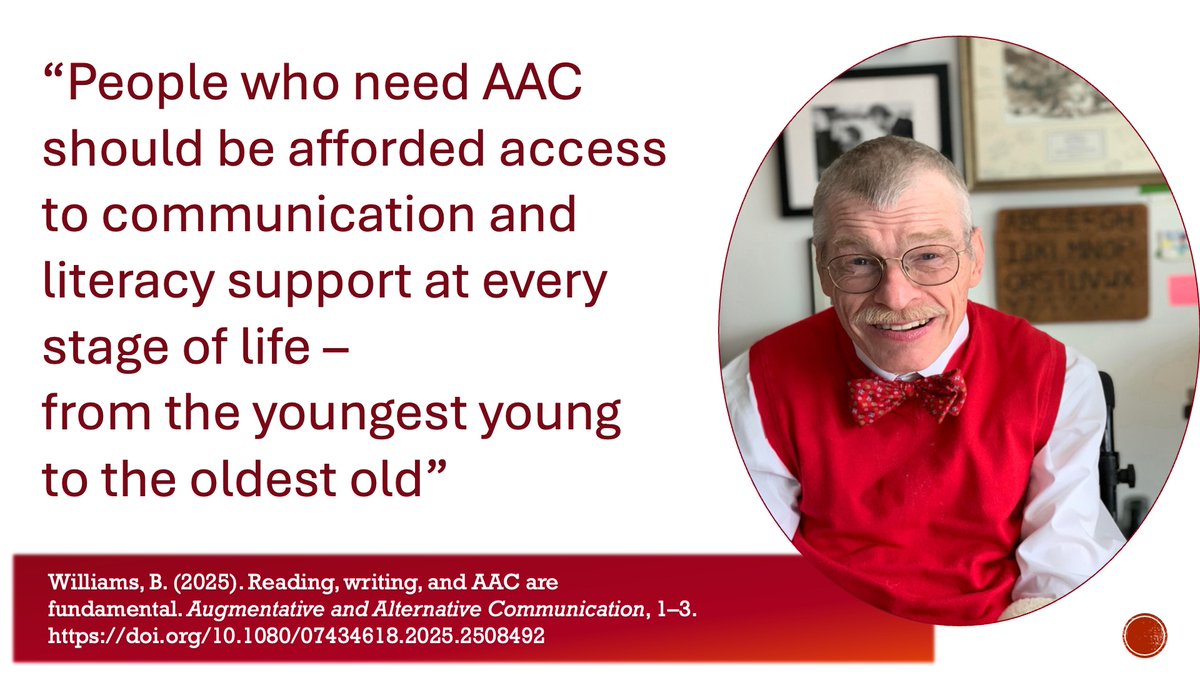
Bob Williams (2025) describes how “Access to language-based communication and literacy tools is essential to safeguarding and securing human and civil rights” and is especially important for those who use AAC @Communica1st@ISAAC_AAC@rrw1957@Comm_matters
Kevin Williams and Christine Holyfield (2025) describe new directions for innovation in AAC innovation, free at AAC journal
https://t.co/sBPlxJpcmu
@Communica1st@ISAAC_AAC@Holyfield_AAC
Alice Wong (2025) describes her use of AAC to combat ableism: "Nonspeaking people belong in public, holding court in conversations, doing our thing, our access needs respected, and being our full selves unapologetically" Free @AACjourn
https://t.co/xZfWwvD1nJ
@SFdirewolf
Read #OpenAccess "External challenges for individuals who need or use AAC who are learning language: lived experiences, key research findings, and future directions" https://t.co/mZGEKRVzMq
Dr. Lateef McLeod describes the impact of Ableism on people who use AAC, and strategies for moving the field of AAC forward.
Now free at the AAC journal
https://t.co/JSK6q7NXPk
Dr. Anjali Forber-Pratt describes how her experiences and academic work have shaped her belief in the importance of disability inclusion and representation in research.
Now free at the AAC journal #openaccess
https://t.co/HaMZziQDOT @communication1st
This paper addresses two main questions: "How well do existing alternative access methods meet users’ needs? And what is the best way to choose the “right” access method(s) for a given individual?"
Free at AAC journal
https://t.co/B552TyjCUo
@Communica1st@ISAAC_AAC
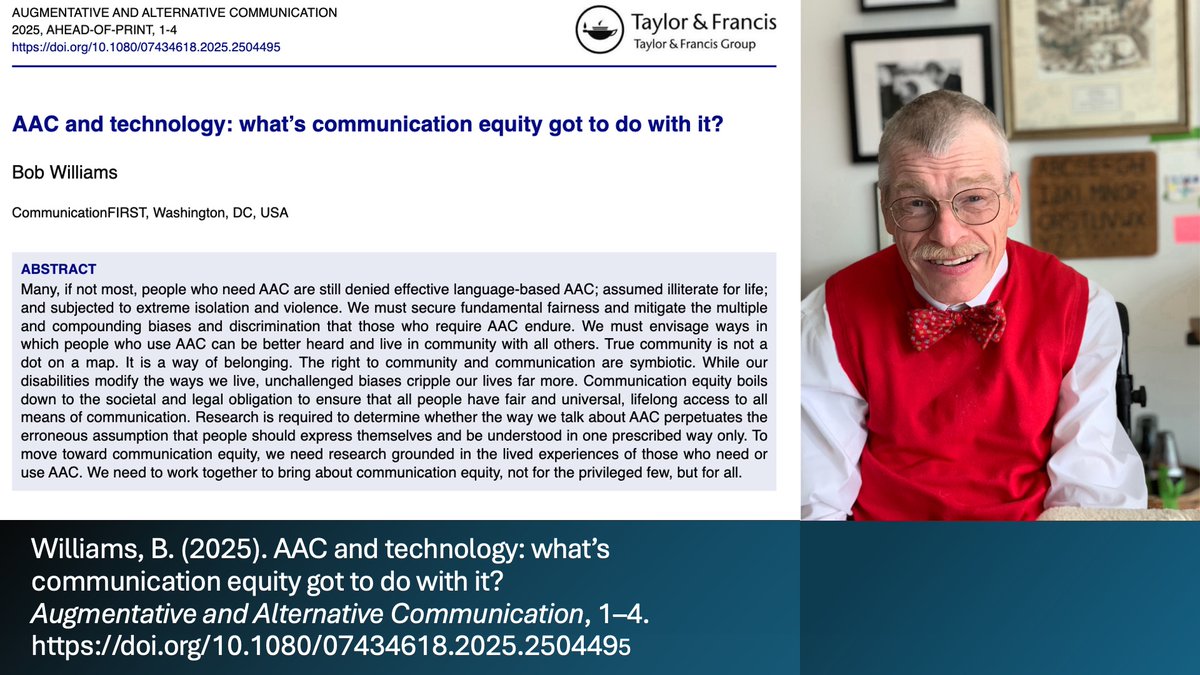
Bob Williams (2025) describes the need to “work together to bring about communication equity, not for the privileged few, but for all.”
Now free at the AAC journal #OpenAccess
https://t.co/VMn6QRbuJU
@Communica1st@ISAAC_AAC@NARICInfo
Godfrey Nazareth (2025) describes living with motor neuron disease and his creation of AAC technology that has helped him live life to the fullest.
Now free at the AAC journal #OpenAccess
https://t.co/BiIuno79iY
@Communica1st@ISAAC_AAC@NARICInfo
Melissa Crisp-Cooper (2025) :
“Life with a significant disability has taught me to be flexible, resourceful, creative, and empathetic.”
Now free at the AAC journal #OpenAccess
https://t.co/KtUR1G5uUW
@Communica1st@NARICInfo#AAC@ISAAC_AAC@AACjourn
Read freely available "Overcoming barriers to literacy for individuals who need or use AAC: lived experiences, key research findings, and future directions" https://t.co/w6Il0LGLxB
Clinicians and teachers, we hope this article might be useful as you consider providing literacy opportunities for individuals with extensive support needs who are in the emerging stages of learning language
This article from #ASHASIG12 shows how teachers and SLPs can use universal design for learning (UDL) principles to help emerging communicators who use AAC participate in language and word reading https://t.co/mqbeTTv0S4 @MGHInstitute@buslhs@UArkansas#AAC
Read the latest on how to create engaging literacy learning opportunities for children who use AAC, from @TimSLP @Holyfield_AAC and our own Alyssa Boucher @aroseboucher
This article from #ASHASIG12 shows how teachers and SLPs can use universal design for learning (UDL) principles to help emerging communicators who use AAC participate in language and word reading https://t.co/mqbeTTv0S4 @MGHInstitute@buslhs@UArkansas#AAC
Leveraging Communication Partner Speech to Automate Augmented Input for Children on the Autism Spectrum Who Are Minimally Verbal https://t.co/Dl9qvP8VCF "developed using a Wizard-of-Oz prototyping approach." Good seeing a much under-researched group are starting to figure more.