There's an entire criminal industry built around removing pollen from honey.
Why?
Because honey is one of the few foods on Earth that never spoils.
Archaeologists have opened sealed jars in Egyptian tombs after more than 3,000 years and found the honey inside still edible. No refrigeration. No preservatives. No packaging technology. Just a substance so hostile to decay that time itself can't break it down.
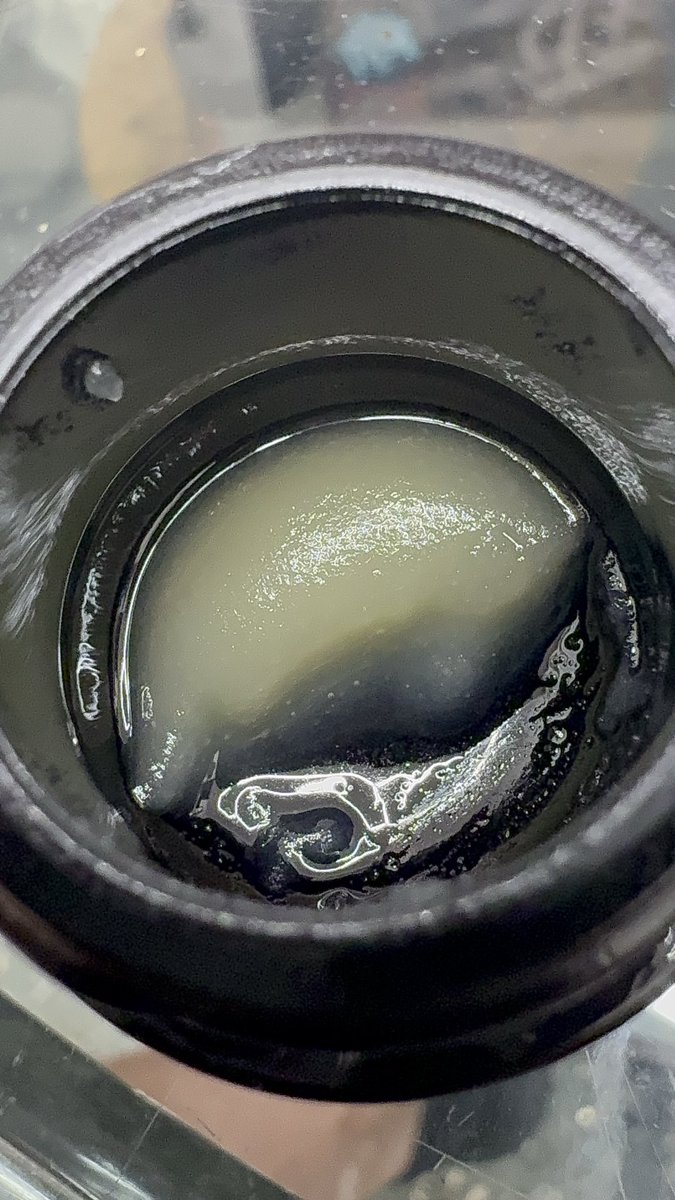
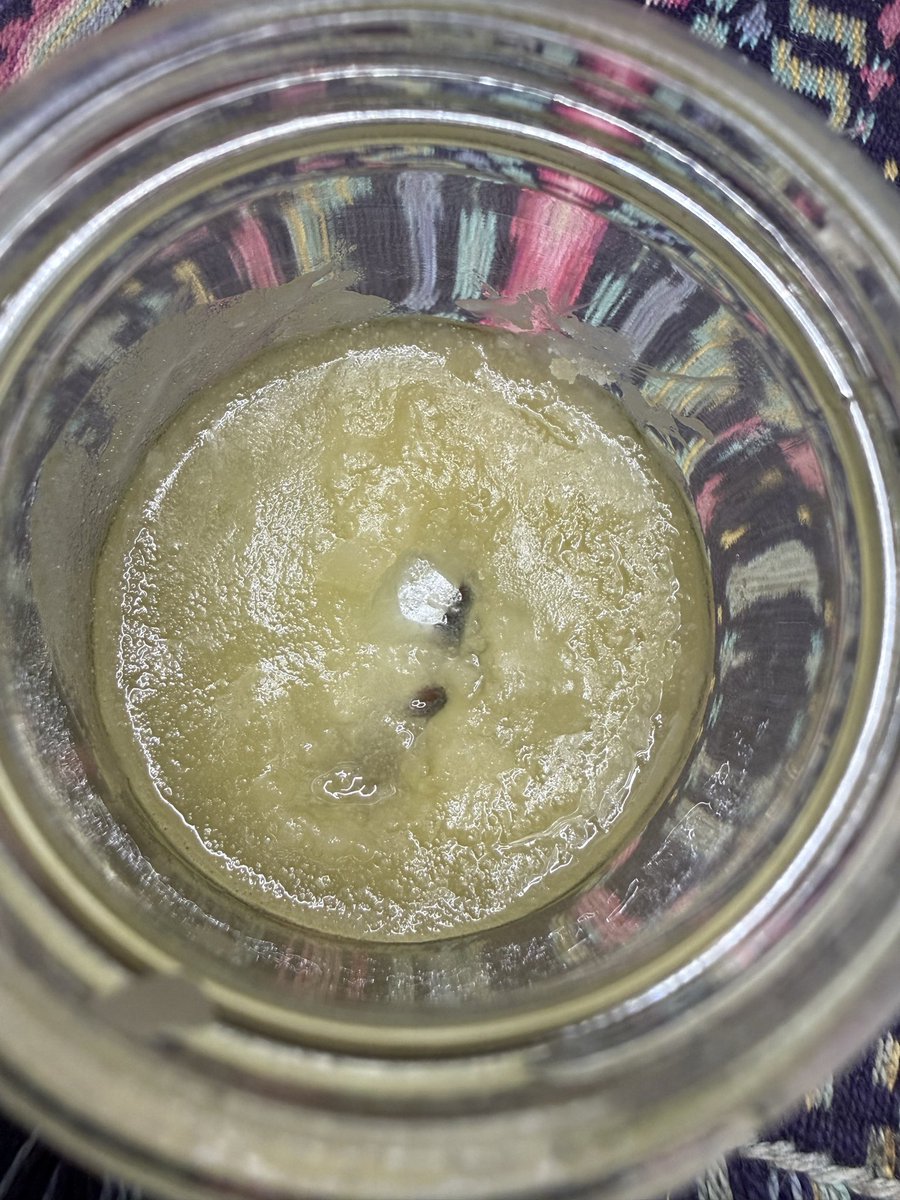
The reason connects directly to what's happening in that jar when the bubbles and pollen drift upward.
Honey is a supersaturated sugar solution holding only around 17 to 18 percent water. That tiny water content is the whole story. Bacteria and microbes need available water to survive, and honey is so dense with sugar that it physically pulls moisture out of any cell that touches it through osmosis. A bacterium landing in honey doesn't get infected by it. It gets dehydrated to death. On top of that, bees add an enzyme called glucose oxidase that slowly releases tiny amounts of hydrogen peroxide, and the whole substance sits at an acidic pH around 3.9. It's a chemical fortress disguised as breakfast.
Now look at what that density does to the clarification itself.
Honey is roughly 1.4 times heavier than water and absurdly viscous. When wax flecks, air bubbles, and pollen grains rise to the surface, that's not a small thing happening in a thin liquid. Those particles are clawing their way up through a medium so thick it barely flows. They rise because they're lighter than the honey around them, and the honey is so resistant to mixing that once they reach the top, they stay there in a clean layer the beekeeper can simply skim. The same property that makes honey immortal is the property that lets it filter itself. Density does the work that machinery would otherwise have to do.
This is why traditional beekeepers prize settling over forced filtration, and the distinction matters more than most people realize.
When honey clarifies naturally by rising and settling, the pollen comes up gently and can be skimmed without destroying the rest of what's in there. The honey keeps its enzymes, its aromatic compounds, its trace minerals, the living fingerprint of the flowers the bees actually visited. Heat it and force it through industrial micro-filters and you strip all of that out to make it look glassy and uniform on a supermarket shelf.
That stripping has a darker consequence almost nobody talks about.
Pollen is the only way to identify where honey actually came from. Every region's flowers leave a distinct pollen signature, and a trained melissopalynologist can look at the pollen in a jar and tell you the country, sometimes the very valley, it was harvested in. When commercial processors ultra-filter honey to remove every trace of pollen, they're not just changing the texture. They're erasing the honey's birth certificate.
This created an entire shadow industry called honey laundering. Cheap, often adulterated honey from countries facing import tariffs gets ultra-filtered until it's untraceable, then re-labeled as originating somewhere else entirely and sold at a premium. The pollen removal isn't a quality decision. It's an evidence-destroying one. Investigations have found that a startling share of honey on grocery shelves has had its pollen completely removed, which means there is no way to verify it's honey at all, or where it came from.
So the humble act of letting a jar sit while the bubbles rise is quietly the most honest thing that can happen to honey. The slow upward drift of pollen is the honey telling the truth about itself. Filtration, done violently, is how that truth gets deleted.
There's one more layer that makes this almost poetic.
Every gram of that honey represents bees visiting somewhere around 1,500 flowers, and a single worker bee will produce about one twelfth of a teaspoon in her entire lifetime. The pollen rising to the surface is the physical residue of millions of those flower visits. When you skim it gently and keep the honey whole, you're preserving a record of an ecosystem. When you blast it through a filter to make it pretty, you throw that record away.
A spoonful of raw honey isn't just sugar.
It's a sealed, self-preserving, self-clarifying archive of a landscape, written in pollen, built by insects, and capable of outlasting empires.