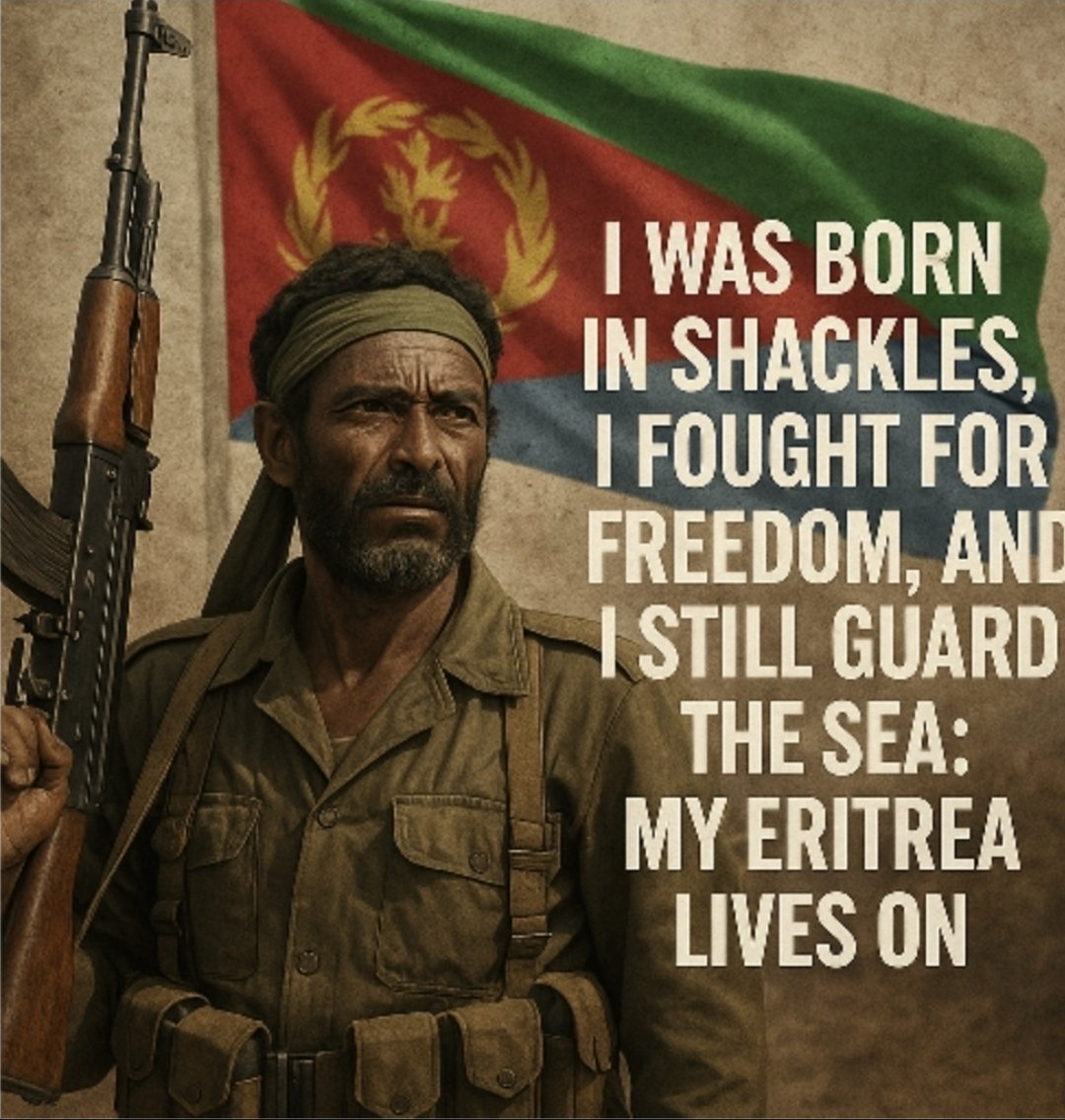
@BehiwotTilahun 😂😂😂 So tell me , isn’t it a wonder that a country you describe as “nothing” still makes headlines every day, and lives rent-free in your conversations morning and night? That says less about Eritrea, and more about Ethiopia’s habit of outsourcing its problems.
Eritrea’s Permanent Representative at the United Nations celebrated the 35th Independence Day anniversary on 20 May at the United Nations Headquarters in New York.
The celebration was attended by senior #UN officials, Permanent Representatives of various countries, Eritrean professionals working at the UN, and members of the press
#EritreaShineAt35
#Our_Resilience_Our_Guarantee
#ጽንዓትና_ዋሕስና
#ERITREA 🇪🇷 @AmbStesfamariam
ERITREA
35 years of sacrifice, resilience, and unity. From the mountains of Nakfa to the streets of Asmara and the shores of ASSAB, Eritrea stands proud and unbroken. A legacy written in courage, a future built on hope. 🇪🇷 #Eritrea#IndependenceDay#May24
General Sebhat Efrem is a nation’s living treasury, carrying institutional memory, struggle, and dedication that cannot easily be replaced.
Welcome back, Five-Star ⭐⭐⭐⭐⭐ General. Your experience, resilience, and service remain deeply valued and appreciated by #Eritreans.
🇪🇷
Habtish, you are so delusional and childish little kindergarten element. Shabia never ever publishes such a letter , let alone a statement signed by its president. You are confusing Eritrea with OROMUMA, BENSHANGULMA, OR ABYUMAMA. We act silently, diligently and strategically like a BLACK MAMBA,final result is deadly fatal. Watch what will unfold, mark my words!!!!.
😂😂😂Operation: Hollywood Red Sea Edition” 🍿😂😂
Habtish the great, so now the plot is: Washington, Tel Aviv, satellites, secret maps, sanctions, Assab, and probably Batman too?
Every six months, you produce a new cinematic universe where Eritrea’s ports are apparently one diplomatic handshake away from being “grabbed.” Meanwhile, reality keeps interrupting the fantasy.🤣🤣
Assab is not a free sample at Costco.
It is sovereign Eritrean territory, defended by people who survived annexation, war, sanctions, isolation, and endless predictions of collapse.
The same country that defeated your much larger armies with sandals, discipline, and determination is now supposed to surrender its ports because someone read a geopolitical fan fiction on Facebook? 😂😂😂😂😂😂
The funniest part is the “lifting sanctions is bait” theory.
Brother, at this point even fish are refusing that bait. Every time Eritrea breathes diplomatically, some people immediately start seeing secret underwater NATO submarines heading to Assab.
Relax. The Red Sea is not a Netflix series where Ethiopia unlocks a “sea access expansion pack” after completing side missions.
Ports are obtained through cooperation, trade, and mutual respect.
Not through nostalgic daydreams, conspiracy theories, and PowerPoint geopolitics.Operation
STRATEGIC BRIEF: ERITREA'S
RESOURCE POTENTIAL
( Dr. Daniel Araia Zeggai)
Geopolitical Leverage and Economic Rebuttal
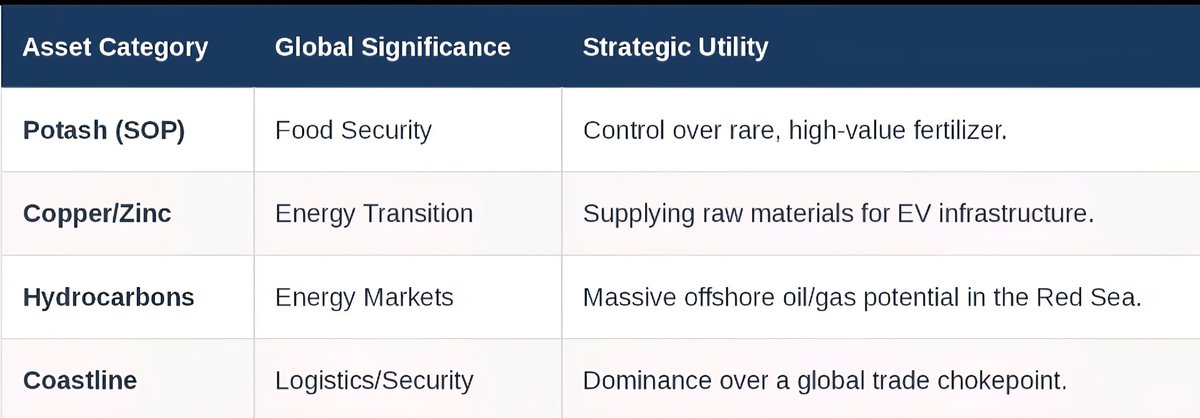
The assertion that Eritrea lacks negotiable value due to economic isolation is a strategic misconception. In a transactional global landscape, Eritrea possesses critical "currencies" in the form of maritime chokepoint control, rare mineral wealth, and untapped energy reserves. This brief outlines the four pillars of Eritrean strategic potential.
1. The Potash Frontier: Global Food Security
Eritrea sits atop the Danakil Depression, hosting some of the world's most accessible deposits of Sulphate of Potash (SOP). Unlike common Muriate of Potash, SOP is chloride-free and essential for high-value agricultural exports.
• The Colluli Project: Identified as one of the lowest-cost SOP projects globally with a multi-decade mine life.
• Diplomatic Leverage: As global food security becomes a primary national security concern for many nations, Eritrea's role as a tier-one fertilizer exporter provides immense bargaining power.
2. Mineral Wealth & The Green Transition
Situated on the Nubian-Arabian Shield, Eritrea’s geology is rich in base and precious metals critical for the 21st-century economy.
Key Assets: Copper and Zinc (essential for Electric Vehicles and renewable grids), alongside significant Gold and Silver reserves providing hard-currency stability.
3. Red Sea Hydrocarbons: The Energy Frontier
The Eritrean Red Sea remains one of the world's last underexplored hydrocarbon provinces. Geological data, including the 1969 gas blowout at the C-1 well, confirms an active, high-pressure petroleum system.
Strategic Advantages:
• Salt Seal Protection: Extensive evaporite layers provide a "cap" for vast potential reservoirs.
• Proximity to Market: Unlike landlocked oil, reserves here sit directly on global shipping lanes, eliminating transit risk and pipeline fees.
4. Maritime Geostrategy
With over 1,000 km of coastline and oversight of the Bab-el-Mandeb Strait, Eritrea is the gatekeeper of a corridor carrying 10-15% of global maritime trade. The deep-water ports of Massawa and Assab are non-disposable assets for regional logistics and international security interests.
Conclusion:
Eritrea's "isolation" is not a sign of a crumbling state, but rather a reflection of a controlled, transactional approach to its high-value resources. The nation holds critical cards in the global race for resource and maritime security, making it a pivotal partner for those navigating a resource-constrained world.
Summary of Strategic Assets
Strategic Patience vs. Ideological Inconsistency
The Wall Street Journal recently reported that the United States is actively seeking to reset and restore diplomatic ties with Eritrea, a strategically vital state on the Red Sea. This potential shift includes steps toward lifting long-standing sanctions, driven by America's strategic need to counter Iranian influence and address escalating maritime threats.
The report highlights Eritrea's 1,100-kilometer coastline as a critical bulwark in the current global power struggle over the Horn of Africa.
It is unsurprising that some observers perceive this major development as a "collapse of principle," yet such a view overlooks the fundamental nature of Realpolitik. Diplomacy is not a static declaration of permanent enmity; rather, it is a fluid response to shifting global security architectures and evolving national interests.
1. Recognition of Strategic Value, Not "Validation"
The excitement observed is not necessarily a "thirst for Western approval," but rather a validation of Eritrea’s long-term strategic positioning. For decades, Eritrea has maintained that its geography—specifically its 1,100-kilometer Red Sea coastline and the Dahlak Archipelago—is a cornerstone of regional stability.
If Washington is now seeking a "reset," it is a tacit admission that the previous policy of isolation failed to achieve U.S. objectives in the Horn of Africa. From a diplomatic perspective, Eritrea hasn't moved; the U.S. has recalculated its interests in light of:
The Houthi threat to global shipping.
Growing Iranian and Russian influence in the Bab el-Mandeb strait.
The limitations of existing partnerships in the region.
2. Self-Reliance as a Survival Strategy, Not a Choice
The "tired mantra" of self-reliance was less a rhetorical choice and more a functional necessity. When a state is placed under a sanctions regime and denied access to international financial systems, "self-reliance" becomes the only viable path to maintaining sovereignty.
Celebrating a potential lift of sanctions is not a betrayal of those principles; it is a recognition that the "fortress" strategy successfully weathered the storm until the international community was forced to return to the negotiating table. In diplomacy, surviving isolation is often the prerequisite for negotiating from a position of strength.
3. Mutual Interest vs. "Lifelines"
To frame a reset as a "lifeline" for Eritrea ignores the asymmetric desperation often present in these overtures. The U.S. is currently facing a "scramble for Africa" where its influence is being actively challenged by the BRICS+ bloc.
Eritrea’s refusal to "kiss ass" (to use the critic's term) in the past is exactly what makes its potential cooperation valuable now.
Normalization is a two-way street: the U.S. gains a bulwark against Iranian influence and a strategic maritime partner, while Eritrea gains economic decompression. This is a standard transactional diplomatic exchange, not a moral surrender.
4. Sovereignty and Evolution
True sovereignty is the ability to engage with the world on one's own terms. If the Eritrean government engages with the U.S. now, it does so as a state that did not collapse under decades of pressure. To suggest that "true sovereignty doesn't flip with headlines" ignores that sovereign states must evolve. China’s "Ping-Pong Diplomacy" in the 1970s wasn't a betrayal of its revolution; it was a masterclass in using a shift in headlines to change a nation's trajectory.
Conclusion
The shift in tone is not a sign of "emptiness," but a sign of diplomatic maturity. Ideology serves to unify a nation during times of external pressure; diplomacy serves to advance a nation’s interests when the pressure begins to thaw. If a "reset" occurs, it will be because both Asmara and Washington realized that the status quo of the last 20 years served neither party’s long-term security interests in the most volatile corridor of global trade.
Rebuttal: Strategic Patience vs. Ideological Inconsistency
Dear HABTISH, your characterization of Eritrea’s potential re-engagement with the United States as a "collapse of principle" overlooks the fundamental nature of Realpolitik. Diplomacy is not a static declaration of permanent enmity, but a fluid response to shifting global security architectures.
I herby invite you to analyse the following strategic points from the perspective of current geopolical context .
1. Recognition of Strategic Value, Not "Validation".
The excitement observed is not necessarily a "thirst for Western approval," but rather a validation of Eritrea’s long-term strategic positioning. For decades, Eritrea has maintained that its geography—specifically its 1,100-kilometer Red Sea coastline and the Dahlak Archipelago—is a cornerstone of regional stability.
If Washington is now seeking a "reset," it is a tacit admission that the previous policy of isolation failed to achieve U.S. objectives in the Horn of Africa. From a diplomatic perspective, Eritrea hasn't moved; the U.S. has recalculated its interests in light of:
The Houthi threat to global shipping.
Growing Iranian and Russian influence in the Bab el-Mandeb strait.
The limitations of existing partnerships in the region.
2. Self-Reliance as a Survival Strategy, Not a Choice.
The "tired mantra" of self-reliance was less a rhetorical choice and more a functional necessity. When a state is placed under a sanctions regime and denied access to international financial systems, "self-reliance" becomes the only viable path to maintaining sovereignty.
Celebrating a potential lift of sanctions is not a betrayal of those principles; it is a recognition that the "fortress" strategy successfully weathered the storm until the international community was forced to return to the negotiating table. In diplomacy, surviving isolation is often the prerequisite for negotiating from a position of strength.
3. Mutual Interest vs. "Lifelines".
To frame a reset as a "lifeline" for Eritrea ignores the asymmetric desperation often present in these overtures. The U.S. is currently facing a "scramble for Africa" where its influence is being actively challenged by the BRICS+ bloc.
Eritrea’s refusal to "kiss ass" (to use the critic's term) in the past is exactly what makes its potential cooperation valuable now.
Normalization is a two-way street: the U.S. gains a bulwark against Iranian influence and a strategic maritime partner, while Eritrea gains economic decompression. This is a standard transactional diplomatic exchange, not a moral surrender.
4. Sovereignty and Evolution.
True sovereignty is the ability to engage with the world on one's own terms. If the Eritrean government engages with the U.S. now, it does so as a state that did not collapse under decades of pressure. To suggest that "true sovereignty doesn't flip with headlines" ignores that sovereign states must evolve. China’s "Ping-Pong Diplomacy" in the 1970s wasn't a betrayal of its revolution; it was a masterclass in using a shift in headlines to change a nation's trajectory.
Conclusion
The shift in tone is not a sign of "emptiness," but a sign of diplomatic maturity. Ideology serves to unify a nation during times of external pressure; diplomacy serves to advance a nation’s interests when the pressure begins to thaw. If a "reset" occurs, it will be because both Asmara and Washington realized that the status quo of the last 20 years served neither party’s long-term security interests in the most volatile corridor of global trade.
Dear HABTISH, it is helpful to view these developments not as a victory of one side over another, but as a significant shift in the regional security landscape that warrants a strategic, rather than purely emotional, response.
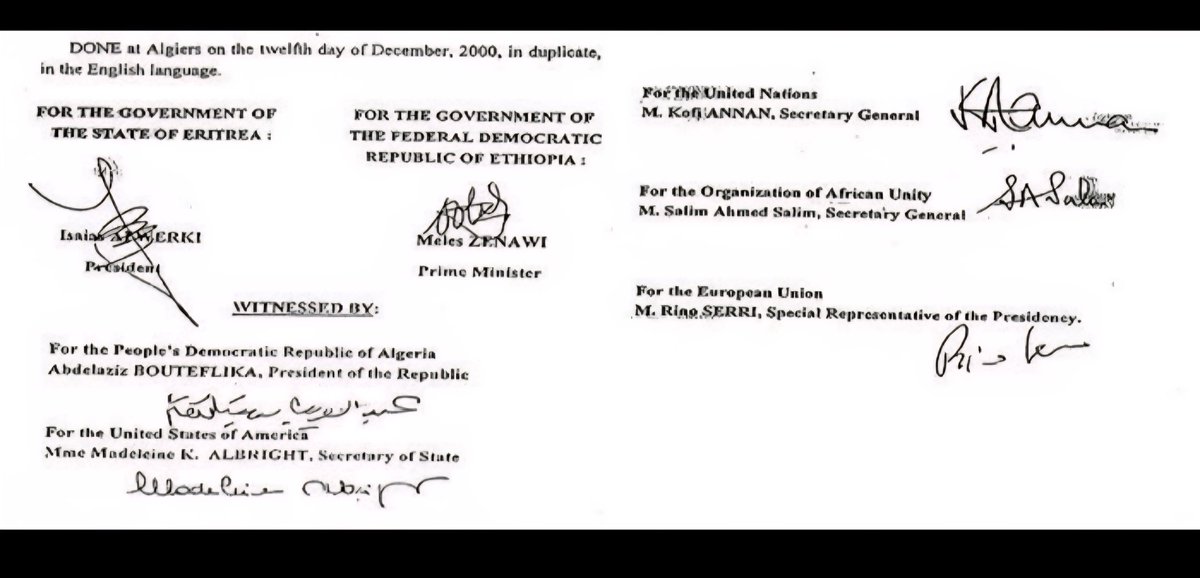
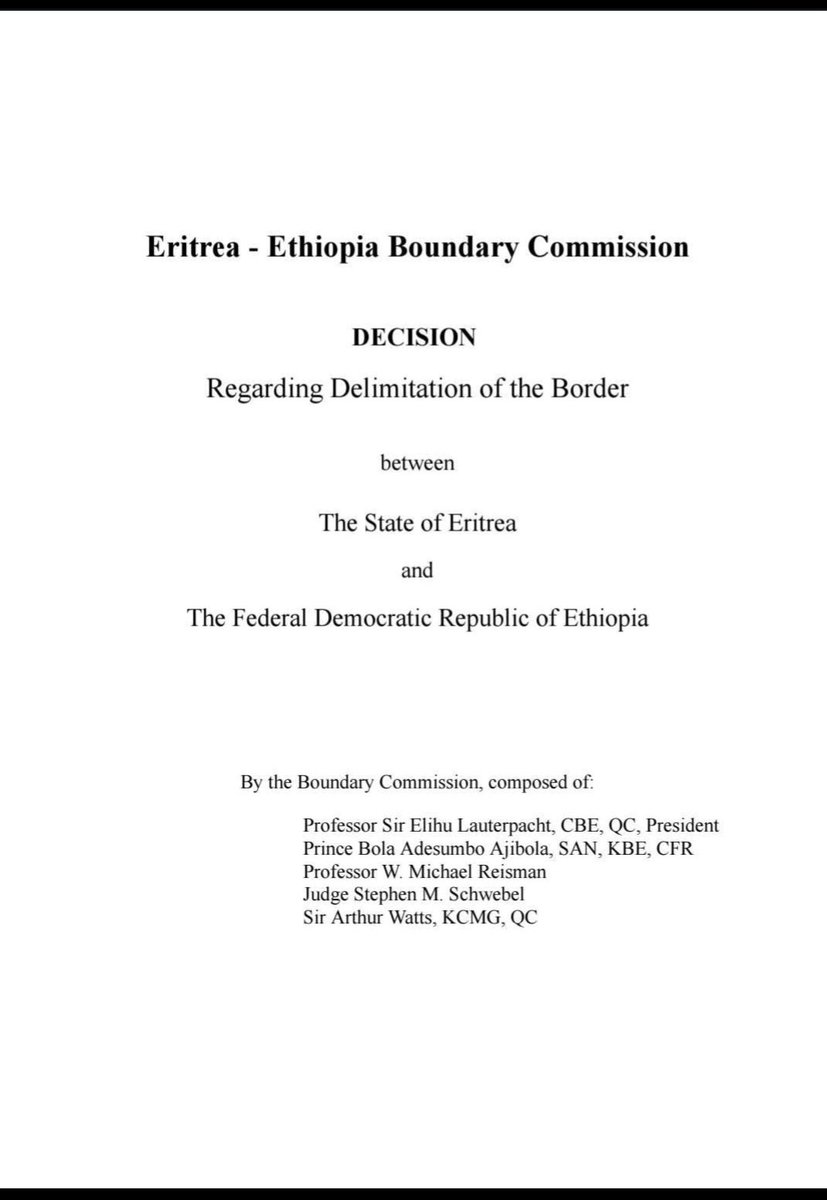
THE PATH OF INTERNATIONAL LAW: REFLECTING ON THE EEBC DELIMITATION DECISION .
The pursuit of lasting peace between nations often rests upon the foundation of definitive legal frameworks and the courage to uphold mutual agreements.
A pivotal moment in this journey occurred on April 13, 2002, when the Eritrea-Ethiopia Boundary Commission (EEBC) delivered its delimitation decision in The Hague. This ruling, rendered as "final and binding" under the terms of the Algiers Agreement, represented a critical step toward resolving one of the most complex territorial disputes in East Africa.
A FRAMRWORK OF STABILITY
By awarding the town of Badme to Eritrea, the Commission adhered to a rigorous interpretation of historical colonial treaties and international legal precedents. While territorial adjustments are inherently sensitive, the commitment to an independent, third-party arbitration mechanism offers a way forward that transcends political cycles. Embracing the EEBC’s findings is not merely about a specific plot of land; it is about affirming the following principles:
● Sanctity of Treaties: Respecting the Algiers Agreement strengthens the integrity of international mediation.
● Predictability: A clearly defined border provides the necessary certainty for cross-border cooperation and regional economic integration.
● Conflict Prevention: Adherence to "final and binding" decisions serves as a safeguard against the
resurgence of cycle-based hostilities.
TOWARDS A SHARED FUTURE
The decision of April 13 remains a cornerstone for those seeking a relationship defined by diplomacy rather than defense. Acknowledging the legal reality of the Badme award allows both nations to pivot toward their most pressing shared challenges:
● regional security,
● sustainable development, and
● the prosperity of their citizens.
True leadership is often found in the quiet adherence to the rule of law. By honoring the EEBC’s delimitation, the international community and the involved parties reinforce the idea that peace is best secured through the consistent application of justice and the shared respect for sovereign boundaries.
Moving forward with the implementation of such decisions is the most viable path toward a stable and harmonious Horn of Africa.
On April 13, 2002, the #Eritrea-#Ethiopia Boundary Commission (EEBC), based in The Hague, issued its "Final and Binding" delimitation decision regarding the disputed border, notably awarding the town of #Badme to Eritrea.
Breaking News: Landlocked & Loaded! !!!!
😂😂😂 First off, I have to extend a massive thank you to our beloved HABTISH for his ever-increasing entertainment skills; honestly, at this rate, you’ll be winning a Pulitzer for Fiction or a Netflix comedy special by the end of the week.
Your latest scoop is a masterclass in geographical defiance.
Hold onto your life vests, folks, because we have reached peak geopolitical fan-fiction.😂😂😂
According to "trusted sources" (who I assume are currently hallucinating in a desert), Ethiopia,a country famously lacking a single drop of coastline, is buying five warships from Azerbaijan, a country whose navy is essentially trapped in the giant, salty lake we call the Caspian Sea.😂😂
Here is why this "Major Development" is actually a major comedy routine:
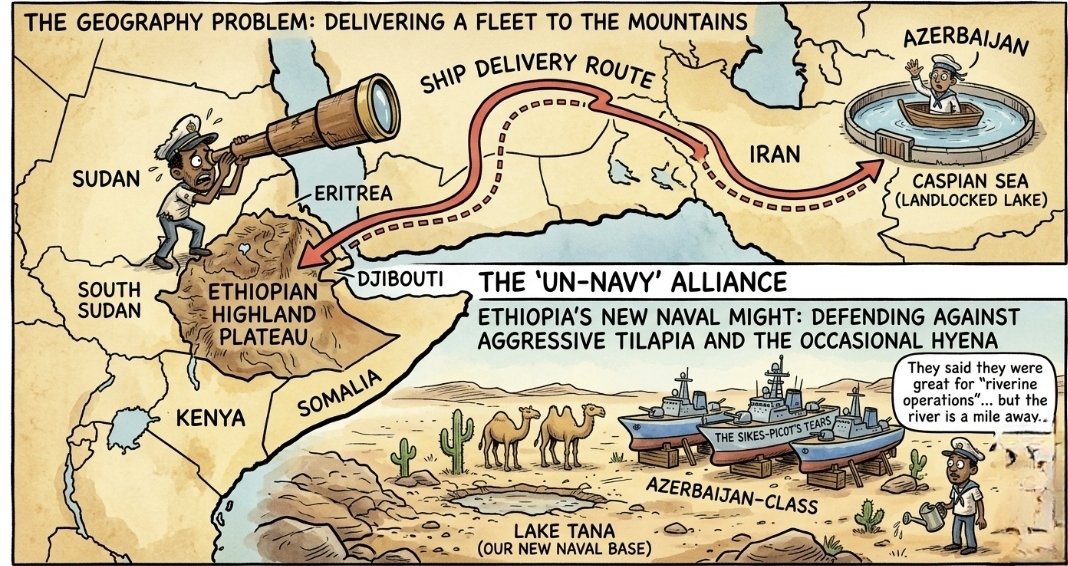
● The Geography Problem: For this fleet to reach Ethiopia, these ships would need to develop legs and walk across several countries, or Ethiopia is planning to deploy them in the Great Renaissance Dam’s reservoir to defend against aggressive tilapia.🤣🤣
● The Caspian Cul-de-Sac: Azerbaijan’s navy is "landlocked" in the Caspian Sea. To get these ships to Ethiopia, they’d have to be disassembled, put on trucks, driven through the mountains, and reassembled, at which point, buying a boat from a country with an actual ocean starts to look like a much better Groupon deal.
● Strategic Genius: This is like Switzerland buying a submarine from Mongolia. It’s not a "strategic acquisition"; it’s a very expensive way to confuse every satellite operator on the planet.
Unless Ethiopia is planning to annex the Red Sea by Tuesday or Azerbaijan has invented a "Teleportation Prow," this deal has a 0% chance of floating.
But hey, maybe they’re just really big fans of The Hunt for Red October and wanted some very expensive lawn ornaments?😂😂😂🤣😅
From Landlocked to Lifeguard: The Red Sea’s Most Ambitious Job Application”.
😂😂😂 the four horsemen of justification , history, international law, geography, and security , have apparently convened and unanimously agreed… that a landlocked country must deploy a navy into someone else’s sea.🤣🤣🤣🤣
Let’s unpack this masterpiece fiction :
● Geography: The Red Sea politely checks the map and asks, “Ethiopia… remind me again where you park your ships?”
● International Law: UNCLOS quietly clears its throat and says, “Access? Yes. Patrol? Kindly sit down.”
● History: Last time Ethiopia had a coastline, cassette tapes were still trending.
● Security: Nothing reassures coastal states more than a neighbour showing up uninvited with warships and vibes.
This is like someone losing their house keys, then insisting they must now patrol the entire neighbourhood for “security reasons.”
And let’s not forget , the last time Ethiopia tried to project maritime power, a certain liberation movement, which was the nightmare of the Ethiopian government , with speedboats turned it into a 72-hour crash course in naval humility.
So no, the Red Sea is not a group project where Ethiopia suddenly volunteers to be class monitor.
Access through cooperation? Absolutely.
Commandeer the coastline? That’s not strategy , that’s fan fiction with a uniform.
“Red Sea Empire: Sunk by Speedboats in a Long Weekend”
😂😂😂 The legendary “guardians of the Red Sea” narrative, patrolling from horizon to horizon… until reality clocked in for a 72-hour shift in 1991.
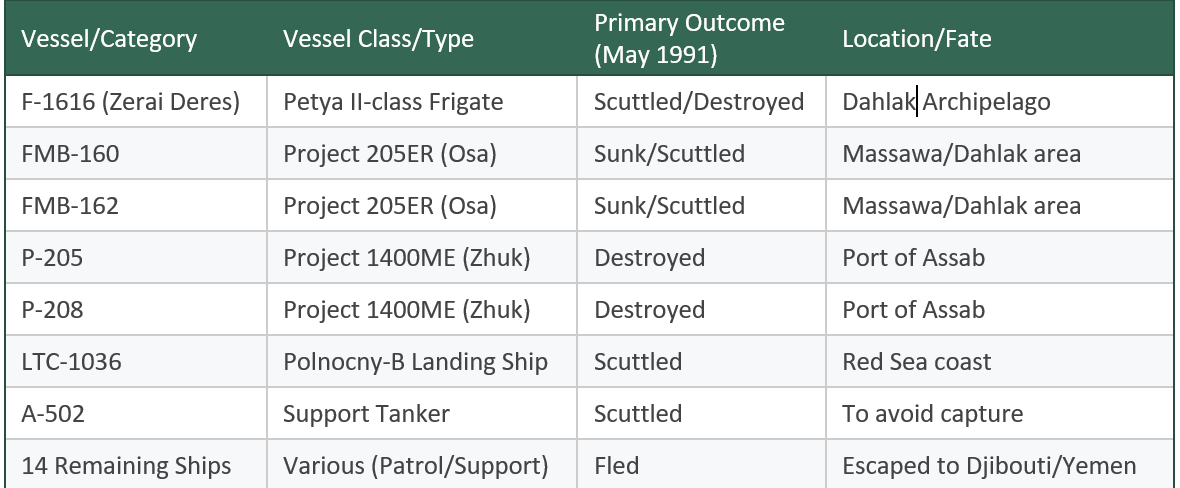
Let’s not romanticise this into a Netflix epic. The same “formidable force” you’re praising was dismantled during Operation Fenkil by the EPLF using, brace yourself, small, fast attack boats, decentralised tactics, and actual strategic coherence. Not aircraft carriers. Not blue-water dominance. Speedboats.
In less time than a long weekend, the myth of maritime supremacy sank faster than its own vessels😂😂😂
If regional security was truly “maintained,” it raises an obvious analytical question:
How does a force responsible for securing an entire sea and ocean collapse so decisively against a materially inferior, asymmetrical opponent?
From an international military doctrine perspective, Fenkil is a textbook case of:
● Agile asymmetric warfare outperforming conventional rigidity
● Local intelligence and motivation beating overstretched command structures
● Operational adaptability crushing legacy assumptions of dominance
In simpler terms:
You can’t claim to “secure the Red Sea” if your navy gets outmanoeuvred by guerrilla sailors with speedboats and discipline.
History isn’t nostalgic, it’s empirical.
And in this case, the data point is clear:
72 hours. Game over.
THE 1991 ETHIOPIAN NAVAL DISINTEGRATION FACT SHEET
@Habtishgreat MEDIATION ABOUT WHAT?????
WE ARE VERY MUCH BETTER OFF WITHOUT YOU HABTISH!!!
JUST MIND YOUR BUSINESS AND KEEP YOUR LANE.
HABTISH'S GHOST SOURCES ARE REALLY AMAZING😂😂😂😂😂😂
@ethiopiansone Back-off, mind about your Ethiopianism, keep your lane and mind your business. We don’t want or need you. We are much better off without you.