Keelhauling was a form of punishment specifically associated with naval discipline, used from the late Middle Ages into the 19th century.
Origin and Use:
Keelhauling originated in the Dutch Navy and later was adopted by other European navies. It was primarily used to punish sailors for various offenses, including dereliction of duty, insubordination, and theft.
The Process:
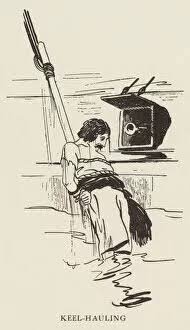
The condemned sailor was tied with a rope that looped beneath the vessel, effectively passing under the keel. Then, the sailor was thrown overboard and dragged under the ship's bottom, from one side to the other. This process could be repeated multiple times.
Dangers and Injuries:
Keelhauling was extremely dangerous and often fatal. The victim could drown or succumb to injuries caused by barnacles and other sharp objects attached to the ship’s hull, which could cause severe lacerations.
Purpose:
Beyond punishment, keelhauling served as a deterrent to other crew members. The public and brutal nature of the punishment underscored the seriousness of maintaining discipline aboard ships.
Decline and Abolition:
The practice was eventually seen as too cruel and inhumane, leading to its decline and eventual abolition. By the 19th century, as naval discipline evolved, keelhauling was largely phased out in favor of other forms of punishment.
Cultural Impact:
Keelhauling has entered popular culture as an epitome of brutal naval punishment, often depicted in historical and fictional accounts of pirate and naval life.
Keelhauling is remembered today as a symbol of the harsh conditions and strict discipline that characterized life at sea in earlier centuries, and its discontinuation reflects the broader evolution towards more humane disciplinary practices
Florencio Roque Fernández, known as the "Argentine Vampire," carried out a series of unsettling crimes that were unique in their nature and execution.
Central to his modus operandi was the act of watching his victims as they slept, a behavior that contributed significantly to his notoriety and the public's fear.
Florencio Roque Fernández, known as the "Argentine Vampire," carried out a series of unsettling crimes that were unique in their nature and execution.
Central to his modus operandi was the act of watching his victims as they slept, a behavior that contributed significantly to his notoriety and the public's fear.
Keelhauling was a form of punishment specifically associated with naval discipline, used from the late Middle Ages into the 19th century.
Origin and Use:
Keelhauling originated in the Dutch Navy and later was adopted by other European navies. It was primarily used to punish sailors for various offenses, including dereliction of duty, insubordination, and theft.
The Process:
The condemned sailor was tied with a rope that looped beneath the vessel, effectively passing under the keel. Then, the sailor was thrown overboard and dragged under the ship's bottom, from one side to the other. This process could be repeated multiple times.
Dangers and Injuries:
Keelhauling was extremely dangerous and often fatal. The victim could drown or succumb to injuries caused by barnacles and other sharp objects attached to the ship’s hull, which could cause severe lacerations.
Purpose:
Beyond punishment, keelhauling served as a deterrent to other crew members. The public and brutal nature of the punishment underscored the seriousness of maintaining discipline aboard ships.
Decline and Abolition:
The practice was eventually seen as too cruel and inhumane, leading to its decline and eventual abolition. By the 19th century, as naval discipline evolved, keelhauling was largely phased out in favor of other forms of punishment.
Cultural Impact:
Keelhauling has entered popular culture as an epitome of brutal naval punishment, often depicted in historical and fictional accounts of pirate and naval life.
Keelhauling is remembered today as a symbol of the harsh conditions and strict discipline that characterized life at sea in earlier centuries, and its discontinuation reflects the broader evolution towards more humane disciplinary practices
Capital Punishment in the USA: An Overview of Crimes Eligible for the Death Penalty.
In the United States, the types of crimes that can be punishable by death vary depending on the jurisdiction. However, there are some commonalities across most states that allow capital punishment, these include:
Murder: This is the most common crime for which the death penalty is applied. Specific types of murder, often classified as first-degree or aggravated murder, are typically eligible for the death penalty. This might include murders that are especially heinous, atrocious, or cruel, or those involving specific circumstances such as the murder of a law enforcement officer, murder for hire, or multiple murders.
Espionage and Treason: Federal law includes provisions for the death penalty in cases of espionage and treason, although these are extremely rare.
Large-scale Drug Trafficking: In certain cases, federal law permits the death penalty for drug-related offenses, particularly those involving large quantities of drugs or the death of a person as a result of the drug trafficking.
Terrorism: Federal law allows for the death penalty in certain terrorism-related offenses, especially those resulting in death.
It's important to note that the application of the death penalty varies greatly from state to state in the U.S. Some states have abolished it, others have a moratorium on executions, and still others actively use it. Additionally, the legal landscape regarding capital punishment is subject to change due to ongoing legal challenges and changes in public opinion.
The Catherine Wheel, also known as the "breaking wheel," was a particularly gruesome execution method used in Europe, primarily from the medieval period into the early modern era.
Design and Execution Process: The wheel itself was a large wooden spoked wheel, similar to that of a cartwheel. The condemned person was tied to the wheel, and the executioner then used a hammer or an iron bar to methodically shatter their bones, starting with the limbs and often avoiding vital organs to prolong suffering.
Displaying the Condemned: After the breaking, the mangled body was often woven through the wheel's spokes. The wheel, with the victim still attached, would then be hoisted onto a tall pole, leaving them to die slowly and be displayed as a warning to others.
Variations and Usage: There were variations in how the Catherine Wheel was used across different regions. In some cases, the execution could be more merciful, with the condemned being strangled or killed before their body was broken on the wheel. In other cases, the process was deliberately prolonged.
Named After St. Catherine: The method is named after Saint Catherine of Alexandria, a Christian martyr who, according to tradition, was sentenced to be executed on a breaking wheel. However, when she touched the wheel, it miraculously broke, and she was subsequently beheaded.
End of Use: The use of the Catherine Wheel gradually declined with the advancement of more humane views on punishment and the legal system. It was eventually abolished as societies moved towards less brutal forms of punishment.
The Catherine Wheel stands as a stark reminder of the brutality of historical punishment methods and the evolution of societal and legal norms regarding justice and human dignity.
The Catherine Wheel, also known as the "breaking wheel," was a particularly gruesome execution method used in Europe, primarily from the medieval period into the early modern era.
Design and Execution Process: The wheel itself was a large wooden spoked wheel, similar to that of a cartwheel. The condemned person was tied to the wheel, and the executioner then used a hammer or an iron bar to methodically shatter their bones, starting with the limbs and often avoiding vital organs to prolong suffering.
Displaying the Condemned: After the breaking, the mangled body was often woven through the wheel's spokes. The wheel, with the victim still attached, would then be hoisted onto a tall pole, leaving them to die slowly and be displayed as a warning to others.
Variations and Usage: There were variations in how the Catherine Wheel was used across different regions. In some cases, the execution could be more merciful, with the condemned being strangled or killed before their body was broken on the wheel. In other cases, the process was deliberately prolonged.
Named After St. Catherine: The method is named after Saint Catherine of Alexandria, a Christian martyr who, according to tradition, was sentenced to be executed on a breaking wheel. However, when she touched the wheel, it miraculously broke, and she was subsequently beheaded.
End of Use: The use of the Catherine Wheel gradually declined with the advancement of more humane views on punishment and the legal system. It was eventually abolished as societies moved towards less brutal forms of punishment.
The Catherine Wheel stands as a stark reminder of the brutality of historical punishment methods and the evolution of societal and legal norms regarding justice and human dignity.
Capital Punishment in the USA: An Overview of Crimes Eligible for the Death Penalty.
In the United States, the types of crimes that can be punishable by death vary depending on the jurisdiction. However, there are some commonalities across most states that allow capital punishment, these include:
Murder: This is the most common crime for which the death penalty is applied. Specific types of murder, often classified as first-degree or aggravated murder, are typically eligible for the death penalty. This might include murders that are especially heinous, atrocious, or cruel, or those involving specific circumstances such as the murder of a law enforcement officer, murder for hire, or multiple murders.
Espionage and Treason: Federal law includes provisions for the death penalty in cases of espionage and treason, although these are extremely rare.
Large-scale Drug Trafficking: In certain cases, federal law permits the death penalty for drug-related offenses, particularly those involving large quantities of drugs or the death of a person as a result of the drug trafficking.
Terrorism: Federal law allows for the death penalty in certain terrorism-related offenses, especially those resulting in death.
It's important to note that the application of the death penalty varies greatly from state to state in the U.S. Some states have abolished it, others have a moratorium on executions, and still others actively use it. Additionally, the legal landscape regarding capital punishment is subject to change due to ongoing legal challenges and changes in public opinion.
Stockholm Syndrome is a psychological response wherein hostages or abuse victims bond with their captors or abusers.
This condition is named after a 1973 bank robbery in Stockholm, Sweden, where hostages defended their captors after being released and even refused to testify against them.
Key aspects of Stockholm Syndrome include:
Hostage's Development of Positive Feelings Towards Captor: This is often irrational and arises not from the kindness of the captor, but from a relief that the captor is not harming the hostage.
No Previous Relationship: The syndrome generally occurs when people are held captive without any prior relationship with their captor.
Harsh Treatment Mixed with Kindness: Often, the captor will mix threats and kindness to confuse the victim. This unpredictability in behavior can create a powerful emotional bond.
Isolation from Others: Hostages become isolated from regular social references and come to see the captor as a link to their survival.
Perceived Inability to Escape: Feeling that one cannot escape or will be hurt if an escape is attempted can reinforce the bond.
It's important to note that Stockholm Syndrome is a survival mechanism and not a sign of any weakness or flaw in the victim. It's a complex reaction to a high-stress situation, often seen as a way for the victim to regain a sense of control or security.
Stockholm Syndrome is a psychological response wherein hostages or abuse victims bond with their captors or abusers.
This condition is named after a 1973 bank robbery in Stockholm, Sweden, where hostages defended their captors after being released and even refused to testify against them.
Key aspects of Stockholm Syndrome include:
Hostage's Development of Positive Feelings Towards Captor: This is often irrational and arises not from the kindness of the captor, but from a relief that the captor is not harming the hostage.
No Previous Relationship: The syndrome generally occurs when people are held captive without any prior relationship with their captor.
Harsh Treatment Mixed with Kindness: Often, the captor will mix threats and kindness to confuse the victim. This unpredictability in behavior can create a powerful emotional bond.
Isolation from Others: Hostages become isolated from regular social references and come to see the captor as a link to their survival.
Perceived Inability to Escape: Feeling that one cannot escape or will be hurt if an escape is attempted can reinforce the bond.
It's important to note that Stockholm Syndrome is a survival mechanism and not a sign of any weakness or flaw in the victim. It's a complex reaction to a high-stress situation, often seen as a way for the victim to regain a sense of control or security.
From Monterrey's Infamous Surgeon to Hannibal Lecter: The Chilling Tale of Alfredo Ballí Treviño.
Alfredo Ballí Treviño was a Mexican surgeon who became notorious for a brutal murder in 1959. He was convicted of killing his lover, Jesus Castillo Rangel, during an argument. Treviño slit Rangel's throat with a scalpel, then dismembered and buried the body in an empty lot. This crime led to Treviño's death penalty sentence, which was later commuted to 20 years imprisonment. He was released from prison around 1980 or 1981.
In an intriguing twist of history, Treviño's life and personality became a source of inspiration for one of the most iconic characters in literature and film: Dr. Hannibal Lecter, created by author Thomas Harris. Harris met Treviño in 1963 while he was working on a story at the Nuevo León State Prison in Monterrey, Mexico. Initially, Harris thought Treviño was a prison doctor, but he later learned of Treviño's true identity as an inmate convicted of a gruesome murder.
Treviño's interaction with Harris had a profound impact on the author. Harris described Treviño as a small, lithe man with an elegant demeanor, which contributed to the creation of the sophisticated and enigmatic character of Hannibal Lecter. This character debuted in Harris's 1981 novel "Red Dragon" and was further popularized in the 1988 novel "The Silence of the Lambs" and subsequent films.
Despite his dark past, Treviño reportedly spent his later years helping the poor and elderly. He died in 2009 at the age of 81. His story remains a fascinating example of how real-life events and personalities can inspire fictional works
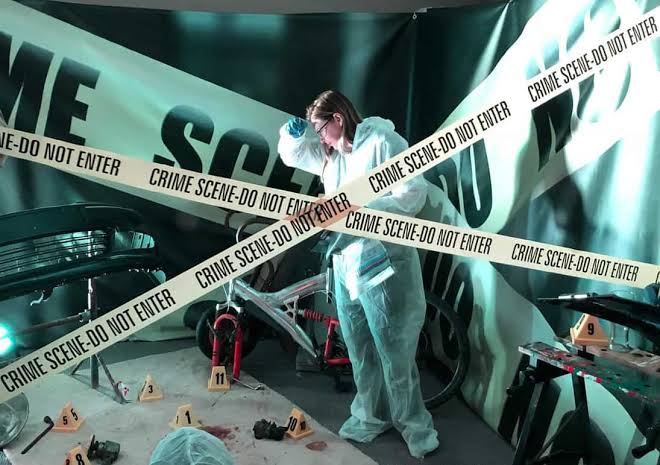
In a crime scene investigation, evidence collection involves various meticulous methods:
Photography/Videography: Documenting the scene as found.
Fingerprint Collection:
Using powders, tapes, and chemicals to lift prints.
DNA Evidence:
Gathering biological materials with swabs and tweezers.
Trace Evidence:
Collecting small particles like fibers and gunshot residue.
Bloodstain Pattern Analysis: Analyzing blood spatter to understand events.
Ballistics:
Collecting and analyzing bullet casings and trajectories.
Footprints and Tire Tracks: Photographing and casting impressions.
Digital Evidence:
Retrieving data from electronic devices and cameras.
Environmental Conditions:
Recording weather and other scene conditions.
Tools and Weapons:
Securing items involved in the crime.
Chemical Analysis:
Testing for drugs, poisons, or chemicals.
Note Taking and Sketching:
Detailed documentation of the scene layout and evidence positions.
Each method is crucial for preserving the integrity and chain of custody of the evidence, which is essential for legal proceedings.
Procedures and Priorities in Murder Investigations: The Role of the Medical Examiner at Crime Scenes.
In a murder investigation, the Medical Examiner (ME) plays a critical role, but whether they get "first priority" depends on the context of the investigation and the specific circumstances of the crime scene.
Here's how it typically works:
Scene Preservation: The first priority at a crime scene is always to secure and preserve it. This is crucial for maintaining the integrity of evidence.
Medical Examiner's Role: The Medical Examiner, or a forensic pathologist, is responsible for determining the cause and manner of death. They typically arrive at the scene after it has been secured by law enforcement.
Body Examination: The ME examines the body at the scene to gather initial observations that may be crucial for the investigation, such as the nature of the wounds, the estimated time of death, and any signs that might indicate how the person died.
Evidence Collection: While the ME has priority in terms of accessing and examining the body, other crime scene technicians concurrently collect other forms of evidence. This process is often collaborative, with law enforcement and forensic teams working alongside the ME.
Removal of the Body: The body is not moved until the ME has completed their initial examination. After this, the ME typically authorizes the removal of the body to the morgue for a more thorough autopsy.
Autopsy: The autopsy, conducted at the morgue, is a comprehensive examination that provides crucial information for the investigation, including the cause of death and other forensic evidence.
Ongoing Collaboration: Throughout the investigation, the ME collaborates with detectives, providing updates and insights based on the findings from the autopsy and any subsequent tests.
In summary, while the Medical Examiner is a key figure at a crime scene, their priority is specifically related to the examination of the body and determination of the cause of death. Other aspects of the crime scene investigation, such as evidence collection and witness interviews, are handled simultaneously by law enforcement and crime scene investigators.
Top Three Homicide Methods in the USA: A Disturbing Trend in Violent Crimes
Firearms: Guns are by far the most common method used in homicides. In the United States, handguns, in particular, account for a significant proportion of murders.
Knives or Other Cutting/Piercing Tools: The use of knives or other sharp objects is the second most common method for committing homicide.
Suffocation: This includes methods like strangulation and is ranked as the third most common method of homicide.
Modern Photo Lineup Procedures: Enhancing Accuracy in Criminal Investigations.
Double-Blind Administration: In a double-blind lineup, the officer conducting the lineup does not know who the suspect is. This helps prevent unintentional cues or biases from influencing the witness's decision.
Sequential Presentation: Rather than presenting all photos at once, photos are shown one at a time. This method is believed to reduce relative judgment, where a witness compares photos to each other, and encourages absolute judgment, comparing each photo to their memory of the perpetrator.
Standardized Instructions: Witnesses are given standardized instructions, which typically include a statement that the perpetrator may or may not be in the lineup and that they should not feel compelled to make an identification.
Similarity in Appearance: All individuals in the photo lineup should resemble the witness's description of the perpetrator to a reasonable degree, without making the suspect stand out.
Appropriate Number of Fillers: Fillers (non-suspects) are included in the lineup. The number of fillers can vary, but usually, there are at least five fillers for every suspect.
Recording Witness Confidence: Immediately after the identification, the witness's level of confidence is recorded. This is important because a witness's confidence can change over time, often becoming more certain by the time of trial.
Avoiding Multiple Identifications: Showing a witness the same suspect in different lineups can lead to reinforcement and should be avoided.
Use of Computer Software: Some jurisdictions use computer software to randomly select fillers that match the description of the suspect, which further reduces potential bias.
Review by Independent Panel: In some cases, an independent panel may review the lineup procedure to ensure fairness and adherence to guidelines.
Witness Support: Procedures may also include support measures for the witness, recognizing that participating in a lineup can be stressful, especially in serious cases.
Psychosis is a mental health condition characterized by a disconnection from reality, often involving delusions (false beliefs) and hallucinations (seeing or hearing things that aren't there). It's important to note that psychosis is a symptom, not a diagnosis in itself, and it can be part of several different mental health conditions.
Modern Photo Lineup Procedures: Enhancing Accuracy in Criminal Investigations.
Double-Blind Administration: In a double-blind lineup, the officer conducting the lineup does not know who the suspect is. This helps prevent unintentional cues or biases from influencing the witness's decision.
Sequential Presentation: Rather than presenting all photos at once, photos are shown one at a time. This method is believed to reduce relative judgment, where a witness compares photos to each other, and encourages absolute judgment, comparing each photo to their memory of the perpetrator.
Standardized Instructions: Witnesses are given standardized instructions, which typically include a statement that the perpetrator may or may not be in the lineup and that they should not feel compelled to make an identification.
Similarity in Appearance: All individuals in the photo lineup should resemble the witness's description of the perpetrator to a reasonable degree, without making the suspect stand out.
Appropriate Number of Fillers: Fillers (non-suspects) are included in the lineup. The number of fillers can vary, but usually, there are at least five fillers for every suspect.
Recording Witness Confidence: Immediately after the identification, the witness's level of confidence is recorded. This is important because a witness's confidence can change over time, often becoming more certain by the time of trial.
Avoiding Multiple Identifications: Showing a witness the same suspect in different lineups can lead to reinforcement and should be avoided.
Use of Computer Software: Some jurisdictions use computer software to randomly select fillers that match the description of the suspect, which further reduces potential bias.
Review by Independent Panel: In some cases, an independent panel may review the lineup procedure to ensure fairness and adherence to guidelines.
Witness Support: Procedures may also include support measures for the witness, recognizing that participating in a lineup can be stressful, especially in serious cases.
Top Three Homicide Methods in the USA: A Disturbing Trend in Violent Crimes
Firearms: Guns are by far the most common method used in homicides. In the United States, handguns, in particular, account for a significant proportion of murders.
Knives or Other Cutting/Piercing Tools: The use of knives or other sharp objects is the second most common method for committing homicide.
Suffocation: This includes methods like strangulation and is ranked as the third most common method of homicide.
Justice at Last: Glynn Simmons Exonerated After Nearly Five Decades in Prison for Wrongful Murder Conviction
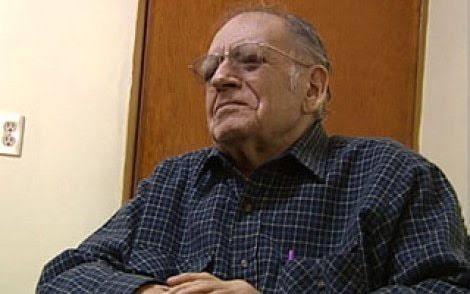
Glynn Simmons, who spent nearly 50 years in prison for a murder he did not commit, has been exonerated by an Oklahoma judge. This exoneration comes after it was revealed that key evidence in his case was not disclosed to his defense lawyers. Simmons was convicted 48 years ago for shooting a liquor store clerk during a robbery in Edmond and for shooting a second woman, who survived. His conviction was vacated in July, and he had been out on bond while waiting for a decision on a new trial.
The decision to dismiss his case and murder conviction was influenced by the unfair conduct of his 1975 trial, including a missing police report with critical information about suspect lineups, which raised doubts about the primary witness's identification. The ruling means that Simmons has served the longest wrongful imprisonment in US history, according to the National Registry of Exonerations.
Glynn Simmons maintained his innocence throughout his imprisonment. His lawyers argued that a lineup report, considered as 'powerful innocence evidence', showed an eyewitness did not identify Simmons. They also highlighted that 12 witnesses testified that Simmons had been in Louisiana at the time of the murder. The court found clear and convincing evidence that Simmons did not commit the offense for which he was convicted.
Now declared actually innocent, the 71-year-old Simmons is eligible for up to $175,000 in compensation from the state of Oklahoma for his time in prison. However, it could take years before he receives this money. Currently, he is living off donations as he undergoes treatment for cancer