We’re excited to introduce Honen.
Honen is a platform that automates a company’s entire learning and training infrastructure. Upload training documents, connect internal knowledge, or type in a topic, and Honen builds a personalized, interactive course in seconds.
From onboarding and sales enablement to cybersecurity training and AI adoption, Honen helps teams learn faster with AI teachers, hands-on simulations, adaptive content, and real-time insights into how employees are learning.
We believe the future of work requires continuous learning, and companies need training systems that evolve as fast as technology and their teams do.
Read more: https://t.co/obRm6qeXrp
Honen now works inside the LMS you already use.
We now deliver fully embedded course experiences inside major LMS platforms, including Canvas, Moodle, Skilljar, and more.
Not ready to migrate your LMS but want a fully AI-native platform? Add Honen on top of your LMS to amplify your learning experience and your course creation and curriculum building.
• Instructors get AI course creation, management, and analytics, all in one place
• Rostering and groups build themselves
• Learners never sign in separately
• The full Honen course experience with all 10 modalities, including the AI tutor, runs right inside your LMS
• Grades flow straight back into your existing gradebook
Integrate in minutes, with zero friction for your users.
Read more: https://t.co/N6urjJKziu
We're excited to introduce Parallel Training on Honen: a way to teach your people and your AI the same knowledge.
Every organization now has two workforces: the people on your team, and the AI systems working beside them. They're rarely trained on the same knowledge.
A human and an AI look at the same task and operate from two different versions of the truth. If you run learning at your company, you must make sure your AI “co-workers” are operating on the same wavelength.
With Honen knowledge bases, you can centralize all of your information in one place by attaching your existing sources like Google Drive, dragging in documents, or building it out through your preferred AI tool.
Then you can take this knowledge, create learning experiences for the people in your organization, and also distribute it via MCP and skills to the AI systems your company uses, all from one place.
Learn more by watching our video or reading here: https://t.co/DYc1TdxKTW
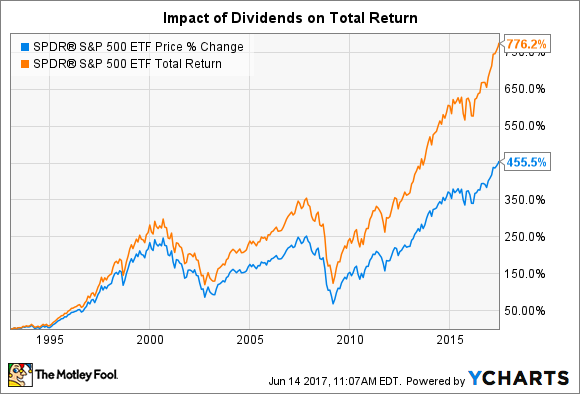
Dividends are one of the most powerful and most overlooked tools in long term investing.
At https://t.co/mHVpsvoWMU we teach How to Start Investing
From understanding dividends to building a portfolio that pays you while you sleep.
Start for free at https://t.co/mHVpsvoWMU
Most people think the only way to make money in the stock market is to sell something.
There’s another way that pays you just for holding these stocks.
It’s called a dividend and it is how some of the wealthiest investors in the world generate income without ever touching their principal.
Building a portfolio that pays you every month is simpler than most people think.
Different companies pay dividends in different months throughout the year.
By owning a mix of dividend paying stocks and ETFs that are staggered across quarterly payment schedules you can engineer a portfolio that generates income every single month without selling anything.
This is how retired investors and income focused portfolios generate cash flow that covers living expenses while the principal keeps compounding.
From panic to green in a single session.
This is the fourth time in the last two months the market has opened red, looked like the beginning of something serious, and closed flat or higher. Every single time the morning felt like a breakdown. Every single time the afternoon made the morning irrelevant.
The people who sold during today's drop locked in real losses on a day the Dow closed green. That is not risk management. That is paying a fee to exit a position that recovered before the market closed.
This keeps happening because the underlying bid for equities is stronger than the headlines suggest. Every dip is being bought. Not because retail investors are fearless but because the fundamentals have not changed. AI earnings are accelerating. Corporate revenues are strong. The companies inside the Dow are generating real cash flow that anchors valuations even when sentiment swings violently intraday.
The volatility is real. The permanent damage to a disciplined investor who stays in is almost zero. The damage to the investor who reacts to every red open and sells before noon is compounding quietly every single time this happens.
Green on the day. Same as it has been after almost every scary open this year.
Introducing Honen
The world's fastest way to train skills needed to succeed in the Al era
Simply drop in your org's docs
Get interactive courses that self-improve over time
To prove out our vision, we partnered with NVIDIA to bring AI literacy to 250,000 learners
By 2030, 78M jobs will need reskilling due to Al, and we're ensuring no person or company gets left behind
Learn more https://t.co/4fOh4My1Bf
The ability to learn fast and adapt is the career skill nobody taught you and the one that matters most right now.
At https://t.co/N9uT81fcPn we teach High Paying Careers That Didn't Exist 3 Years Ago, built for people who are ready to move before the market tells them to.
Start for free at https://t.co/N9uT81fcPn
For the last 50 years the career advice was the same.
Pick a lane. Go deep. Become the expert.
That advice built careers in a world where industries changed slowly and expertise had a long shelf life.
Here’s how to adapt:
The resume that wins in 2035 will not be the one with the deepest single credential.
It will be the one that shows a pattern of learning new things fast, applying them in real contexts, and moving into spaces before the credentialing system caught up.
The generalist who learns fast is not a consolation prize for someone who could not go deep.
In the next decade they are the most dangerous person in the room.
Painful in the moment. Completely normal in context.
The S&P 500 closed above 7,600 for the first time ever just yesterday. The market has had nine consecutive weeks of gains. It is up over 20% since the March 30th bottom. But what comes up must come down eventually.
The $2.2 trillion number is doing a lot of emotional work in that headline. It's roughly a 2 to 3% move on a $90 trillion market. But the S&P 500 has one of those every few weeks on average historically. Every single time the headline makes it sound like the financial system is breaking. Almost every single time it is noise.
What actually drove today's move was fresh geopolitical tensions in the Middle East alongside a narrow revenue miss from a major chip company that spooked a sector that has been on an absolute tear. Not a fundamental shift in the economy. A sentiment move on two data points.
The companies inside the S&P 500 didn't stop generating revenue today. AI infrastructure spending did not reverse. Corporate earnings did not crater. A number on a screen moved down because the market that went up nine weeks in a row decided to take a breath.
$2.2 trillion wiped out today. $11.4 trillion added in the two months before it.
The scheduled buy goes through Friday. Nothing changed.
Let's get some context before anyone does anything they will regret for the next decade.
Today the Nasdaq is down 0.89% and the S&P 500 is down 0.74%.
Yesterday the S&P 500 closed above 7,600 for the first time in history. The day before that it closed at an all time high. The day before that, another all time high. The market has had nine consecutive weeks of gains. At some point it takes a breath.
The bull run is not over because the market pulled back less than 1% from record highs. The bull run ends when the fundamentals change. When AI earnings stop growing. When the Fed raises rates aggressively into a slowing economy. When corporate revenues start missing at scale. None of that happened today.
What actually happened today is fresh geopolitical tensions in the Middle East rattled sentiment and tech and communications stocks led the pullback. Not a fundamental shift in the economy. A sentiment move on a headline. 24/7 Wall St.
Should you sell? Ask yourself this. What exactly are you selling into? Cash that loses 3% a year to inflation while you wait for a better entry point that may never feel safe enough to act on? The people who sold during the March bottom asking the same question are now 20% behind where they would have been if they had done nothing.
The S&P 500 is still up over 20% since March 30th. It is still near all time highs. The companies inside it are still generating record earnings.
Nothing changed today except the number on the screen going down slightly. The plan does not change.