Consider the equation kx=sin(x) where x can take any real number value.
For what value(s) of k does the equation have the same number of solutions regardless of whether x is measured in degrees or radians?
For any students or teachers who are interested: a colleague of mine is running a free online 'Help with GCSEs' course, the first session being on 12th March. Please let anyone who might be interested know. Details on the poster below:
Does anyone else have a student who has made a human error in applying for a university admission test with Pearson Vue and is now faced with the possibility of not being able to apply to Oxbridge? Given it is the first year like this, it feels a little harsh? #PearsonVue
I have a couple of IMO-standard A Level students who want to publish a paper they have written. They would like it to be open access and not too long a process to get it published, but it is original research.
Does anyone have any recommendations?
Let N be the number of seconds from the first second of the year 2000 up to and including the last second of 2024. What factorial, n!, is closest to the value of N?
When would the closest factorial then become (n+1)! ?
Without doing any calculations: If you expressed the number halfway between 100! and 101! as k*100!, what would you imagine to be true about the value of k?
The horrible realisation has just dawned on me that next year, hoping I make it, will be the only year in my lifetime that is a square number. #depressed_mathematician
I agree with you all on this one! I agree you can do a lot more with this question but I am interested in, from a student's perspective, whether they may be less sure of what to do than for a more standard question such as "What is the last digit of 17! ?".
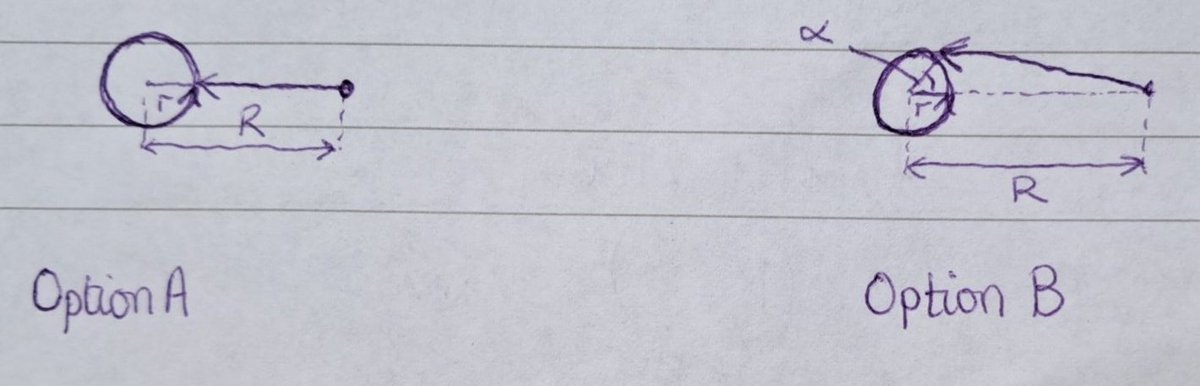
2/2 B follow the polar curve f(theta)=R+k*theta where the origin is the circle centre, you start at theta=0 and k is a constant chosen so that you meet the circle at theta=alpha, after which you follow the circumference as before.
Which option involves the shortest distance?
1/2 You start distance R from the centre of a circle of radius r<R. You need to complete a full revolution around the circle and have two options:A Head in a direct line towards the centre of the circle until you meet the circumference then follow the circumference of that circle
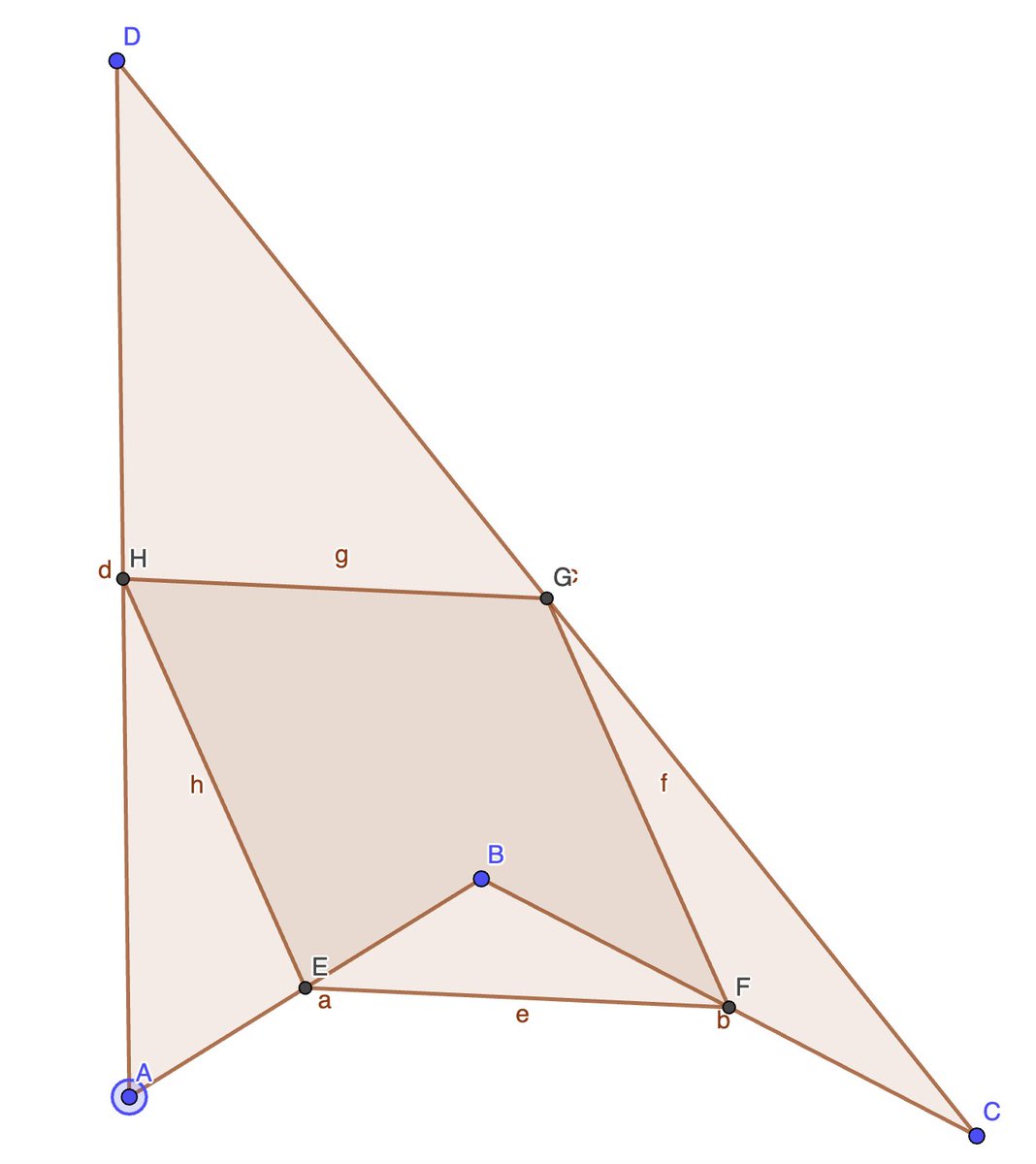
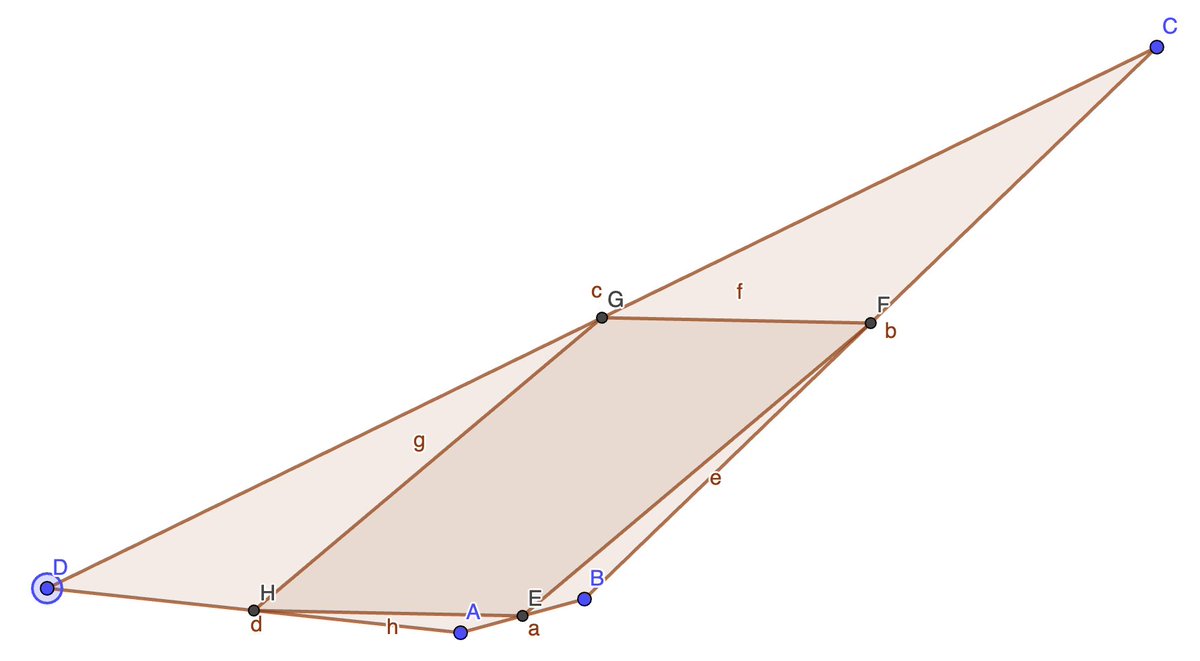
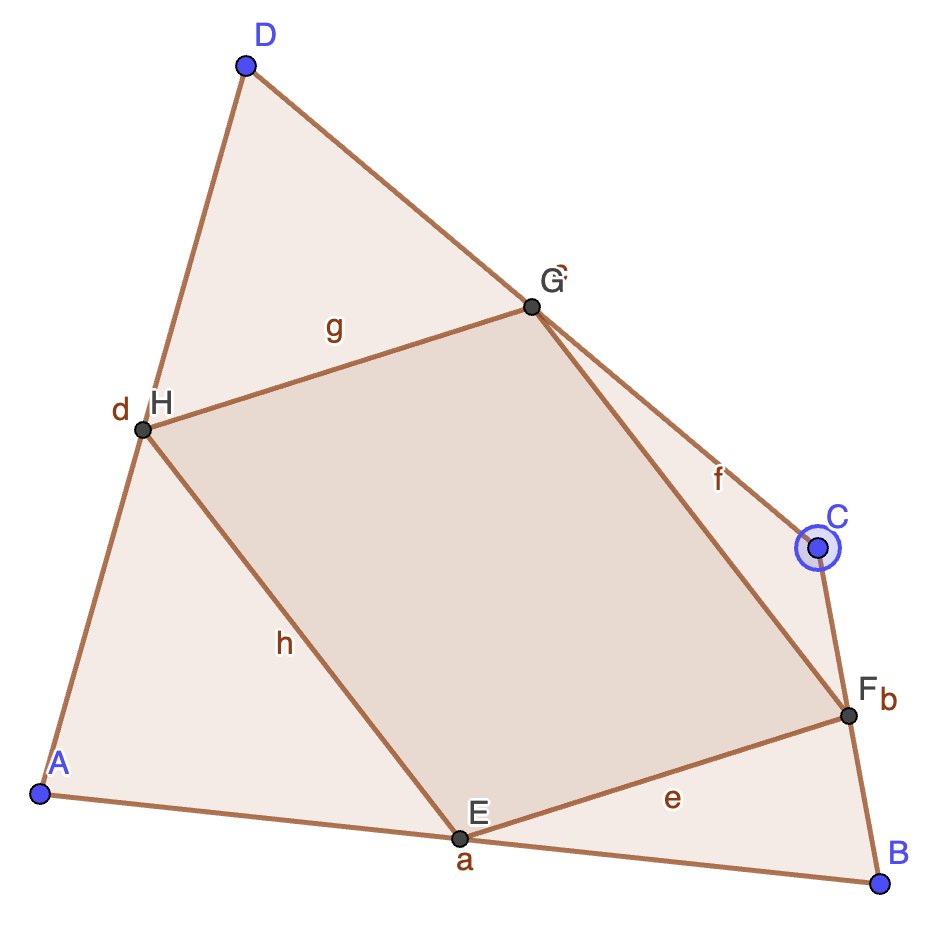
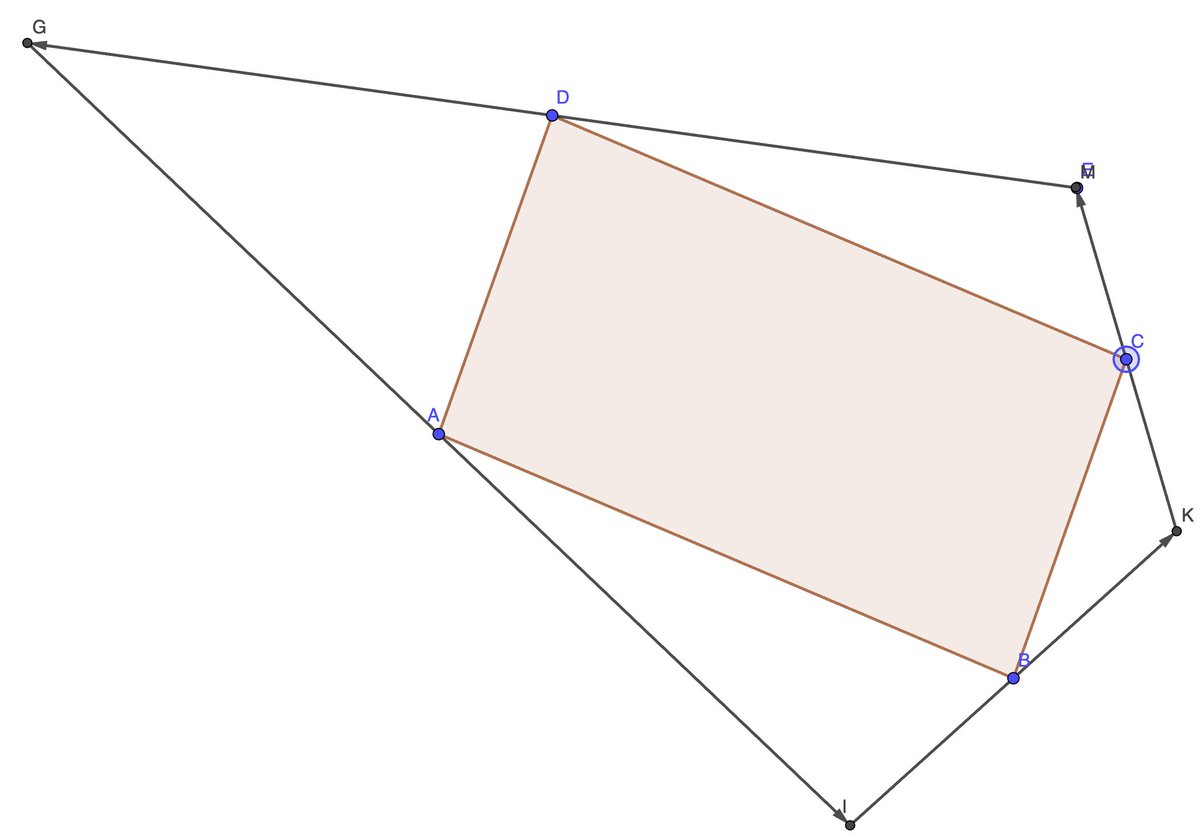
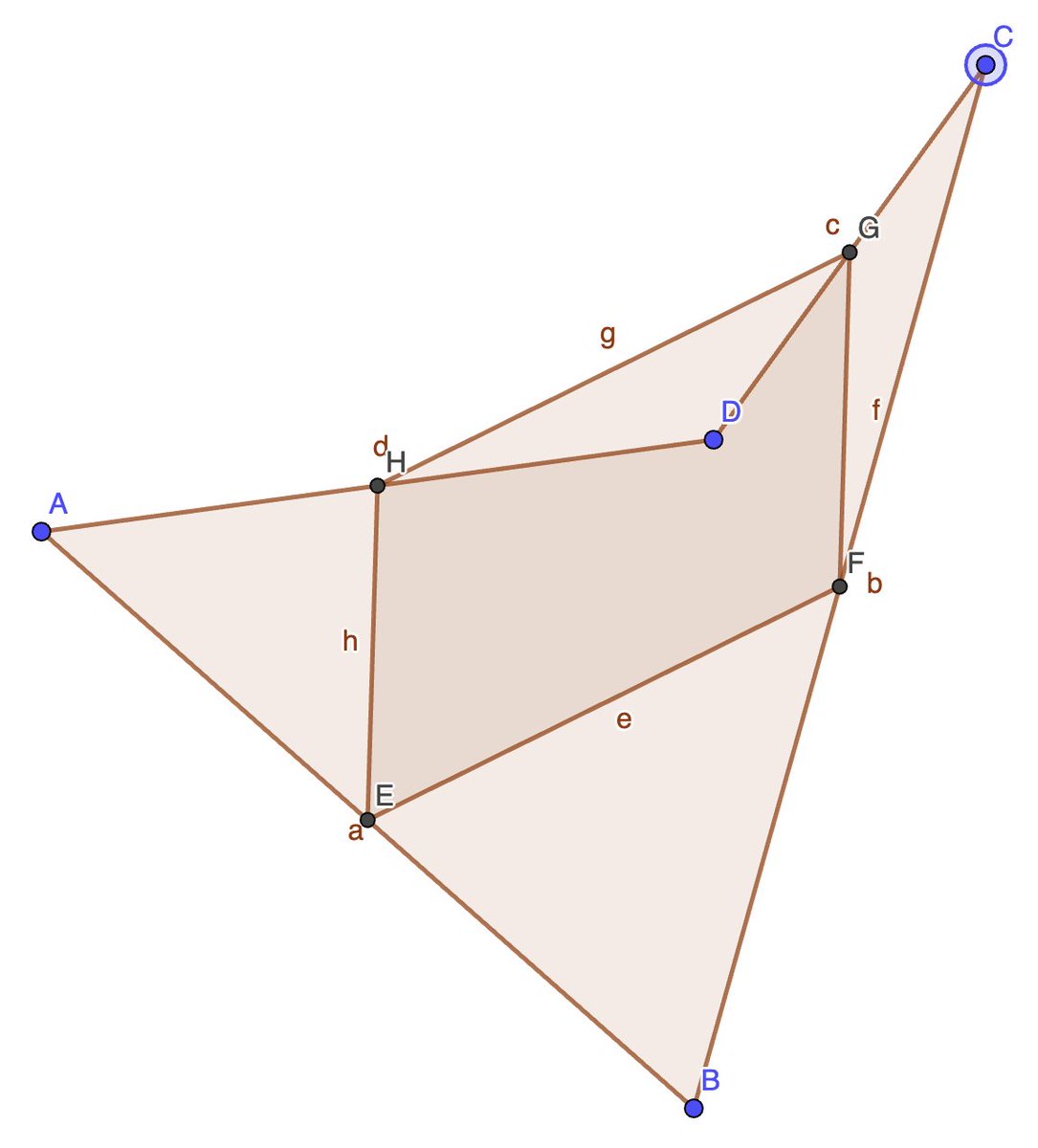
Pictures for the previous post:
(The second picture does show that the quadrilateral may have crossing edges, but you can easily choose point E so that this doesn't happen...)
Fun fact I rediscovered at #MEIConf2024:
ANY quadrilateral you draw, join the midpoints of the four sides and they ALWAYS form a parallelogram!
Thanks, Bernard Murphy, for a great session.
(Follow-up tweet to follow in a day or two...)
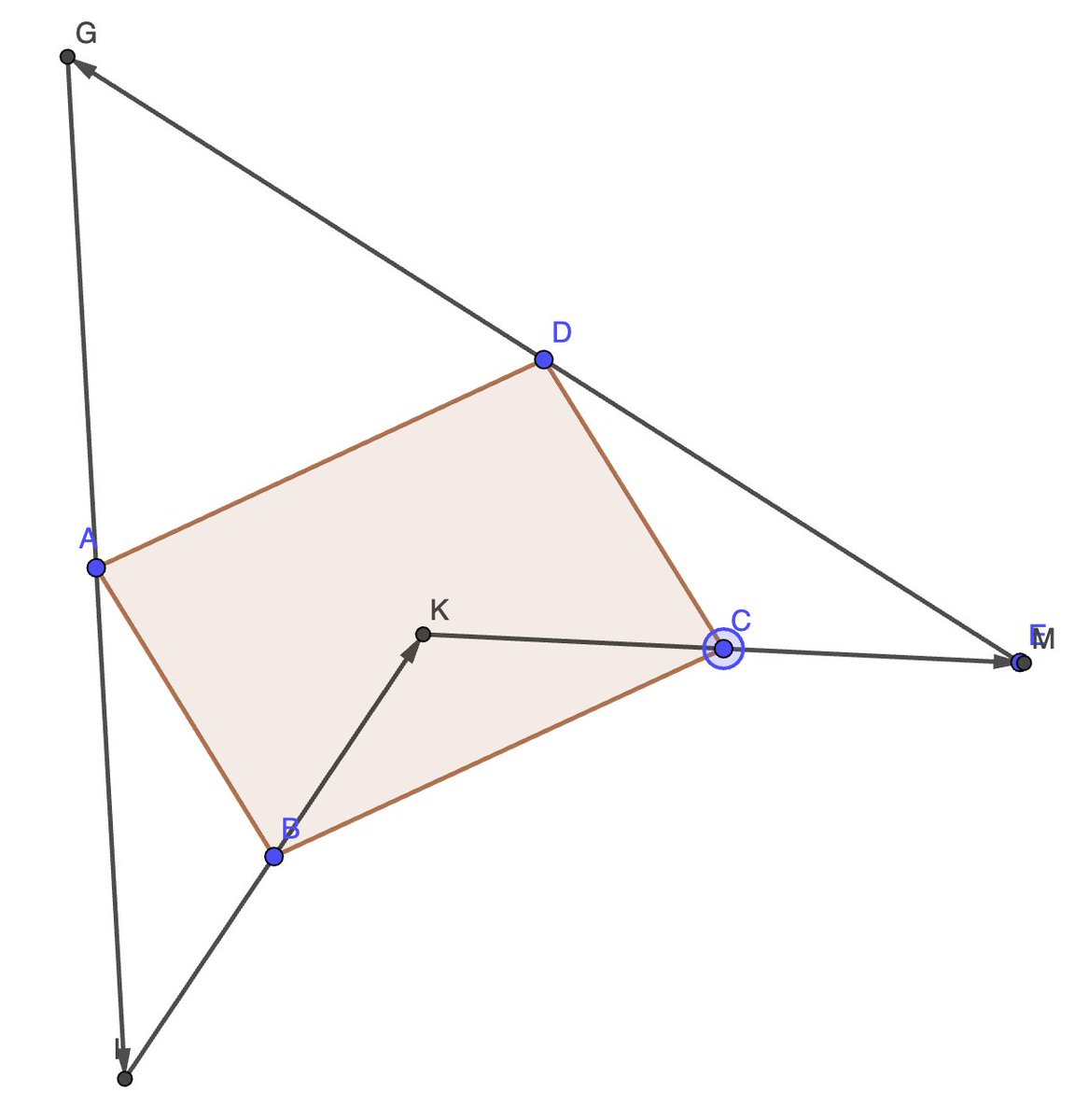
In particular, E=M precisely when the quadrilateral is a parallelogram! A good ex in vectors for confident A Level students.
A consequence is that (re: the top of the thread) EVERY parallelogram and (distinct) point has a unique quadrilateral that forms the parallelogram!