June 8th 1989
Philadelphia
The Pittsburgh Pirates were beating The Phillies 10-0, 1st inning.
Bucs announcer Jim Rooker: "If we lose this game, I'll walk back to Pittsburgh."
The Pirates lost 15-11.
Rooker walked from Philly to Pittsburgh that Oct. raising $81K for charity!
This just aired. 4 of these people were either fired or “resigned” a week ago. How sloppy can you get Bari Weiss and Skydance/Paramount? RIP 60 Minutes. CBS News. CBS Radio News. Colbert. Voice Of America. All gutted or gone, like the Rose Garden. It’s political. NOT financial.
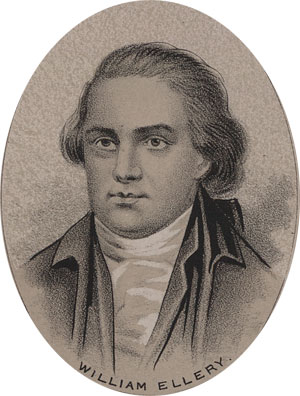
While 56 men signed their own potential death warrant, one of them stood at the table and studied every single face to see who flinched. His name was William Ellery, and he might be the coolest Founder you've never heard of. Buckle up.
He was a Harvard man at 20, fluent in Greek and Latin, and then he did almost nothing with it for decades. Merchant, customs official, clerk. He didn't even start practicing law until he was 43.
Then Rhode Island sent him to the Continental Congress in 1776, just in time to sign the Declaration of Independence.
Here is what makes him unforgettable. Ellery understood exactly what signing meant: if the Revolution failed, every name on that page was a confession of treason punishable by hanging. So instead of looking at the document, he positioned himself right next to the secretary's table and watched each man's face as he signed.
His verdict, in his own words: "Undaunted resolution was displayed in every countenance." He wanted to know if his fellow Founders were scared. They weren't.
He also signed his own name huge. On the actual Declaration, Ellery's signature is one of the largest there, second only to John Hancock's. No fear, on the record, in ink.
The British made him pay for it. In 1778 they occupied his hometown of Newport and deliberately burned his house and property to the ground. He lost much of his wealth and never fully recovered it.
He didn't break. He became an early abolitionist by 1785, decades ahead of most of his peers, and pushed hard against slavery in Rhode Island, the very state that had dominated the American slave trade.
He outlasted nearly everyone. Ellery lived to 92, one of only three signers who reached their nineties, alongside John Adams and Charles Carroll.
The ending is the most Ellery thing imaginable. On February 15, 1820, the 92-year-old was sitting in his chair, calmly reading Cicero in the original Latin. His doctor checked his pulse and was amazed at how steady it was. A short time later he simply died, book still in hand, as composed in his last moment as he'd been watching those faces 44 years earlier.
Some men signed the Declaration and hoped no one noticed. William Ellery signed it in giant letters, watched everyone else to make sure they meant it, and went out reading Cicero with a steady pulse.
250 years ago today, a man with four fingers missing from his left hand stood up in a sweltering Philadelphia room and said the words that could have gotten him hanged.
It is June 7, 1776. The Pennsylvania State House. The windows are shut against eavesdroppers despite the summer heat. Richard Henry Lee of Virginia rises from his chair.
He knows how to hold a room. They call him the American Cicero. Years before, a hunting gun had exploded in his hands and taken the fingers of his left hand clean off — and ever since, he has worn a wrapping of black silk over the ruin. He has learned to use it. When he speaks, he lifts that shrouded hand and lets the dark silk fall, and every eye in the room follows it.
Today he lifts it, and he reads three sentences.
The first is the one that changes the world: "Resolved, That these United Colonies are, and of right ought to be, free and independent States, that they are absolved from all allegiance to the British Crown, and that all political connection between them and the State of Great Britain is, and ought to be, totally dissolved."
He is not asking a question. He is proposing that thirteen colonies stop being British.
John Adams seconds it before Lee has fully returned to his seat.
And then — nothing happens.
This is the part almost everyone forgets. There was no roar, no signing, no leap. Congress looked at what Lee had just put on the table and flinched. They voted to wait. Several delegations had no authority from home to take so enormous a step. Some men wanted alliances and a plan of confederation settled first. And some were simply afraid. They called a recess so the delegates could ride home and ask their people the unaskable question: are we ready to commit treason together?
Because that is what it was.
Every man who would eventually say "aye" understood the arithmetic exactly. There was no legal independence yet, no nation, no army that had won anything decisive. There was only a king with the largest military on earth and a very long memory. If the war was lost, the document they were debating became a confession. The punishment for that confession was a rope.
They knew it. They debated anyway.
The next day, Congress appointed a small committee to draft a statement explaining the decision, should they ever find the nerve to make it — Jefferson, Adams, Franklin, Sherman, and Livingston. They handed the pen to the quiet Virginian, Thomas Jefferson. The famous parchment we frame on walls and read aloud every Fourth of July was, in a sense, the footnote. It exists to justify Lee's motion. The motion came first.
And here is the detail that ought to be carved somewhere.
When the final vote on independence finally came, on July 2, 1776 — Richard Henry Lee was not there.
His wife had fallen ill. Virginia was building itself a new government and needed him home. So the man who stood up and proposed American independence climbed onto a horse and rode away before the question he'd asked was ever answered. Adams stood in for him and carried the argument across the line.
He proposed it.
He didn't cast the vote for it.
He never seemed to mind who got the credit.
The resolution passed on the second of July. Adams was so certain that date would be remembered forever that he wrote home predicting Americans would celebrate it for all time with bonfires and parades. He was off by two days. We kept the fourth — the day the explanation was approved — and let the seventh, the day a man first dared to say it out loud, slip quietly out of the calendar.
But the courage was never really in the parchment.
The courage was in being first. In standing up in a closed room, lifting a maimed hand, and reading three sentences that made you a traitor the instant they left your mouth — with your name attached, in front of witnesses, before a single other colony had promised to stand with you. Then trusting that strangers would find the same nerve, and finish what you'd started, even if you weren't in the room
Everyone needs to watch this, the danger of state contolled/influenced media has to be acknowledged. This is not a partisan take, anytime the media is turning a story to fit their political stance you threaten democracy. Regardless of party the media must be independent.
Good god this is a crazy interview. Listen as Scott Pelley describes how Bari Weiss wanted journalists at CBS to cover the killing of Renee Good in Minnesota. This is why we can’t have oligarchs running our news outlets, this is absolutely devastating.
Trump attacks Kristen Welker after she presses him on his false claims of rigged elections, abruptly ending the interview: "You're either crooked, or you're stupid."
The contrast between Reagan’s speech at Point-Du-Hoc and Pete Hegseth today are like two different galaxies. Listen to how much reverence he gives to the same allies that Hegseth attacks.
84 years ago today, a pilot running out of fuel made a decision that won the Pacific War. Most Americans have never heard his name.
June 4, 1942. Six months after Pearl Harbor, Japan's navy is undefeated. Four of the carriers that burned Pearl, Akagi, Kaga, Soryu, and Hiryu, are steaming toward Midway to finish off the US Pacific Fleet.
At 7:52 AM, Wade McClusky launches from USS Enterprise leading 32 Dauntless dive bombers. Here's the detail nobody mentions: McClusky is a fighter pilot. He'd been given the air group weeks earlier and had barely flown a dive bomber in combat. Now he's leading every SBD the Enterprise has at the most important target in the Pacific.
9:20 AM. He arrives at the intercept point where the Japanese fleet is supposed to be.
Empty ocean. Nothing for miles.
The Japanese had turned. Nobody knew where. And now McClusky owns the worst math problem in naval aviation: his fuel is bleeding away, and every minute he keeps searching, he condemns more of his own pilots to ditch in open water where nobody will find them.
Doctrine is clear. Turn back.
McClusky keeps going. He works a search pattern, squeezing miles out of dying fuel tanks.
9:55 AM. Far below, a single Japanese destroyer is cutting a white scar across the ocean at flank speed. It's the Arashi, racing to rejoin the fleet after depth-charging the American submarine Nautilus. Think about that. A failed sub attack is about to give away the entire Japanese navy.
McClusky reads the wake like an arrow and follows it.
10:02 AM. The horizon fills with the entire Japanese strike force. Four carriers, their decks crammed with planes being refueled and rearmed. Fuel lines snaking everywhere. Bombs stacked in the open.
And here's the miracle: the sky above them is empty. Minutes earlier, American torpedo squadrons had attacked at sea level and been annihilated. Torpedo 8 lost all 15 planes. One survivor, Ensign George Gay, watched what came next while hiding under his seat cushion in the water. Those doomed pilots dragged every Japanese fighter down to the waves. The door upstairs was wide open.
10:22 AM. McClusky pushes over from 14,500 feet. Both squadrons follow him down onto Kaga. It's actually a mistake, doctrine said split the targets, but Lt. Dick Best catches it mid-dive, pulls out with two wingmen, and goes after Akagi alone. His single bomb pierces the flight deck into the packed hangar. It's enough.
By 10:28, Kaga, Akagi, and Soryu, the third hit simultaneously by Yorktown's bombers, are floating infernos. Six minutes. Three carriers that attacked Pearl Harbor, gone. Hiryu follows them to the bottom that evening.
The cost of McClusky's gamble was real. Many Enterprise bombers never made it home, some shot down, others swallowed by the sea when their tanks ran dry. McClusky himself was jumped by two Zeros on the way out, took five bullets through his shoulder, and still flew his shot-up Dauntless back to the Enterprise.
Admiral Nimitz said McClusky's decision "decided the fate of our carrier task force and our forces at Midway." Japan never won another major battle.
One borrowed pilot. One destroyer's wake. One choice to keep flying when every gauge said go home.
84 years ago today, four Japanese aircraft carriers were burning in the Pacific because of a man who went to work in a smoking jacket and slippers.
Washington took his job, buried his name, and blocked his medal for 44 years.
This is the story of Joseph Rochefort, the codebreaker who saved Midway.
December 7, 1941. Pearl Harbor burns. Rochefort, head of a Navy codebreaking unit on Oahu, takes it personally. He tells a colleague that an intelligence officer has exactly one job: to tell his commander today what the enemy will do tomorrow. On December 7, he believes he failed at it.
He decides he will never fail at it again.
His unit is Station HYPO, hidden in a windowless basement at Pearl Harbor that his men call "the Dungeon." It is cold, damp, and lit like a morgue. Rochefort wears a smoking jacket over his uniform to fight the chill and slippers because the concrete floor wrecks his feet. He works 20 hour days, sleeps on a cot in the basement, and lives on coffee.
His team is just as strange. Brilliant misfit cryptanalysts like Joe Finnegan and Ham Wright, plus the surviving bandsmen of the battleship USS California, sunk on December 7. The musicians turn out to be naturals at running the IBM punch card machines. Sailors who played trombones in November are reconstructing an enemy cipher by March.
Their target: JN-25, the Imperial Japanese Navy's operational code. Tens of thousands of code groups, layered with additives, changed regularly. On a good day HYPO can read maybe 10 to 15 percent of any message. They rebuild the rest from fragments, traffic patterns, callsigns, and Rochefort's freakish memory. He had spent three years in Japan learning the language. He could hold months of intercepts in his head at once.
By May 1942, processing up to 140 decrypts a day, HYPO sees something enormous taking shape. Admiral Yamamoto, the architect of Pearl Harbor, is massing nearly 200 ships for one decisive battle. The target appears in the intercepts as two letters: AF.
Rochefort is certain AF is Midway Atoll.
Washington is certain he is wrong. The Navy's own codebreaking office, OP-20-G, argues for the South Pacific. Others fear Hawaii again, or even the West Coast. The Army wants planes held back to defend San Francisco. If Nimitz bets his last carriers on Midway and Rochefort is wrong, the Pacific is lost.
So HYPO sets one of the great traps in the history of intelligence.
The idea comes from staffer Jasper Holmes. The order goes to Midway by undersea cable, which the Japanese cannot tap: broadcast by radio, in plain language, that your water distillation plant has broken down.
Midway sends the fake distress call.
Two days later, HYPO decrypts a Japanese intelligence report to fleet commanders: AF is short of fresh water.
Two letters, confirmed. The argument is over.
Now Nimitz goes all in. The carrier Yorktown, mauled in the Coral Sea and given 90 days of repairs, is patched up in 72 hours and sent back out. Three American carriers slip northeast of Midway and wait at a spot on the map they name Point Luck.
On May 27, HYPO cracks the Japanese date and time cipher, the final piece. Nimitz's intelligence officer Edwin Layton, Rochefort's closest friend and partner, gives Nimitz a prediction of nearly insane precision: the Japanese carriers will be spotted on bearing 325 degrees, 175 miles from Midway, around 0600 on June 4.
On the morning of June 4, 1942, a PBY scout plane radios in the sighting. Nimitz turns to Layton and says: well, you were only five minutes, five degrees, and five miles out.
What follows are the most consequential ten minutes of the Pacific war. American dive bombers catch the Japanese carriers with fueled planes and stacked ordnance on their decks. By nightfall, Akagi, Kaga, Soryu, and Hiryu, four of the six carriers that hit Pearl Harbor, are gone, along with thousands of men and the irreplaceable core of Japan's elite naval aviators. Six months after Pearl Harbor, Japan's advance across the Pacific is broken. It never recovers.
A basement full of misfits had handed the US Navy the greatest ambush in its history.
Then came the knives.
The same Washington officers who had called Midway wrong now claimed the credit. They whispered that Rochefort was difficult, an ex-enlisted man without the right pedigree. Nimitz recommended him for the Distinguished Service Medal. Washington killed it. Nimitz tried again. Killed again.
In October 1942, four months after the victory he made possible, Rochefort was pulled from HYPO. The man who outwitted Yamamoto spent much of the rest of the war commanding a floating dry dock in San Francisco Bay.
He never lobbied for himself, never wrote a self-serving memoir, and rarely spoke of it. He said his real reward came at Midway itself. He died in 1976, unknown to the public, medal denied.
His old shipmates refused to let it go. Layton and others fought the Navy bureaucracy for years with the declassified record. In 1985 the Navy relented, and on May 30, 1986, President Reagan presented the Distinguished Service Medal to Rochefort's children in the Roosevelt Room of the White House.
44 years late.
One man in slippers, in a basement, out-thought an empire and was punished for being right.
Lieutenant General Harold "Hal" Moore (1922–2017), the legendary commander at the Battle of Ia Drang (depicted in We Were Soldiers Once... And Young and the film We Were Soldiers), was known for writing deeply personal, heartfelt letters rather than generic ones.
He famously hand-wrote condolence letters to the families of every soldier killed under his command—emphasizing leadership through compassion and accountability. Condolence Letter Example (from the film, reflecting his real practice) A representative example (voiced as narration in the movie, based on Moore's approach):
"Dear Barbra, I have no words to express to you my sadness at the loss of Jack. The world is a lesser place without him. But I know he is with God and the angels, and I know even Heaven is improved by his presence there.
I know you too are sure of this and yet this knowledge can't diminish his loss and your grief.
With abiding respect and affection, Hal Moore."
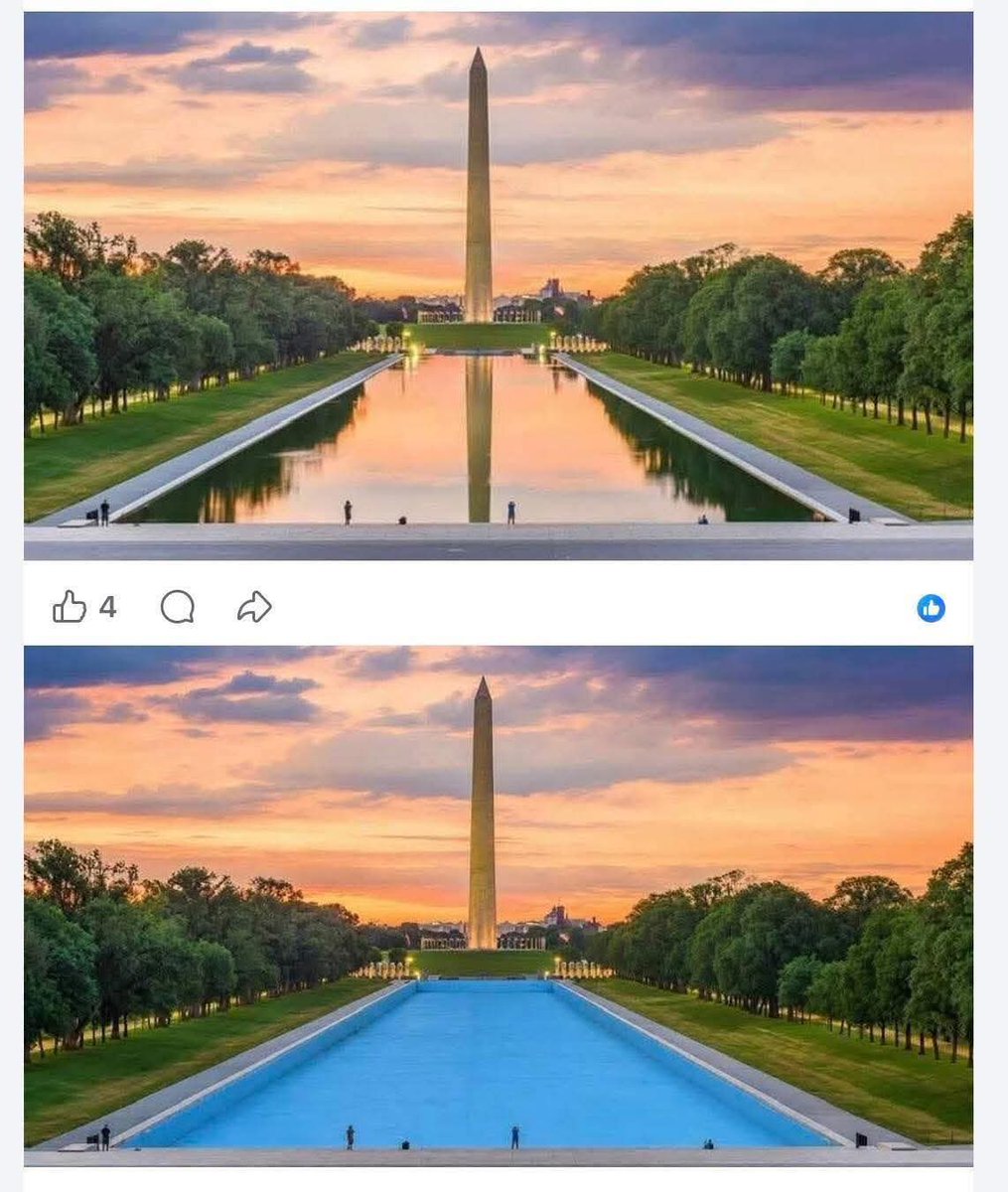
I stood at this pool, at both monuments and saw both reflections…
He’s a God damn idiot, as are the fools that support him. The “Reflection Pool” wasn’t designed by American architect Henry Bacon a hundred years ago to look like a swimming pool. It’s designed to have a darkened characteristics that has reflective qualities to reflect the monuments.
That way, the Washington Monument is reflective to you when at the Lincoln Memorial, and when at the Washington Monument, the Lincoln Memorial is reflective to you.
It’s designed to enhance the grandeur of monuments, create an illusion of reflection, and inclusion of expansive space of unity.
He’s a tacky vulgar person that vulgarizes everything he touches. America isn’t becoming great, it’s becoming vulgar.
Credit - Mathew Reed
I stood at this pool, at both monuments and saw both reflections…
He’s a God damn idiot, as are the fools that support him. The “Reflection Pool” wasn’t designed by American architect Henry Bacon a hundred years ago to look like a swimming pool. It’s designed to have a darkened characteristics that has reflective qualities to reflect the monuments.
That way, the Washington Monument is reflective to you when at the Lincoln Memorial, and when at the Washington Monument, the Lincoln Memorial is reflective to you.
It’s designed to enhance the grandeur of monuments, create an illusion of reflection, and inclusion of expansive space of unity.
He’s a tacky vulgar person that vulgarizes everything he touches. America isn’t becoming great, it’s becoming vulgar.
Credit - Mathew Reed