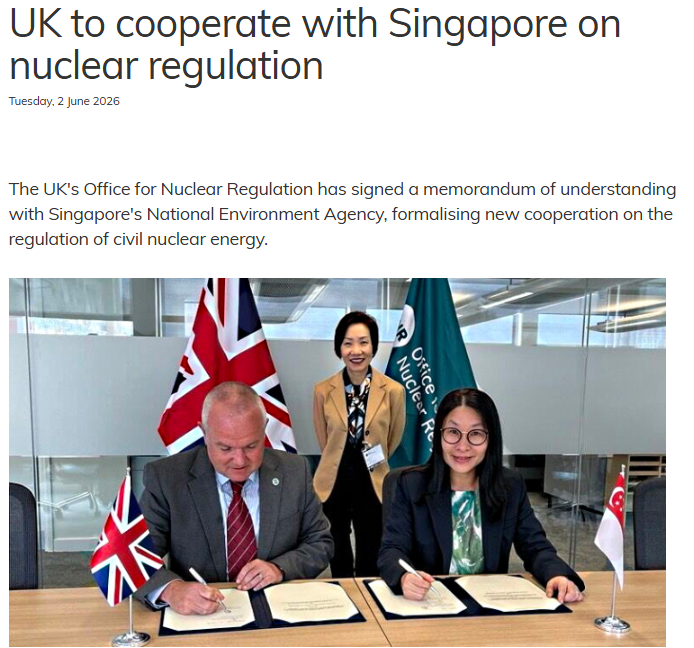
Singapore has recently expressed interest in creating a nuclear program. The Brits are offering to help them do so, with a 5-year cooperation agreement. Article link in reply.
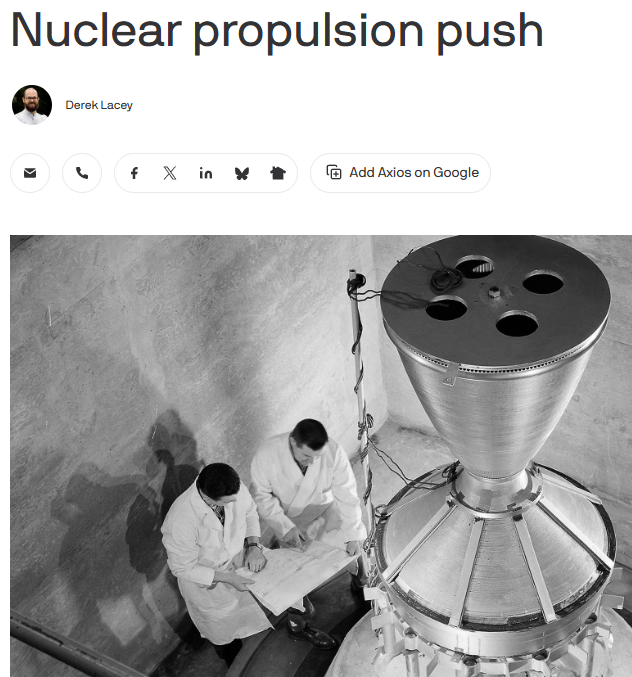
NASA is working with University of Alabama in Huntsville to develop nuclear thermal propulsion. Nuclear propulsion is now being seriously considered for Mars missions. Article link in reply.
The CA primary election for governor is going well for nuclear. It's looking like anti-nuclear candidate Tom Steyer will not make it onto the general election ballot (i.e., for the November runoff election). Article link in reply.
The two leading candidates, Hilton and Becerra are ahead of Steyer by ~6% or more, with 57.5% of the votes counted.
In a recent debate, all eight candidates, including Steyer, said that they support keeping the Diablo Canyon plant running after 2030. But nuclear advocates don't trust Steyer to keep that promise.
In 2018, Steyer spent $20 million on an AZ proposition that would have mandated 50% renewables by 2030. The policy would have exluded nuclear, refusing to classify it as "clean" or "renewable". As structured, the mandate might have resulted in the closure of the large Palo Verde nuclear plant. Thus, spending a lot of money replacing one clean source with another. A cardinal rule for genuine climate polcies should be that you keep all the clean, carbon-free power you got, and you use all new clean power to replace fossil sources.
The reactor vessel for Hinkley Point C, Unit 2 has been put into place. Overall, construction of the 2nd unit is happening ~30% faster than the 1st unit. Also at a lower cost. This generally happens for follow on reactors at a given site. Article link in reply.
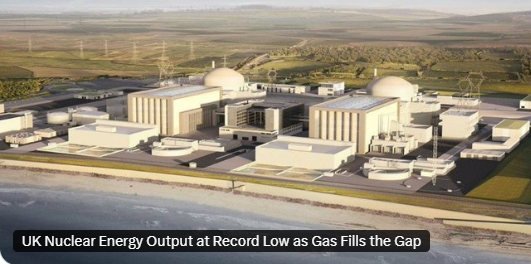
The UK's experience is showing that reduction in nuclear generation results in more gas (fossil) generation, even in areas with large amounts of renewable generation. Article link in reply.
New nuclear generation (to replace the UK's old graphite reactors) can't come soon enough.
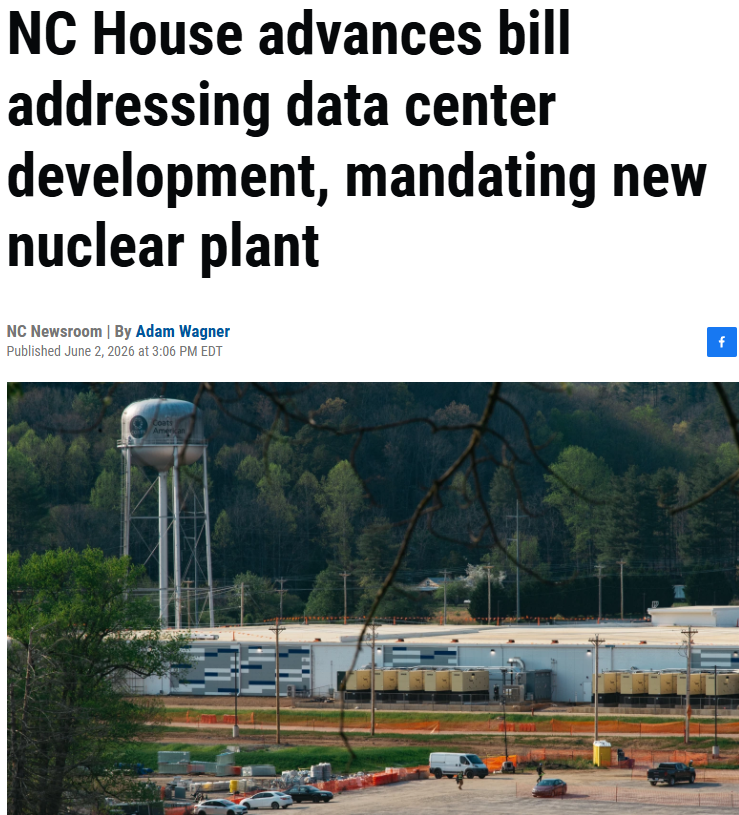
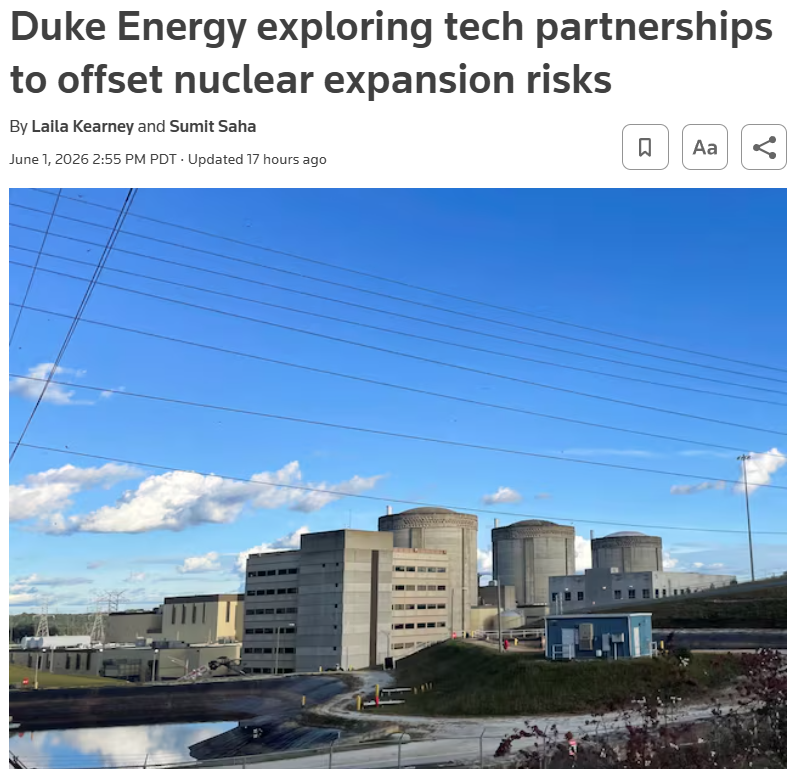
A North Carolina bill that imposes requirements on data center development also requires Duke Energy to get "permission" to build at least 1 GW of nuclear capacity before it's allowed to retire fossil plants. Article link in reply.
"Permission" means "a certificate of public convenience and necessity for a nuclear plant".
The idea is that they don't want utilities to close fossil plants w/o building non-intermittent generation to replace them. The intentions is maintaining grid reliability.
Even large nuclear utilities like Duke are trying to make deals with tech (data center) companies, i.e., to have such companies shoulder some of the financial risk of new nuclear construction. Article link in reply.
Such deep-pocketed companies may be the "first adopters" that jump start the new nuclear construction industry. They will take on the higher costs and risks of the first reactor builds. Once several reactors are built, the rest of us will benefit from lower costs of follow-on reactors. (Kinda like what happed with plasma TVs...)
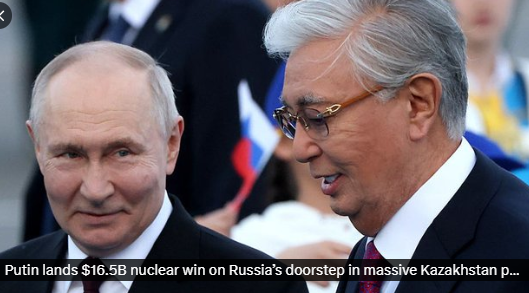
Russia has signed a %16.5 billion contract to build Kazakhstan's first nuclear plant. Russia will finance 85% of the cost. The plant will have two large Russian design reactors. Article link in reply.
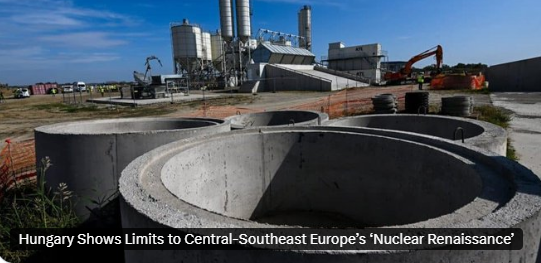
People have wondered whether Viktor Orban's loss in the recent election would affect Hungary's Paks plant expansion. Word is that starting from scratch, with a non-Russian vendor is unlikely. Article link in reply.
The Russia-friendly Orban administration made an agreement with Russia's Rosatom to build two Russian VVER-1200 reactors at Hungary's Paks site. Construction is already under way.
Experts are saying that its too late to start over with a different supplier, and reactor design. At most, some of the contracts' terms may be renegotiated.
NJ is moving from banning new nuclear construction to subsidizing it. The state Assembly’s Utilities Committee unanimously voted for a bill that would direct the state’s energy regulators to begin soliciting bids for new nuclear power. Article link in reply.
The bill would effectively subsidize construction of at least 1,100 MW of new nuclear capacity in the state.
TBH, I have mixed feeling about this. Allowing nuclear to compete on a fair playing field is one thing. Picking winners (nuclear in this case) is another.
Removing the state's baseless nuclear construction moratorium was clearly the right thing to do. Giving nuclear a financial advantage over other clean sources is not. Equal subsidies for clean sources, over fossil sources, is justifiable (lack of pollution and CO2 emissions is something of tangible value). If this new nuclear subsidy is not higher than the subsidies that renewable sources are getting, then it's fine.
Some might argue that nuclear deserves higher subsidies to reflect its reliability benefits. I think the utilities would figure out that they need to keep the lights on, and would account reliability in their decisions.