the number of people I talk to who think they should leave the field because end2end research is about to be AuToMAted is ridiculous. In terms of tools, open problems, and our ability to attack them, this is BY FAR the best time in recent history to do AI research.
They used carefully picked words to make this seem like a hack but it wasn’t a hack. It was nothing. Just fear mongering.
https://t.co/xSuOAV5z4z via @NYTimes
In our NeurIPS spotlight 💫 we show high order graph neural networks have a fundamental limitation: they can't distinguish simple spectrum graphs. We use canonicalization to solve this issue and integrate spectral info invariantly via a RoPE variant into Transformers!
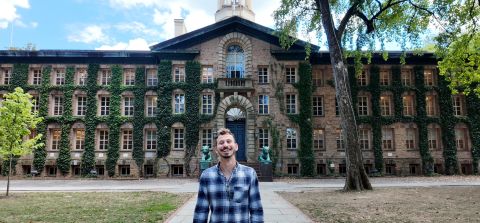
One year into my CS PhD at @Princeton, I'm finally putting this account to use! I’m interested in machine learning, math, and physics. I’ll be sharing what I’m reading, learning, and working on.
If your interests overlap, I’d love to connect!
Large Drug Discovery Model is out! I am exited to introduce our new generative SBDD framework. We experimentally validated LDDM across 5 targets and successfully designed novel, validated hits with structural accuracy confirmed by X-ray.
Preprint: https://t.co/vqOiVfuDVi
🧵 1/7
This is super cool result for AI & protein design!
Claude wrote CUDA kernels that beat NVIDIA's own cuEquivariance on triangle attention by 2.7–2.9x, and triangle multiplication by 1.7–3.2x.
Two engineers supervised it. Neither had prior kernel engineering experience. 30+ models such as AlphaFold3, Boltz-2, OpenFold3, protein LMs, genomics, done in 4 weeks.
Triangle ops are the cubic bottleneck in Pairformer-based structure prediction. Fix them and the whole stack gets cheaper: 4x average speedup, 100x fewer GPU hours for comparable protein design results.
FlashPairformer is now open-sourced:
https://t.co/sjBRNhhv4B
Biologists use specialized open-source models for tasks like modeling the structure of molecular systems, designing drug-like molecules, and predicting the effects of genetic mutations. But these models are often expensive to run, potentially limiting their impact.
In our latest Science Blog, we share how Claude was able to optimize inference for more than 30 open-source models, making them 4x faster on average, partly by writing custom software for GPUs. We’re open sourcing all of the optimization code.
Read more: https://t.co/qiuN1jpgpA
I'm hiring a postdoc! The position is funded by my new ERC Starting Grant, GDLNeuralArt, and based in my group at the Technion.
We work on learning on weight spaces, internal representations and gradient spaces: treating neural networks themselves and their artifacts as data. 🧵
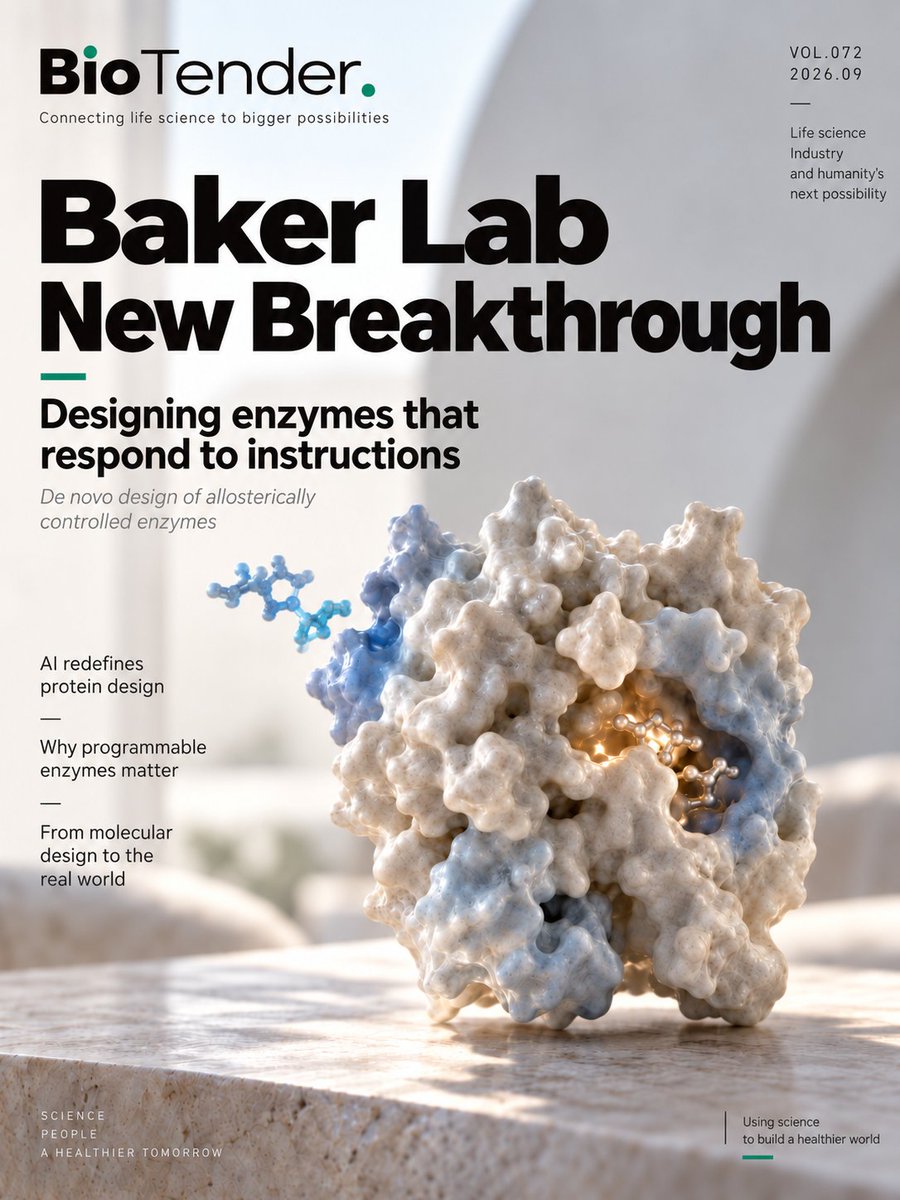
Baker Lab just pushed enzyme design into a new regime.
Instead of designing an enzyme that is simply “on,” they designed de novo allosterically controlled enzymes — enzymes whose activity can be switched by a remote molecular signal.
In other words:
Protein design → programmable protein control.
This feels like an important step from designing static molecular functions toward building dynamic, responsive biological machines.
Paper:
https://t.co/Q4ziPREoB8
Excited to share some of what we’ve been building at Periodic!
One thing I’ve come to appreciate is how important it is for AI for science to stay close to the lab: working closely with scientists, learning from real data, and solving the problems that actually slow science down
“What did we actually make?”
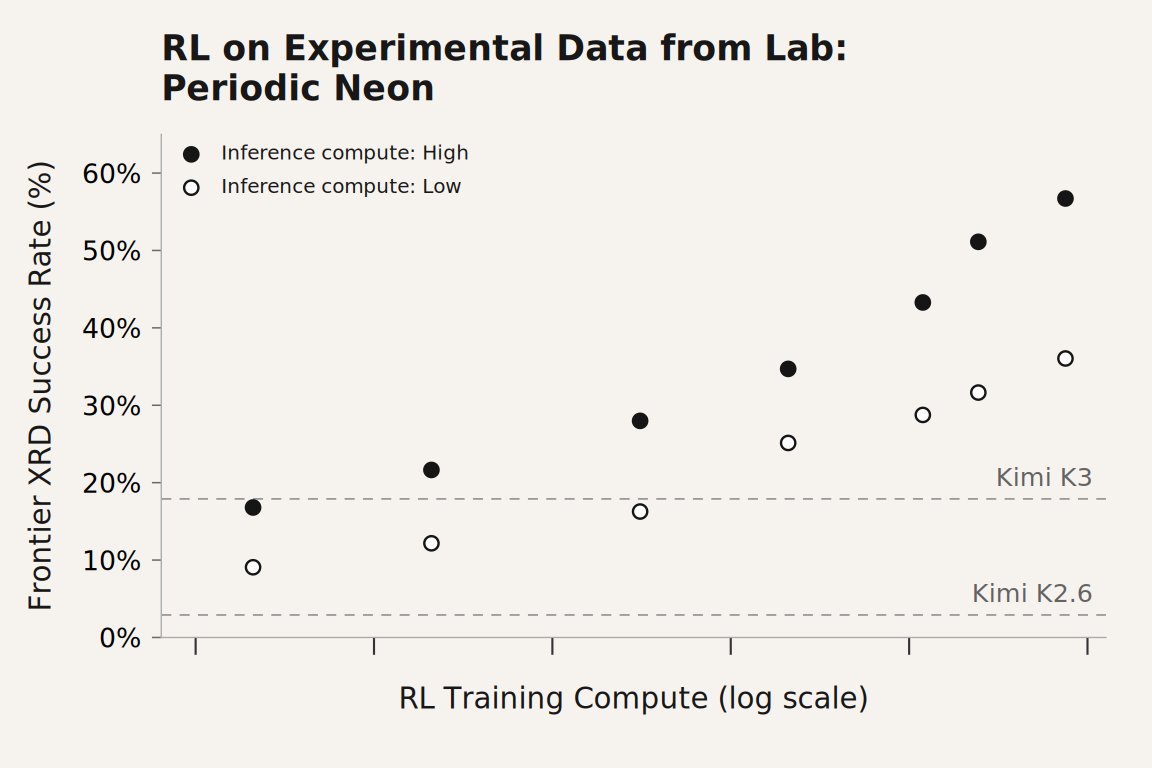
Answering this can take hours. Lab data + midtraining + RL took X-ray diffraction analysis success from 2.7% to 55.3% (~20×) on 134 difficult samples, scored by model judges calibrated against human experts. We see great scaling properties with respect to additional RL.
Read more about our research here.
https://t.co/nzbshpoqpN
Finally getting around to sharing our Riemannian Metric Matching paper! We presented it as an oral at ICML this summer, and it also received the Best Short Paper Award at the ICLR GRAM workshop 🎉