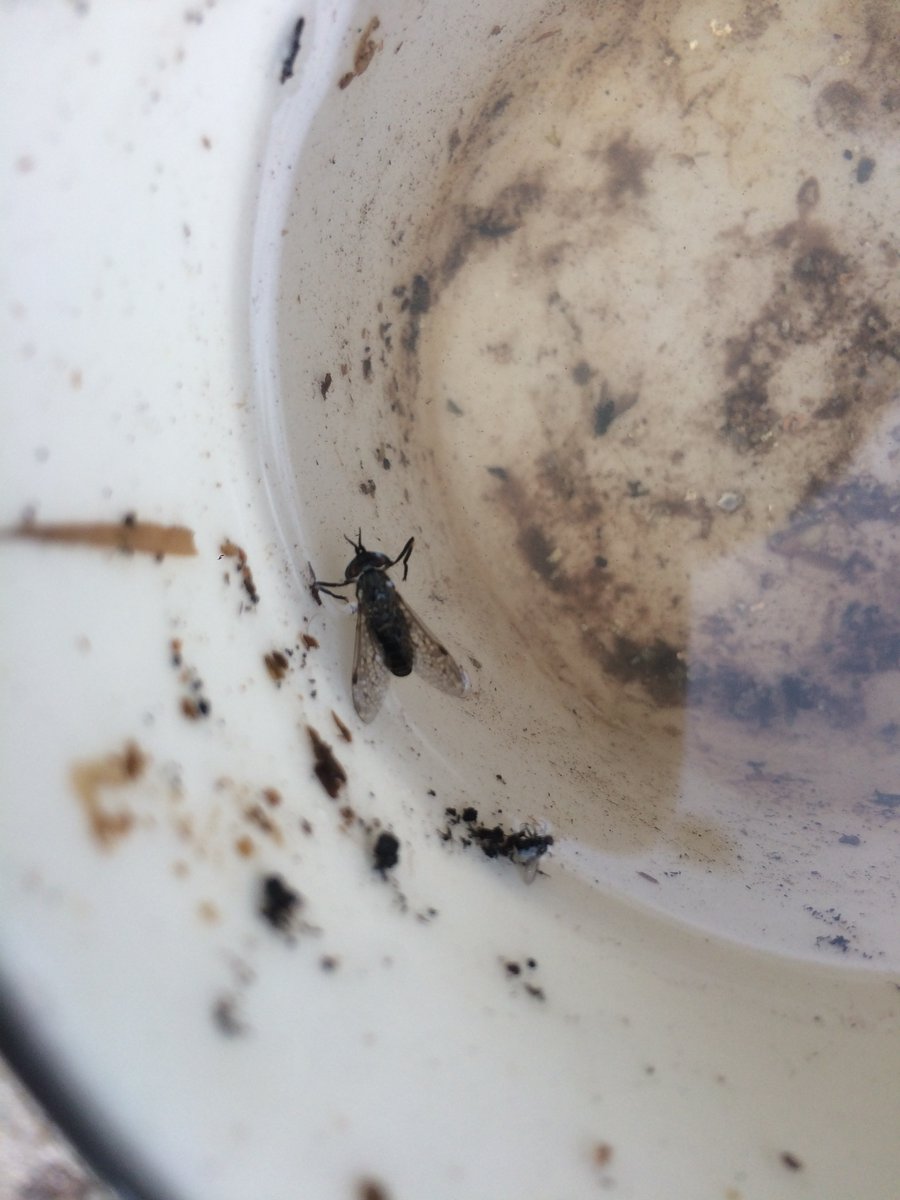
Usually we are out in the British countryside collecting biting flies by now, but this year we need you...
Do biting flies bother your animals? Tell us about it! https://t.co/BUo3dokB4o 🪰🦟🐎
We've been very quiet this year because we are working on something VERY exciting 🎉
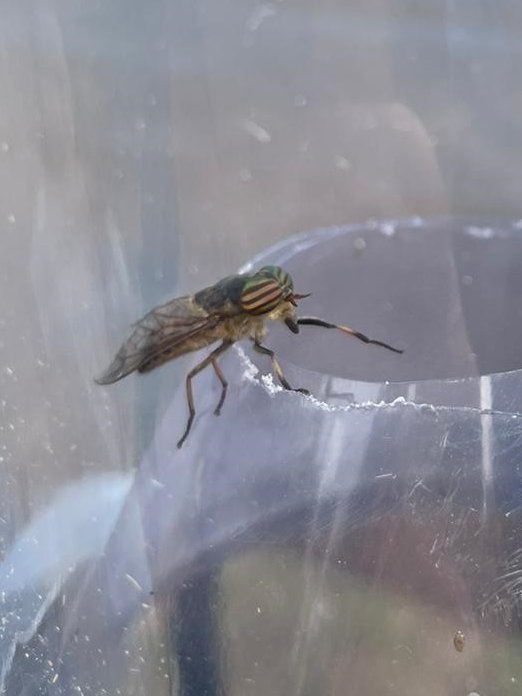
BUT we have still been in the field trapping - look at those eyes 😍
We caught this beautiful Tabanus glaucopis 2 weeks ago - anyone seen any horseflies this week?
With the weather heating up the horseflies are out in force 😱 not everyones cup of tea but we are excited for fieldwork! 😍 COVID has us stuck at home but that hasn't stopped us catching 5 around the house & garden, now safely in the freezer ready for ID 💪🔬
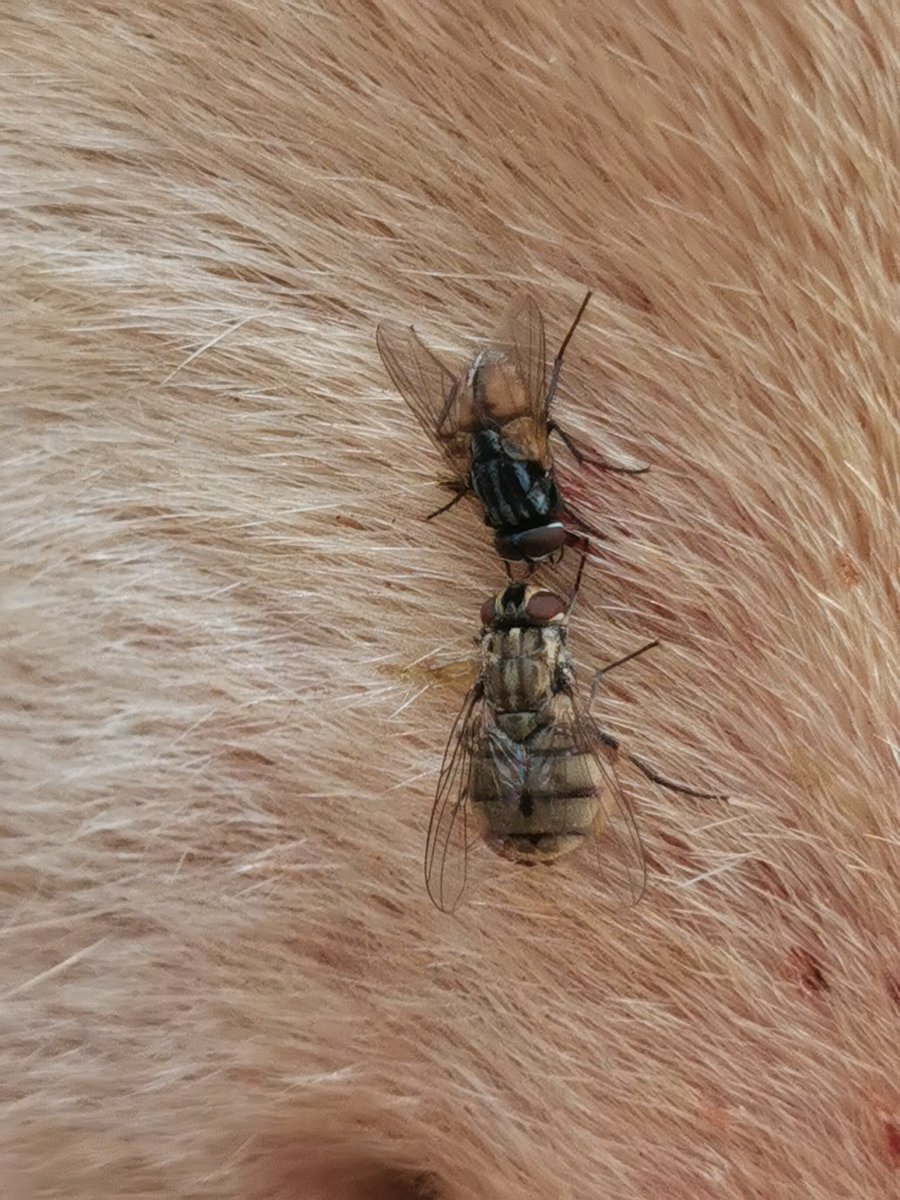
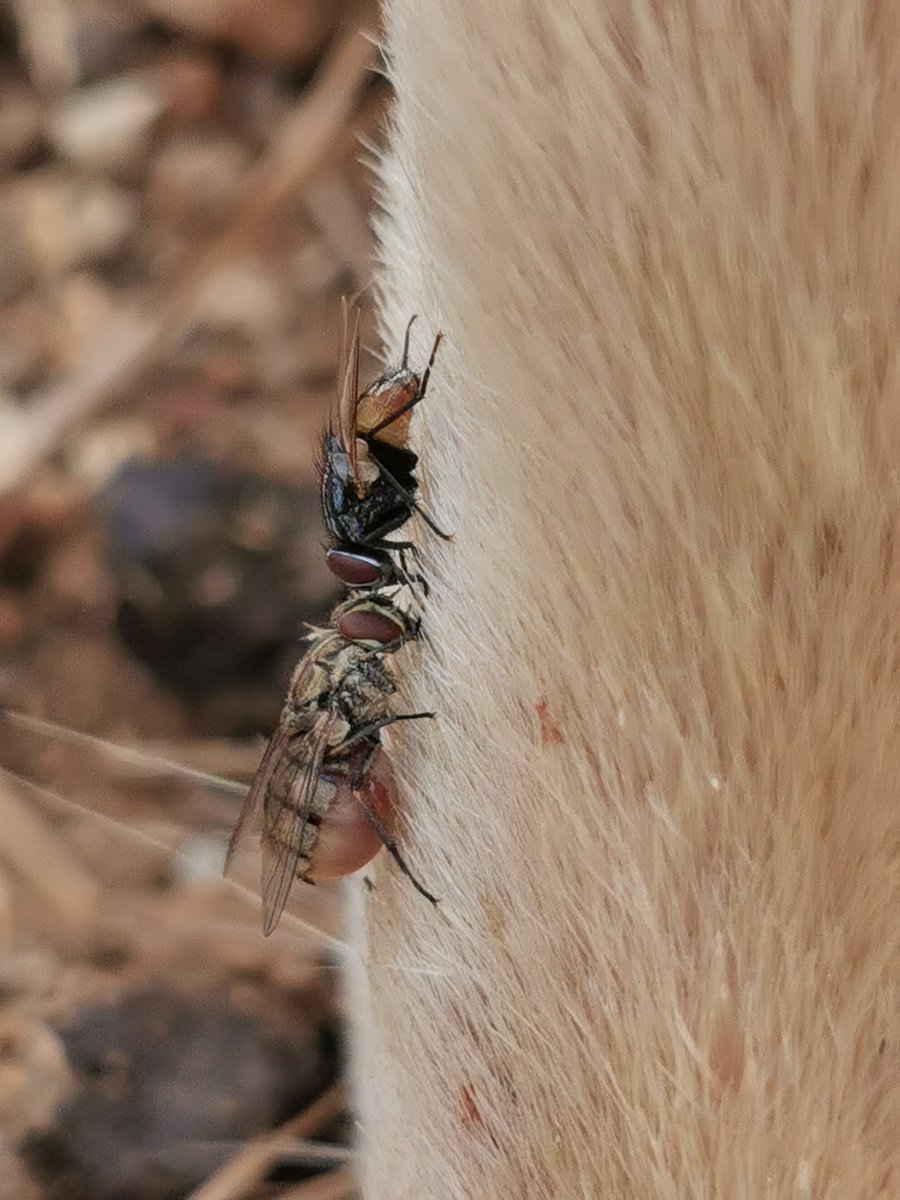
Astonishing image of Stomoxys calcitrans and Musca autumnalis (male) feeding and sucking blood, respectively, from a sheep. M. autumnalis take advance of the telmophagous system of S. calcitrans to collect pools of blood. Balearic Islands (Spain). @CarlosZooUIB@ZoologiaUIB
‘Head of a gadfly’
Gadflies are a name given to any flies that pester livestock eg bot flies and horseflies (which this is the latter)
Can’t tell you much more due to the erm rather uninformative label. Nice mouthparts though...
#Data#collections
@flygirlNHM We currently store in either 70% ethanol or -20C depending on future use. We are hoping to complete some CO1 barcoding when we can get back in the lab
Finished sorting summer collections🎉
Of the 4000 biting flies collected this year 1439 were within the Tabanidae, representing 6 different species!
Numbers varied widely across sites & weeks 🪰🗓️
Huge thank you to all of our sites-results will be present out to individuals soon
Love, love, love the guide to Chrysops by the @DipteristsForum / @___BRC___ 😍
The pictures are amazing, easy to understand guide, a really fantastic resource!
https://t.co/tFTPCo47N1
George Henry Verrall (born on this day in 1848) was not a fan of Holotypes (a single specimen upon which a species description is based) but preferred a series of specimens - Syntypes e.g. Hybomitra distinguenda @NHM_Diptera@NHM_London@NHM_Digitise
Yesterday we sorted one of our South West samples - over 100 Stomoxys Calcitrans (Stableflies) and 2 Clegs.
This is a diagram we made to demonstrate the different sizes of biting flies in the UK: midge<mosquito<Stablefly<Cleg<Horsefly.
Stableflies=~8mm & long sharp mouthparts
Horseflies in the @guardian today!
Been bothered by horseflies during your picnic in the UK?
Been bitten this year?
Fill out our survey! https://t.co/vFqyHElsE9
Article:
Horseflies at your picnic? Here’s how to keep them away for ever https://t.co/X7zZJJwlao
More clegs (Haematopota) this week in our volunteers collections. No signs of any Chrysops (deer flies) in any of our traps so far this year- only the one that entered our house looking for a bite!
Have you seen any?
We have been going through some of our samples sent by our volunteers. So far lots of notched horned clegs (Haematopota pluvialis) and some band-eyed brown horseflies (Tabanus bromius)
We have some exciting news- in addition to our survey and field collections we are hoping (with your help) to collect some example horseflies to start recording and reporting sequence data!
If you catch a horsefly DM us!
We will organise postage & let you know what you caught
@amandabamford@SusanFalconer7@flygirlNHM@BuglifeScotland Could well be if it was large (21-24mm)- it's a male which means you do not have to worry about being bitten!
We are hoping to collect some individuals so if you manage to catch one please get in touch :)
We have volunteers collecting from their own traps this year. This is very exciting- it allows us to trap across the country, giving us more important data & can ID whats in their traps!
Want to take part?
Our survey is still open, take part to sign up: https://t.co/IatpejJ2Qa
Last week we were busy back out on our fieldsites (yay!), putting up our traps and completing habitat surveys ready to catch the end of this horsefly season. We're trapping at several farms, equine yards and gardens across the south of England