Preparing for TGE, listing—or reviewing post-listing market health?
HotimerLabs helps token teams assess:
• listing readiness
• MM coordination
• liquidity health
• exchange & GTM alignment
DM “REVIEW” with your project stage, timeline and current venues.
A launch roster should be organized around real decisions.
Name coverage for funding, wallets, trading, communications and support, with handoff times and escalation authority. Attendance matters less than knowing who can act.
#TokenLaunch
Every MM mandate change should produce a durable receipt.
Record the instruction, authority, affected scope, acknowledgement and effective time. Chat history can support context, but it should not be the final operating record.
#MMGovernance
Average slippage can hide the size band where execution begins to break.
Compare consistent notional bands, side, time window and reference method. The shape across sizes is often more useful than one blended headline number.
#ExecutionQuality
Liquidity recovery is a path, not one timestamp.
Observe how spread, executable depth and quote continuity refill and normalize after stress, then test whether the improvement holds. A fast first quote may not mean the book is usable again.
#LiquidityHealth
A listing page should render from one approved source package.
Keep asset name, network, contract, availability and risk copy under the same release state. Manual edits across surfaces create drift exactly when attention is highest.
#ListingOps
An unlock date is clearer when communicated as an operating window.
State the time zone, executable boundary, expected treasury action and update owner. Precise communication reduces conflicting interpretations without implying a market outcome.
#TokenOperations
Token-claim support should be designed before claims open.
Separate wallet, eligibility, transaction and entitlement failures, with evidence requirements and named owners. One generic queue makes diagnosis slower at the busiest moment.
#TokenLaunch
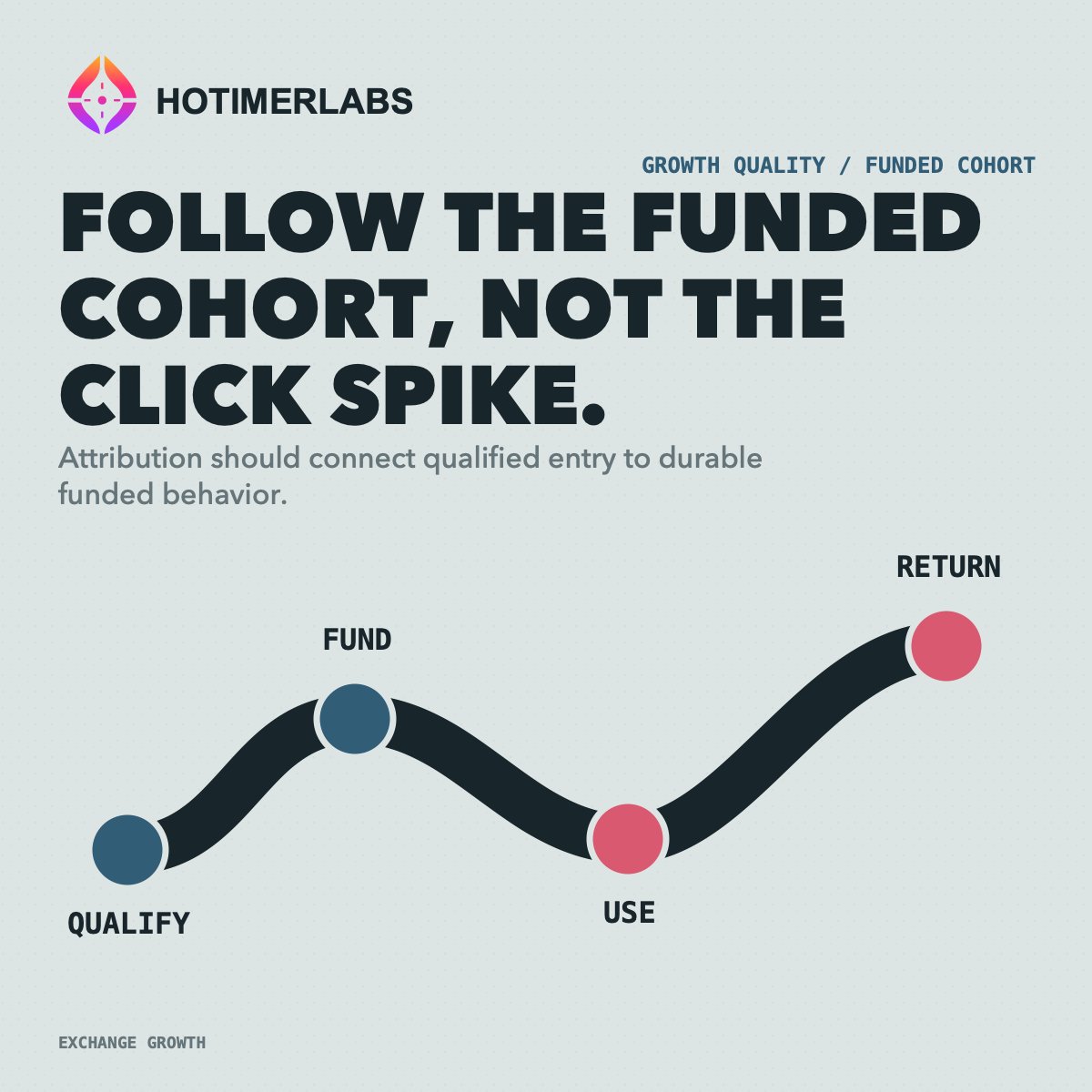
A click spike is not enough evidence of campaign quality.
Follow qualified entrants through funding, first use and return behavior, with a holdout where possible. Growth becomes useful when it produces an operable customer cohort.
#GrowthQuality
Campaign traffic should arrive behind reserved operating capacity.
Plan verification, funding, trading and support headroom by their own peak windows. Acquisition can be successful while the customer path still fails downstream.
#ExchangeGrowth
Repeated launch questions should change the operating plan.
Group search, support and community demand, then update product copy, staffing and escalation paths. A FAQ is useful when it reduces the next preventable failure.
#TokenLaunch
Self-trade prevention depends on identity scope.
Specify whether controls link account, subaccount, strategy or beneficial owner, and define the cancel outcome. The same order pair can be allowed or blocked under different scopes.
#ExchangeOps
Venue failover is a state transition, not just a routing switch.
Confirm eligibility, inventory, risk limits and the condition for returning to the primary path. A backup route that is merely reachable may still be unsafe to use.
#ExecutionOps
Quote obligations need an agreed session clock.
Define open, pause, maintenance and resume boundaries, including delayed venue states, before measuring performance. Scoring against different clocks creates disputes rather than oversight.
#MMGovernance
MM credential rotation needs a controlled overlap window.
Issue and verify the new key, define the cutover boundary, then prove the old credential is revoked. A successful login does not confirm that previous access is closed.
#MMGovernance
A deposit event can be visible before it is safe to credit.
Model seen, final, credited and reversed states separately, with network-specific evidence for each transition. Reorg handling should be designed before the first customer deposit.
#ListingReadiness
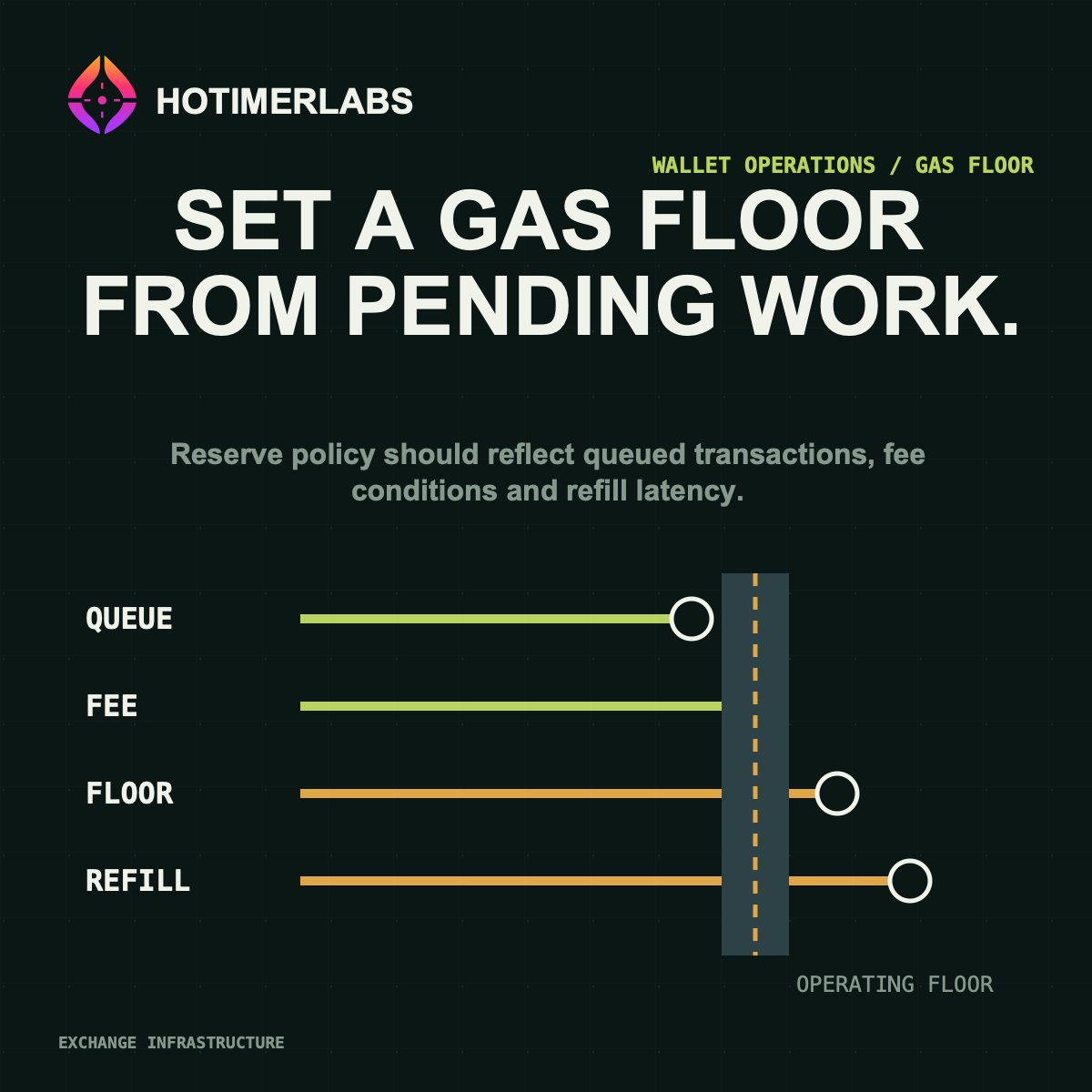
A hot-wallet gas floor should be tied to pending work.
Estimate queued transactions, fee conditions and refill latency, then set an alert and authority path. A static balance threshold can look healthy while withdrawals are already at risk.
#WalletOps
A reference price should expire by rule, not by intuition.
Carry source, timestamp, age tolerance and fallback together into every decision. A numerically valid price can still be operationally invalid when its market context has moved.
#ExecutionQuality
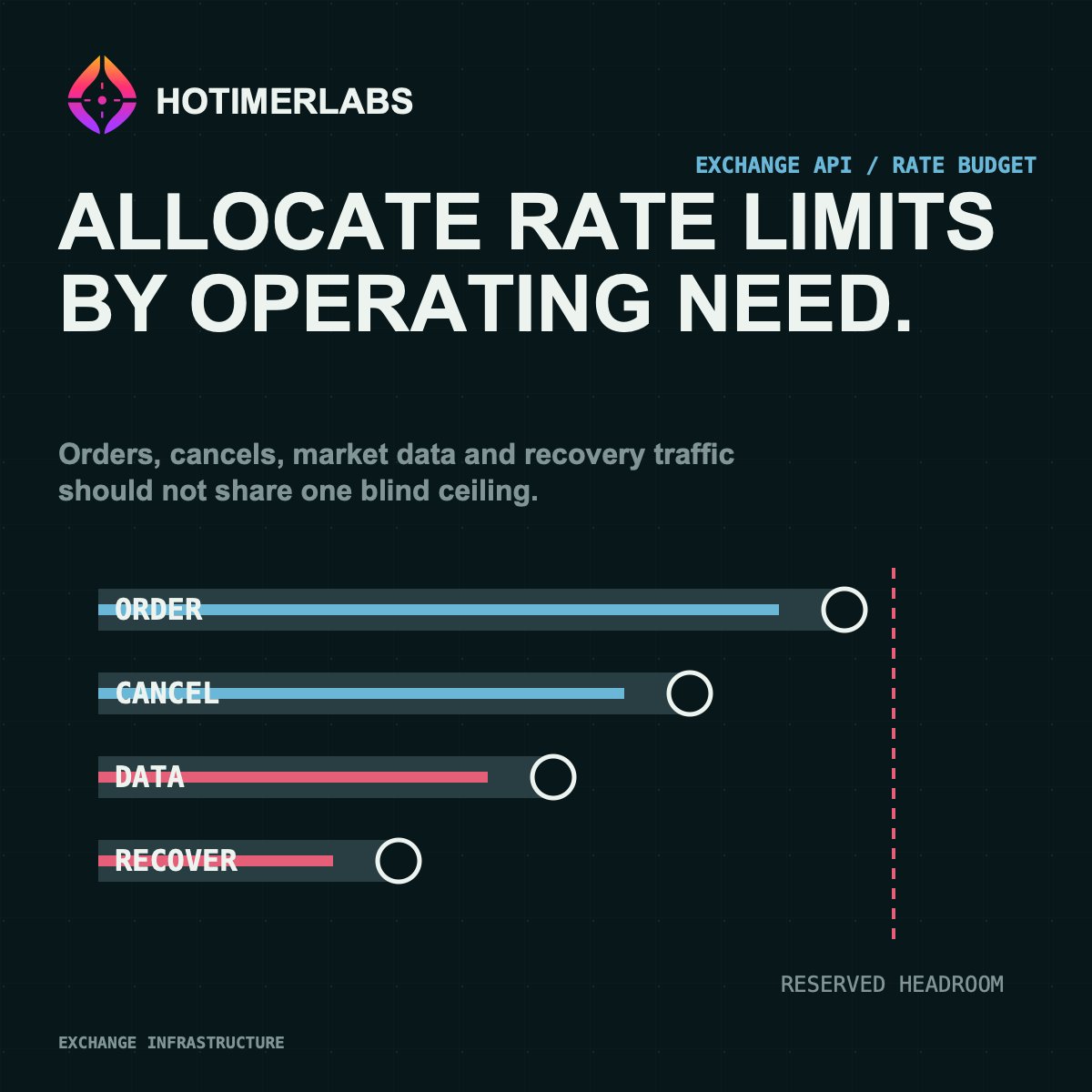
A rate limit is an operating budget, not only an abuse control.
Allocate capacity across orders, cancels, market data and recovery traffic, then define burst and reset behavior. One shared ceiling can block the action needed to reduce risk.
#ExchangeAPI
Order rejections should tell clients what kind of recovery is possible.
Separate validation, risk, market-state and capacity failures with stable reason codes. A generic rejection turns an operating decision into guesswork and repeated traffic.
#ExchangeAPI
A live order book is trustworthy only from a known sequence checkpoint.
Define snapshot alignment, delta ordering, gap detection and rejoin behavior. Connectivity without sequence integrity can produce a coherent-looking but incorrect book.
#MarketData