The second video from Niti Valley is even more terrifying.
After the reported cloudburst near Tamak, the Valley Bridge built by the BRO was swept away by the sudden surge of water.
The visuals show the raging water carrying away vehicles, with a BRO operator reportedly missing after the incident.
The disaster has also cut road connectivity between Niti Valley and the district headquarters.
This is the kind of force the mountains are facing tonight. Stay away from rivers, streams and vulnerable areas.
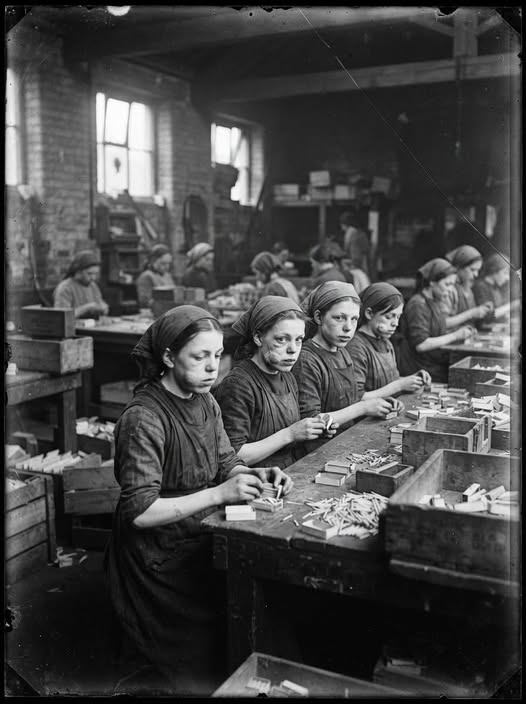
1903 - THE MATCH GIRLS WITH ROTTING JAWS, LONDON
This photo was taken in 1903 inside the Bryant & May match factory in Bow, East London.
Look at the young women's faces. Their jaws are swollen, rotting, glowing in the dark. They are teenagers — 14, 15, 16 years old. This disease was called "Phossy Jaw."
Their job was dipping matches into white phosphorus. White phosphorus is poison. Every day they breathed it. First their teeth fell out. Then their gums turned green and black. Then their entire jawbone rotted and had to be cut out by a doctor with no painkiller. Some died screaming.
The factory owners knew. They knew since 1880 that white phosphorus kills. But it was cheap. Safer red phosphorus cost 3 times more. So they kept using white.
These girls worked 14 hours, 6 days a week, for 4 shillings. If they talked, they were fined. If they dropped a match, they were beaten. Their faces glowed at night from the phosphorus — they called them "ghosts" on the streets of London.
In 1888, 1,400 of them went on strike. All teenagers. Led by a 16-year-old girl named Sarah Chapman. They marched to Parliament with their swollen faces and said: "We would rather starve than rot."
London was shocked. And finally, in 1908, Britain banned white phosphorus — because of these girls.
This was not medieval times. This was 1903 in London, the richest empire on earth.
They were just teenage girls working in a factory… but their courage forced an entire nation to change.
Maya diş hekimleri, yaklaşık 1.000 yıl önce diş çürüklerini yeşim taşı ve bitki bazlı antimikrobiyal maddeler kullanarak dolduruyordu.
Bu dolguların bazıları, yüzyıllar boyunca sağlamlığını koruyarak günümüze kadar ulaştı.