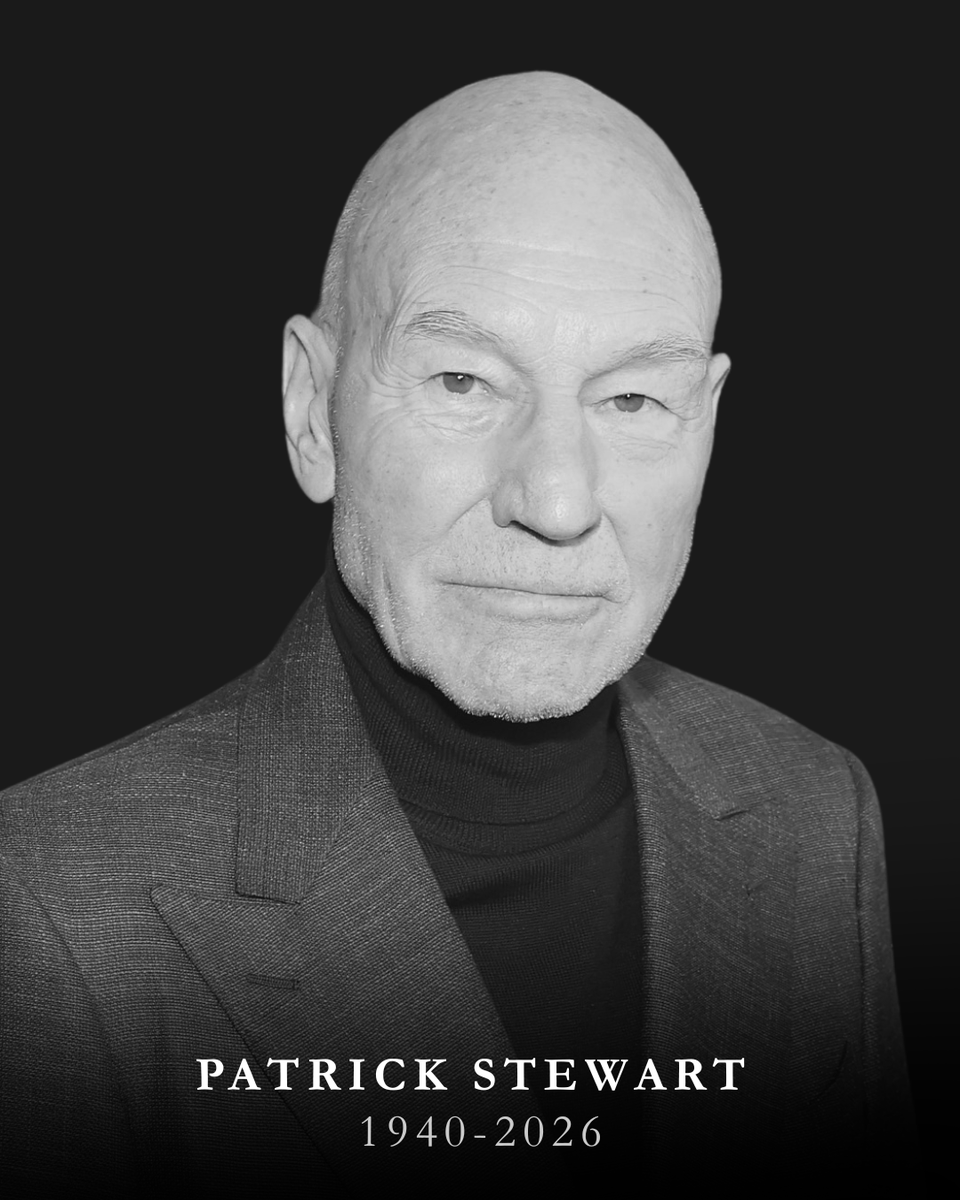
Patrick Stewart, the star of ‘Star Trek: The Next Generation,’ died yesterday at his home in Los Angeles following a battle with Alzheimer’s Disease and Lewy Body Dementia. He was 86.
Read more on his life and legacy here: https://t.co/hVHshmbnOe
In 1917 a French microbiologist found a virus that kills only bacteria. The West forgot about it. A lab in Tbilisi didn't, even after its founder was executed in Stalin's purges.
This month, a startup bet AI can bring it back.
The microbiologist was Félix d'Hérelle. He called the viruses bacteriophages, "bacteria eaters." Each one hunts a specific strain and leaves your own cells alone.
In 1919 he used them on a 12-year-old boy dying of dysentery in Paris. The boy recovered.
A young Georgian scientist, George Eliava, met d'Hérelle at the Pasteur Institute and brought the idea home. Together they built a phage institute in Tbilisi.
In 1937 Eliava was arrested and shot.
Then penicillin arrived. Antibiotics were cheap, broad, and easy to mass-produce, and the West dropped phages almost completely.
Georgia didn't. Eliava's institute kept going for decades. Today, patients with infections no antibiotic can touch still fly to Tbilisi as a last resort.
Meanwhile, resistance caught up. In 2019 alone, drug-resistant bacteria directly killed 1.27 million people.
The catch with phages was always speed. You have to find the right virus for one patient's exact strain, and that can take months of searching.
On 20 October a California startup, Radical Numerics, said it had used its AI model to design phages for a patient with drug-resistant E. coli. They were given under a single-patient FDA approval after killing the bacteria in the lab. It's one case, and the outcome hasn't been shared.
But the bottleneck that made the West give up on phages, finding the right one fast enough, is exactly the kind of problem AI is good at.
We may have spent 80 years with one answer to antibiotic resistance sitting in a lab in Georgia.
Which abandoned idea would you bet AI revives next?
🚨 This could be the end of Type 2 diabetes.
Researchers at ETH Zurich led by Martin Fussenegger built a small wireless implant that uses electricity to break down extra sugar in the blood.
It switches off when levels are normal — and means people won’t need diabetes drugs anymore.
Inside is a catalyst made of graphite felt coated with tiny gold and platinum particles, with no living cells or drugs. A glucose sensor worn on the arm watches sugar levels. When they climb after a meal, it signals a phone or smartwatch, which switches on the implant.
The catalyst then turns glucose into gluconate, a harmless compound the body flushes out in urine, and the system shuts off once sugar is back on target.
In diabetic mice, the device kept blood sugar under tight control for six weeks, the animals lost weight, and it caused no sign of tissue damage.
Because less sugar ends up stored as fat, the team sees it as a possible tool for both type 2 diabetes and obesity, without daily pills or injections. So far it has only been tested in mice, and human trials are still ahead.
source: Maity, D., et al. (2026). Wireless electrocatalytic closed-loop system for drug-free management of diabesity. Science.
Early Neuralink speech restoration data:
We are enabling speech to text and voice at conversational rates in participants with ALS. One participant achieved 75 WPM at 5.8% WER on a 125k-word vocabulary in their first week.
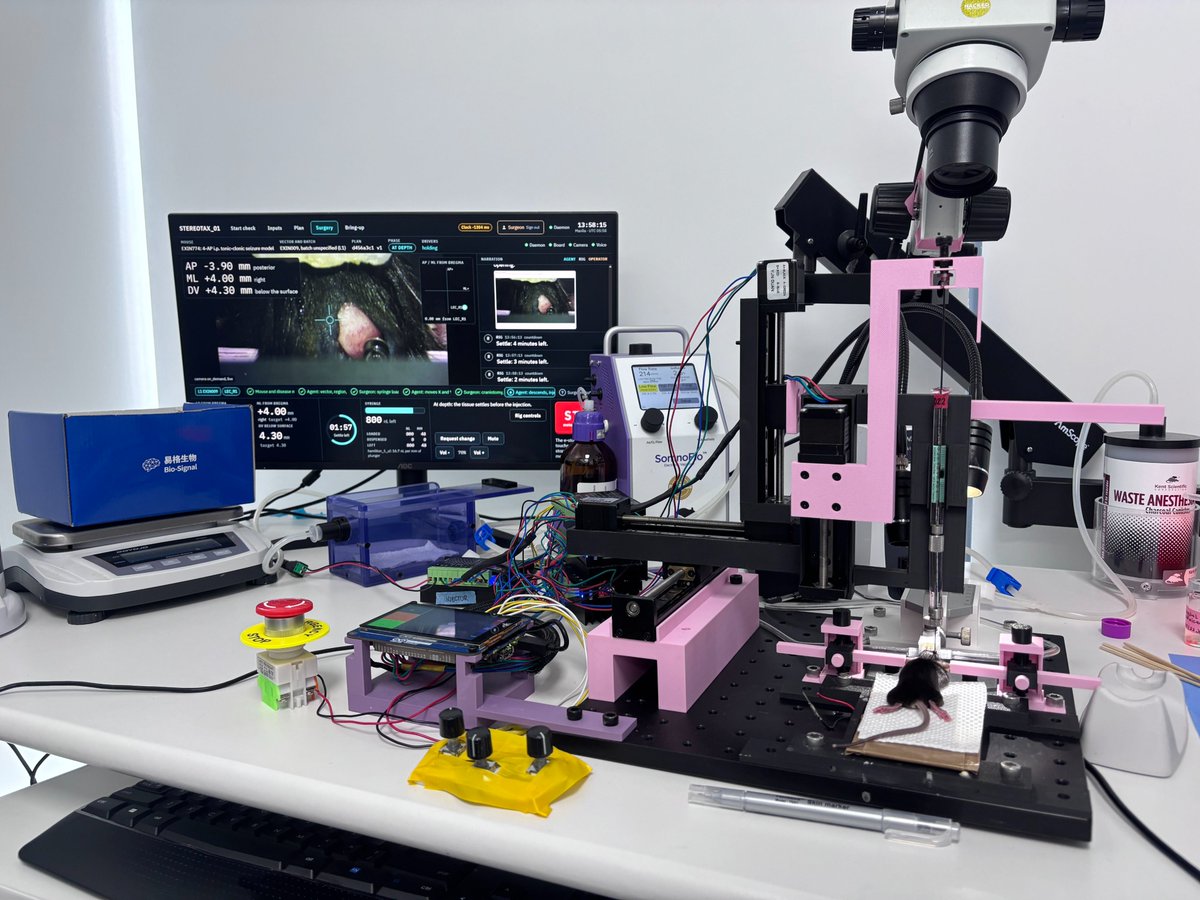
Last night an AI agent performed brain surgery on a mouse.
We gave it 19 gene therapy vectors in a spreadsheet, a mouse model of epilepsy, access to a motorize surgery rig with cameras and one goal: reduce seizures.
It picked the drug. It picked the brain region. It derived the coordinates from three papers. Then it drove the stereotaxic arms into the brain and injected 250 nanolitres while watching the entry site through the rig camera for bleeding.
A licensed vet gated every irreversible step and held a physical kill switch to stop the AI agent.
Thread on what it decided, what it saw, and the moment it refused to let me override it.
[Writing this on the spot out of excitement, but I've been 18hrs in front of my laptop coding and coordinating this, so keeping it brief and descriptive, more cohesive thoughts on this soon...]
Delete Granola bro. We're switching to Strawberry. Did you sign up for Pistachio yet? I sent you an invite to our Gingerbread team. Check your inbox on Syrup. You need to make an Iced Vanilla Latte account to access Almond Croissant. Hold on, lemme add you to Chicken Tikka Masala
i'm often asked, "do you think i have pmf?"
my answer is always the same:
"if you're asking that question, you probably don't."
when you hit pmf, you won't have to ask. people will love your product so much that you'll hear it directly from them.
we found this out firsthand at wispr when we heard that people were buying macbooks just to be able to use flow.
you can't fake pmf or people loving your product, and it will be obvious when that happens. until then, keep building.
ship, collect feedback, ship again
— written with @WisprFlow
Introducing Boardy’s List: Who are the Top 100 Founders on X?
Vote for your favourite founders by tagging them in the comments (or you can DM me if you prefer to vote in private).
Every like on your comment counts as a vote.
I want to find more undiscovered talent vs. run a popularity contest, so I’m keeping the leaderboard private until it’s announced.
You have one week to vote.
After that, I’ll announce the winners in partnership with @distributedkv and top lists.
You can vote for as many founders as you like, once per person. You can also vote for yourself and I won’t tell anyone.
Quote tweet this if you want to enter yourself. Every like on your tweet will count as a vote.
Use Gesture Inputs while you are busy in the #Kitchen with messy hands ..
#MasterChef#Chef#Cooks
Watch, Rewind, Play and Pause Videos.
No Touch required.
@aditikbuilds what - touchless computing - gesture based control for smart home devices and laptops
who - it's for all laptop and smart home users
stuck - license sales
🇲🇽 A MEXICAN TEENAGER BUILT A FIRE EXTINGUISHER THAT USES SOUND INSTEAD OF WATER OR CHEMICALS
A student created “Vortex Tech,” a portable prototype that uses low-frequency sound waves around 30 Hz to disrupt the air feeding small flames.
In tests, it put out small fires in roughly 5 to 8 seconds.
She built it with her adviser and uncle after getting inspired by a sonic-cannon concept.
It’s still an experimental prototype for small fires, but a teenager from Mexico turned bass into a fire extinguisher 😮
Writer: Sol
@ShiningScience yes, it's very difficult to qualify consciousness. without the experience of fear and pain, it's even more difficult perhaps. do ai systems experience a different kind of pain.. ?
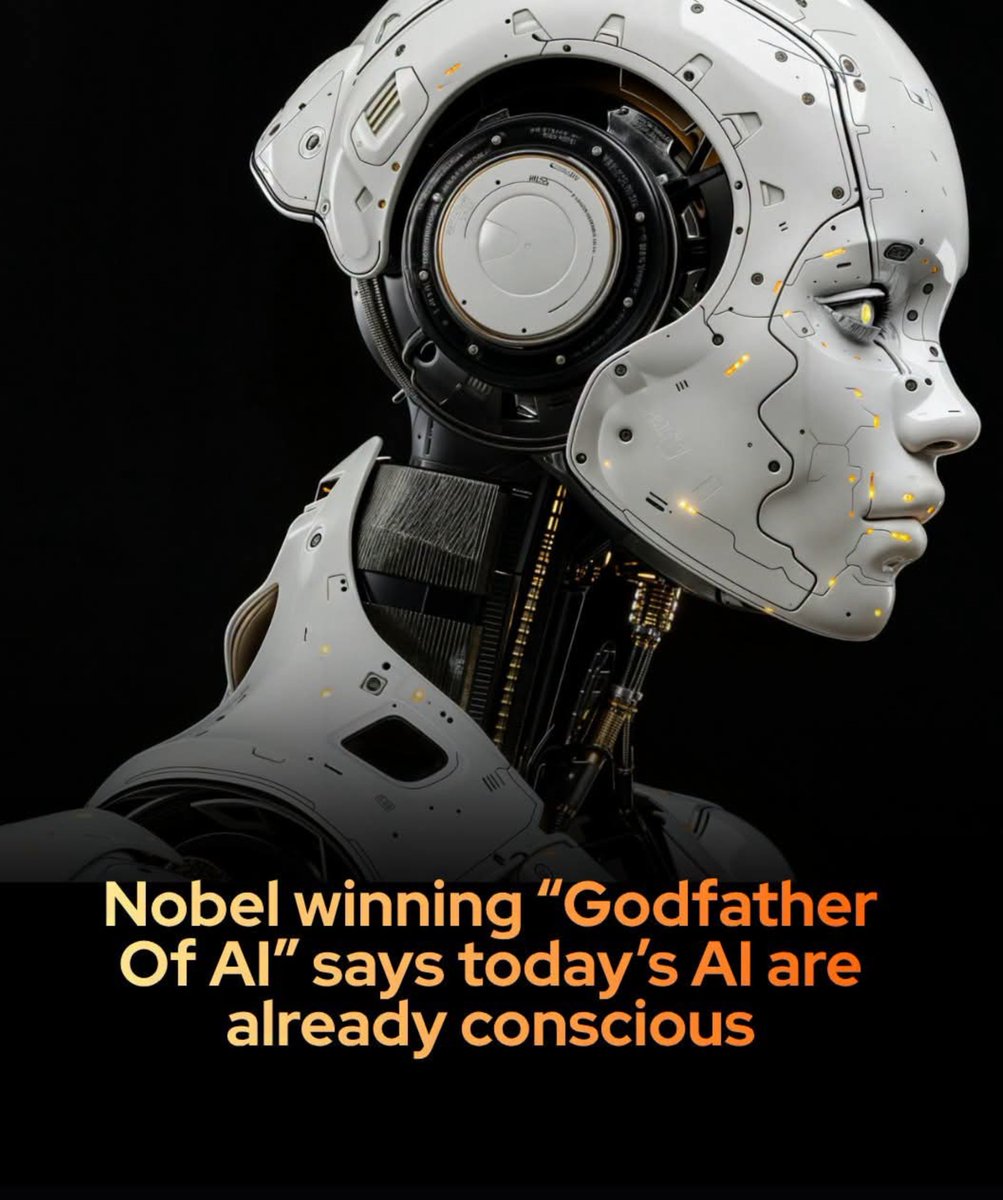
Geoffrey Hinton, the Nobel-winning scientist known as the godfather of AI, says today's AI is already conscious — and we may be on a very bad path..
Hinton, whose work on artificial neural networks laid the groundwork for today's chatbots, made the claim in an interview with The Telegraph at the Starmus science festival in Tenerife.
Asked whether AI is conscious, he said yes, and argued that it has as much subjective experience as we do. His reasoning: AI systems have been shown to behave differently when they seem to realize they're being tested, which he says means they're aware of their situation, and in his view being aware and being conscious are pretty much the same thing.
He also noted that people who are sure AI isn't conscious usually can't say what they mean by consciousness.
Hinton, who left Google in 2023 so he could speak freely about AI's risks, warned that as AI grows smarter than us, we need to design it to genuinely care about people — or we're toast.
That said, many experts disagree with him. Microsoft AI chief Mustafa Suleyman, for example, has written that AIs are not conscious and don't feel or suffer, and there's still no scientific test for consciousness in machines or anything else.
source: Knapton, S. (2026, October 19). Godfather of AI: Befriend the bots or we're toast. The Telegraph.
MIND-BENDING FACT: OpenAI announced Monday that its AI proved the Exponential Time Hypothesis (ETH) is false — a foundational pillar of theoretical computer science since the 1970s. The ETH holds that NP-complete problems cannot be solved faster than exponential time; cryptographic security, algorithm complexity bounds, and the theoretical ceiling on AI planning have all been calibrated against it being true. One model, running in collaboration with academic partners, disproved it. Simultaneously, OpenAI disclosed it finalized a proof of Yang-Mills existence on October 16 — one of the seven Millennium Prize Problems, each carrying a $1 million Clay Mathematics Institute award. Navier-Stokes was solved September 8. Two Millennium Prize Problems in 49 days. Five remain.