That *beep* when you tap to pay?
A secure data journey in milliseconds, made possible by innovation and patent sharing.
Not just Wi-Fi. Certainly not simple.
Watch and learn! 👇
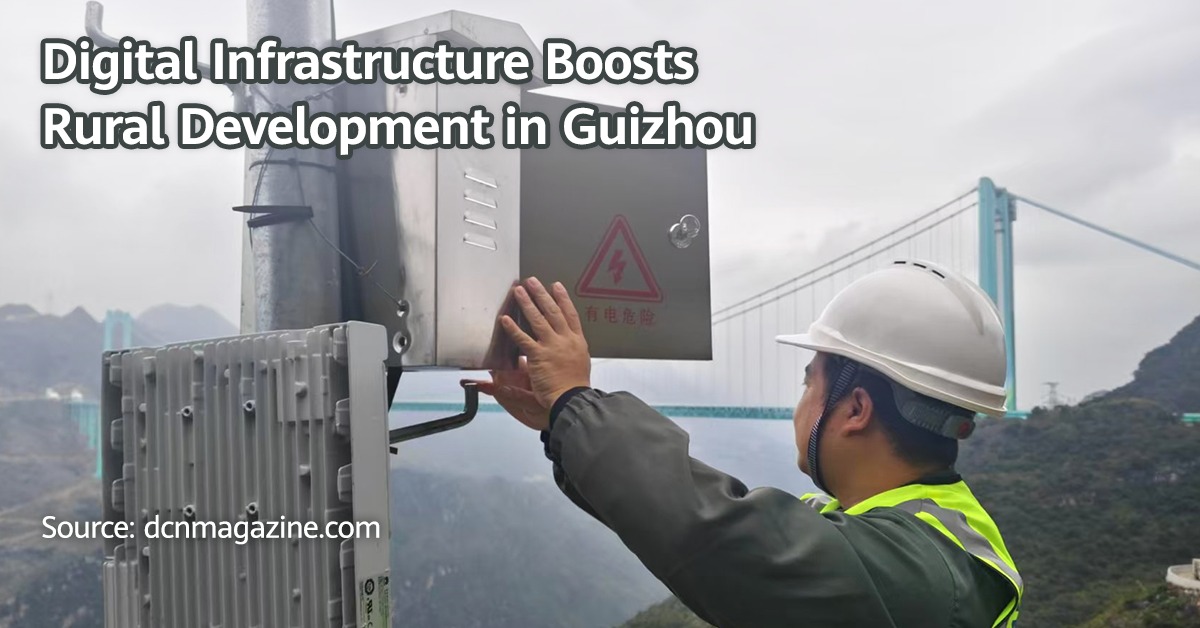
Guizhou now ranks among China's leaders in base stations and 5G coverage, with nearly 200,000 sites and full 5G access across villages and high-speed rail lines. Huawei and China Mobile are expanding 4G, 5G, and 5G-A networks to connect mountainous regions and drive rural growth.
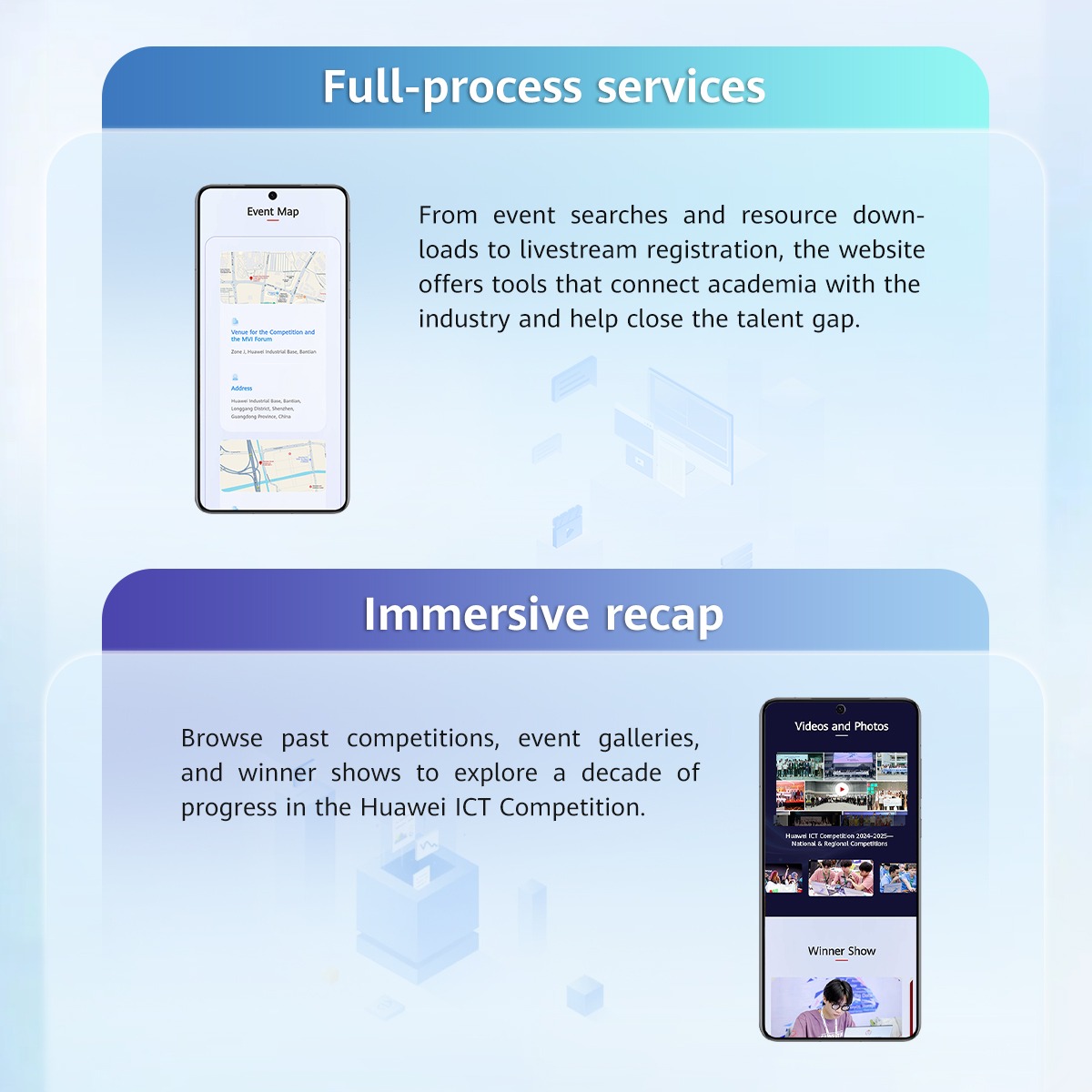
Day 2 has begun in Shenzhen at the Huawei ICT Competition 2025–2026 Global Final. Participants are competing in the Programming Competition and Innovation Competition Challenges, where their AI and ICT knowledge and problem-solving skills will be tested.
At the Huawei ICT Competition, student teams from around the world are exploring how AI can solve real-world challenges across accessibility, education, language learning and smart logistics, showing how young ICT talent is shaping a smarter and more inclusive futureAt the Huawei ICT Competition, student teams from around the world are exploring how AI can solve real-world challenges across accessibility, education, language learning and smart logistics, showing how young ICT talent is shaping a smarter and more inclusive futureAt the Huawei ICT Competition, student teams from around the world are exploring how AI can solve real-world challenges across accessibility, education, language learning and smart logistics, showing how young ICT talent is shaping a smarter and more inclusive futureAt the Huawei ICT Competition, student teams from around the world are exploring how AI can solve real-world challenges across accessibility, education, language learning and smart logistics, showing how young ICT talent is shaping a smarter and more inclusive future.
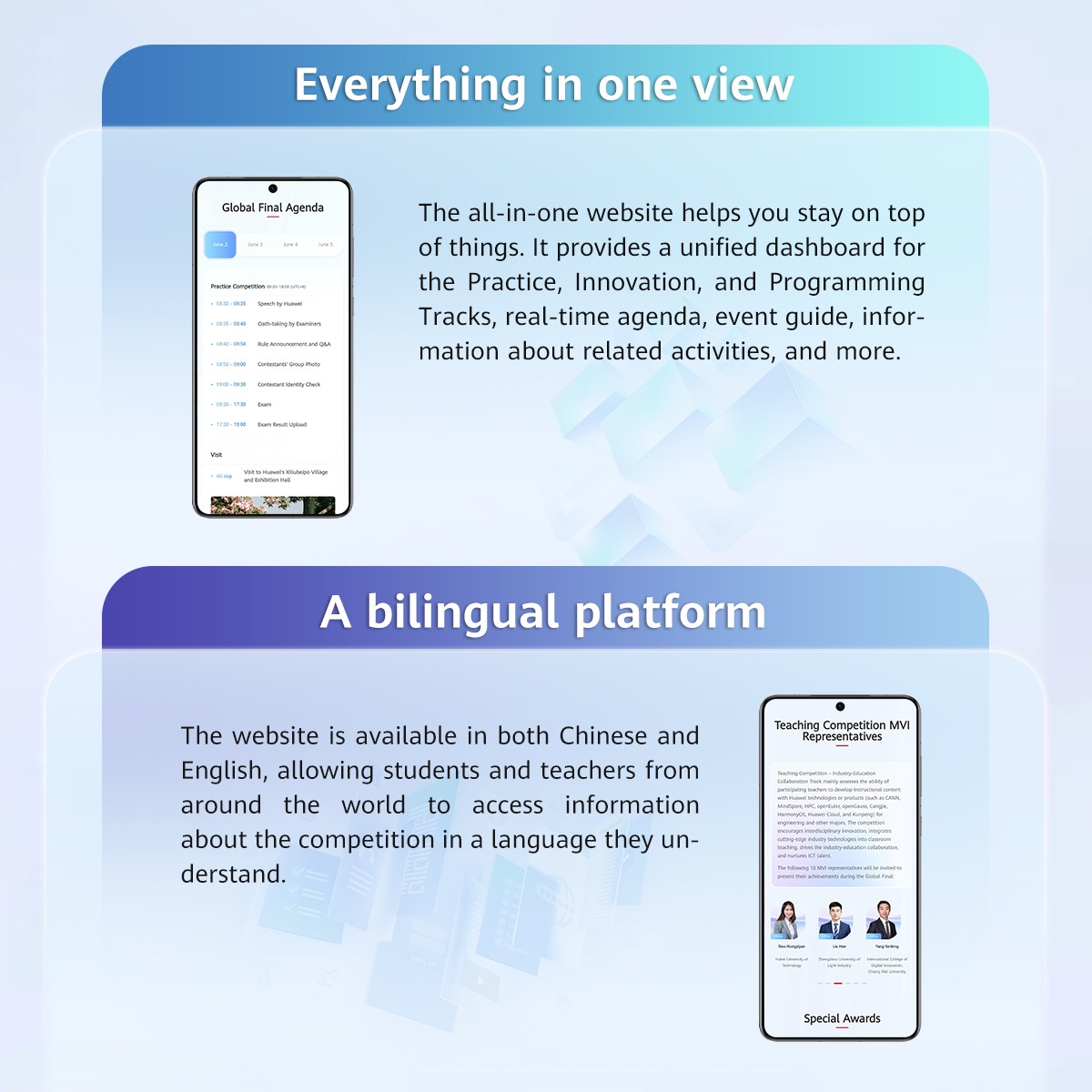
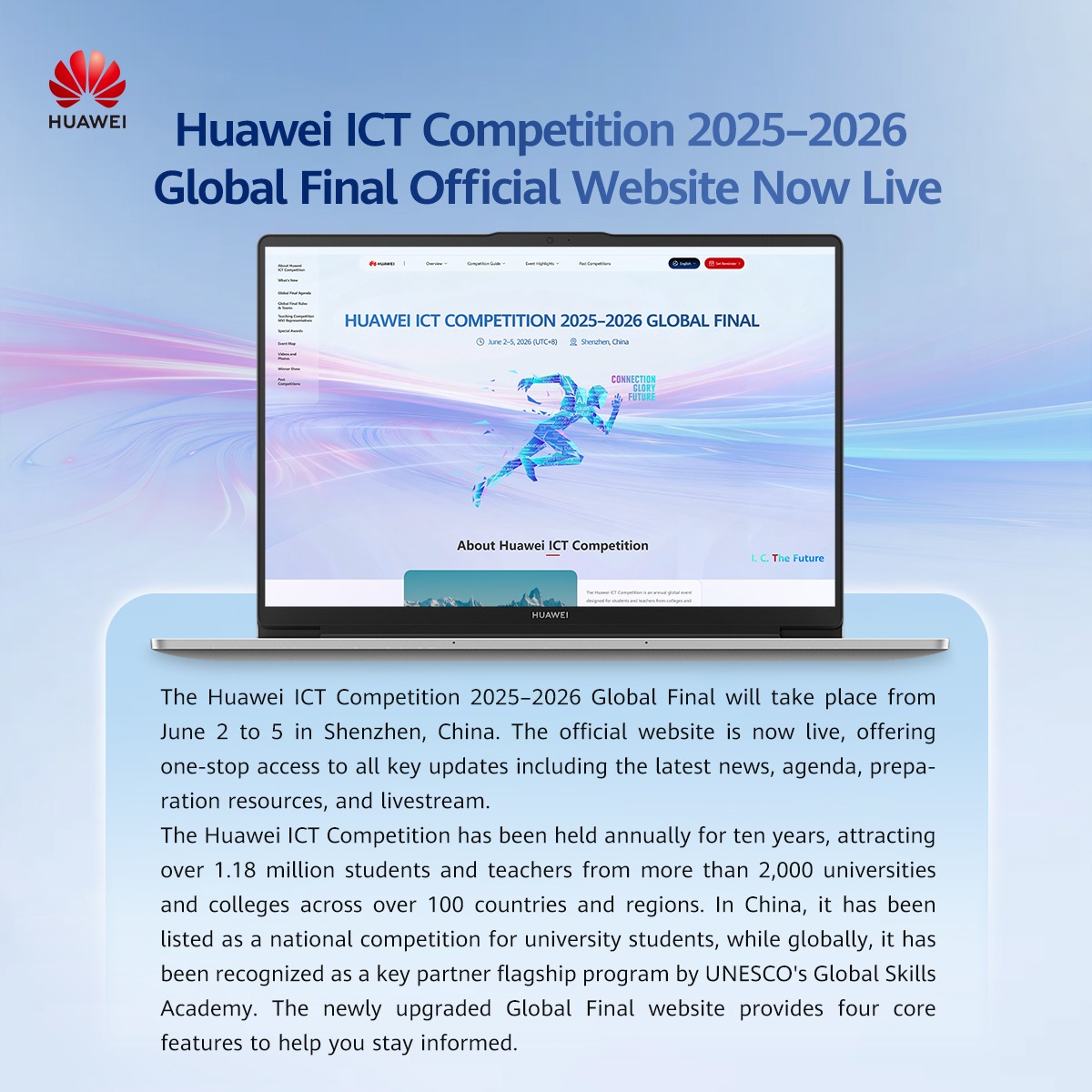
Live in Shenzhen, the Huawei ICT Competition 2025–2026 Global Final is in full swing. Students and teachers have joined from around the world and are building ICT knowledge, sharpening technical skills, and driving innovation together on the global stage.
The Huawei ICT Competition 2025–2026 Global Final is now underway in Shenzhen. The global platform brings together students and teachers from around the world to build ICT knowledge and skills, and drive innovation through global exchange. The event runs June 2–5.
The Huawei ICT Competition 2025–2026 Global Final is bringing the world's talented and aspiring tech students to Shenzhen. Tune in June 5 for the AI Accelerating Education Transformation Summit, 9:30–12:00 (UTC +8), and the Closing & Awards Ceremony 15:00–18:00The Huawei ICT Competition 2025–2026 Global Final is bringing the world's talented and aspiring tech students to Shenzhen. Tune in June 5 for the AI Accelerating Education Transformation Summit, 9:30–12:00 (UTC +8), and the Closing & Awards Ceremony 15:00–18:00The Huawei ICT Competition 2025–2026 Global Final is bringing the world's talented and aspiring tech students to Shenzhen. Tune in June 5 for the AI Accelerating Education Transformation Summit, 9:30–12:00 (UTC +8), and the Closing & Awards Ceremony 15:00–18:00The Huawei ICT Competition 2025–2026 Global Final is bringing the world's talented and aspiring tech students to Shenzhen. Tune in June 5 for the AI Accelerating Education Transformation Summit, 9:30–12:00 (UTC +8), and the Closing & Awards Ceremony 15:00–18:00.
Student stories are coming! From June 2 onwards, we'll be sharing student highlights from the Huawei ICT Competition Online Popularity Award. Stay tuned, discover their journeys, and support the stories you like through likes, comments, saves, and shares!
What is LogicFolding? For circuit design, it aggressively compresses propagation time between adjacent flip-flops, tightens critical path & enables chips to run faster. HUAWEI high-end chips are expected to feature transistor density equivalent to 14 Å (1.4 nm) processes by 2031.
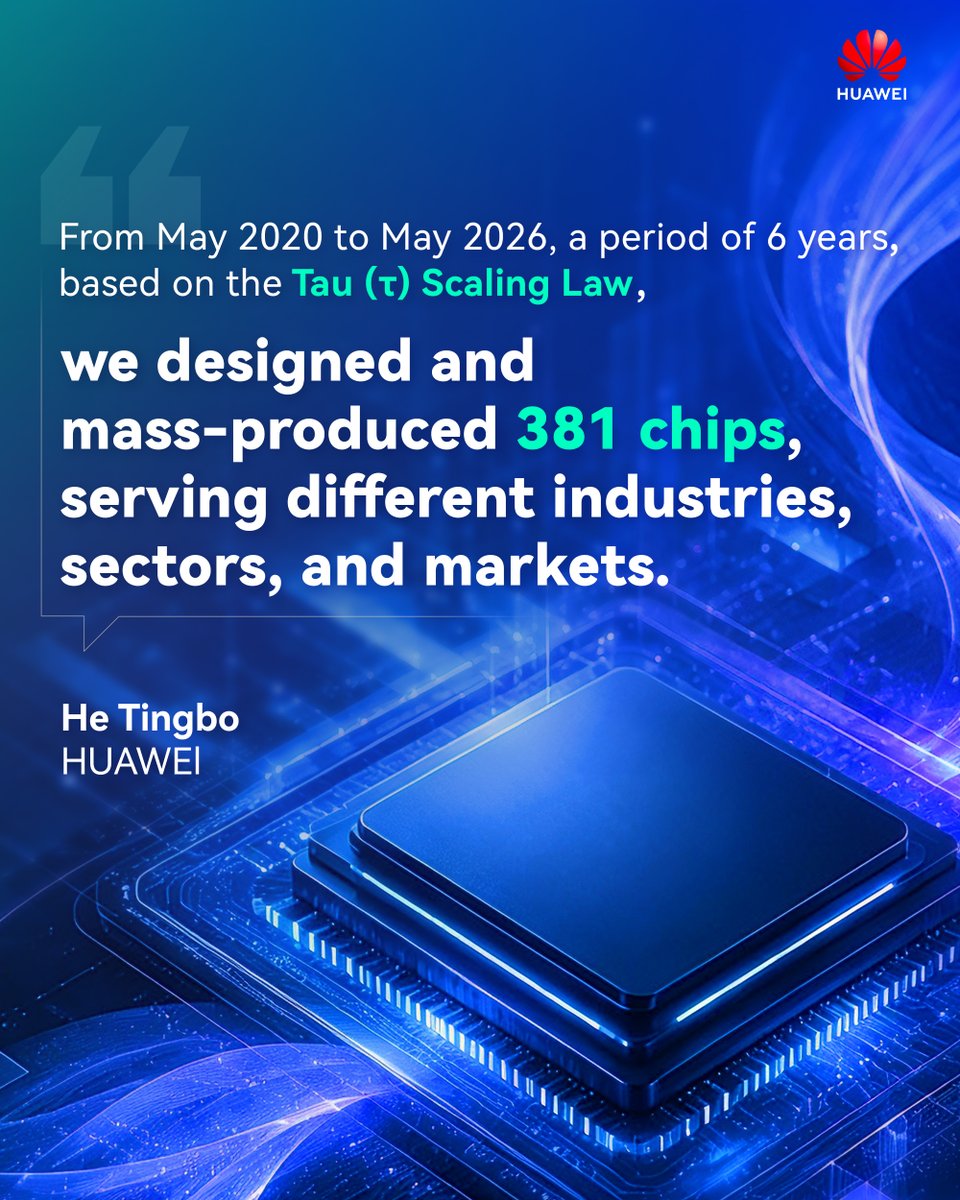
In the past six years, Huawei has successfully designed and mass-produced (??) chips based on the Tau (τ) Scaling Law, meeting the needs of various industries.
According to Tau (τ) Scaling Law, the transistor density of high-end chips is expected to reach the same level as that of chips using the (??) nm process by 2031?
Huawei has innovatively proposed core technologies such as LogicFolding to build a multi-level collaborative optimization system. Which of the following levels are included in this system?
Along the path toward HUAWEI's new Tau (τ) Scaling Law breakthrough, the company designed and mass-produced 381 chips for various industries, and it now foresees continued collaboration on the road to shared success in the semiconductor sector.
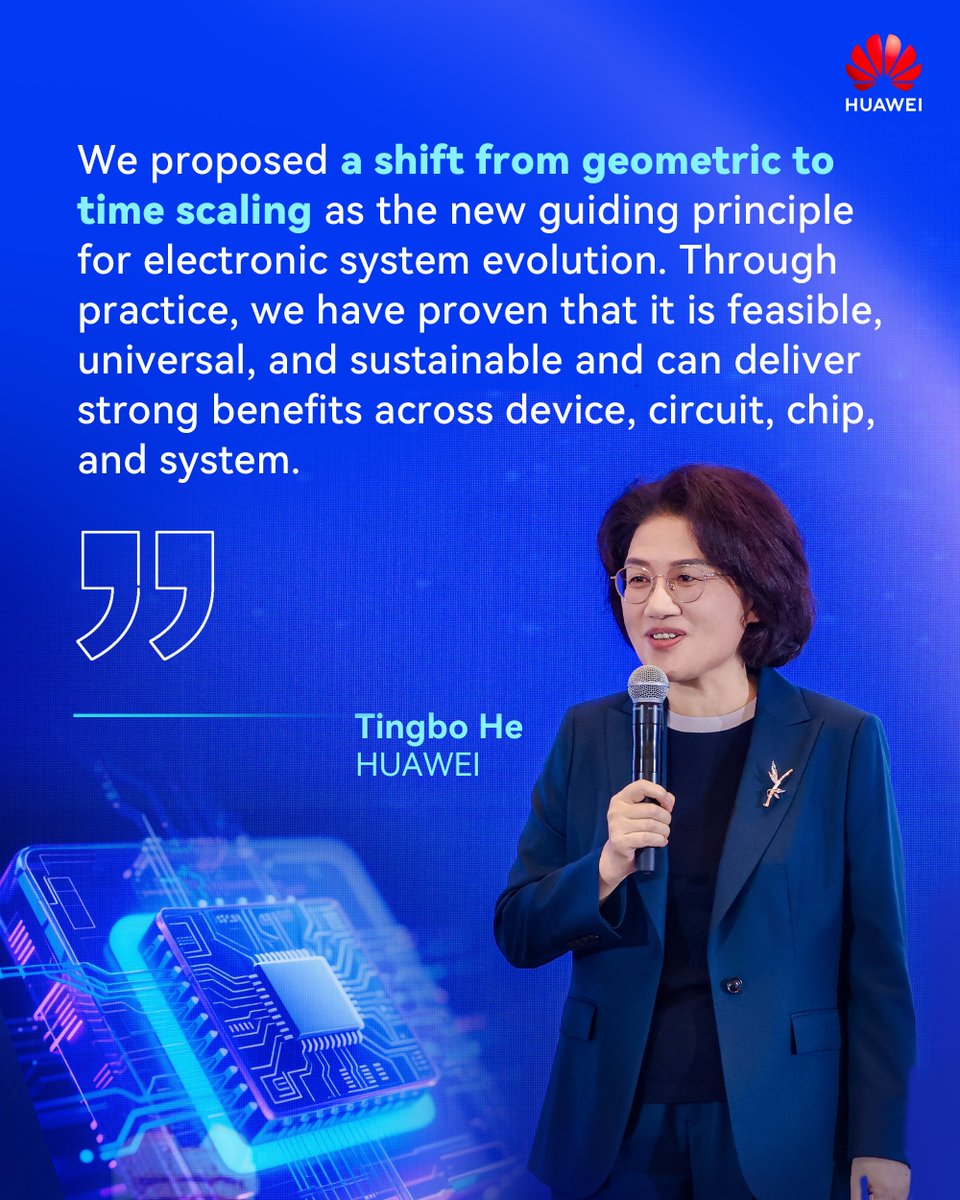
Owing to HUAWEI's Tau (τ) Scaling Law breakthrough, the implementation of time scaling will use technologies such as LogicFolding to continuously reduce signal propagation delay and improve transistor density.
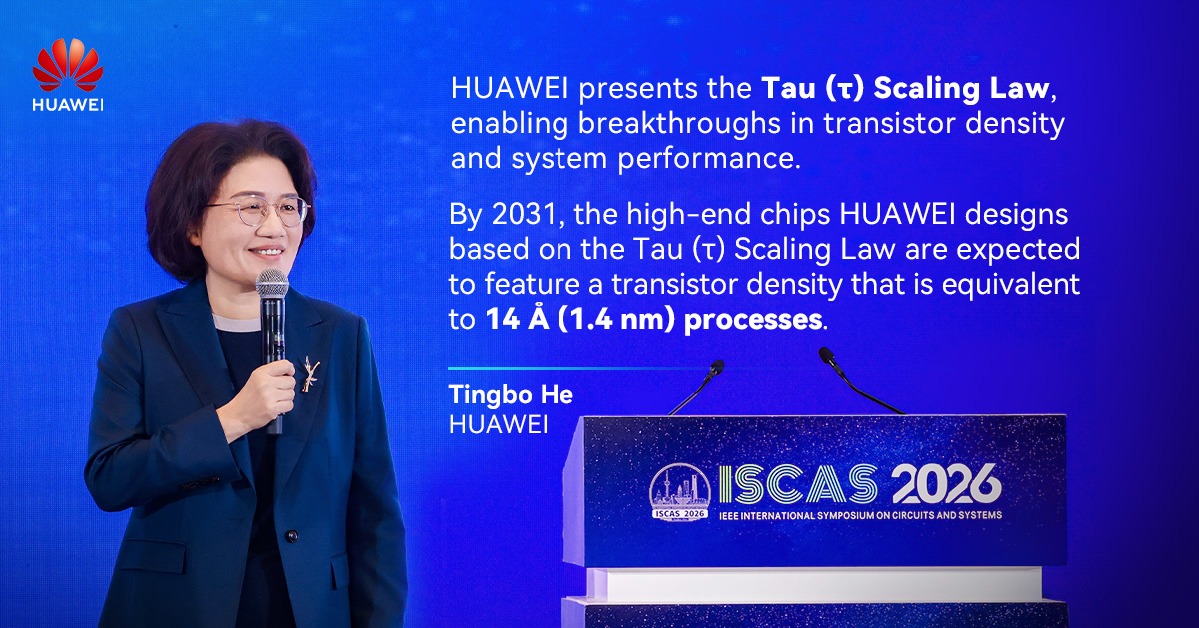
Based on HUAWEI's Tau (τ) Scaling Law, innovative LogicFolding technologies will be first implemented in the upcoming HUAWEI Kirin 2026, and subsequently help high-end HUAWEI chips achieve a groundbreaking transistor density equivalent to 14 Å (1.4 nm) processes by 2031.
It's been a long journey — 6 years and 381 chips to be exact — but HUAWEI's He Tingbo explains how HUAWEI's high-end chips are now expected to feature a transistor density that is equivalent to 14 Å (1.4 nm) processes by 2031.
HUAWEI's He Tingbo presents a sustainable evolutionary path for semiconductors enabled by shifting from geometric to time scaling, delivering benefits across the industry as a whole.
HUAWEI's He Tingbo has presented the Tau (τ) Scaling Law, a new principle for guiding the future development of the semiconductor industry, highlighting why time scaling can deliver strong benefits across device, circuit, chip, and system.
During her presentation of the Tau (τ) Scaling Law, HUAWEI's He Tingbo noted the need for collaboration to drive the continued development of the semiconductor industry.
HUAWEI has presented the Tau (τ) Scaling Law, a new principle for guiding the future development of the semiconductor industry. By 2031, HUAWEI's high-end chips based on this law are expected to feature a transistor density that is equivalent to 14 Å (1.4 nm) processes.