Tune in now! The Huawei ICT Competition 2025–2026 Global Final Closing & Awards Ceremony is streaming live. Join to experience the best moments, and watch top ICT talent take center stage. https://t.co/U0OOb0S1RO
The AI Accelerating Education Transformation Summit is now live. Join the livestream to explore AI-driven education, insights, and real-world innovation. See what's shaping the future of learning at the Huawei ICT Competition 2025–2026 Global Final. https://t.co/poWIcmqxGf
Telecom Egypt (WE), in partnership with Huawei has launched Fiber-to-the-Room services in Egypt to improve high-speed internet coverage in homes with multiple rooms. The solution extends fiber-optic connectivity to individual rooms, addressing weak signals and network congestion.
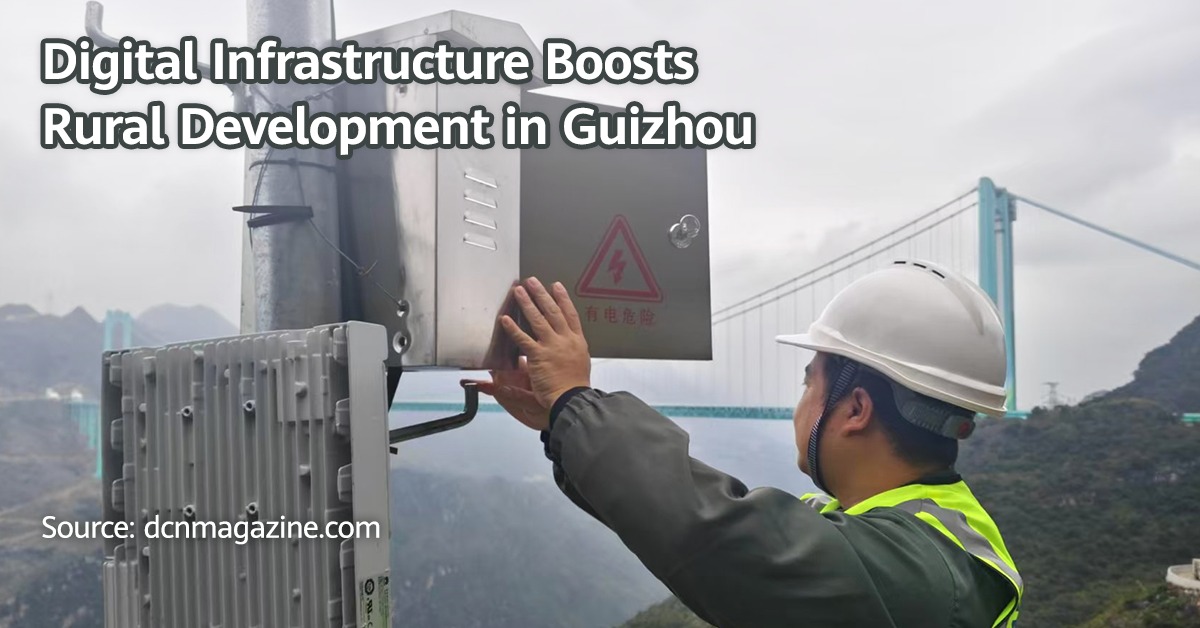
Guizhou now ranks among China's leaders in base stations and 5G coverage, with nearly 200,000 sites and full 5G access across villages and high-speed rail lines. Huawei and China Mobile are expanding 4G, 5G, and 5G-A networks to connect mountainous regions and drive rural growth.
As a founding member of the Via Licensing Alliance Voice Codec patent pool, Huawei welcomes its expansion, and remains committed to open innovation, supporting the voice communications industry with an efficient, one-stop licensing solution.
Huawei welcomes the addition of a new licensee and licensors to the Via Licensing Alliance Voice Codec patent pool, together with the publication of a transparent and comprehensive payment structure that addresses market needs.
At Zambia Mobile Congress 2026, the SMART Zambia Institute signed an MoU with Huawei, supporting AI-powered e-government across all 25 ministries. The agreement focuses on cloud & AI infrastructure, AI deployment, a data center study, and training 5,000 ICT professionals by 2028.
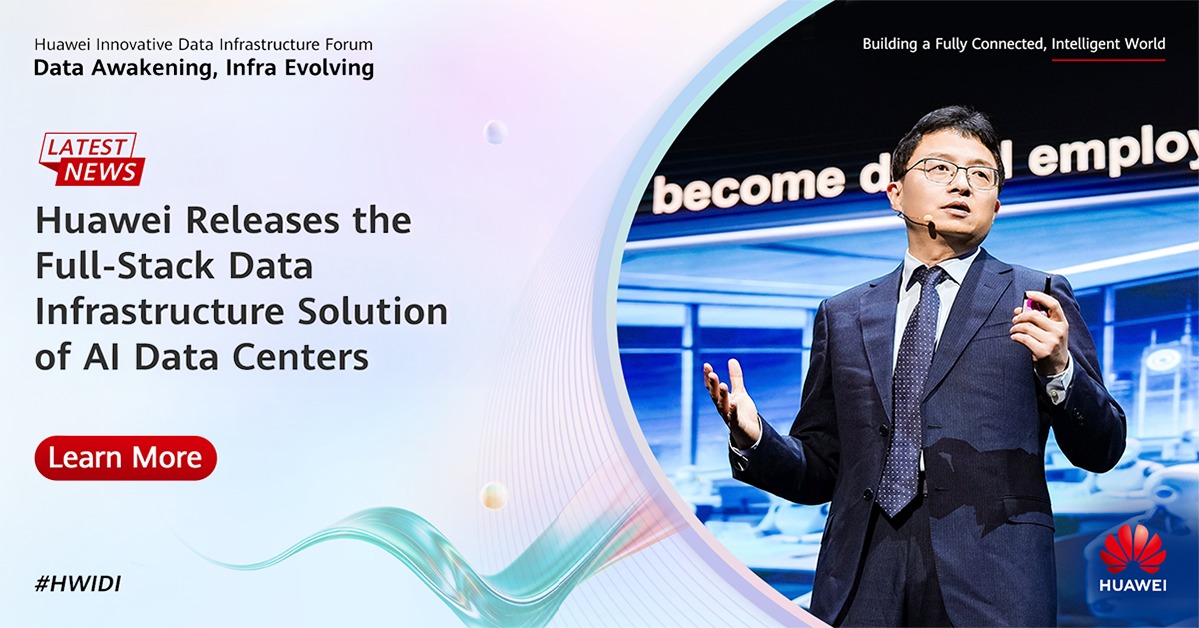
At Huawei Innovative Data Infrastructure Forum 2026, Yuan Yuan, President of Huawei Data Storage Product Line, delivered a keynote titled "Data Awakening, Infra Evolving", unveiling a full-stack data infrastructure solution for AI data centers to accelerate industry intelligence.
At the Huawei Code4Mzansi finals, young innovators proved that technology works best when it solves the challenges people face every day with solutions spanning from AI-powered food safety tools for spaza shops to telemedicine, smart agriculture, and community credit platforms.
HUAWEI has unveiled the Tau (τ) Scaling Law, a new principle guiding the evolution of both semiconductors and electronic systems, which is expected to deliver transistor density equivalent to 14 Å (1.4 nm) processes in high-end chips by 2031.
What is LogicFolding? For circuit design, it aggressively compresses propagation time between adjacent flip-flops, tightens critical path & enables chips to run faster. HUAWEI high-end chips are expected to feature transistor density equivalent to 14 Å (1.4 nm) processes by 2031.
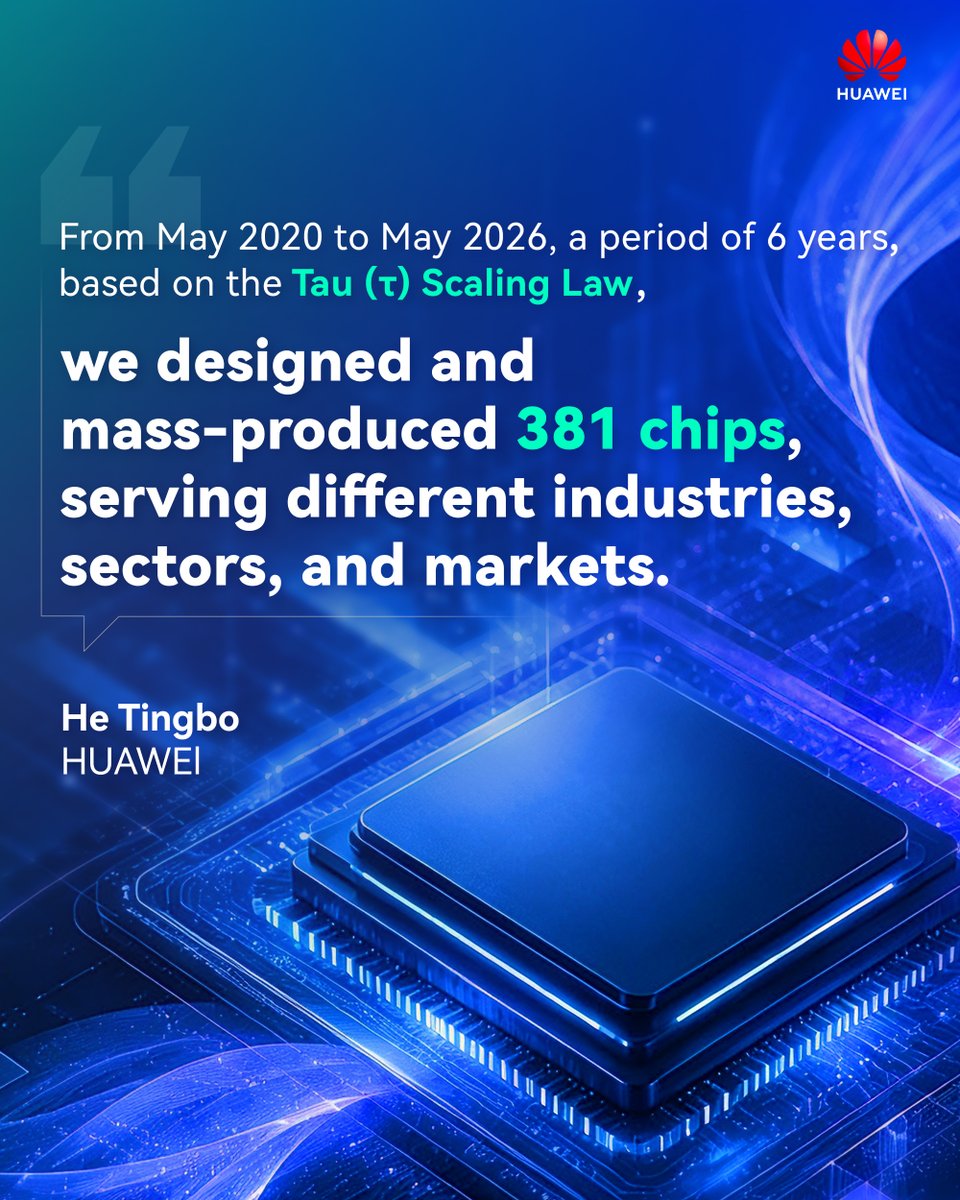
In the past six years, Huawei has successfully designed and mass-produced (??) chips based on the Tau (τ) Scaling Law, meeting the needs of various industries.
According to Tau (τ) Scaling Law, the transistor density of high-end chips is expected to reach the same level as that of chips using the (??) nm process by 2031?
Huawei has innovatively proposed core technologies such as LogicFolding to build a multi-level collaborative optimization system. Which of the following levels are included in this system?
Along the path toward HUAWEI's new Tau (τ) Scaling Law breakthrough, the company designed and mass-produced 381 chips for various industries, and it now foresees continued collaboration on the road to shared success in the semiconductor sector.
Owing to HUAWEI's Tau (τ) Scaling Law breakthrough, the implementation of time scaling will use technologies such as LogicFolding to continuously reduce signal propagation delay and improve transistor density.
Based on HUAWEI's Tau (τ) Scaling Law, innovative LogicFolding technologies will be first implemented in the upcoming HUAWEI Kirin 2026, and subsequently help high-end HUAWEI chips achieve a groundbreaking transistor density equivalent to 14 Å (1.4 nm) processes by 2031.
It's been a long journey — 6 years and 381 chips to be exact — but HUAWEI's He Tingbo explains how HUAWEI's high-end chips are now expected to feature a transistor density that is equivalent to 14 Å (1.4 nm) processes by 2031.
HUAWEI's He Tingbo presents a sustainable evolutionary path for semiconductors enabled by shifting from geometric to time scaling, delivering benefits across the industry as a whole.