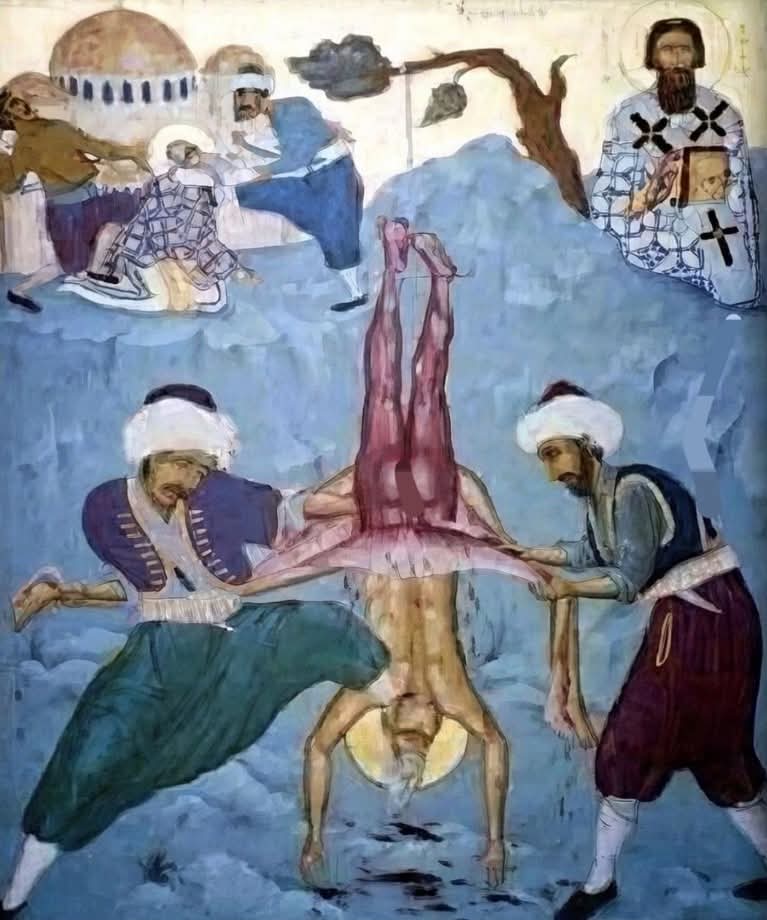
Hanging quietly inside the National Museum of Serbia is a painting dated 1595 that does not ask for attention—it commands it.....
It depicts Serbian Orthodox Bishop Teodor of Vršac at the moment of his execution, being flayed alive by Ottoman authorities. His crime was not theft or rebellion for personal gain. It was leadership. Faith. A refusal to renounce his religion and submit to imperial rule.
This was the late 16th century, a time when the Ottoman Empire ruled much of the Balkans. Control was maintained not only through armies, but through fear. Public executions were meant to send messages, and flaying—though not routine—was a documented punishment reserved for figures seen as dangerous symbols of resistance. Clergy, community leaders, and rebels who refused conversion or defied authority were sometimes made examples of in the most brutal ways possible.
Bishop Teodor had supported the Banat Uprising of 1594, a Serbian revolt that mixed faith, identity, and survival. When the uprising failed, the retaliation was merciless. His execution was staged to be remembered—and it was.
That is why the painting exists. It is not propaganda. It is testimony. Painted decades later, it reflects how communities preserved memory when justice was impossible. When no court would record the crime, art did. When silence was enforced, images spoke. The bishop’s exposed flesh is not there for shock—it is there to tell future generations what power looked like when it went unchecked.
This painting is not about hatred. It is about cost. It reminds us that faith, identity, and resistance have often been paid for with bodies—and that history’s worst violence doesn’t disappear just because time passes.
Museums do not only display beauty. Sometimes, they guard warnings. And as long as this image remains on the wall, Bishop Teodor’s suffering was not erased—and neither was the lesson it carries.
#archaeohistories