KEYSTONE, in Plain English
What happened on this blockchain — explained without the jargon
The one-sentence version
Someone created fake versions of valuable crypto tokens out of thin air, used them as fake "collateral" to borrow about 942 billion in a stablecoin, and then — instead of running off with the money — poured almost all of it back into the chain to make a dead, copied blockchain look and work like a living, thriving one.
It's less like a bank robbery and more like someone counterfeiting money and then using it to open a hundred real-looking businesses in a ghost town.
Background: what is this chain?
Think of a popular blockchain (like Ethereum) as a busy city. Someone made a photocopy of that entire city — every building, every bank, every shop — and started running it as a separate place. This copy is called a fork. It's called "PulseChain" here, and it has its own copied version of everything.
The problem with a photocopied city: it looks real, but nobody actually lives there. No real money, no real activity. It's a ghost town wearing the skin of a metropolis.
This investigation is about someone who tried to change that — by cheating.
The trick, step by step
Step 1: Print fake tokens
On the real chain, there are only so many of each valuable token — say, a few million "ETH." On the copied chain, our operator made ten million fake ETH appear, plus fake versions of other big-name tokens. They didn't hack the price of anything. They just made a huge quantity of fake tokens exist.
Analogy: they didn't forge a $1,000 bill that's really worth $1. They photocopied millions of perfectly real-looking $1 bills.
Step 2: The system prices them honestly — and that's the clever part
Here's the subtle bit. The chain's automatic "price checkers" (called oracles) still reported the correct, honest price for each token — about $2,600 per ETH, the real market price.
Why does that matter? Because the operator didn't need to trick the price. They tricked the amount. Ten million fake ETH, each honestly valued at $2,600, adds up to an enormous pile of "collateral" — and because every individual price is correct, none of the system's fraud alarms go off.
Analogy: the counterfeit bills are so good that the money-counting machine happily counts all ten million of them at face value. The machine isn't broken — it just can't tell the stack is fake.
Step 3: Borrow a mountain of money against the fakes
With that giant pile of fake-but-honestly-priced collateral, the operator borrowed roughly 942 billion units of a stablecoin (a token meant to be worth ~$1) from the chain's copied lending banks.
They borrowed real spendable tokens against collateral that was pure fiction.
Step 4: Here's the twist — they didn't run away
This is where it stops looking like a normal scam. A thief would now bridge the money out, cash it, and vanish.
Instead, the operator took almost all of that borrowed money and spread it across the chain's trading markets as liquidity — the pools of tokens that let people actually buy and sell. We traced where the money went, and about 94% of it landed in these trading pools and stayed there. Almost none of it left toward an exit.
Analogy: the counterfeiter used their fake-backed loans to stock the shelves of every empty shop in the ghost town, hire clerks, and get the lights on — so that to any visitor, the town looks open for business.
So what actually happened here?
Putting it together:
Fake tokens → honestly priced → used as collateral → borrowed 942 billion → poured back in as working liquidity.
The result is a blockchain that functions — you can trade on it, the markets have depth, it looks alive — but the whole thing is standing on a foundation of tokens that were conjured from nothing.
We call this reanimation: bringing a dead copied chain back to life, using counterfeit collateral as the seed money.
Two things to be clear about
1. "They built something" does NOT mean "it's legitimate." Yes, the operator built real, working markets instead of stealing and leaving. But those markets are capitalized with fake money. It's a real-looking economy built on a counterfeit foundation. Building isn't the same as honest.
2. We can prove the what and the how, but not the why. The blockchain records show us exactly what was done and how it worked — every step is verifiable. What they don't show is the person's intention. Was this a scam that's mid-setup? An unconventional attempt to bootstrap a real ecosystem? Something in between? The evidence can't read minds. It can only show: fake collateral went in, working liquidity came out.
How we know this (the trust part)
Every number in this report comes from reading the blockchain's own records directly — not from anyone's opinion or any third-party label. When we say "942 billion" or "94% went to liquidity," those come from the chain's actual transaction data, checked and cross-checked.
The working rule of the whole investigation was: no proof, no claim. If we couldn't verify something directly from the chain, it didn't go in as a fact.
A few honest limitations:
We can see the chain's current state clearly, but some deep historical details are pruned away (like an old security camera that only keeps recent footage).
"The money went into liquidity pools" is true as of now — we can't guarantee those pools won't be drained later.
All the amounts are in copied-chain tokens, which aren't the same as real-world dollars.
The bottom line
Someone counterfeited crypto collateral on a photocopied blockchain, borrowed a staggering amount against it, and used the proceeds not to steal but to make the dead chain look and work like a living one.
Whether that makes them a fraudster, an eccentric builder, or both — the chain can't say. What it can say, beyond doubt, is this:
Fake collateral in. A working-looking economy out. Built on a foundation of nothing.
Wilmer Antonio Cruz, conocido como “El Topo de La Guaira” ha sido secuestrado por el régimen de Delcy Rodriguez.
Logró rescatar a más de 60 personas sin recibir ayuda oficial. Tras animarse a denunciar ante la prensa fue desparecido a las pocas horas.
Esto es INHUMANO.
Look at the prices of PulseChain assets; I can feel the euphoria at the bottom.
If you’re holding the right assets, you’ll be alright.
Let’s make this July count.
More good stuffs are coming!
🥹🇻🇪 Miracles are still happening in Venezuela. Every rescue brings new hope to families waiting for good news. ❤️🙏 As rescue teams continue searching through the rubble, the world is praying for more miracles and more lives to be saved. 🏗️ Thank you to the incredible rescuers who refuse to give up. 🇻🇪❤️ #PrayForVenezuela #FYP #Earthquake #Rescue #Hope
URGENTE ‼️
Pido que POR FAVOR difundan la noticia lo más que puedan antes de que sea demasiado tarde
Van a empezar a desaparecer a los civiles que han rescatado sobrevivientes y esto no se puede quedar así. Hasta cuándo lo mismo?
Ya no más, ya no la misma mierda de siempre
🇻🇪 🚨 ALERTA MUNDIAL | Wilmer Cruz, rescatista voluntario conocido como el Topo de La Guaira, está desaparecido desde anoche, luego de haber sido detenido por funcionarios de la PNB.
Además, en la zona de los edificios OPP, el régimen estaría amenazando a las personas que continúan realizando labores de rescate.
Wilmer logró rescatar con vida a decenas de personas y recuperar más de un centenar de cuerpos. Su detención ocurre después de las fuertes declaraciones que ofreció a medios internacionales, en las que denunció la falta de apoyo por parte del Estado.
¡GRAVE!
We’re building in-wallet video guides with simple visual graphics to explain everything clearly and hands-on.
All dApps and key functions, fiat on-ramp, bridging, swapping, trading, and private swaps via Railgun, will be included.
One clean wallet interface with everything you need to learn how to “go PulseChain” properly.
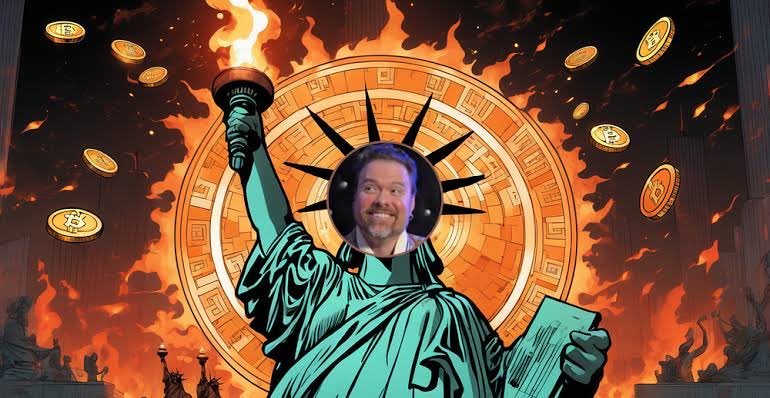
Believe in PulseChain and Richard Heart’s vision 🫵🫵🫵🫵
Clint Eastwood !!!! ❤️
Aos 96 anos, Clint Eastwood quebrou nossas ilusões sobre envelhecimento. Não ofereceu consolo sobre anos dourados cheios de serenidade. Pintou a verdade: "A luz machuca os olhos. Respirar pode ser um trabalho duro. O teu corpo já não está a cooperar. Cada passo requer estratégia."
Mas o verdadeiro peso da velhice não é físico. É emocional. Ao cruzar os anos 90, seu círculo social diminui. A maioria das pessoas que te conheceram quando eras jovem desapareceram. O telefone parou de tocar. O ritmo dos dias abranda. A pílula mais amarga não é a dor. É a ausência de alguém que queira te ouvir.
Eastwood explicou por que os idosos repetem histórias. Não é para me gabar. É para se ancorar a uma realidade onde eles eram ativos, amados e relevantes. "Você se encontra repetindo histórias, adicionando detalhes, não para convencer ninguém, mas para sentir que você ainda está conectado a algo", disse. "Você tenta transmitir coisas aos jovens, mesmo quando vê o tédio nos olhos deles".
Vivemos em uma cultura que trata a longevidade como um troféu, mas ignora a solidão que a acompanha. Louvamos o rápido e o brilhante. Não deixamos espaço para o ritmo lento dos idosos.
Clint Eastwood é um gigante do cinema, mas suas palavras falam por cada idoso de 90 anos. São bibliotecas vivas da nossa história. Quando os ouvimos, algo mágico acontece. Fechamos o fosso entre gerações. Rugas não são sinais de envelhecimento. São mapas de uma vida plenamente vivida. E é um privilégio ouvir sua viagem.
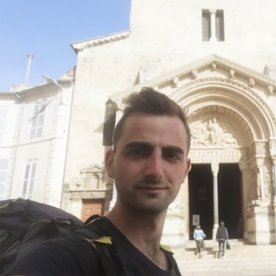
>24-year-old Catholic student walking across France on a pilgrimage to cathedrals
>Stops in a park in Annecy
>See a man trying to attack babies in strollers
>Police aren't there
>Henri charges the attacker using only his heavy hiking backpack as a shield
>Blocks the knife strikes, chases the man away from the kids
>Keeps engaging him until police arrive
>Asked why he did it: "I am a Catholic. I followed my instinct to protect the weak."
This is what a true Christian warrior looks like
📍Equipe de resgatistas espanhóis, estão desenvolvendo um protocolo com equipamentos especiais para detectar ondas sonoras na Venezuela 🙏🇪🇸
Obrigado, amigos de Espanha!
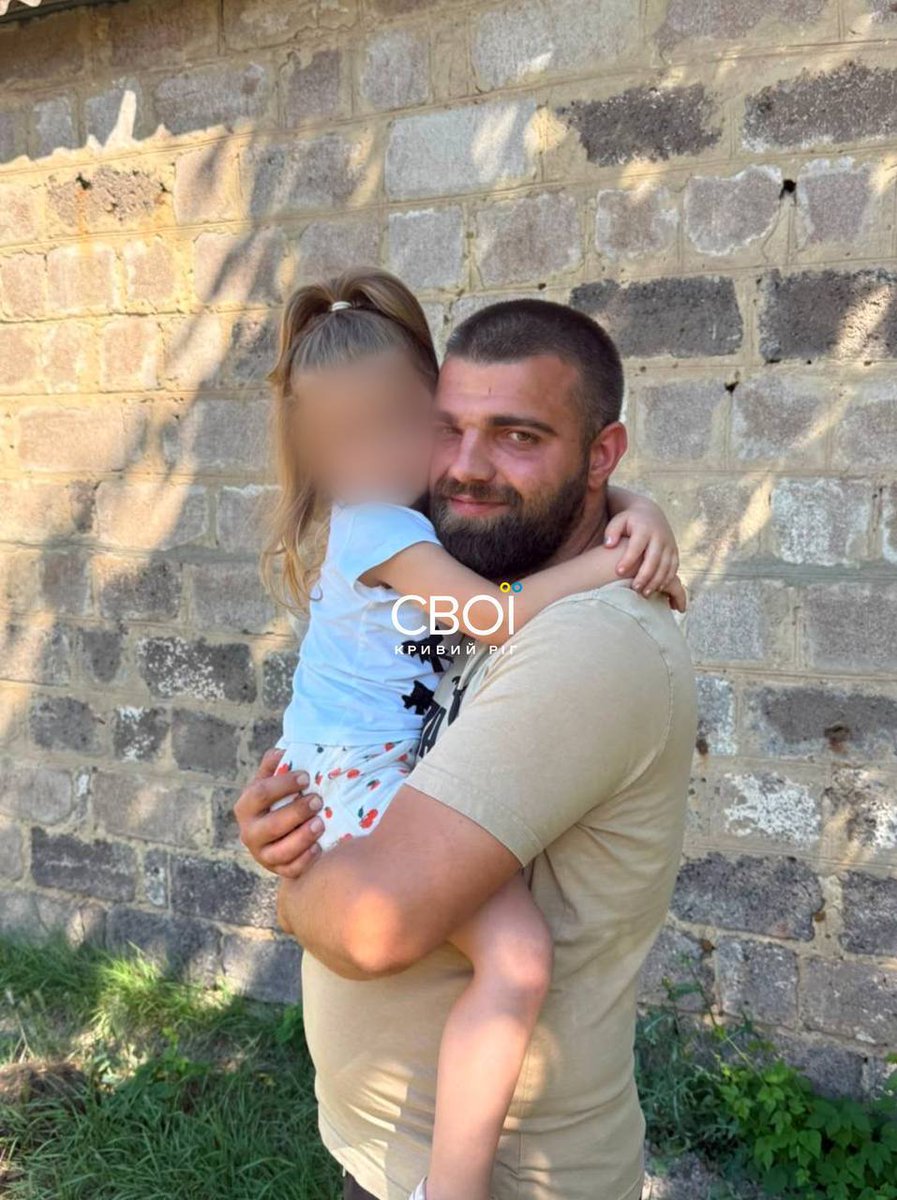
🇺🇦 Single father of a 5-year-old girl RELEASED by Zelensky’s recruiters after community pressure
How many similar cases are there that aren’t being talked about? At least this one got a somewhat happy ending
🚨🚨🚨 RESCATADA EN EL ÚLTIMO MOMENTO
A las 12:54 AM de la medianoche de hoy 1⁰ de julio al lado de la plaza Tanaguarenas, Vargas, una jóven de 25 años de edad, respondió al llamado justo cuando daban por terminada la búsqueda.
Su padre mantuvo las esperanzas e insistió.
Thanks to strong public attention inside Ukraine and internationally, plus the work of MPs, the father of the 5y.o. was released from the conscription office today where he was illegally detained. He is finally home with his little daughter. Yet these horrific stories will keep repeating as long as the brutal, anti-human, cancerous system of total mobilization continues to devour the country.
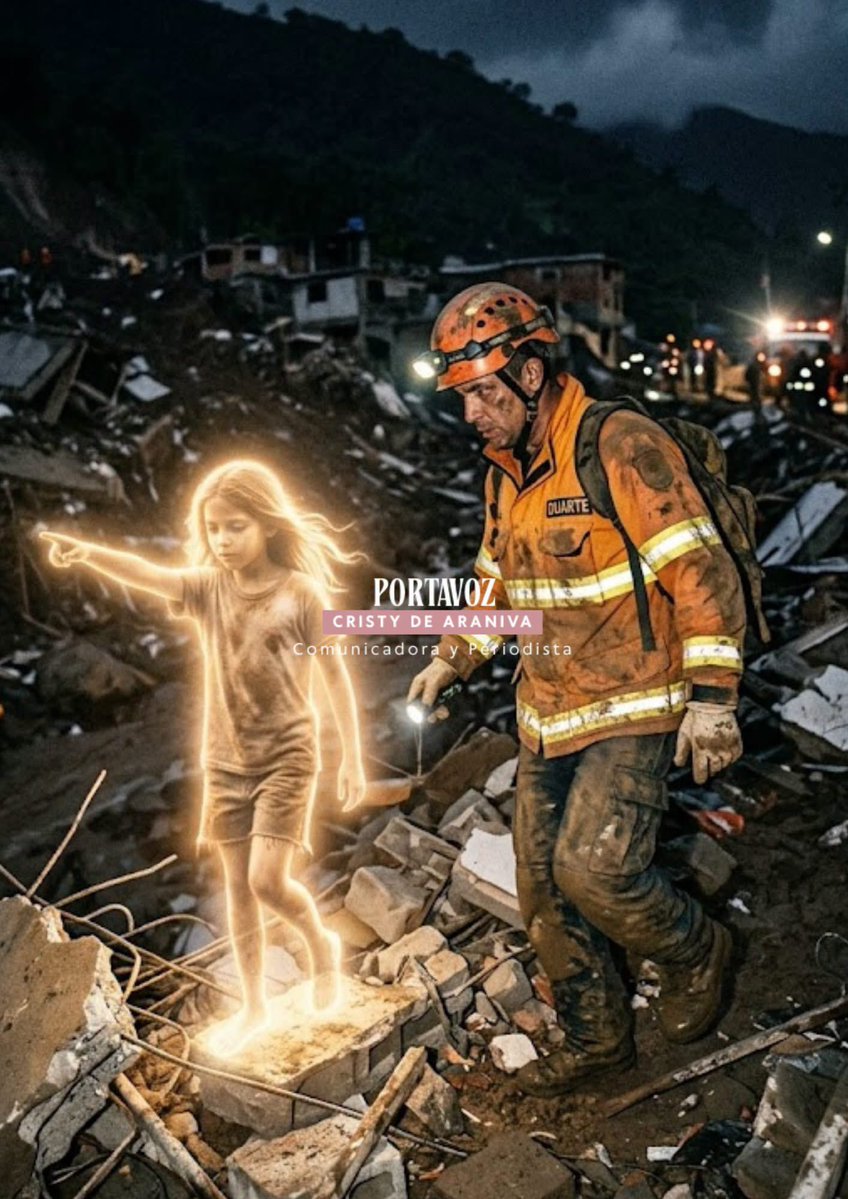
⚠️LA NIÑA QUE NO PIDIÓ QUE LA SALVARAN, SOLO QUERÍA SALVAR A SU HERMANO.
Hay despedidas que nadie alcanza a escuchar.
Hay héroes tan pequeños, que el mundo solo conoce su grandeza cuando ya no están en este mundo.
Entre toneladas de concreto, oscuridad y silencio, una niña de apenas 11 años permanecía atrapada junto a su mamá y su hermanito Moisés, de 9 años. Atrapada entre los escombros, inmóvil y seguramente con dificultad para respirar, tenía algo que sería su herramienta.
TODAVÍA TENÍA UNA VOZ.
Mientras los rescatistas buscaban sobrevivientes entre los edificios destruidos por el terremoto, esa pequeña comenzó a guiarlos desde debajo de los escombros. Les decía hacia dónde avanzar, les indicaba donde estaban y esa voz sería clave para que los rescatistas los encontraran.
El rescatista Duarte, con la voz entrecortada y sin poder contener las lágrimas, contó después que jamás olvidará aquel momento. Relató que la niña nunca dejó de hablarles, nunca dejó de orientarlos, aun cuando sus fuerzas se apagaban poco a poco.
Su mamá ya había fallecido.
La niña, por su parte, en lugar de pensar en sí misma, siguió luchando por una sola razón, que su hermanito pudiera vivir.}
No pidió que la rescataran primero.
No suplicó por su vida.
Solo continuó guiando a quienes intentaban llegar hasta ellos.
Cuando finalmente lograron abrir un camino entre el concreto, Duarte recuerda que, en los últimos minutos, la niña les decía que ya podía ver la luz, que ya casi llegaban. Los rescatistas aceleraban cada maniobra con la esperanza de alcanzarla a tiempo.
Pero su pequeño cuerpo ya había entregado todo lo que tenía.
Falleció apenas unos instantes antes de que pudieran sacarla de entre los escombros.
Como si hubiera esperado únicamente a cumplir la misión que ella misma se había impuesto, SALVAR A SU HERMANITO.
Pero hay otro detalle que ha conmovido profundamente a quienes conocieron esta historia...
El nombre Moisés significa "salvado de las aguas", en referencia al personaje bíblico que fue rescatado para tener una nueva oportunidad de vida.
Los rescatistas dicen que, después de todo lo ocurrido, ya no lo ven como una simple coincidencia, porque aquel niño también fue salvado. No de un río, sino de una montaña de concreto.
Y fue su propia hermana quien lo condujo hacia la vida.
Hoy Moisés permanece estable en un centro asistencial. Está vivo porque una niña de apenas 11 años decidió entregar hasta su último aliento para protegerlo.
Sin embargo al conocer esta historia, muchas usuarios afirman que la niña, ya no estaba y que seguramente fue su alma que guío a los rescatistas.
Por otro lado, su madre murió sin saber lo que sucedió con sus hijos.
Pero quizá, donde quiera que esté, hoy ya sabe que su hija hizo lo imposible para que su hermano siguiera viviendo.
A veces los héroes no llevan uniforme.
A veces tienen apenas 11 años.
Y aun así, son capaces de dar absolutamente todo por la persona que más aman.
Que el nombre de esta pequeña nunca se pierda entre los escombros del tiempo. Porque algunos corazones dejan de latir, justo después de haber salvado otro.
#venezuela #ultimahora #news #terremoto #Solidaridad