Routine antipseudomonal therapy may be unnecessary in high-risk FN patients!
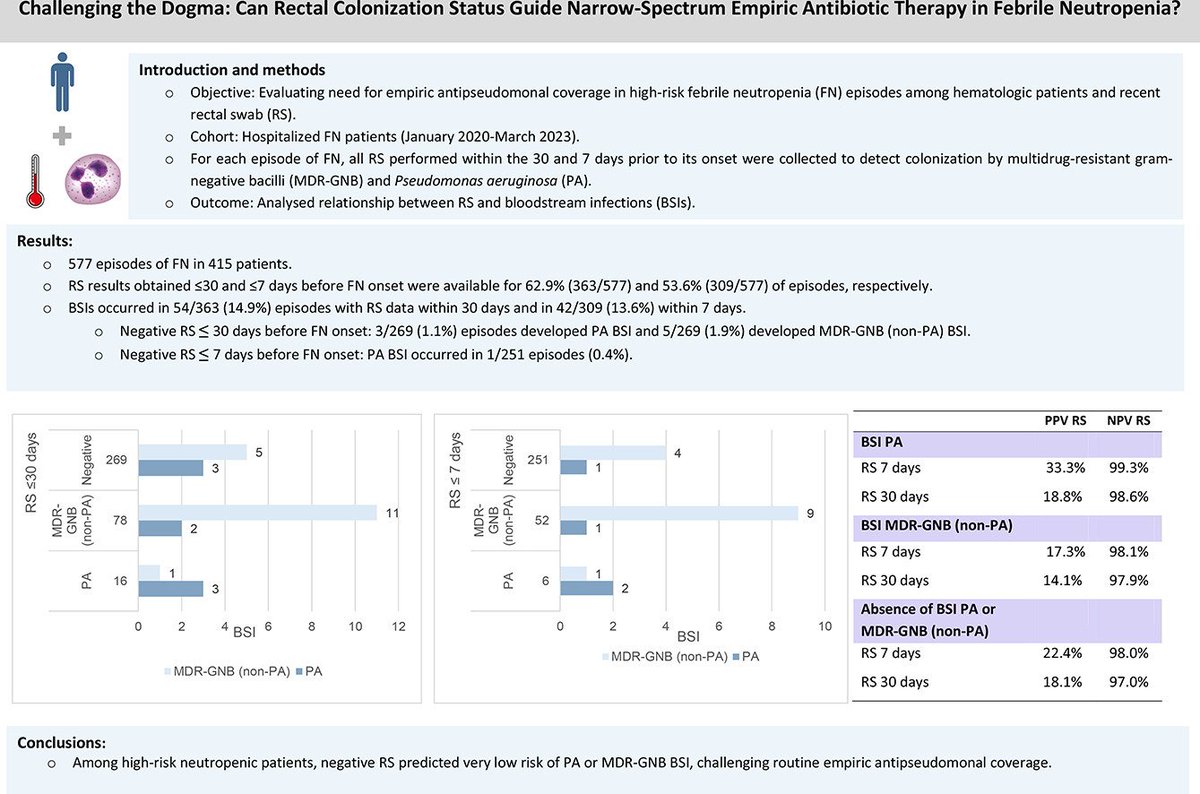
Challenging the Dogma:
Can Rectal Colonization Status Guide Narrow-Spectrum Empiric Antibiotic Therapy in Febrile Neutropenia?
🆕💥🔴Retrospective study
Among high-risk neutropenic patients, negative rectal swab predicted very low risk of PA or MDR-GNB BSI, challenging routine empiric antipseudomonal coverage #IDXposts
https://t.co/9oCvLr1I0y
🩸 ¿Y si restringijimos los hemocultivos a 1 sola pareja de frascos (ae+ana)?
2.987 episodios antes de la restricción vs 1.076 con una sola pareja
⬇️Incidencia bacteriemia : 5,84 vs 4,10/1.000 pacientes-día
⬇️Contaminaciones: 39% vs 31%
⬇️Aclaramiento microbiológico: 86% vs 70%
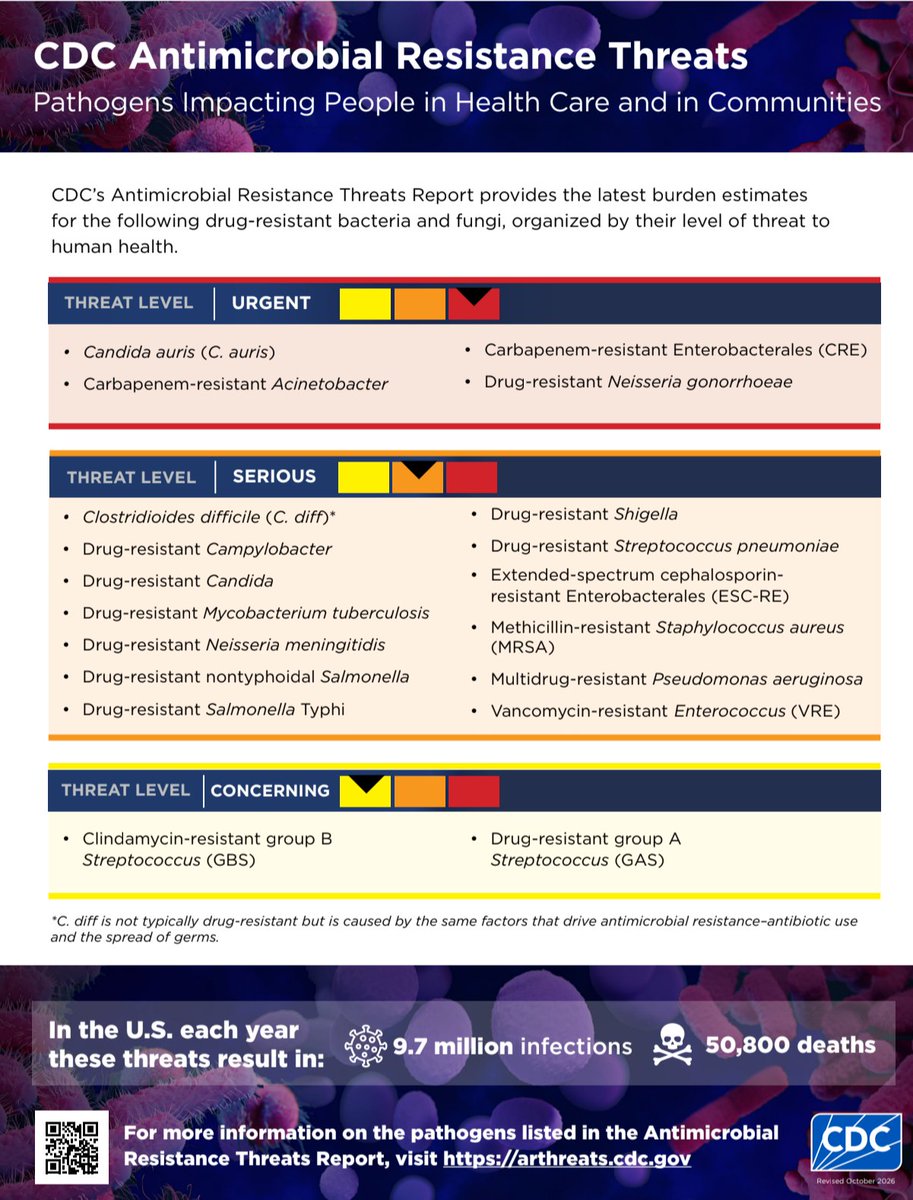
🔥CDC just released the 2026 update to the Antimicrobial Resistance Threats Report (AR Threats Report)🔥
The 2026 update estimates that 19 bacteria and fungi result in 9.7 million infections & 50,800 deaths in the United States each year #IDXposts
https://t.co/j8ifjOuGqV
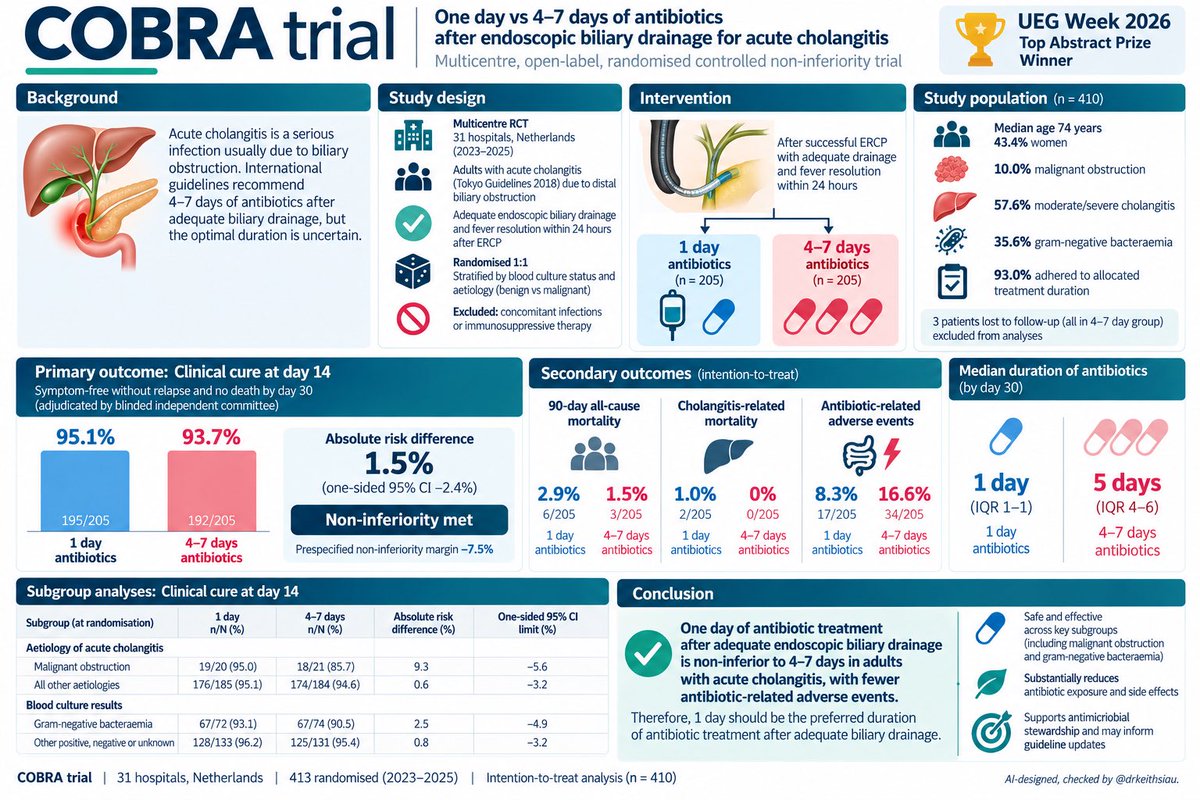
What is the optimal duration of antibiotics after ERCP decompression for cholangitis?
The #UEGWeek 2026 top abstract prize goes to Anouk Overdevest for her work on the COBRA trial, which shows that 1 day of antibiotic is non-inferior to 4-7 day courses 👏🏆
Oxazolidinones in the Clinical Management of Staphylococcal Infection—Linezolid or Tedizolid? A review on behalf of the European Society of Clinical Microbiology and Infectious Diseases (ESCMID) https://t.co/VgJvtj6bZU
🚨The MBL tide is rising. Even the Trojan horse has its Achilles’ heel.
🆕💥🟢US surveillance of 80,927 Enterobacterales collected from 103 US medical centres (2016–2024): Helio Sader et Al.
• 194 (0.24%) were NS to CZA or MVB
• 115 (0.14%) were NS to both CZA + MVB
• 832 (1.0%) were carbapenem-resistant
⚠️ 36.1% (73/202) of CRE collected in 2023–24 were MBL producers, with NDM predominating.
Among isolates NS to CZA and/or MVB, NDM was the most common carbapenemase (114; 58.8%).
🧬 Aztreonam/avibactam:
• 98.1% active vs CRE
• 98.4% vs MBL producers
• 91.9% vs CZA-NS
• 94.0% vs MVB-NS
Species-level activity:
• K. pneumoniae: 98.0%
• E. cloacae complex: 100%
• E. coli: 87.5%
Among ATM/AVI-NS CRE, carbapenemases included NDM-5 (2 E. coli).
🔬 Cefiderocol was active
• 78.8% vs CZA-NS
• 83.2% vs MVB-NS
• 94.7% vs CRE
• 82.1% vs MBL producers
Among cefiderocol-NS isolates, 71.1% carried a carbapenemase, including NDM-1/NDM-5 in 19 isolates, plus KPC-3/4, KPC-65 + NDM-5, NDM-1 + OXA-232, IMI-4 and VIM-1.
🔄 Cross-resistance was not absolute:
• ATM/AVI active vs 92.1% of cefiderocol-NS isolates
• Cefiderocol active vs 81.2% of ATM/AVI-NS isolates
🎯 Cefiderocol was less reliable against MBL producers (82.1% susceptible) than ATM/AVI (98.4%). Notably, 71.1% of cefiderocol-NS isolates carried a carbapenemase, including NDM-1/NDM-5. #idxposts https://t.co/76jHSXwvry
Según el ensayo clínico español SCOUT, la nitrofurantoína es superior a la dosis única de fosfomicina en mujeres con cistitis simple. https://t.co/JkpZJB4WuS
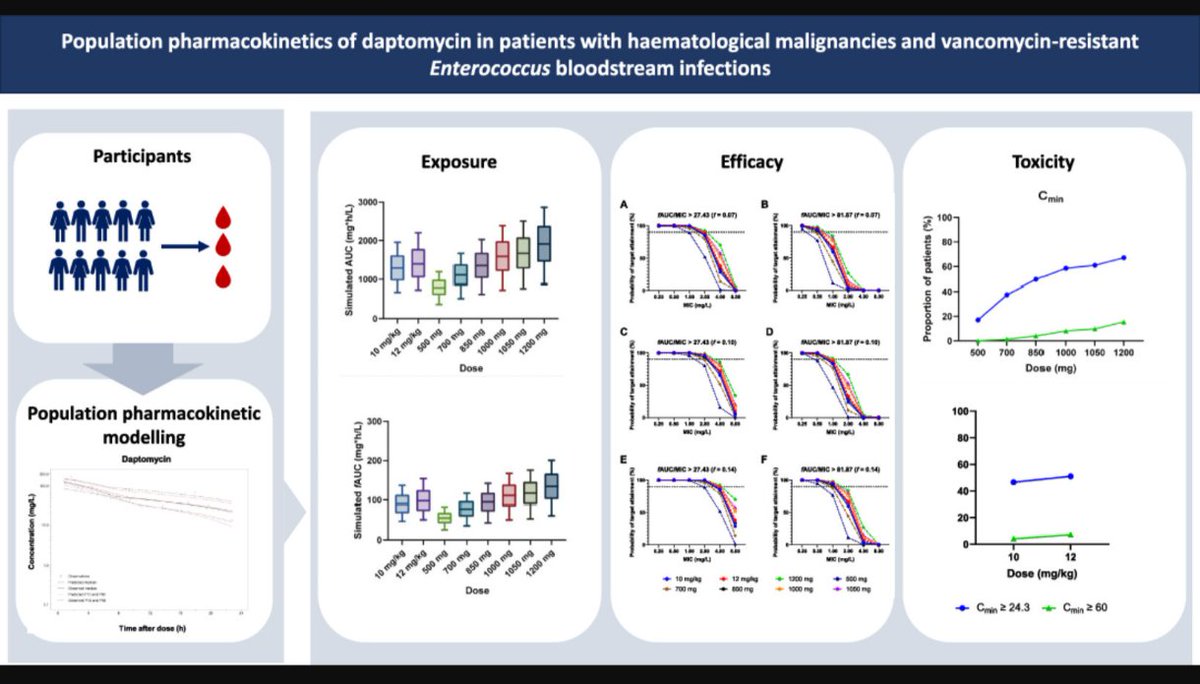
🆕💥🔴Population pharmacokinetics of daptomycin in patients with haematological malignancies and VRE bloodstream infections
🔺1200 mg was the only dose able to achieve PTA>90% for MICs of 4 mg/L when targeting fAUC24h,ss/MIC >27.43, PB 86%
🔺PTA >90% was achievable for MICs ≤1 mg/L with doses ≥10 mg/kg or doses ≥850 mg daily (fAUC24h,ss/MIC>81.87, PB 86%). 🔺No doses achieved PTA >90% for MICs >4 mg/L for either efficacy target.
🔺Protein binding significantly affected PTA for VREfm BSI efficacy targets #idxposts
https://t.co/1ms1XDC2cd
What drives levofloxacin prophylaxis failure in high-risk hematology patients?
🆕💥🟢Prospective observational study of 120 neutropenic episodes examined why levofloxacin prophylaxis fails in high-risk hematology patients:
🔺Profound neutropenia → higher risk of prophylaxis failure (OR 4.17)
🔺fAUC₀–₂₄/MIC ≥80 → lower risk of failure (OR 0.12)
🔺ROC analysis identified fAUC/MIC ≥48.46 as the optimal cutoff
🔺Target non-attainment was strongly associated with levofloxacin-resistant GNB colonization, indicating that PK/PD failure was predominantly MIC driven.
🔺750 mg/day was insufficient to achieve the PK/PD target in a significant proportion of patients
🔑 Levofloxacin prophylaxis failure appears to reflect an interplay between host factors and inadequate PK/PD target attainment, which was largely influenced by levofloxacin-resistant GNB colonization. #idxposts https://t.co/0yaM1JuL1J
#DivulgaciónSEIMC | ¿Son necesarios más hemocultivos de control tras documentar la negativización en la bacteriemia por Staphylococcus aureus? 🩸🔬
Un estudio reciente, compartido por la Dra. @velascoarribas, que analizó 1.005 episodios de bacteriemia por S. aureus observó que solo el 3,1% de los pacientes presentó una bacteriemia de escape después de haber obtenido hemocultivos negativos a las 48 horas de tratamiento eficaz.
Los resultados muestran que los pacientes clínicamente estables, afebriles, sin signos ni síntomas de infección metastásica y con hemocultivos negativos a las 48 horas tienen un riesgo muy bajo de bacteriemia persistente. Estos hallazgos apoyan una utilización más individualizada de los hemocultivos de control, evitando procedimientos innecesarios en pacientes de bajo riesgo.
El trabajo aporta evidencia relevante para optimizar el seguimiento microbiológico de una de las infecciones más frecuentes y con mayor impacto clínico en la práctica diaria.
Os dejamos el artículo al completo ⬇️⬇️
https://t.co/WH5aq4waE6
Focused Update to International Consensus Recommendations for the Use of Prolonged‐Infusion Beta‐Lactam Antibiotics Among Severely Ill Adult Patients https://t.co/GSPiSKM9Ax