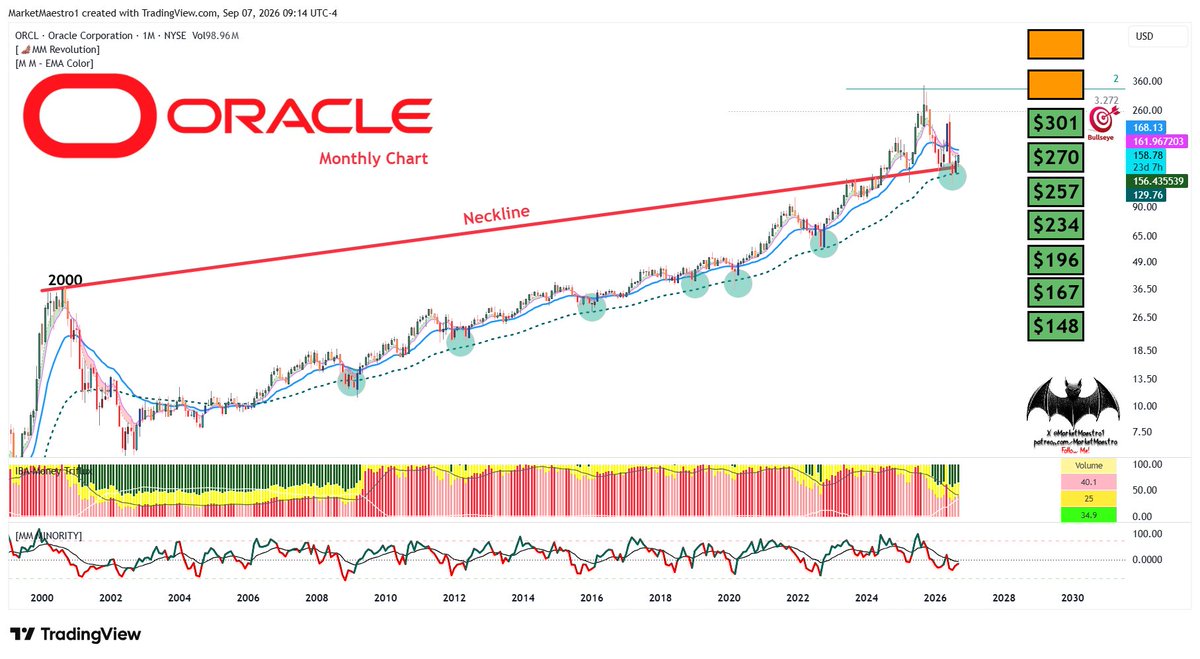
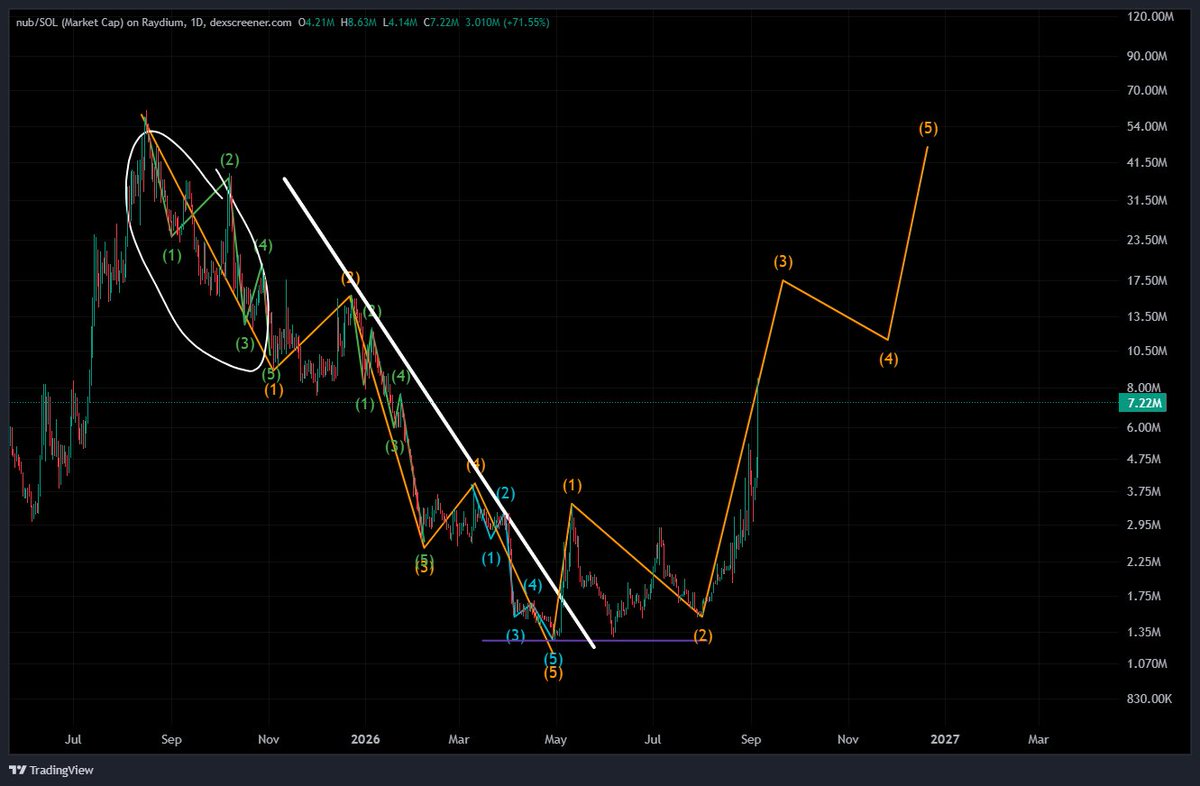
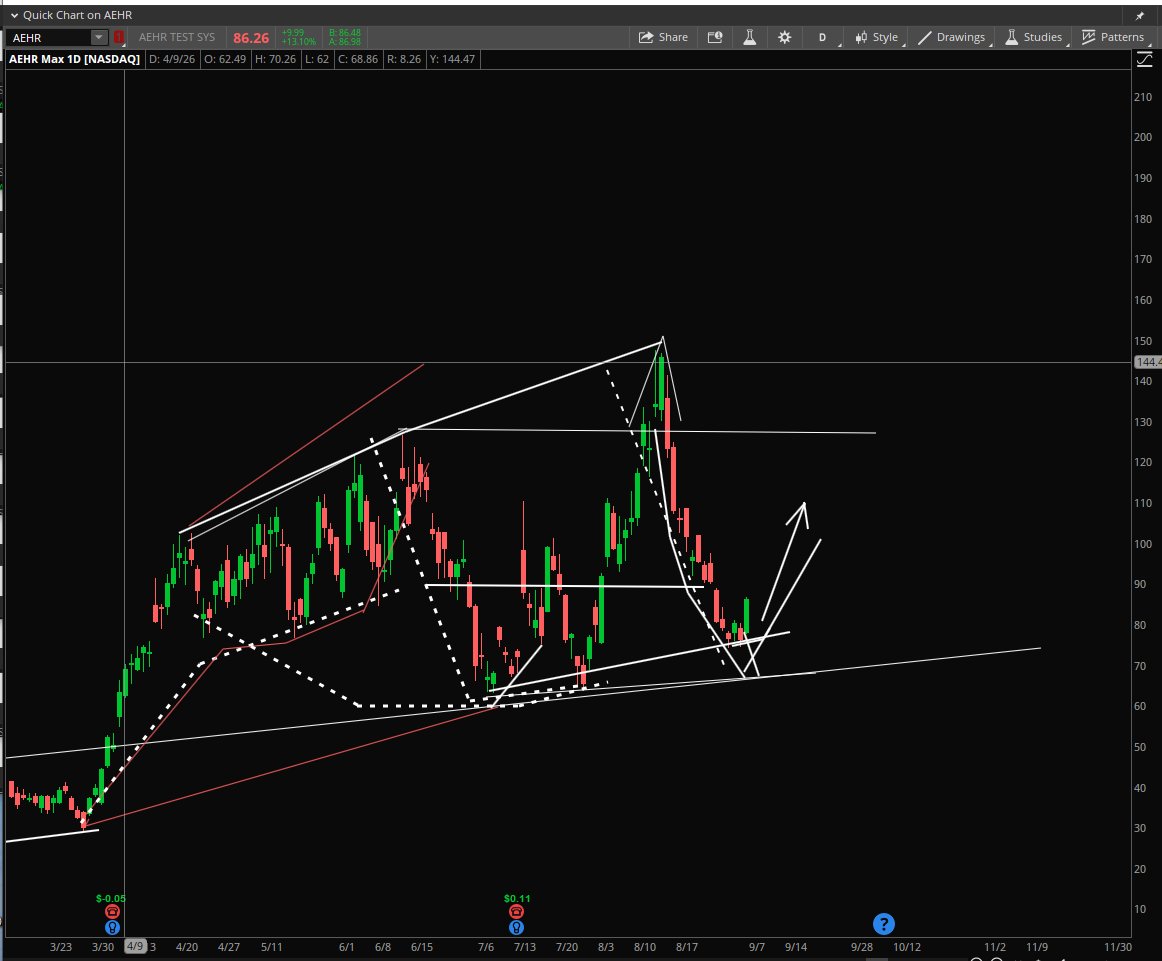
$ORCL
As you can see, Burry doesn’t know technical analysis! This shows that he survived by luck! Macro shorting is one thing, and shorting individual stocks is another! We are long $ORCL , $PLTR , and $NBIS , and short $LULU !
I talk about this in my https://t.co/qljJfR5272 course as well, but I just wanted to share something here for people who are looking for great accounts to follow.
10 signs of actual intelligence, not pretend intelligence.
I'd like to see more of this on the platform, and these are the principles as to how I'd like to operate.
1. Intellectual Humility
Truly intelligent people are uniquely aware of the vastness of what they do not know. They comfortably say "I don't know" and treat being proven wrong as a valuable data update rather than an ego threat.
2. High "Absence Detection"
Most people only process what is directly in front of them. Highly intelligent minds excel at spotting what is missing.
3. Cognitive Resource Management
They don't over-optimize everything. Highly intelligent individuals often preserve mental "horsepower" by automating or ignoring low-stakes decisions (like wearing the same style of clothes or keeping a messy workspace) so they can hyper-focus on highly complex tasks.
4. Holding Contradictory Ideas
Lower cognitive flexibility requires immediate certainty to avoid discomfort. Genuine intelligence allows a person to sit with ambiguity and simultaneously analyze two conflicting ideas without feeling forced to immediately pick a side.
5. Teaching via Examples, Not Definitions
When explaining a concept, a truly smart person translates the abstract into practical, structural examples rather than repeating textbook definitions. This shows they have fundamentally metabolized the data, rather than just memorized it.
This is why I'm very skeptical of people who just focused on definitions but are actually not very good at what they do.
That's why I spent months and months trying to find examples for each of my technical lessons, rather than just focusing on definitions.
6. The "Question Behind the Question"
During conversations, they often pause before answering. They are actively bypassing surface-level chitchat to analyze the underlying motive, assumptions, and core structure of what is being asked.
7. Cross-Domain Pattern Recognition
They connect seemingly unrelated subjects. A highly intelligent person might use a principle from biology to solve a software bug, or a musical pattern to understand an economic trend, because they organize information by underlying systems rather than surface categories.
8. Appreciating Dark or Complex Humor
Processing irony, satire, and dark humor requires rapid mental perspective-shifting and the subversion of expectations. Multiple studies link a dark or quirky sense of humor with high cognitive capacity.
9. High Verbal Worrying
While people think intelligence equals calm zen, research shows a strong correlation between high verbal intelligence and a tendency to ruminate. A powerful brain naturally runs endless, vivid simulations of potential future problems.
10. Low Tolerance for Background Noise
Highly creative and intelligent brains often possess "leaky sensory gating". Their brains struggle to filter out ambient data (like a ticking clock, chewing noises, or side conversations), because they are naturally wired to absorb and analyze all environmental stimuli at once. Sometimes it gets to the point where they need to be left alone and recharge to be away from the background noise.
Understanding these qualities help you identify those who you want to be around and be friends with, as well as which accounts to mute.
None of us are perfect, and having these principles help keep me grounded most days.