Please, RT. The analytical faculty @purduechemistry is holding an informational meeting for prospective graduate students on Mon, Oct 28, at 7:30 pm. https://t.co/XBWQG0LmQx
Please, RT to help us spread the word. The annual CAID Workshop (chemical instrumentation) will be held on Nov 6-8, 2024. It is a great opportunity for students and researchers at any level to learn about analytical instrumentation through hands-on demos: https://t.co/CJrZpwLXTo
Our paper, in which we use sub-ambient ion soft landing for designing high-performance 3D carbon electrodes is featured in #Small. https://t.co/jFXUnxKQKG @_arya_das_
We are on a roll! Another paper led by @PeiSu7 has been accepted to @ChemicalScience. We examine the structures of host-guest complexes of polyoxometalates with cyclodextrins using ion mobility spectrometry, NMR, and molecular dynamics simulations.
https://t.co/DK8HF9rdRe
Excited to share our paper in @ChemicalScience describing structural changes of transition metal complexes at interfaces of interest to understanding degradation processes in photovoltaic and solar cells. Congrats to @HugoSamayoa8 and co-authors! https://t.co/8jxTwnoRLd
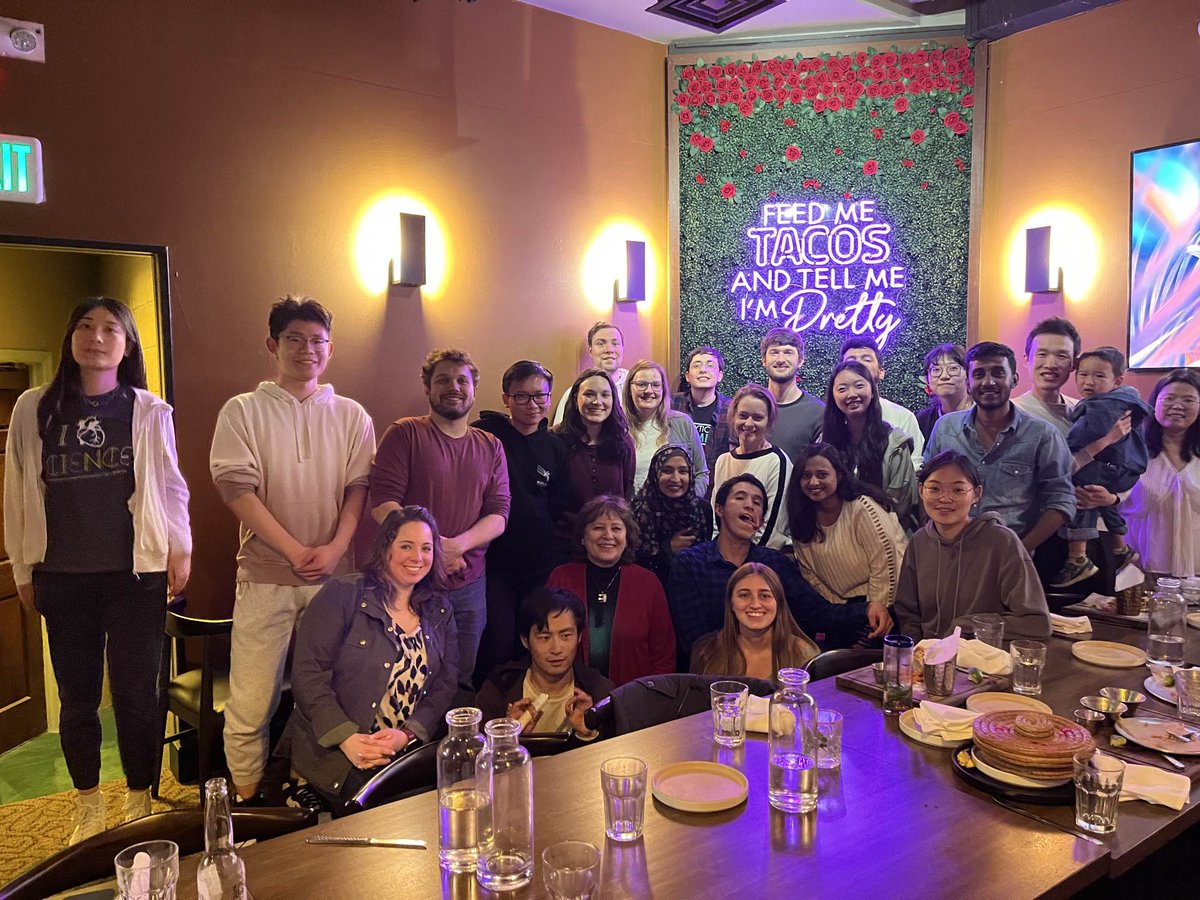
I had an awesome time at @PurdueChemistry and working with @LabLaskin . I’ll miss you all greatly! Looking forward to my new adventures at The University of Utah!
Both mentor (@HugoSamayoa8) and mentee (@dhristovsz14) are graduating and leaving the group. Danny is headed to UC Berkeley for grad school. Hugo is headed to U of Utah for a postdoc. Wishing them the best of luck! @PurdueChemistry
That bittersweet moment when we are saying goodbye to our #7 PhD, @HugoSamayoa8. We are excited to see where the new adventures will take him. He is headed to @UtahChemistry to do a postdoc with Scott Anderson.
Please, RT. @AnfacPurdue is holding an informational session about our graduate program for prospective graduate students on Oct 30, 7-8:30 pm over Zoom (https://t.co/jfLXaiBfZY). This will include a graduate student panel. @PurdueChemistry
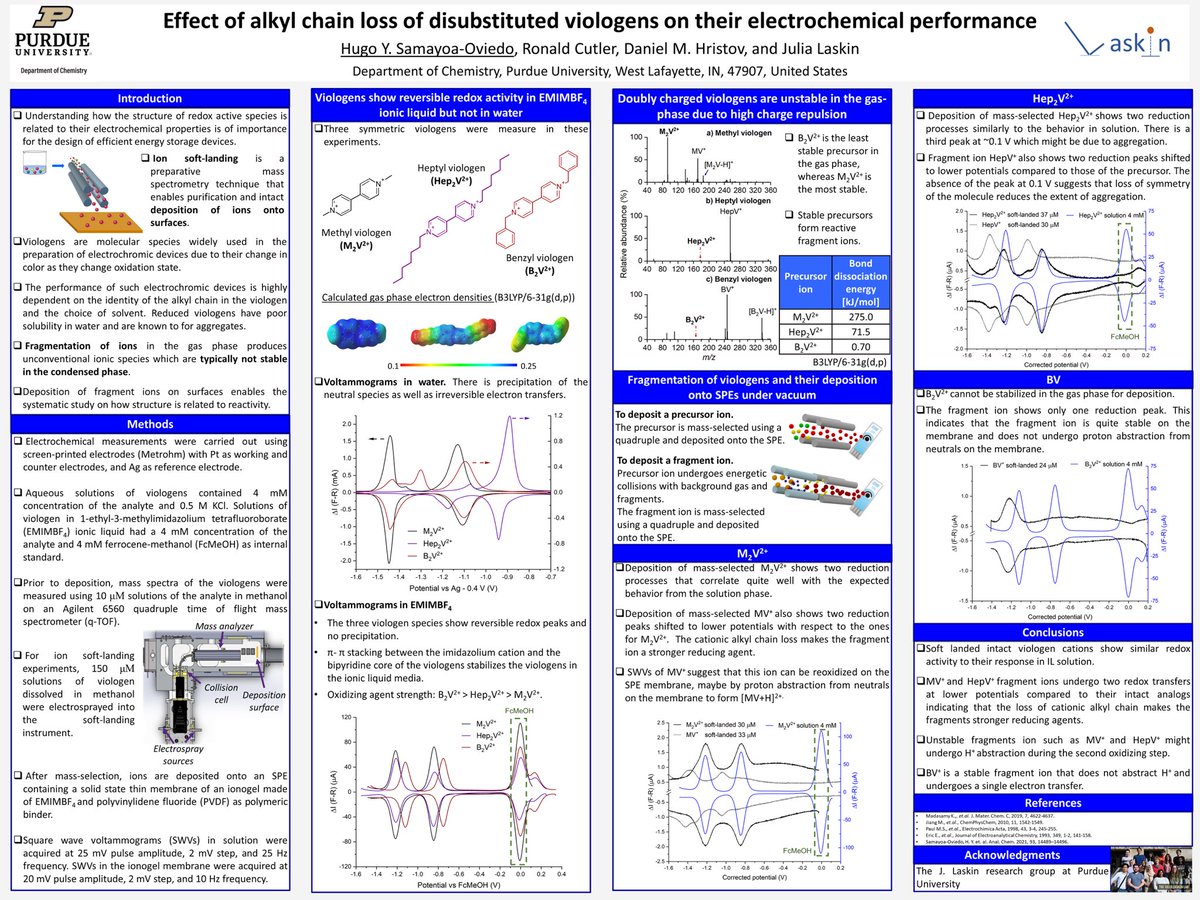
@CampEGPSF@LatinXChem@PCCP@RSC_Energy@ChemPhysChem@PurdueChemistry@LabLaskin Entonces podemos hacer cualquier tipo de medición electroquímica y controlar el potencial. En principio también hemos usado cobaltoceno como estándar de referencia porque el potencial del electrodo de referencia no es tan estable
@CampEGPSF@LatinXChem@PCCP@RSC_Energy@ChemPhysChem@PurdueChemistry@LabLaskin Hola Pablo Usamos screen printed electrodes, en donde vienen impresos los 3 electrodos. Sobre esa superficie crecemos la membrana iónica que permite que los 3 electrodos estén en contacto. Para la medición in situ conectamos el potenciostato con los electrodos usando un adaptador