Ik denk niet dat Keulemans in de zak zat van het RIVM, maar dat het probleem veel dieper zit. https://t.co/MqolwBFUKR
Er was namelijk geen reden voor maatregelen als lockdowns voor de hele bevolking, schoolsluitingen, mondkapjes in het OV etc. Corona is voorbereid en de media zaten en zitten helemaal in de pocket. Niet alleen met Corona trouwens. Lees het boek 'bij gebrek aan beter' van schrijver Diedert de Wagt voor een uitgebreider beeld, hoe beleid wordt bepaald door lobbygroepen en niet onafhankelijke denktanks.
The goat gets left out of every serious conversation about sustainable food, which is a shame, because it does a job no other farm animal will touch.
A cow is a grazer. A sheep is a grazer. Both want grass, on ground that is at least walkable. The goat is a browser, and its tastes run somewhere else entirely:
- It eats scrub, bramble, gorse and thistle, the spiky stuff everything else avoids.
- It strips the woody growth and lower branches that choke a neglected hillside.
- It works terrain too steep, too rough, and too overgrown for cattle or sheep to bother with.
- It thrives on exactly the marginal, reverting, abandoned land that grows nothing anyone wants.
This makes the goat the pioneer of the whole system. Put goats onto a bramble-choked hillside and they browse it back, season by season, until grass can establish again. Once the grass comes, the sheep and cattle can follow. The goat opens ground the others could never use.
And at the end of it you get milk that many people who cannot tolerate cow dairy digest perfectly well, meat that more of the world's population eats than any other, and a cleared hillside that was an impenetrable thicket the year before.
The goat asks for the worst land on the farm and quietly makes it useful. It has been doing humanity's roughest groundwork for ten thousand years, and we still treat it as an afterthought with a comedy reputation.
„De legbatterijen moesten hier weg vanwege dierenwelzijn. Die zijn geëxporteerd naar Oekraïne en de eieren daaruit komen nu verwerkt weer terug naar Nederland. Deze week kocht ik de inrichting van een mestkalverenstal op. Die gaat naar Kroatië, want daar kan het wél. Wie houdt wie dan voor de gek? Over de grens is energie ook geen punt, aan frequentieregeling is daar bijvoorbeeld geen behoefte. Emissiearme vloeren heb ik ook geëxporteerd, maar die leggen ze daar als gewone roostervloer. Wij verbieden in Nederland dingen, dan halen we hier de productie weg, en gaat het naar landen waar dit geen issue is.”
https://t.co/bsa2n9LTiJ
De netkosten stijgen hard, en het frame is altijd “we verbruiken steeds meer stroom”. Maar dat klopt niet. Het Nederlandse elektriciteitsverbruik staat al een decennium vrijwel stil. Wat wel explodeerde, is het aanbod. De netverzwaring is voorbereiding op variabel aanbod, niet op groeiende vraag.
De cijfers. Het opgestelde zon-PV-vermogen vervijfvoudigde van 4,6 GWp in 2018 naar 23,9 GWp in 2023, terwijl het totale elektriciteitsverbruik het afgelopen decennium ongeveer gelijk bleef. Aanbod maal vijf, vraag vlak. Dat is geen detail, dat is de hele zaak.
En zon en wind zijn inmiddels geen nichebron meer. De productie uit zon en wind groeide in 2024 met 9% naar 55 TWh, goed voor 45% van de totale elektriciteitsproductie. Bijna de helft van de stroom komt nu uit bronnen die fluctueren met weer en daglicht.
Dat fluctueren is het probleem, niet de hoeveelheid. Een net dat is gebouwd op voorspelbare, regelbare centrales moet nu pieken aan en terugleveren verwerken die in uren ontstaan. Niet meer kWh per jaar, maar veel grilliger verdeeld over de dag. Daar gaat het verzwaringsgeld heen.
Het bewijs zit in de geografie. De meeste laagspanningsstoringen door overbelasting zaten in Groningen en Drenthe. Dunbevolkte provincies met veel teruglevering en juist weinig vraaggroei. Als dit vraag-gedreven was, zaten de knelpunten in de Randstad. Ze zitten waar de zon-PV zit.
De schaal van de operatie. Liander verwacht tot 2033 bijna 40.000 kilometer kabel te leggen en 23.000 transformatorhuisjes te plaatsen. Dit betaalt iedereen via de nettarieven. De vraag is dus eerlijk: waar bereiden we het net precies op voor?
De stijgende netkosten zijn vooral de prijs van een net dat wordt omgebouwd voor variabel aanbod, niet voor een verbruik dat al jaren stilstaat. Wie de rekening “groeiende vraag” noemt, vertelt het halve verhaal. Een deel is anticipatie op toekomstige vraag via warmtepompen en EV’s, maar de knelpunten van nu zijn teruglever-gedreven.
@PGoldschmeding Als we niet weer gaan straffen, gaat dit door. Deze landverrader moet gestraft worden conform de wet! En snel. En laat het helder zijn, liegen is nog het minst ernstige wat dit sujet op zijn geweten heeft. Daar zitten lijken in de kast. En er zit nog wat anders in die kast.
@den_margaretha@Hakblokken Hij vond het heerlijk met Hugo de Jonge en Grapperhaus lekker tegen de rest te strijden… dat bleek gisteren uit de corona commissie … dat stond in 1 van de weinige overgebleven sms-jes
Why Energy is the Key to Human Advancement—and Freedom
The human race stands apart from every other species on this planet because we have mastered the control of energy. Like all creatures, we began using only our muscles to survive. But our brains gave us a distinct advantage: we discovered how to harness and manipulate energy.
It began with fire—whether stumbled upon by accident or sparked by the curiosity of the first person to ask, "What if I...?" Fire gave us light in the darkness, warmth in the cold, and protection from predators. It allowed us to explore and settle in colder regions. It helped us cook food, which led to improved health and the ability to store supplies. Around campfires, our ancestors told stories, shared ideas, and inspired dreams that shaped future generations.
We advanced further by domesticating animals to perform labour, developing agriculture to reduce the time spent foraging, and specializing in roles to help one another thrive. The Industrial Revolution brought us steam power, freeing people from the relentless struggle for food, shelter, and warmth.
After World War II, the nuclear age arrived. People envisioned a future powered by clean, cheap, abundant energy—one that would allow humanity to dream bigger, and even reach for the stars.
But these dreams faced serious setbacks.
Chernobyl, 1986: A Preventable Disaster
Cause:
· Human error and flawed reactor design.
· During a late-night safety test, engineers disabled key safety systems on Reactor No. 4.
· The RBMK reactor had a dangerous design flaw: instability at low power.
· A steam explosion and a nuclear meltdown followed, with a massive radioactive release due to a lack of a containment structure.
Could it have been avoided?
Yes, if:
· The test had been properly conducted or postponed.
· The reactor had a safer design (e.g., a negative void coefficient).
· Operators were better trained and followed protocol.
· A containment building had existed (as used in Western reactors).
https://t.co/O8uH3SuebX
Fukushima, 2011: Nature Meets Neglect
Cause:
· Triggered by the Tōhoku earthquake and tsunami.
· The reactors shut down safely, but the tsunami flooded the backup diesel generators used for cooling.
· This led to meltdowns in three reactors, hydrogen explosions, and radiation leaks.
Could it have been avoided?
Yes, if:
· The sea wall had been higher.
· Backup power systems were elevated or sealed.
· Disaster planning had been better.
· Passive safety systems or newer reactor designs were used.
The Future: Safer Nuclear with Pebble Bed Reactors (PBRs)
What are they?
· A 4th-generation nuclear technology using spherical “pebbles” made of uranium fuel, encased in layers of graphite and ceramic.
· Each pebble is about the size of a tennis ball and contains TRISO particles that safely trap radiation.
Why are they safer?
· Naturally self-regulating: the hotter they get, the more the reaction slows down.
· Don’t require active cooling to prevent meltdown.
· Resistant to failure, even in extreme scenarios.
· Ideal for scalable, modular use—transportable and efficient.
Examples:
· China’s HTR-PM reactor began operation around 2021.
· Canada, the U.S., and the U.K. are investing in Small Modular Reactors (SMRs) based on similar principles.
https://t.co/M3KMLPACVv
https://t.co/u23R58GSIu
But What About the Waste?
Not all nuclear waste is the same:
1. Low-Level Waste (LLW)
o ~90% of waste volume, but only ~1% of radioactivity.
o Includes tools, clothing, and filters.
o Requires minimal shielding and is buried near the surface.
2. Intermediate-Level Waste (ILW)
o ~7% of volume, ~4% of radioactivity.
o Includes reactor components and chemical sludges.
o Requires shielding and engineered storage.
3. High-Level Waste (HLW)
o ~3% of volume, ~95% of radioactivity.
o Includes spent fuel.
o Needs cooling and deep geological storage.
https://t.co/h09BQs0QMm
Energy, Freedom, and Our Future
In the 1980s, Al Gore began warning about global warming—long before it became political consensus. Today, in the name of saving the planet, governments heavily subsidize renewables, often at the cost of making energy more expensive. Nuclear energy, despite being clean and reliable, is dismissed as “too dangerous.”
https://t.co/ArZX7SoZ1j
https://t.co/DhivcaK0Jv
https://t.co/IsRQsv0Ph3
But energy is freedom.
The ability to harness energy gave us time to think, to dream, to build. Expensive energy robs us of that freedom. Nuclear energy could be abundant and affordable, even free with the right systems in place.
If you think that sounds unrealistic, consider this: we’ve made clean, safe drinking water so cheap and accessible that you will literally defecate in it sometime after reading this. If we can achieve that for water, why not for power?
Yet we turn away from nuclear, choosing costlier solutions that slow progress and burden the very people energy is meant to empower.
Why?
https://t.co/AnZaUCJBTo
@TheUn_important They have turned carbon into a tradeable commodity. Like gold. When in reality the scam is no different from the emperors new clothes.
Eco-Hypocrisy: When Wind Farms Destroy Forests and Goats Die for Trees
The United Kingdom is home to Scotland—a picturesque land of forests, moors, and fields steeped in history. Yet, this very land is being used in ways that raise serious concerns about environmental conservation. Are these decisions being made by well-intentioned experts, or by those who are reckless, deceitful, or simply driven by profit?
Take, for example, the removal of 16 million trees to make way for wind turbines—supposedly a step toward greener energy. While tree harvesting is common, were these part of the usual annual deforestation, or did wind farms double the typical number of trees felled? Regardless, this directly ties into Oxygen Conservation, an organization aiming to offset environmental damage by planting new trees.
https://t.co/YnhGlPqOho
https://t.co/XkOG4RnEu5
At the same time, in another part of Scotland, feral goats in Dumfriesshire, Clydesdale, and the Tweeddale constituency face potential culling. The reason? Oxygen Conservation’s tree-planting efforts are at risk—because these goats graze on saplings. The wild herd, estimated at around 140 animals, roams freely across the moors above Langholm, occasionally wandering onto the organization’s Blackburn & Hartsgarth Estate. Locals argue that these goats have been part of the landscape for hundreds of years, playing a key role in maintaining moorland conditions that support species like Hen Harriers. But since they lack the status of more "charismatic" wildlife, their fate is clear: they must die to protect a few newly planted trees.
https://t.co/crQJhBbhiY
https://t.co/ZQ9VqBvEYn
Oxygen Conservation proudly reports planting 195,729 trees across its estates, aiming for 250,000. Yet, this number is insignificant compared to the 16 million trees felled for wind farms—trees that, according to some reports, were no more than what would typically be cut down in a single year. So, while one hand clears vast forests under the guise of green energy, the other plants a mere fraction and claims to be restoring nature.
Wouldn’t a more logical solution have been to leave those trees intact, continue sustainable forestry, and install the turbines in areas already cleared—like the moorlands where the goats graze? After all, goats won’t eat wind turbines, and since they can’t fly, they wouldn’t be at risk from the blades.
https://t.co/FXb4YGnOas
So, the real question is: are these organizations genuinely trying to save the planet, or is this just a lucrative scheme funded by subsidies, offering nothing more than the illusion of environmental progress? Over 16 million trees are cut down for turbines, while another organization plants trees elsewhere to "restore oxygen"—are they taking the piss?
https://t.co/RGDxFSBXNB
Wouter Koolmees onder ede: Weggestopt in sheet 32 door de NCTV
https://t.co/0S9Gpj4P0L
Wat dit verhoor interessant maakt, is de afwezigheid van de notulen in de Torentjes, Catshuizen en BCO's. Daar werden de spijkerharde maatregelen genomen, grondrechten geschonden en de economie gesloopt.
Iets dat de kern van de verhoren wordt.
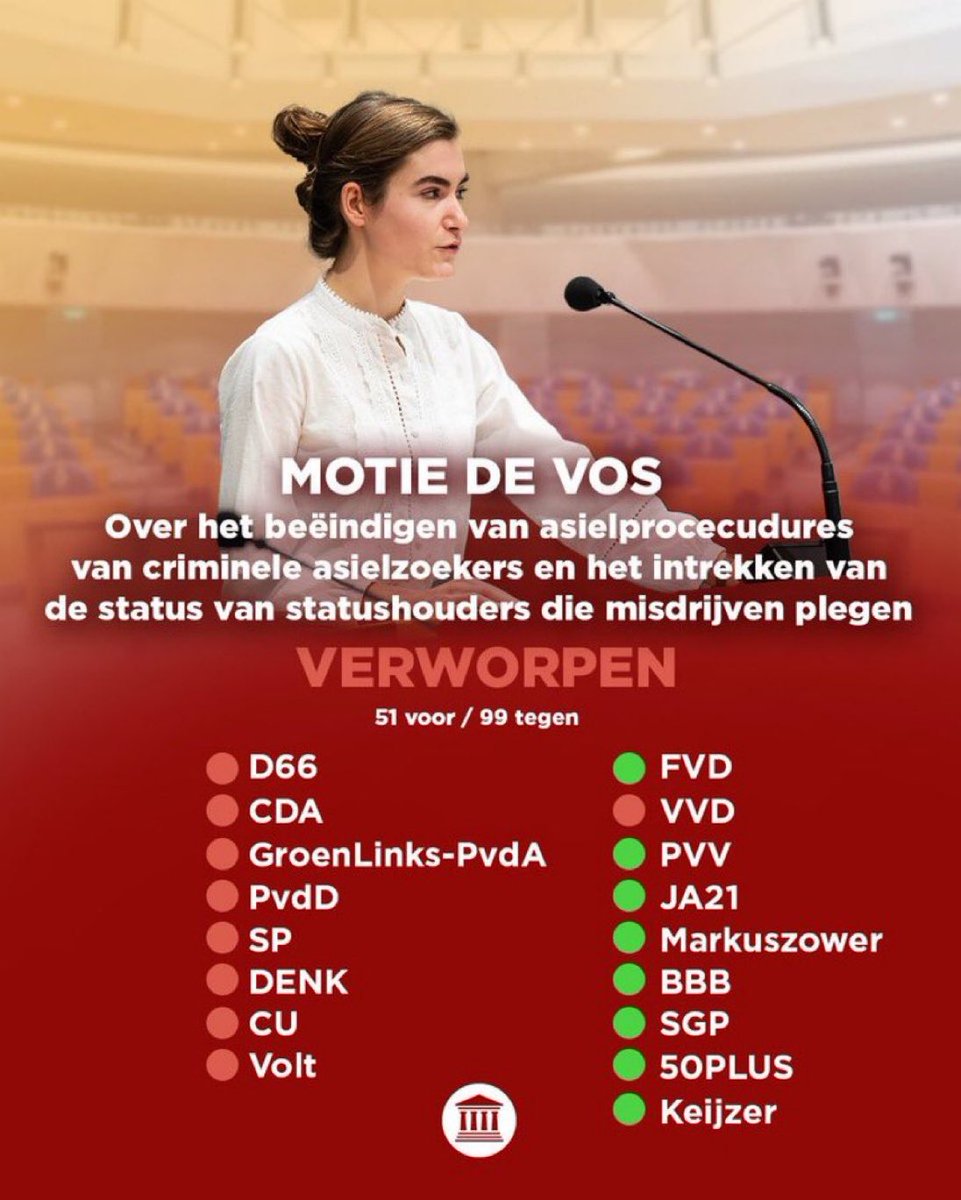
@rubenbrekelmans@MinisterAenM De stemming van de moties vertellen wat anders leugenaar!
En hoe zit het met het zo gauw mogelijk intrekken van de spreidingswet waar jullie vóór hebben gestemd?
@rubenbrekelmans@MinisterAenM Als FVD met deze motie komt stemmen jullie tegen en nu roeptoeteren alsof je hetzelf uitgevonden hebt? Beetje hypocriet toch?