In clinical early warning systems (EWS), can we go beyond the model estimate of event occurrence and leverage its belief about the event distance to improve our alarm policy?
Introducing “Dynamic Survival Analysis for Early Event Prediction” with @ToManuelBurger and @gxr. 🧶
✨New Preprint ✨ Ever thought that reconstructing masked pixels for image representation learning seems sub-optimal?
In our new preprint, we show how masking principal components—rather than raw pixel patches— improves Masked Image Modelling (MIM).
Find out more below 🧵
🎓 💫 We are opening post-doc positions at the intersection of AI, data science, and medicine: • Large Language Models for French medical texts • Evaluating digital medical devices: statistics and causal inference
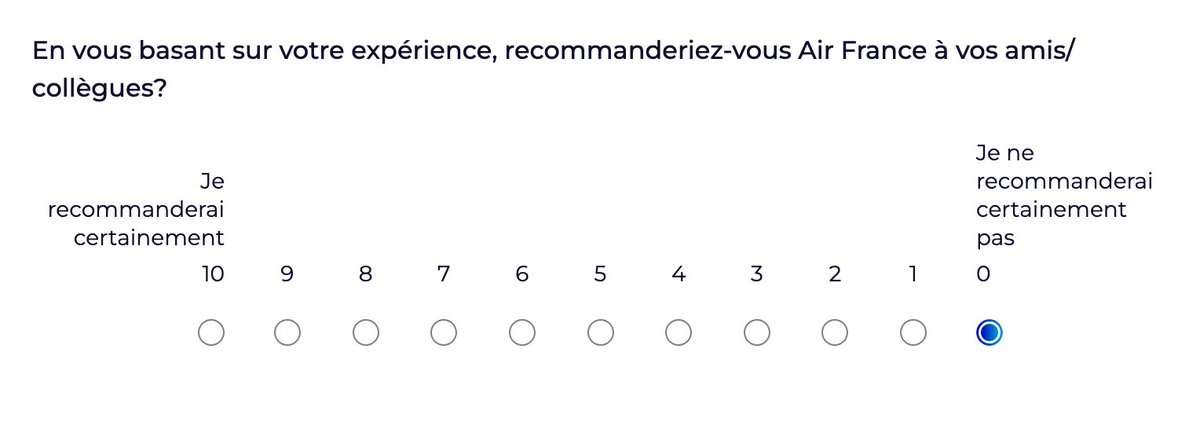
Hey @AirFranceFR, rather than reverting the scale of your satisfaction survey hoping to trick a few people into giving you good feedback, how about actually trying to improve your customers' experience?
We curated the biggest critical care multi-variate time-series dataset ever! Wondering how it might fuel the first generation of foundation models in this domain?
Join us at the oral presentation session of the AIM-FM NeurIPS Workshop tomorrow 2:30 - 3:30 PM Vancouver time.
Join us at the ETH AI Center to pioneer tomorrow's #healthcare solutions and push the boundaries of #medicalAI. ⚕
As an ETH AI Center #Fellow, you’ll be part of groundbreaking research aimed at making #healthcare more patient-centered, efficient, and accessible.
"Dynamic Survival Analysis for Early Event Prediction" by @HugoYeche@ToManuelBurger@gxr
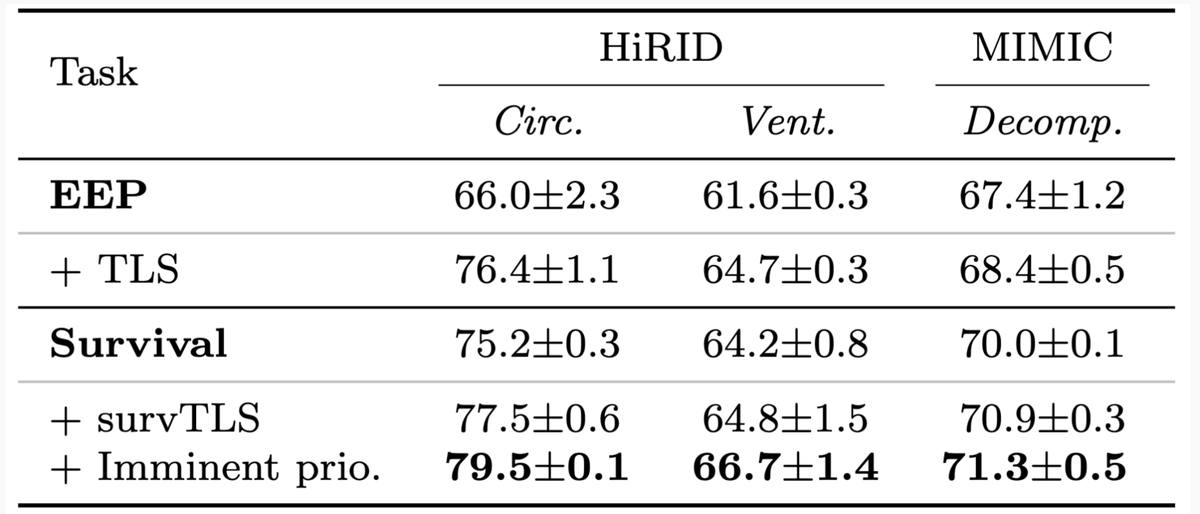
We improve early event prediction using dynamic survival analysis with up to an 11% difference on clinically relevant event-level metrics! #CHIL2024
Presenting this work today at the TS4H #ICLR2024 workshop today in Room Strauss 1:
- Poster session 1 at 10:15AM
- Oral presentation at 12:00PM
Come by to have a chat ☺️ !
In clinical early warning systems (EWS), can we go beyond the model estimate of event occurrence and leverage its belief about the event distance to improve our alarm policy?
Introducing “Dynamic Survival Analysis for Early Event Prediction” with @ToManuelBurger and @gxr. 🧶
@ToManuelBurger@gxr If you want to learn more about this work, have a look at the manuscript (https://t.co/xDdiGcpptF) or come chat with us at venues where we present this work :
- ICLR TS4H workshop happening tomorrow in Vienna
- CHIL conference happening in June in New York
In clinical early warning systems (EWS), can we go beyond the model estimate of event occurrence and leverage its belief about the event distance to improve our alarm policy?
Introducing “Dynamic Survival Analysis for Early Event Prediction” with @ToManuelBurger and @gxr. 🧶
@ToManuelBurger@gxr At an alarm granularity, we show if our modified survival MLE model already outperforms EEP MLE, we also observe that assigning higher alarm priority to an event believed to be more imminent further improves Alarm/Event AUPRC.
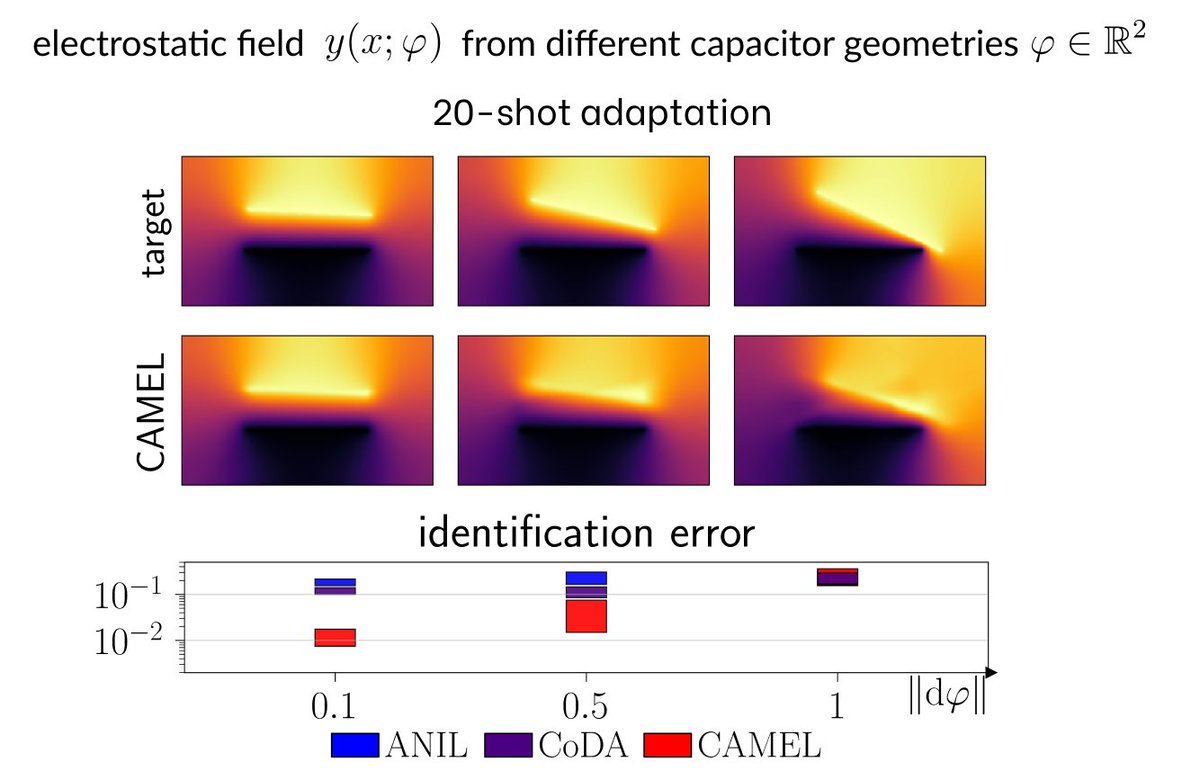
Tomorrow, I will present our paper Interpretable Meta-Learning of Physical systems at #ICLR2024, poster #29, 4.30 P.M.
We propose CAMEL, a meta-learning algorithm incorporating physical structure. Applications include physical parameter identification and robotics.
@marc_lelarge
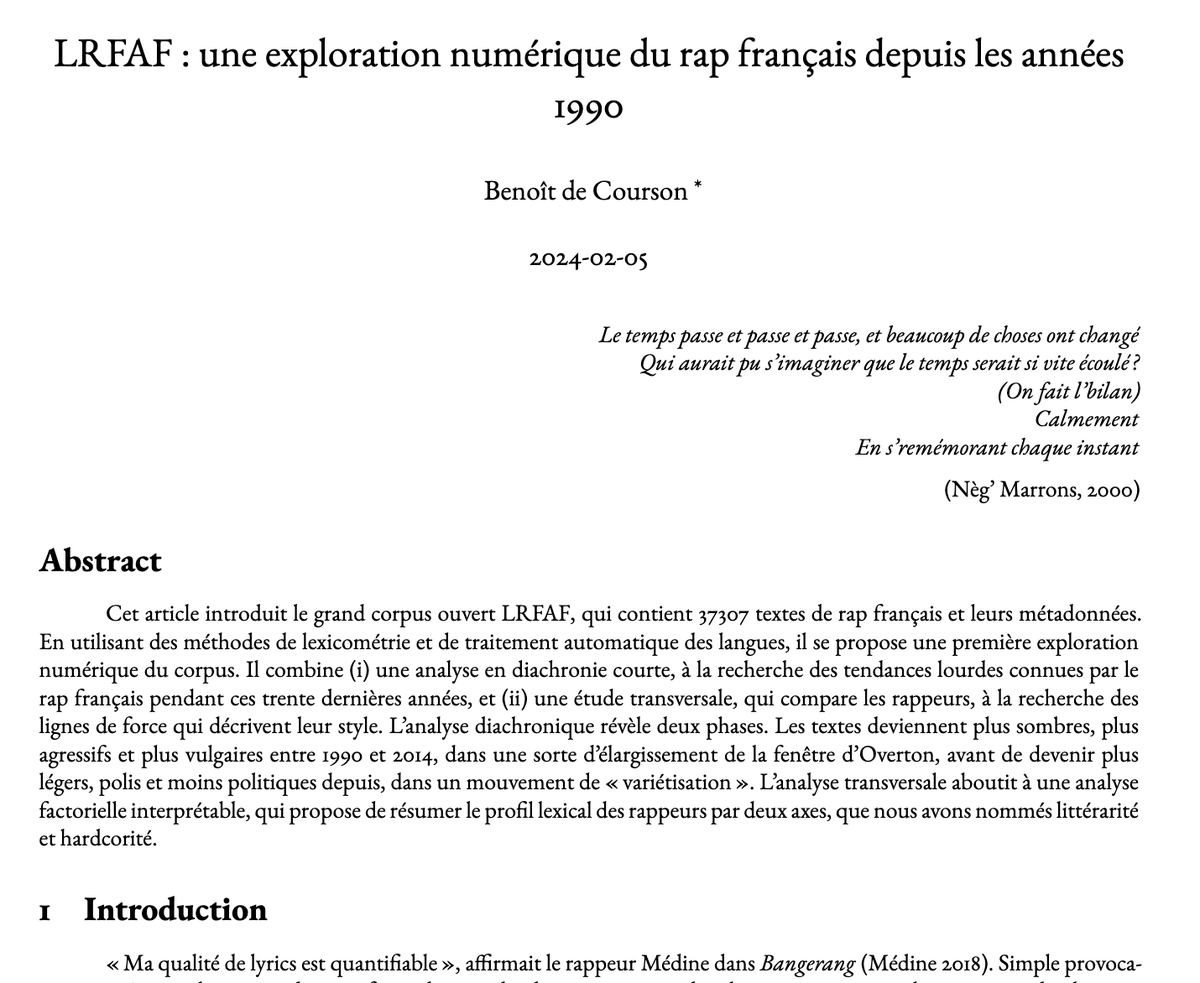
Nouveau working paper sur le rap français 🎙️
Je me suis récemment lancé dans la récolte massive de textes de rap, pour en faire un corpus ouvert et explorable sur @gallicagram. J'ai fait quelques explorations, et il s'est avéré que ça méritait un papier 👇
https://t.co/JLt4O3TJib
Nouveau working paper sur le rap français 🎙️
Je me suis récemment lancé dans la récolte massive de textes de rap, pour en faire un corpus ouvert et explorable sur @gallicagram. J'ai fait quelques explorations, et il s'est avéré que ça méritait un papier 👇
https://t.co/JLt4O3TJib