1/ 🧵 So delighted to share our new paper, out today in Science Translational Medicine @ScienceTM. We built a CAR-T cell therapy that selectively depletes the disease-driving mutant calreticulin (mutCALR) cells in myelofibrosis — while sparing healthy blood stem cells👇
https://t.co/zfwYYSqT9h
.@sbudeptofmed's Dr. Huichun Zhan led this study identifying #megakaryocytes (MKs) as active immune regulators in myeloproliferative neoplasms, with JAK2V617F mutation and aging synergizing to reprogram MKs into inflammatory, immunemodulatory niche cells.
@Haematologica | https://t.co/orlBCYqE00
Mary Brunkow and Fred Ramsdell – who have been awarded the 2025 Nobel Prize in Physiology or Medicine – gained decisive insights into how autoimmune diseases arise.
Brunkow and Ramsdell made a key discovery in 2001, when they presented the explanation for why a specific mouse strain (named scurfy) was particularly vulnerable to autoimmune diseases.
The medicine laureates had discovered that the mice have a mutation in a gene that they named Foxp3. They also showed that mutations in the human equivalent of this gene cause a serious autoimmune disease, IPEX.
The 2025 #NobelPrize in Physiology or Medicine has been awarded to Mary E. Brunkow, Fred Ramsdell and Shimon Sakaguchi “for their discoveries concerning peripheral immune tolerance.”
This year’s medicine laureate Shimon Sakaguchi discovered a new class of T cells.
Sakaguchi was swimming against the tide in 1995, when he made a key discovery. At the time, many researchers were convinced that immune tolerance only developed due to potentially harmful immune cells being eliminated in the thymus, through a process called central tolerance.
Sakaguchi showed that the immune system is more complex and discovered a previously unknown class of immune cells, which protect the body from autoimmune diseases.
#NobelPrize
Congratulations to @DrTonyLetai on being named the new director of @theNCI. An internationally renowned researcher and oncologist, Letai has helped shape our understanding of cancer through his study of cell death. His appointment is a testament to our continuing commitment to innovation and collaboration.
Learn more: https://t.co/0dkpwnamrh
Tell me one contemporary biomedical scientist whose work has not been impacted by Dr. David Baltimore - such a towering figure in the field. RIP! https://t.co/unBS0KFrXf
🚨 New working paper!
Can ChatGPT or generative AI transform education in low-resource settings? We ran a randomized controlled trial in Nigeria to find out.
The results? Powerful learning gains at a low cost.
👇
Hungarian Dance No. 5 meets the timeless brilliance of Charlie Chaplin—moving flawlessly to the rhythm of the music. A true masterpiece of movement and melody! 😍✨
At #EHA, we are thrilled to kick off the 2025 EHA-ASH Translational Research Training in Hematology (TRTH) spring Course! This immersive program brings together early-career researchers from around the world for a year-long journey of mentorship, collaboration, and skill-building in translational hematology research.
The TRTH workshop is designed to empower researchers with the tools they need to become a principal investigator in the field.
Wishing all participants an inspiring and productive start to the course!
Curious to learn more? Check out our TRTH-dedicated page: https://t.co/zzg0YhCCSI
#TRTH2025 #HematologyResearch #TranslationalScience #ResearchTraining #EHA #ASH
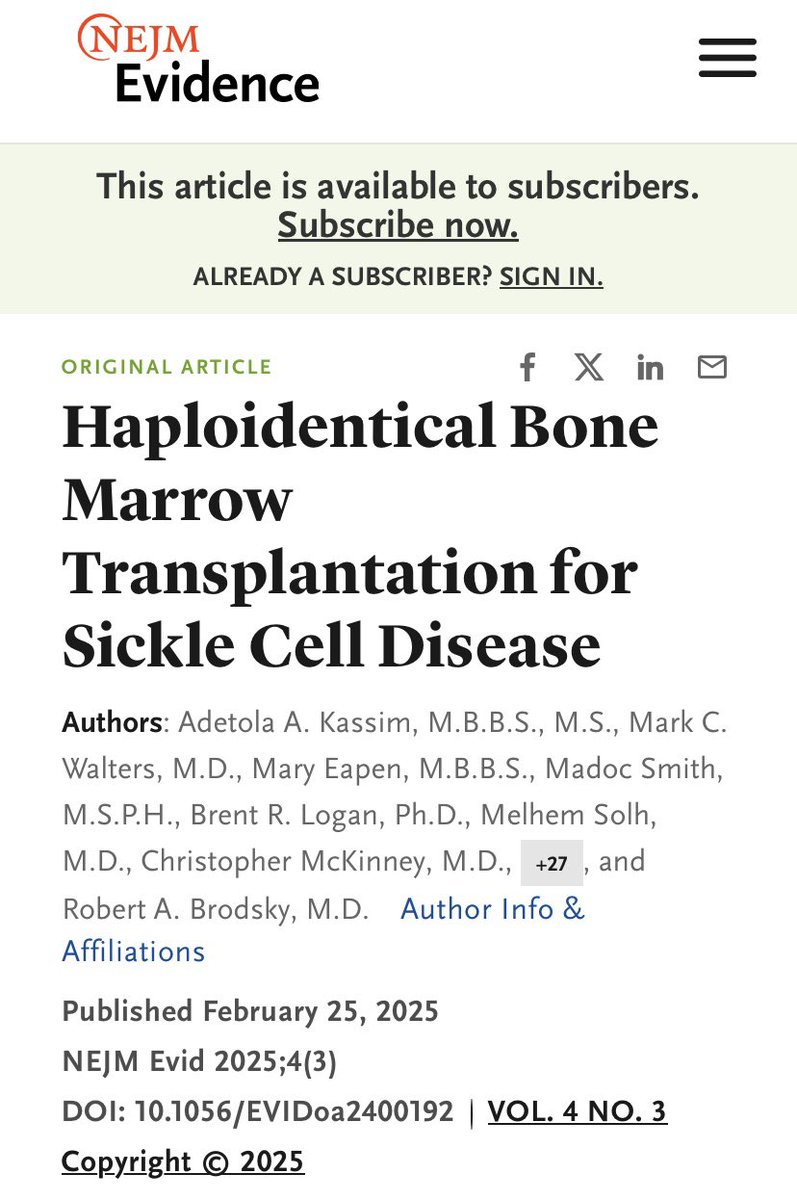
Out in NEJM Evidence today. KEY TAKEAWAYS
•Of 42 people with severe SCD who had the procedure , 95% were alive at 2 yrs, and 88% are considered cured.
•Most people with SCD are eligible, which costs a fraction of the price of gene editing/therapy
#casgevy@ASH_hematology