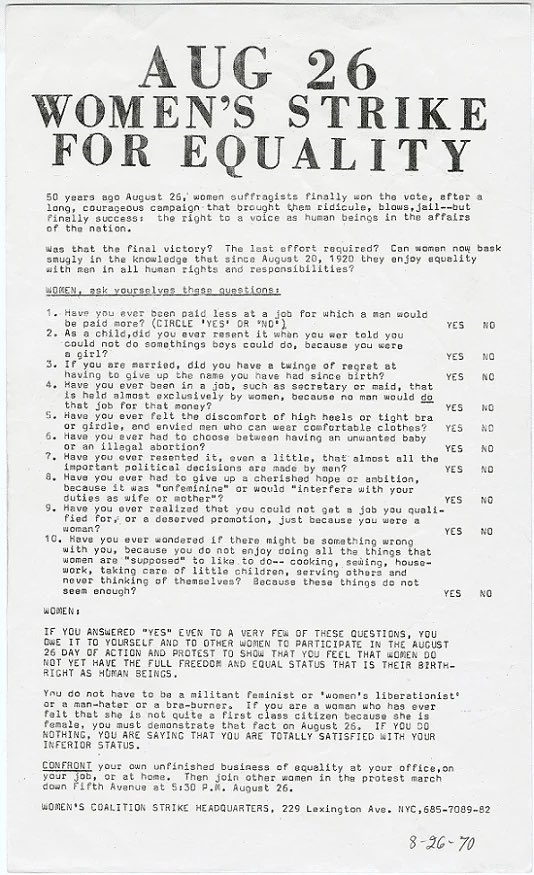
On August 26, 1970, women across the United States stepped away from their ordinary routines.
Some left desks.
Some left classrooms.
Some left kitchens.
Others brought their children with them.
In New York, thousands filled Fifth Avenue.
Office workers walked beside nurses, students, factory workers, mothers, and women old enough to remember life before they could vote.
They carried signs demanding equal opportunity, childcare, and control over their own lives.
The vote had answered one question.
They came carrying others.
On August 25, 1991, 21-year-old Linus Torvalds sent a message to a computer newsgroup.
He was building an operating system on his computer in Helsinki.
He began:
“Hello everybody out there using minix -”
Then he described what he was working on:
“just a hobby, won’t be big and professional like gnu”
He asked what people liked and disliked about Minix.
He asked what features they wanted.
Then he added:
“Any suggestions are welcome, but I won’t promise I’ll implement them :-)”
People answered.
He kept building.
On August 24, 1814, Dolley Madison prepared to leave the President’s House as British troops approached Washington.
She packed government papers.
Then she waited for the large portrait of George Washington.
There wasn’t enough time to unscrew its heavy frame from the wall.
Dolley ordered the frame broken.
White House staff broke the frame and removed the portrait. Among them were steward Jean-Pierre Sioussat, gardener Thomas McGrath, and Paul Jennings, an enslaved servant.
Two men carried it away for safekeeping.
Then everyone left.
British troops reached the house later that evening and set it on fire.
They could not take everything.
So they chose.
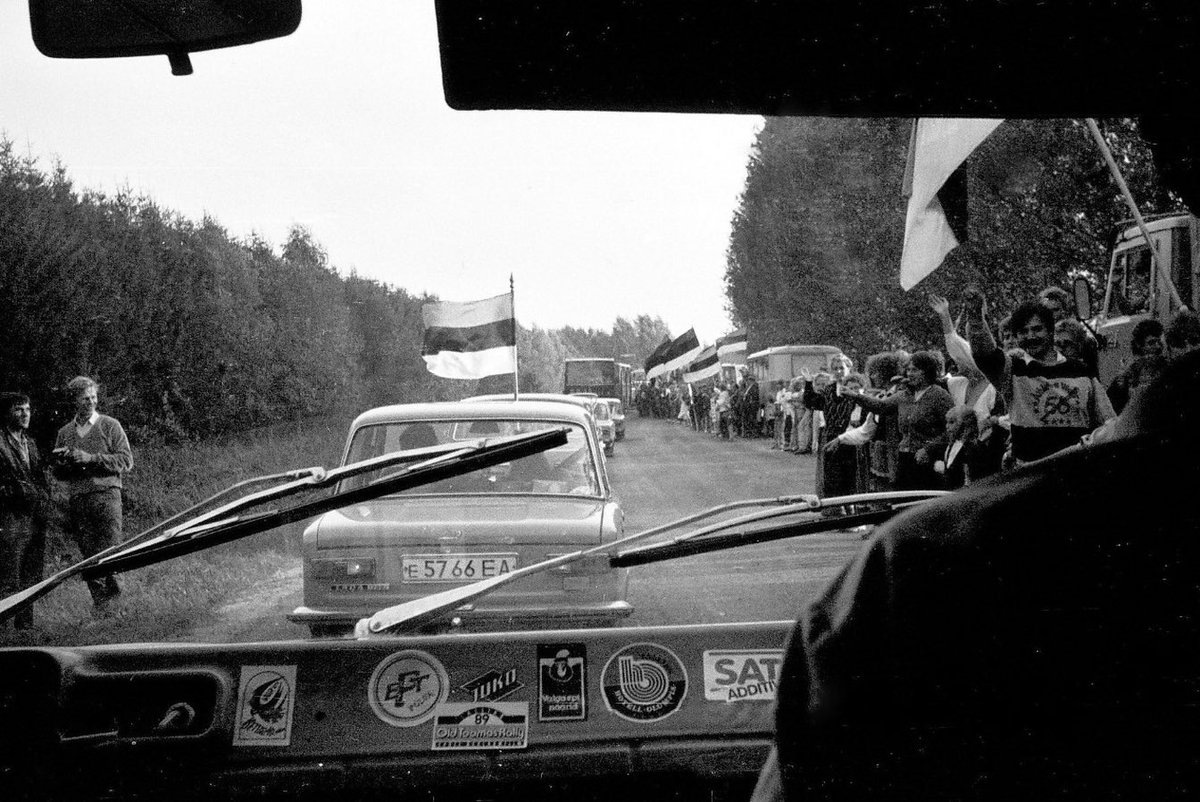
On August 23, 1989, people began gathering along roads across Estonia, Latvia, and Lithuania.
Families came.
Children came.
Strangers stood beside one another.
At 7 p.m., they reached for the people next to them.
One hand.
Then another.
For about 15 minutes, nearly two million people formed a human chain stretching more than 600 kilometers across three countries.
Some sang.
Some stood quietly.
Then they let go.
For a few minutes, the distance between three countries was measured in people.
On August 21, 2017, millions of people across the United States stopped what they were doing and looked up.
Workers stepped outside.
Children left classrooms.
Families gathered in fields, parks, parking lots, and backyards.
Some traveled hundreds of miles just to stand beneath the path of the moon’s shadow.
As daylight faded, conversations slowed.
Then the moon covered the sun.
Some people cheered.
Some cried.
Others simply watched.
For a few minutes, millions of separate lives turned toward the same thing.
The universe kept moving.
We stopped long enough to notice.
On August 20, 1977, Voyager 2 left Earth carrying a gold-plated record.
A small group of people spent months deciding what to put on it.
Waves.
Thunder.
Footsteps.
Laughter.
A heartbeat.
Music from different parts of the world.
Images of people eating, working, learning, and raising children.
Greetings in 55 languages.
One came from a six-year-old boy:
“Hello from the children of planet Earth.”
They could not send everything.
So they chose pieces of us.
On August 19, 1839, people crowded into the Institut de France in Paris.
There were scientists.
Artists.
Journalists.
More waited outside.
François Arago stood before them and explained how light could leave an image on a polished silver plate.
There was no demonstration.
He simply told them how it was done.
Within days, people were setting up cameras in the streets of Paris.
They came to hear the instructions.
They left wanting to try it themselves.
On August 18, 1920, Harry T. Burn arrived at the Tennessee House with a letter from his mother in his pocket.
He had been voting with opponents of women’s suffrage.
The letter was seven pages long.
His mother wrote about rain.
Visitors.
A wedding.
A house sale.
And then:
“Hurrah and vote for Suffrage and don’t keep them in doubt.”
That day, Burn voted yes.
The next day, explaining his decision, he wrote:
“I know that a mother’s advice is always safest for a boy to follow.”
The letter began at home.
He carried it into history.
On August 17, 1945, several hundred people gathered outside a house in Jakarta.
There was no stage.
No formal seating.
Just a crowd standing in the yard and along the street.
At about 10 that morning, Sukarno stepped onto the veranda with Mohammad Hatta beside him.
He read from a short typed page.
Indonesia was independent.
Then a red-and-white flag, sewn by Sukarno’s wife Fatmawati, was raised on a bamboo pole.
The people standing below began to sing.
A nation announced itself from the front of a house.
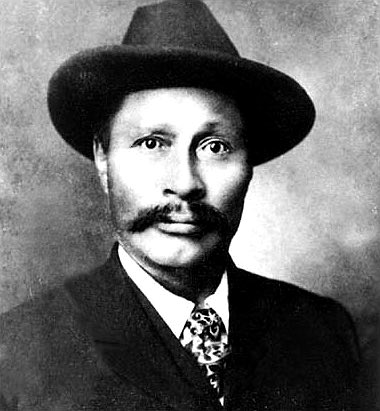
On August 16, 1896, Keish, Káa Goox, Shaaw Tláa, and George Carmack stopped beside Rabbit Creek in the Klondike.
There was gold in the gravel.
Accounts differ over the exact moment it was first noticed.
The strongest evidence credits Keish with the discovery.
They stayed.
They tested the ground.
The next day, they staked their claims.
The creek had been there all along.
This time, someone noticed what it held.
On August 15, 1947, India woke as an independent nation.
In some cities, people filled the streets.
They carried flags.
Children sang.
Strangers shouted “Jai Hind.”
Elsewhere, families packed what they could carry.
Trains moved in both directions.
People gathered around radios and tried to understand where a new border had placed their homes.
Some celebrated.
Some prepared to leave.
Both were part of the same morning.
On August 14, 1945, radios across the United States interrupted their regular programming.
Japan had agreed to surrender.
People poured into the streets.
Car horns sounded.
Church bells rang.
Strangers embraced.
Elsewhere, people stayed where they were and listened.
Some thought about the people who would be coming home.
Others thought about the people who would not.
Some ran into the streets.
Others stayed beside the radio.
On August 13, 1952, Willie Mae “Big Mama” Thornton stepped to a microphone in a Los Angeles recording studio.
The song was “Hound Dog.”
The band played.
Thornton sang.
She added her own talking and hollering. She worked against the guitar and called for barking and howling at the end.
They recorded two takes.
The second was the one they kept.
Years later, Thornton remembered:
“They had this song written out on the back of a brown paper bag… All that talkin’ and hollerin’—that’s my own.”
Someone else wrote the song.
Thornton gave it her voice.
On August 12, 1883, a female quagga died at the ARTIS zoo in Amsterdam.
She had lived there for sixteen years.
She had no recorded name.
That morning, the zoo recorded her death in a single line:
“Deceased, 1 Equus quagga.”
The staff tried to find another.
They believed more still lived elsewhere.
None were found.
On August 11, 1973, Cindy Campbell rented the recreation room of her apartment building in the Bronx for $25.
She was throwing a back-to-school party.
Girls paid 25 cents.
Guys paid 50.
Cindy wrote the invitations by hand.
Her mother made snacks.
Her father brought drinks.
Her brother Clive, known as Kool Herc, spun the records.
Herc watched the dancers.
When certain parts of the records made them move, he gave them more.
People danced into the night.
They had come to party.
History gave it another name.
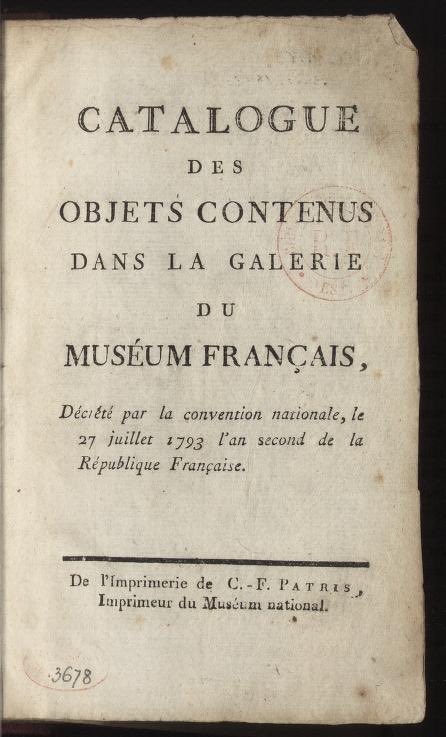
On August 10, 1793, the Louvre opened symbolically as a public museum.
The palace housed royal collections.
Now there was a catalogue for those who would enter and look.
It began simply:
“First bay, entering on the right.”
Then came the paintings.
One after another.
The opening was brief.
The museum closed again for additional work before reopening more fully that November.
People could now walk in, follow the catalogue, and look for themselves.
August 9, 1854
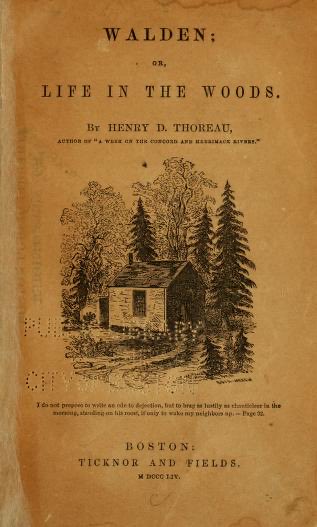
On August 9, 1854, Henry David Thoreau’s Walden was published.
He had spent years watching the pond, the seasons, the trains, the ice, and the ordinary details of a deliberately smaller life.
In his journal that day, he recorded the event with almost no ceremony:
“Walden published.”
Years of attention.
Two words.
On August 8, 1969, photographer Iain Macmillan climbed a stepladder in the middle of Abbey Road.
A police officer stopped traffic.
Four men crossed the street.
Then they crossed back.
They did it three times.
Macmillan took six photographs.
One was chosen.
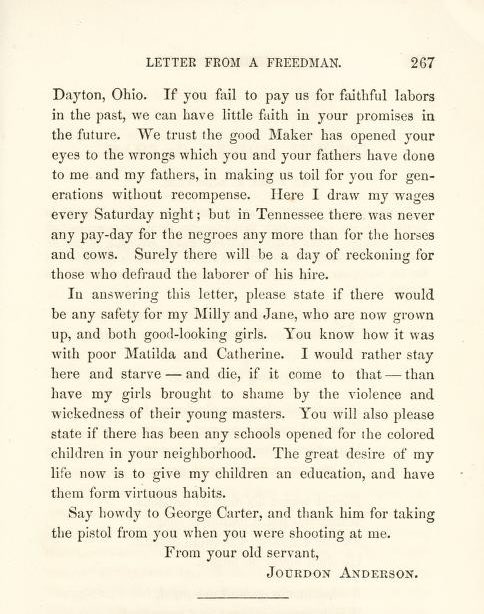
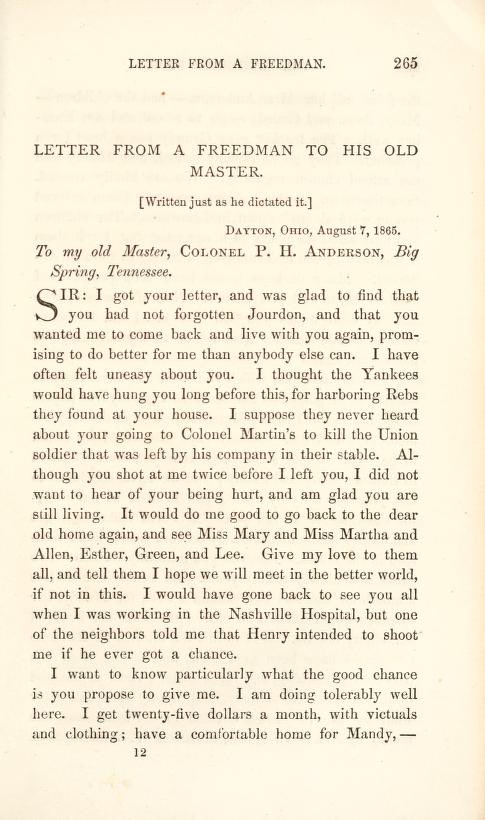
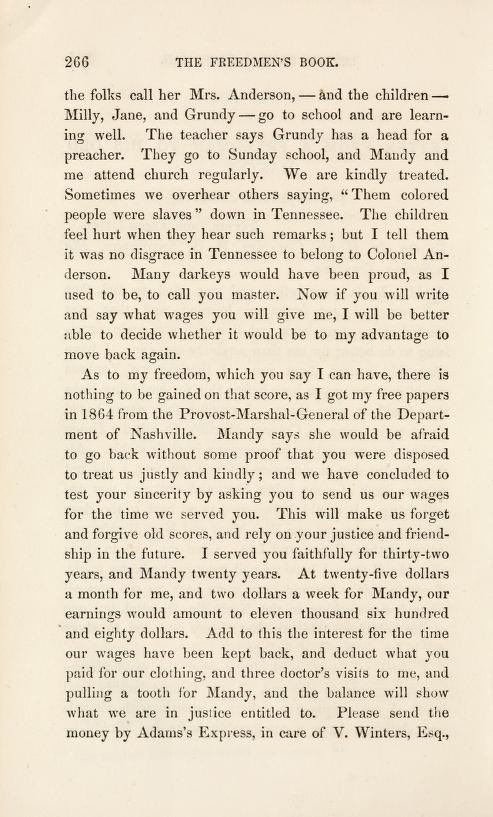
On August 7, 1865, Jourdon Anderson answered a letter from the man who had once enslaved him.
The man wanted Jourdon and his family to return to Tennessee.
Jourdon was living in Ohio.
He earned wages.
His children went to school.
His wife, Mandy, was called Mrs. Anderson.
Before considering the offer, he asked for something.
The wages he and Mandy were owed for the years they had worked without pay.
He calculated the amount himself: $11,680, plus interest.
He also asked whether any schools had opened for Black children nearby.
He wanted his daughters educated.
The man who once decided whether Jourdon could leave was asking him to come back.
This time, Jourdon got to answer.