Caffeine v3.0 officially launches this Tuesday, April 7th, and it is a quantum leap for the $1 Trillion cloud market. $ICP ����
✅ New App Market (fork, remix, and monetize apps!)
✅ Cheap, massive on-chain Blob Storage
✅ Enterprise-grade "Cloud Engines"
✅ The Internet Intelligence Network (Verifiable AI)
The on-chain cloud era starts now. Read the full breakdown here ↓
Caffeine v3.0 ☕️, Tuesday, April 7th
https://t.co/IfQrVovF3L
A new era begins on ICP in a few days. A huge Caffeine upgrade will take place. This is about more than the new features it packs: what can be built on the Internet Computer through chat alone shall advance by a quantum leap.
It will blow your mind, because you can go so much further: those wanting to build apps and services on self-writing cloud, where every technical task is automated and directed by natural language interaction, may rationally decide that the Internet Computer is the place to be thanks to the work of Caffeine Labs.
But, stunning as the v3.0 advance is, this only marks the beginning of a new beginning for ICP. Caffeine is just getting started, and will be joined by other major advances unfolding in the ICP ecosystem. Several things are coming together:
1) The architecture that powers Caffeine v3.0 will ensure it continues to grow more powerful as time goes on. We expect that it will be possible for non-technical people to build almost anything on the Internet Computer in the future. Eventually special features like "Caffeine Snorkel" will also make it possible to auto-migrate legacy apps and services to the Internet Computer.
2) For the first time, Caffeine will allow all users to publish the App Market, so that other users can install copies of their apps, and if they want, remix them, since apps from the market are mutable and can be changed as needed. This is important change will be followed by the activation of monetization features, which will kickstart a new open source onchain economy based around the AI-driven development of re-usable apps and services.
3) Caffeine apps use ICP Blob Storage (which is currently exclusively available to Caffeine owing to its ongoing development) to maintain copies of files and binary large objects. Coming advances will enable Caffeine apps to store data at the world's best $/GB — making the Caffeine the perfect plartform to use to build apps that must store and share large amounts of data (for example, for a photo sharing app, or a team communications platform where video meetings are routinely recorded and archived).
4) Caffeine will soon be joined by new ICP "cloud engine" functionality, and then, the Internet Intelligence Network (IIN) — two new parts of the Internet Computer. Cloud engines will provide enterprise users with much more control over how the Internet Computer hosts their apps and services. IIN will provide everyone with access to inference on open weights models at lower cost than is possible today (for example allowing a business to create an e-commerce website on the Internet Computer where every customer can be helped through product exploration by AI, without worrying about the cost).
5) Cloud engines, which are essentially private subnets that can be controlled via a control panel, enable the Internet Computer to provide a cloud experience that feels more familiar to prosumers and enterprises used to centralized clouds. Users will be able to select the nodes combined to power their cloud engines, and nodes can include cloud-on-cloud nodes, such as AWS instances, as well as traditional sovereign node hardware. These nodes can be chosen to match precise throughput needs, or regulatory requirements (e.g. GDPR). The Internet Computer is thus transforming into a mass market cloud solution.
6) Powerful additional advantages of cloud engines include a) since they are essentally Internet Computer subnets, as usual hosted apps and services are tamperproof and unstoppable, and don't require support by security and systems administration personnel, b) hosted apps can have their query throughput auto-scaled horizontally by adding nodes, which can be located in proximity to demand, and can have ther update throughput auto-scaled by splitting the engines — enabling auto-scaling where software does not have to be updated — and c) owners can traverse underlying compute vendors and geographies and jurisdictions, simply by adding and deleting nodes, which can be done without interrupting hosted apps.
7) The Internet Intelligence Network is an extension to the Internet Computer that we plan to propose to the NNS soon (which I have mentioned before). This will be powered by community-operated hardware devices, which crucially, in combination with new technology we are developing, shall shall facilitate provision of lower per-token inference costs than AI clouds can currently achieve within targeted market segments (low costs that are derived from the technology involved, in contrast to certain contemporary decentralized GPU networks that use token appreciation to drive unsustainable subsidization flywheels).
8) A key unique additional aspect of IIN is that inference is verifiable, just like onchain compute — that is, those supplying prompts and context will know that their results are correct, and shall not have to trust that the IIN nodes powering inference haven't changed their results (for example, by inserting advertising, or malicious content). The strength of the verification is configurable. In the default mode, there will be no discernible difference in cost or performance/time thanks to the techniques developed. In higher security modes, useful for special high-security purposes, verification cost will scale linearly with every node checking the inference, while the hit to performance/time remains very small. (Note that because inference is non-deterministic, inference verification is technically challenging and novel, and will advance the state-of-the-art).
In all, v3.0 is part of the Internet Computer's march towards the mainstream cloud market, which is predicted to generate $1 trillion in revenue in 2026, and $2 trillion in 2030.
While we see the Internet Computer as a revolutionary decentralized cloud platform, rather than a network beloning to the web3 industry per se, we note that after tokens (Bitcoin), and DeFi (Ethereum), onchain cloud is the first new decentralized network functionality to unlock mass market potential — and it's happeing exclusively on the Internet Computer, which is by far the most technologically advanced network the world has ever seen.
ICP is advancing to define an important new cloud sector, where the network is the cloud, and the cloud is self-writing.
$ICP is officially testing sovereign, tamperproof compute over AWS, GCP, and Azure.
The first pilots are already live on the NNS. By running Cloud Engines across AWS, GCP, and Azure, ICP injects decentralized cryptography directly into Big Tech's hardware.
Onwards $ICP 🔥
https://t.co/ZpBkWCdLmh
Here's how to install @dfinity's 17 official AI skills into Claude Code for building on ICP.
One prompt. 90 seconds.
I deployed a canister to mainnet in just a few minutes.
This is what building on Web3 looks like in 2026
A Cloud Foundation production ♾☁️🤖
$1.4 Trillion is lost to healthcare fraud yearly. $ICP is fixing it.
@solumglobal just announced sgUSD: a decentralized healthcare stablecoin running natively on the Internet Computer.
Instant settlements. Zero AWS centralized points of failure. AI-audited claims.
https://t.co/Y65JAVIQte
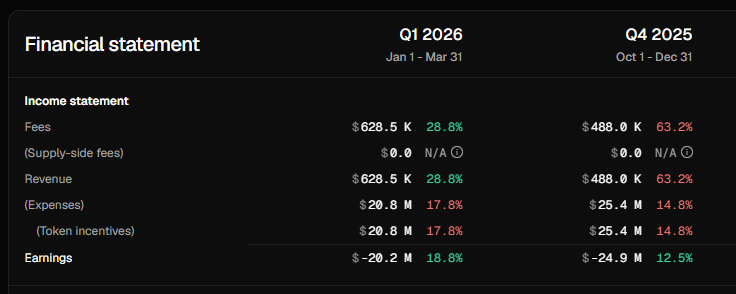
Q1 is almost over. For now, $ICP Money metrics look better compared to Q4 25:
Revenue + 28.8% 📈
Expenses -17.8% 📉
Earnings + 18.8%📈
Overall, ICP is still recording losses. Anyway, in terms of losses, this has been the best quarter since Genesis.
However, the ratio is still low:
Q1 Burn = 230,200
Node Rewards = 2,539,296
Voting Rewards (Disbursed = real Inflation) = 2,260,699
Q1 Mint = 4,799,995
Ratio = 20.85 X
% = 4.79%
This means that ICP has covered 4.79% of the Expenses with the Token Burn. This figure is better that SOL and ETH (Both Sub 2%) but it is still very weak.
Therefore, with M70, The Ratio needs to decrease and the % needs to substantially increase.
Jensen Huang just called out every CEO who’s been firing people “because of AI.”
Jim Cramer asked him why companies are laying people off if AI is supposed to make everyone MORE productive.
Jensen's answer:
"For companies with imagination, you will do more with more. For companies where the leadership is just out of ideas, they have nothing else to do. They have no reason to imagine greater than they are. When they have more capability, they don't do more."
Read that again.
The man who built the most important tech company on Earth just told you that if your CEO is using AI to cut headcount, it means one thing:
They have no imagination.
They have no vision for what comes next.
They got handed the most powerful tool in human history and their FIRST instinct was to fire people.
This is the CEO of NVIDIA. The company whose chips power every AI system on the planet.
If anyone on Earth has the right to say "AI replaces workers," it's Jensen Huang.
And he said the OPPOSITE.
He said every carpenter could become an architect. Every plumber could become an architect. AI elevates capability. It doesn't eliminate it.
But here's where it gets really interesting...
During the same interview, Jensen revealed something nobody's talking about:
He said AI startups like OpenAI and Anthropic are seeing their revenues increase by one to two billion dollars a WEEK. And he wishes these companies were public so the world could see what he sees.
One to two billion per week.
That's a $50 to $100 BILLION annualized run rate.
For companies that most people think are burning cash and making nothing.
The entire Wall Street narrative that "AI companies aren't profitable" might be completely wrong.
Jensen sees their numbers. He sees their compute orders. He sees their growth. And he's saying the revenue is real.
So if the money IS real, why are other companies firing people?
Because they're not building AI products. They're not creating new revenue streams. They're not using AI to expand into new markets.
They're using AI as an EXCUSE to cut costs because they ran out of ideas 3 years ago and need something to tell the board.
Jensen's company added $500 billion in new orders in 5 months. He expects $1 trillion in cumulative revenue through 2027 from just two product lines.
That number doesn't include the new chips, systems, or partnerships announced this week.
And he's not cutting people. He's hiring.
Because when you have imagination, more capability means MORE opportunity. Not less headcount.
Meanwhile Salesforce cut thousands. Meta cut thousands. Amazon cut thousands. All blaming "AI efficiency."
Jensen's response: You're out of imagination.
He also said something that stuck with me.
Cramer asked if he ever thought he'd build a $10 to $20 trillion company while waiting tables at Denny's.
His answer: "I was just trying to make it through the shift."
Biggest tip he ever got? Two, three dollars.
Now he's building tech that increased computing demand by one million times in two years.
He announced OpenClaw, which he says is as big as ChatGPT.
And he's got 21 months of new business that isn't even counted in the trillion dollar figure yet.
When asked how long he plans to keep working?
"I'm hoping to die on the job. And I'm not hoping to die anytime soon."
This is a man who believes every single thing he's building.
And his message to every CEO using AI to justify layoffs is simple...
You're not innovating. You're surrendering.
The technology wasn't built to shrink companies.
It was built to make them limitless.
If your leadership can't see that, the problem isn't AI.
It's THEM.
🚨 Breaking: 2026 developer report is out 🚨
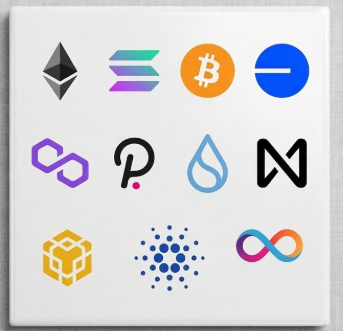
The latest data from @ElectricCapital is out, and the landscape of blockchain development is shifting. Internet Computer ( $ICP ) is emerging as the fastest-growing major ecosystem in the space! ♾️
Ethereum: 11,798 devs (-14% )
Solana: 4,487 devs (-15% )
ICP: 4,399 devs (+375.6% ) 🔥
Bitcoin: 2,987 devs (+4% )
Base: 2,893 devs (+46% )
Polygon: 2,215 devs (+14% )
BNB Chain: 1,121 devs (-13% )
Polkadot: 1,101 devs (-29% )
Sui: 1,012 devs (-14% )
NEAR: 780 devs (-11% )
Cardano: 669 devs (-10% )
While $ETH and $SOL maintain the largest numbers, $ICP is the clear winner in terms of momentum among the top-tier ecosystems, posting a massive 375% annual increase in active developers.
The era of 'On-Chain Everything' is attracting builders at a record pace. The network effects for ICP are becoming impossible to ignore. 🌐
Full circle rendering from Cinema 4D
With the latest Render Network Wizard, you can now:
- Send render jobs directly from Cinema 4D
- Start rendering through the Manager App
- Automatically download completed frames locally
No manual packaging.
No zipping.
No babysitting.
Send jobs, render, and download all in just a few clicks.
Watch the walkthrough:
AWS outage in UAE proving what I've been predicting for years — data centers are the new targets in conflict (including for terrorists in the future).
ICP provides a way to create sovereign cloud from a network that can withstand data center losses.
https://t.co/uH9XWvftyM