imagine a crypto project getting hacked so badly it decides to kill its own blockchain
that's basically $ONE rn
so, r they pumping it for an exit liquidity? bcz
no specific news
no upgrade
no catalyst
let's go over the mixed retail sentiment
a) in august, an exploit let an attacker forge over 3 trillion ONE
that's roughly 200x the entire circulating supply
one wallet moved 2.4 trillion of it in under two minutes
harmony rolled the chain back to undo it
that was patch one
then came the real move
b) shut down the L1 completely
after seven years running its own blockchain, harmony is migrating ONE to ethereum as an ERC 20
holders get the new tokens via a final snapshot and airdrop, no claim needed
but multisigs, LPs, anything sitting in a smart contract.. those don't make the trip.
users had until sept 10 to get out
harmony's own reason for all this wasn't not to rebuild stronger
it was: the threats from state actors and AI agents are too great
c) so what happens to the validators who secured this chain for years?
they get offered a spot in harmony's next thing
an AI video Remix Economy
creators post prompts, others remix them with AI.
validators become governors instead.
there's a payout pool for the ones who wind down their nodes properly
old harmony → dead L1
new harmony → ethereum token → AI pivot → completely different project
d) and don't mistake this for a scarcity play
circulating supply is already ~14.9B, past the original 12.6B cap
there's no scheduled unlocks left, but harmony says total supply and emissions stay unchanged
and new tokens will help fund the AI initiative
so there's no clean less supply, more demand story here
.
.
the market is being asked to price something that barely resembles the old harmony
some see a fresh start
others see a desperate reinvention after a historic security failure
this isn't even harmony's first big hack, the horizon bridge lost $100M back in 2022
and yet
ONE is up 60% today
still 99% below its ATH though
im wondering if a completely new harmony can give an almost forgotten token a reason to exist?
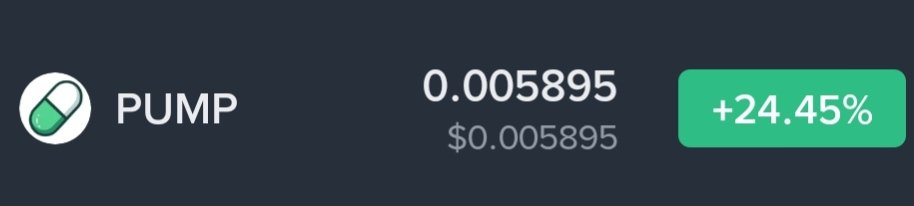
$PUMP is up again.
not sm random pumps weve been digging thru
bcz for once... there's an actual business behind the token
quick primer
PUMP = the token behind https://t.co/RRLfeZrf43
the platform that turned Launch a Memecoin into 3 clicks on Solana.
n whether you love it or hate it...
people use it
a lot
n here's the part that shouldn't surprise you
the platform is making real money from tokens that mostly go to zero.
the numbers:
→ $13.6M in fees in a single week
→ $846M in daily trading volume
→ $1.6M spent on the latest buyback alone
→ ~398M PUMP bought back in that round
→ ~463M PUMP bought back and burned cumulatively
so here's the loop
more memecoins launched
→ more trading
→ more fees
→ more revenue
→ PUMP buybacks
→ fewer tokens in circulation
so, that's an actual value-capture mechanism.
which is rarer than it should be, honestly, even compared to some of the real institutional news tokens i've covered recently.
n price has followed
$0.0038 (sep 25) → $0.0042 → $0.0044 → $0.0049 → $0.0052 → ~$0.0057 now
roughly +50% in under a week.
.
.
but two flags before you get too excited.
flag 1: size.
>market cap is already $2.5B+.
>circulating supply: ~465-470B, out of a 1T max.
>this isn't a thin float that a few wallets can shove around.
>moving this market cap takes real capital.
.
flag 2: some of this is just momentum, not fundamentals.
>short liquidations reportedly fueled some of the sharpest intraday spikes.
>meaning part of this candle = forced buying from squeezed shorts, not organic conviction.
.
.
>>when i went looking for one specific headline behind today's move...
there isn't one.
>>what actually drives PUMP is a pattern:
meme season heats up → activity spikes → fees spike → buybacks accelerate → price follows.
meme season cools → same thing, in reverse.
>>one earlier PUMP rally was explicitly tied to "high launch activity on the platform," not news.
>>one down day was explicitly described as: no catalyst, just risk-off sentiment dragging high-beta names lower.
.
.
so two things are true at once:
>the business is real and growing.
>the token is also riding straightforward momentum on top of it.
the real question isn't "can https://t.co/RRLfeZrf43 generate attention."
clearly it can. this week proves that.
.
.
the real question is:
>does the buyback pace scale with revenue, or stay symbolic when meme demand cools
>does this fee lead over platforms like Hyperliquid hold up, or was that a one-time spike
when the casino goes quiet again,
>does PUMP give back this move as fast as it made it
revenue: up
buybacks: happening
supply: shrinking
traders: back in
a real story, id say
just priced with real money now, not a random candle, so the next leg needs real conviction behind it, not just a squeeze.
$NMR is up 27% today.
question is why
because NMR isn't really an AI token
it isn't really DeFi either
it's the token behind a hedge fund where thousands of anonymous data scientists compete to predict the stock market
yes...
an actual hedge fund.
so naturally, i went looking for what caused today's pump.
and surprisingly...
there isn't some massive announcement.
>no major listing.
>no giant partnership.
>no shiny AI launch.
instead, trading activity suddenly exploded, with volume reportedly jumping more than 700%.
.
.
so what's the market suddenly noticing?
Numerai works very differently from a normal hedge fund.
instead of hiring all its quants internally...
it gives financial datasets to data scientists around the world.
they build machine-learning models.
submit their stock-market predictions.
and Numerai combines thousands of them into one giant "meta model" used by its hedge fund.
.
.
but here's where $NMR comes in.
participants can stake NMR behind their predictions.
good model → earn rewards.
bad model → risk losing some of the stake.
basically...
put your money where your AI model is.
and underneath this weird experiment, the numbers have gotten surprisingly big.
→ ~$700M managed by Numerai
→ $1B+ traded monthly across 30 markets
→ 1.1M+ NMR currently staked
→ active contributor accounts more than doubled over the past year
.
.
and then there's another interesting piece.
Numerai itself has been buying NMR.
three strategic buybacks in under a year:
→ first buyback
→ another $1M
→ another $1.2M in July
total: $3.2M of NMR bought back.
.
.
why?
because Numerai pays contributors from its NMR treasury.
more contributors → more rewards → more NMR needed.
so Numerai has been replenishing that treasury by buying tokens from the market.
.
.
and suddenly you get an interesting loop:
more data scientists
→ more models
→ more NMR staked
→ more rewards
→ treasury needs NMR
→ Numerai buys some back.
then look at supply.
NMR has a maximum supply of just 11M tokens.
so when serious volume suddenly arrives...
you can understand why price can move quickly.
.
.
but here's the important part.
none of this happened today.
>the ~$700M fund isn't new.
>the staking mechanism isn't new.
>the buybacks weren't announced today.
which makes today's +27% more interesting.
this doesn't look like:
"huge announcement → token pumps."
it looks more like:
"market suddenly notices what's been building underneath."
and underneath NMR is one of crypto's strangest experiments:
thousands of anonymous data scientists...
staking crypto on their stock predictions...
feeding models into a ~$700M hedge fund.
$HBAR is up 27% today.
and this one's a little diff from some of the pumps i've been digging into lately.
>it's not a tiny low-cap.
>it's not some illiquid token randomly printing a huge candle.
HBAR is a multi-billion dollar asset...
moving like a small cap.
so i went looking for why.
and there's actually something happening underneath this one.
on Sept 25, a Hedera-based identity platform called IDTrust became available through IBM Cloud Catalog.
it's built by The Hashgraph Group and is designed around verifiable digital identities for things like AI agents and devices.
sounds boring.
but think about where AI is heading.
millions of AI agents potentially interacting with companies, systems and eventually each other.
how do you prove an agent is actually who it claims to be?
that's the problem IDTrust is trying to solve...
with Hedera underneath.
and putting something like this inside IBM's cloud ecosystem matters.
enterprises don't want to figure out crypto wallets, nodes and blockchain infrastructure.
they want products available through systems they already use.
basically...
IBM just made accessing a Hedera-powered enterprise product a lot easier.
and if you know Hedera, this fits its story almost perfectly.
because Hedera has spent years pitching itself as the blockchain for enterprises.
its governing council has names like:
Google.
IBM.
Boeing.
Deutsche Telekom.
LG.
Nomura.
Tata Communications.
Avery Dennison.
Wipro.
so the enterprise angle isn't new.
what's interesting is seeing actual products start appearing around it.
but here's where i'd slow down.
because an IBM Cloud listing is a good catalyst.
i'm not convinced it's a +27% catalyst by itself.
HBAR was already sitting near an important breakout area.
traders were positioning.
open interest was rising.
then a decent piece of news landed...
price broke through...
and momentum did the rest.
the news lit the fuse.
the chart probably helped with the explosion.
and that brings me to the more interesting question.
does any of this actually create demand for $HBAR?
HBAR is the fuel of Hedera.
transactions, smart contracts and other network services are paid for using it.
so theoretically...
more enterprise usage → more network activity → more HBAR demand.
nice clean story.
except there's a catch.
Hedera is deliberately cheap.
that's literally one of its biggest selling points to enterprises.
but economically...
cheap transactions also mean you can have enormous network activity without necessarily creating enormous token demand.
that's the rabbit hole.
because Hedera could keep adding companies.
more enterprise products could launch.
network activity could grow.
and you still have to ask:
how much value actually flows back into HBAR?
especially when the supply picture is very different from something like QNT.
QNT has a tiny ~14.6M supply.
HBAR has tens of billions of tokens circulating, with more supply still outside circulation.
so this isn't really a scarcity story.
it's a usage story.
and that's why today's move is interesting.
the catalyst is real.
the enterprise angle is real.
the breakout is real.
but there's still a gap between:
"enterprises are building on Hedera"
and
"that creates meaningful demand for HBAR."
same rabbit hole i went down with QNT...
just from the opposite direction.
QNT had the tiny supply.
HBAR potentially has the scale.
now we get to see whether that scale actually reaches the token.
10 days ago, when i wrote abt $ONE.
it had just pumped +176% in a day.
and
that was already its THIRD crazy move in 2 weeks.
the sequence was:
+51%
then +85%
then +176%.
and i ended that post asking
how many more of these legs before ONE actually corrects?
well...
a lot happened since.
when i posted, ONE was around $0.0018.
it didn't correct immediately.
instead...
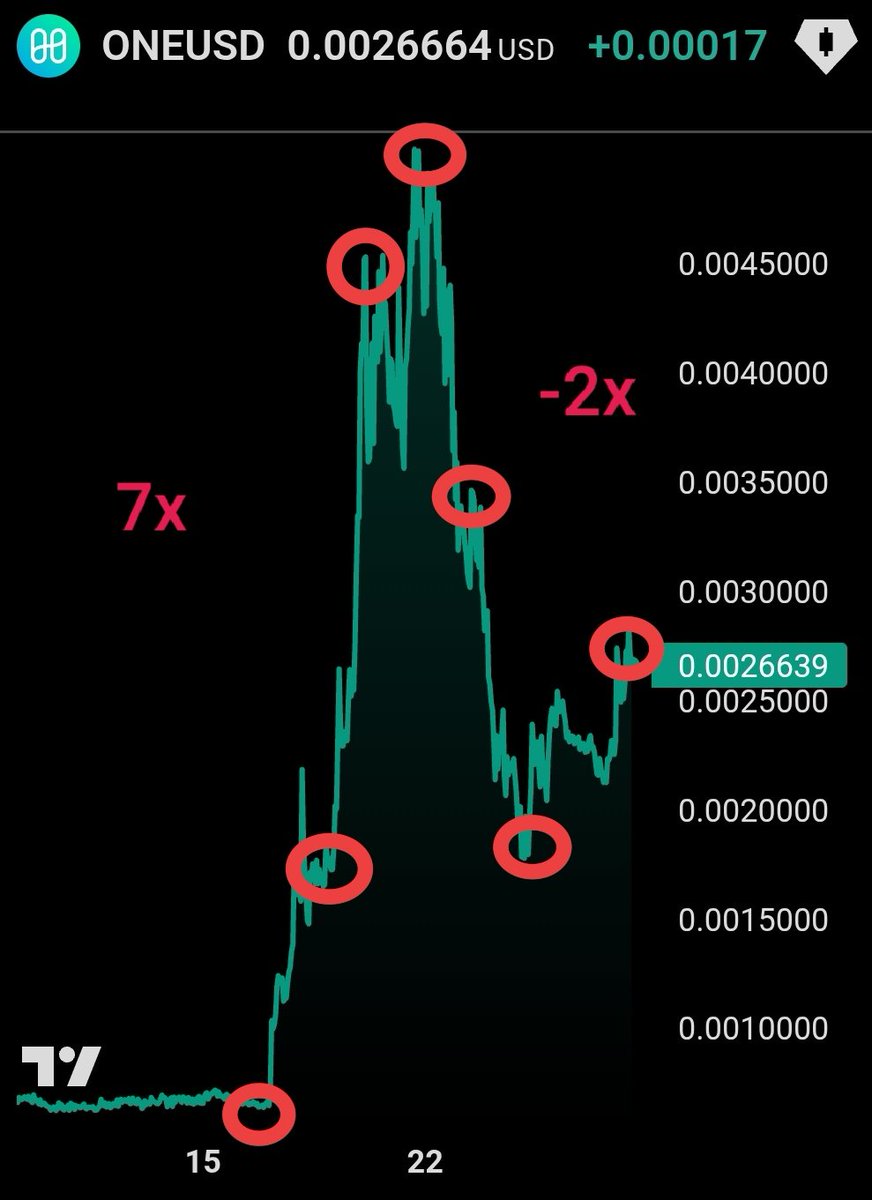
$0.0018 → almost $0.005.
another ridiculous leg higher.
for context, ONE had been sitting around $0.0007-$0.0008 just weeks earlier.
basically doing nothing.
then came the exploit.
trillions of ONE were forged.
the chain was rolled back.
Harmony announced plans around shutting down its L1 and migrating ONE to Ethereum.
you'd normally expect that kind of mess to destroy a token.
instead...
ONE went vertical.
$0.0007 → $0.001 → $0.002 → $0.003 → $0.004 → almost $0.005.
roughly 7x from the base.
then...
the correction finally came.
and it wasn't small.
almost $0.005 → ~$0.0018.
more than 60% wiped from the local top.
in days.
but apparently the roller coaster wasn't finished.
because from ~$0.0018...
ONE bounced again.
$0.0021.
$0.0023.
$0.0025.
now ~$0.0027.
another ~50% move from the bottom.
so here's ONE right now:
1 month: +260%
1 week: -38%
1 day: +9%
same coin.
three completely different stories depending on where you look at the chart.
and that's what makes this whole thing so fascinating.
the fundamentals didn't improve 7x.
then get 60% worse.
then suddenly improve 50% again.
the price did.
somewhere along the way, ONE stopped trading purely on what was happening with Harmony...
and started trading on the momentum itself.
news → pump.
pump → attention.
attention → FOMO.
FOMO → vertical move.
vertical move → brutal correction.
correction → traders jump back in.
all while the underlying story remains messy.
10 days ago, i said this wasn't a recovery.
after watching ONE go almost 3x from $0.0018...
collapse more than 60%...
then bounce another 50%...
i think there's a better word for it.
a roller coaster.
and somehow...
the ride still isn't over.
another 65% since I posted
$ONE is pumping again
+176% today.
no new announcement
no migration update
just the same coin ripping for the third time in two weeks.
pattern so far:
→ +51% (rollback news)
→ +85%
→ +176% today
each leg, less and less news behind it. today's move is pure oversold bounce + thin liquidity + heavy turnover," not fresh info.
and the technicals are flashing exactly what you'd expect after three vertical legs RSI sitting near 92 on the 4H,
deep overbought, volume-to-market-cap ratio over 200%.
moves this steep rarely hold without giving some back first.
meanwhile the actual story hasn't changed:
- L1 shutdown still on track
- Ethereum migration snapshot still coming, deadline already passed for exiting contracts
- exploit shortfall still sitting at ~6.58B ONE unaccounted for
so nothing fundamental justifies leg three. this is a token with a dead chain, a pending migration, and a live security overhang... up 176% today anyway.
at some point the question stops being
why is it pumping and becomes how many more of these legs before it actually corrects.
still ~99% below ATH. still not a recovery. just really good beta for people trading the chop.
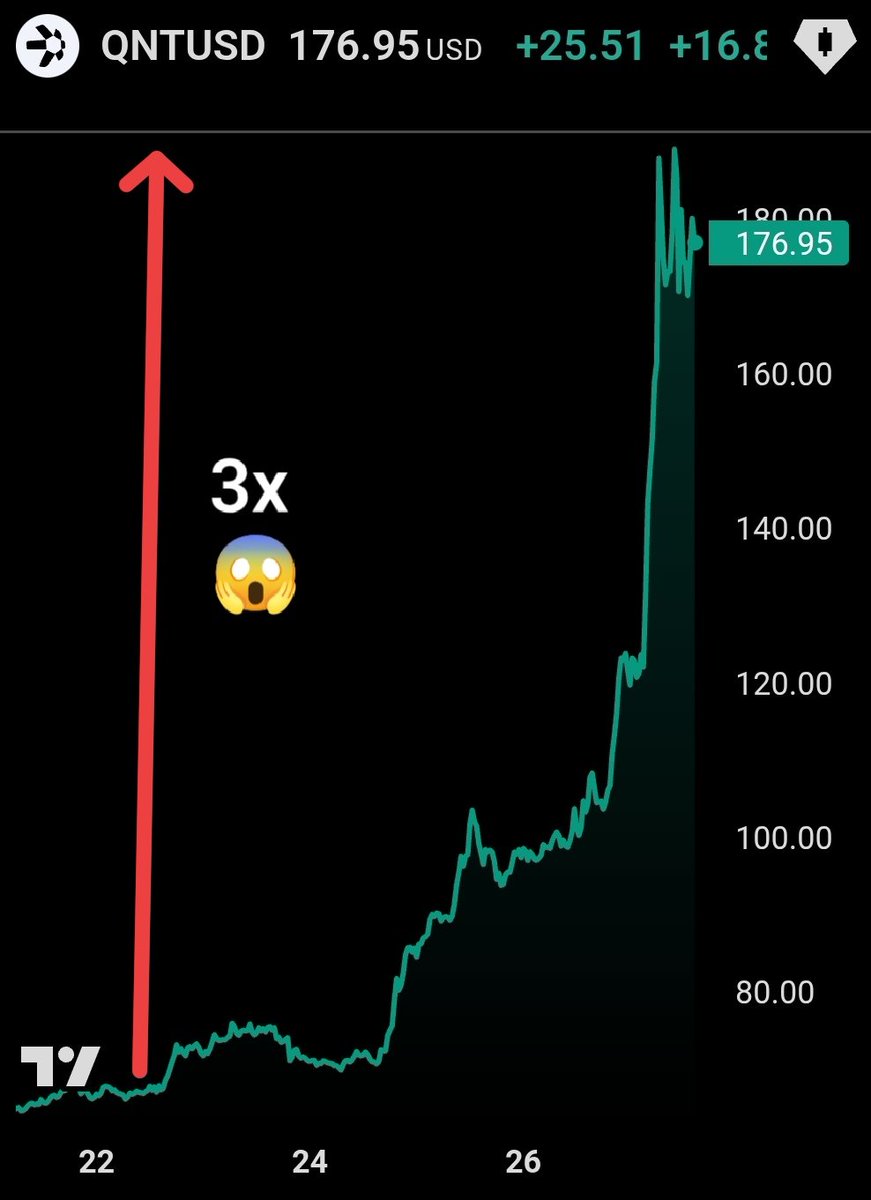
$QNT has gone absolutely vertical
3x in 3 days
so naturally...
i went looking for what caused it.
and for once, the answer wasn't
-AI
-token burns
-memecoin rotation or
-some random squeeze
actually, it was banks (a)
Barclays.
HSBC.
Lloyds.
NatWest.
Santander.
Nationwide.
Monzo.
and then...
The Clearing House in America (b)
which made me ask
>> what exactly is Quant building?
because QNT has been around forever in crypto terms...
but its thesis suddenly looks a lot more relevant.
here's the simple version.
a)
banks are experimenting with tokenised deposits.
sounds complicated.
it isn't.
imagine the money already sitting in your bank account...
except it can move on blockchain-style infrastructure and follow programmed rules.
in the UK, major banks have been testing exactly this through the Great British Tokenised Deposit project.
and these weren't just demos.
they involved live transactions using real customers + real money.
>> the infrastructure underneath it?
Quant was selected to provide the programmable-money technology.
then the story got bigger.
b)
The Clearing House selected Quant for its On-Chain Money Initiative in the US.
and this isn't some crypto startup.
The Clearing House sits at the heart of US banking infrastructure.
Quant will help connect tokenised deposits with existing payment rails like RTP + CHIPS.
and suddenly Quant's thesis starts making sense.
imagine banks issuing their own tokenised money.
-public blockchains exist.
-stablecoins exist.
-traditional payment rails aren't disappearing.
you end up with a bunch of different networks that need to talk to each other.
c)
Quant's bet is basically:
someone has to connect all of this.
and it wants to be that someone.
-UK banks.
-US banking infrastructure.
-tokenised deposits.
-existing payment rails.
-programmable money.
now you can understand why QNT suddenly caught a bid.
but here's where it gets interesting.
d)
Quant doing well...
doesn't automatically mean QNT captures that value.
that's the part crypto tends to skip.
banks don't necessarily need someone buying QNT from Binance every time a transaction happens.
enterprise customers can pay through normal commercial arrangements while Quant handles the infrastructure underneath.
so we're starting to get an answer to
>> will institutions actually use Quant?
the harder question is:
>>does that usage create demand for QNT?
and QNT has something interesting here.
-only around 14.6M tokens exist.
-most are already circulating.
-no billions waiting to unlock.
-no giant VC cliff suddenly doubling supply.
e)
so if meaningful QNT demand does emerge...
supply is unusually tight.
but scarcity alone isn't enough.
usage has to create demand.
and that's what i'd watch now.
because Quant's old thesis was simple
the financial world will become increasingly fragmented...
and someone will need to connect it.
that used to sound theoretical.
with major UK banks testing tokenised deposits...
and The Clearing House choosing Quant for US banking infrastructure...
it suddenly sounds a lot less theoretical.
and QNT went from $60 → $180 in about a week.
now comes the harder part:
does the token actually capture the value of the network being built underneath it?
$RUNE is up 20% today
n the timing is kinda wild
because while RUNE is pumping...
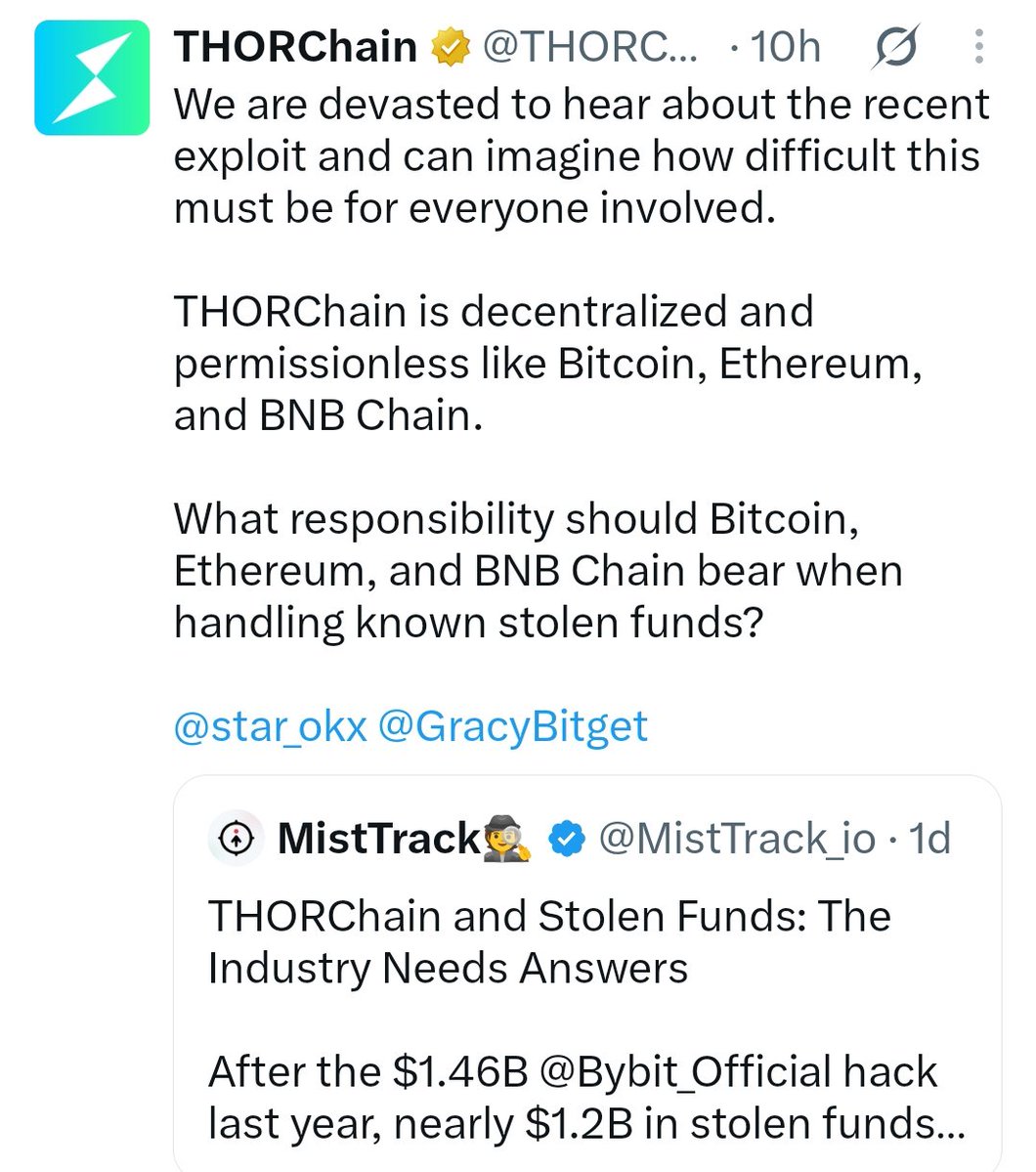
THORChain is in the middle of a debate abt
what DECENTRALISATION actually means
n at the same time...
it's making a big change to RUNE's economics
so i went digging
.
.
Bitget was recently exploited.
roughly $387M ended up under attacker control.
some of those funds started moving through THORChain.
Bitget's CEO publicly asked THORChain to block the known hacker addresses.
THORChain's response was basically:
>we're decentralized + permissionless.
>Bitcoin is permissionless.
>Ethereum is permissionless.
>BNB Chain is permissionless.
if stolen funds move through Bitcoin...
what responsibility does Bitcoin have to stop them?
.
and that's important because THORChain is literally built around this idea.
it lets users swap native assets across chains.
BTC → ETH.
ETH → USDC.
>without wrapping.
>without a centralized exchange.
>without asking permission.
great when you're a normal user.
much more uncomfortable when you're a hacker.
and we've seen this before.
.
.
after the Bybit hack, stolen funds also moved through THORChain.
so THORChain keeps hitting the same contradiction:
>what makes the network useful...
>also makes it controversial.
and it's leaning further into this model.
>Zcash support is coming.
>Monero is planned after that.
but there's another story happening underneath all this.
.
.
THORChain just changed RUNE's economics.
previously, 5% of system income went toward burning RUNE.
now?
just 1%.
an 80% reduction.
yet RUNE is up 20%.
because instead of burning more tokens...
THORChain will direct 20% of system income toward Protocol-Owned Liquidity.
basically, THORChain wants to own more of the liquidity powering its swaps.
the bet..
more liquidity
→ better swaps
→ more volume
→ more fees
→ more liquidity.
instead of destroying RUNE...
THORChain wants to use more of its economics to grow the network.
and there's already activity underneath it.
in August:
>$613M swap volume.
>active wallets +57%.
>21.8K new wallets.
>another $254M routed through affiliates.
so the setup is pretty interesting.
>more permissionless assets.
>more protocol-owned liquidity.
>less RUNE burning.
>more controversy around permissionless swaps.
and Wealthsimple is removing RUNE support on September 29, saying changes in third-party provider support mean it can no longer meet its liquidity requirements.
meanwhile...
.
.
RUNE +20%.
THORChain is basically making two bets:
permissionless > censorship.
and
growth > burning.
.
.
>>if deeper liquidity brings more volume + fees...
cutting the RUNE burn from 5% → 1% could make sense.
>>if it doesn't...
THORChain gave up most of its burn without getting enough growth in return.
so today's 20% candle isn't really the interesting part.
the real question is
>>can THORChain stay truly permissionless when bad actors use it...
>>and can growing the network create more value for RUNE than simply burning it?
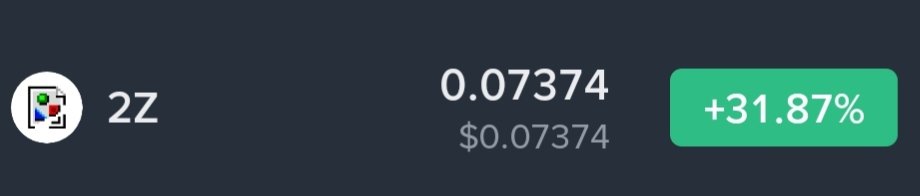
$2Z is up 32% today.
and unlike most random pumps i've been digging into...
this one actually has news behind it.
new L1.
Hyperliquid integration.
infrastructure built for traders + AI agents.
sounds great.
except there's one number nobody looking at today's green candle should ignore:
1.625 BILLION 2Z unlocks in 6 days.
and ~97% of it goes to insiders + investors.
suddenly this becomes a much more interesting trade.
because DoubleZero isn't another old token suddenly waking up.
it only launched in October 2025.
the project raised $28M, backed by names including Multicoin + Dragonfly, to build something pretty unusual:
a dedicated fiber-optic "fast lane" for blockchain traffic.
think about what validators normally deal with.
they're running high-performance blockchain infrastructure...
but a lot of the communication still travels over the same public internet everyone else uses.
latency.
jitter.
congestion.
DoubleZero's bet is basically:
what if blockchains had their own high-performance internet?
a dedicated network connecting validators and other participants directly.
and 2Z actually sits inside that system.
this isn't primarily a governance token.
users pay 2Z for network access.
infrastructure providers earn 2Z based on measurable performance improvements they provide.
and some serious names are involved on the infrastructure side, including Jump Crypto + Galaxy.
now there's another piece.
DoubleZero just launched real-time Hyperliquid full order-book data through DoubleZero Edge.
instead of traders, market makers, bots and AI agents relying entirely on normal public APIs...
they can receive the data over dedicated fiber infrastructure.
and Hyperliquid isn't exactly tiny.
it processed $662B+ in trading volume in Q2 alone.
DoubleZero Edge already serves Solana + Kalshi.
now Hyperliquid joins them.
so unlike a lot of pumps we've looked at recently...
there's a genuine infrastructure story developing underneath this one.
but then you get to the tokenomics.
October 2.
1.625B 2Z unlocks.
that's 16.25% of the entire 10B supply becoming unlocked in one event.
and roughly:
78.5% → insiders
18.5% → investors
3.1% → community
so around 97% goes to insiders + investors.
that's a very different setup from simply:
good product news → token pumps.
especially because 2Z is still roughly 94% below its October ATH.
this isn't PHA, RARE or QI getting rediscovered years later.
it's a young infrastructure token still trying to find its price after a brutal post-launch collapse.
and now there are basically two clocks running.
the adoption clock:
more infrastructure.
more venues.
Solana.
Kalshi.
now Hyperliquid.
potential demand from validators, traders + AI agents.
and then...
the supply clock:
1.625B tokens unlock in 6 days.
mostly to insiders + investors.
with billions more still vesting over the coming years.
that's why today's +32% isn't really the interesting part.
the product story is getting stronger.
the token is getting attention again.
but now we get a much better test:
can actual adoption grow fast enough to absorb the supply coming behind it?
because October 2 isn't some tokenomics problem months away.
it's 6 days away.
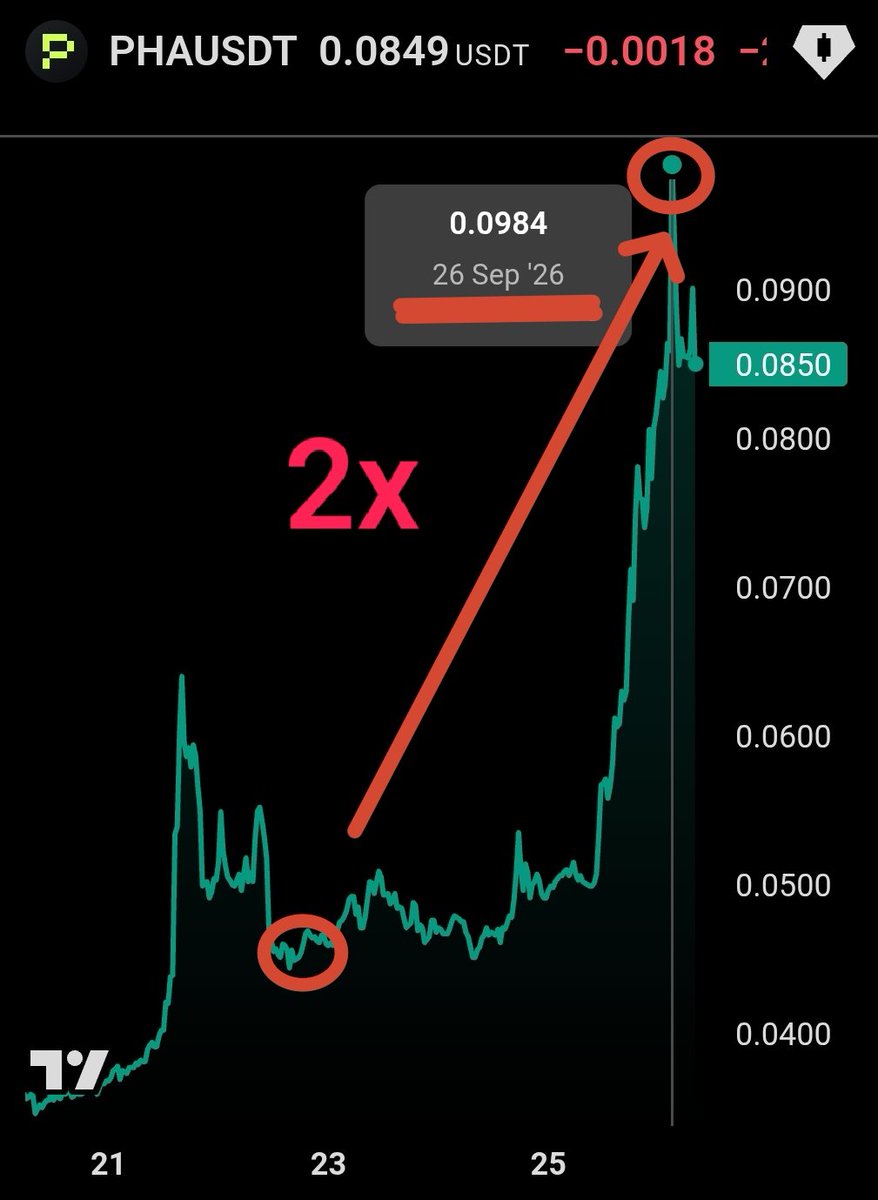
3 days ago i wrote about $PHA.
not bcz it pumped.
but bcz PHA might be becoming something very diff from what the market remembers.
then $0.05
today $0.09
almost 2x.
n this is where it gets interesting.
old PHA was:
privacy + Polkadot + TEEs.
new PHA is chasing:
private AI
→ confidential GPUs
→ AI inference
→ verifiable agents
→ Ethereum
→ decentralized compute
that's a much bigger market.
but a green candle doesn't prove the thesis.
so here's what i'm actually watching now...
does the confidential VM count keep growing?
does LLM token throughput translate into organic compute demand?
do names like NEAR, Venice AI + Intel turn into recurring usage rather than just integrations/pilots?
and most importantly...
does that usage actually create demand for PHA?
bcz that's still the entire bet.
if the infra grows AND PHA remains structurally necessary to use it...
that's interesting.
if usage grows but the token doesn't capture the value...
that's the trap.
3 days later, price has moved fast.
now i'd rather watch the dashboard than the chart.
after spending yrs building a crypto network around confidential computing
u realizing the bigger opportunity might be private AI.
that's $PHA.
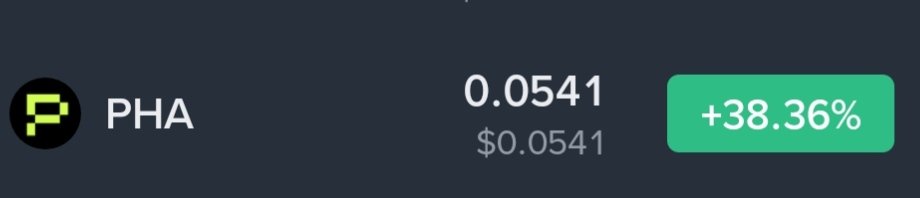
and today it's up 38%.
but if you've followed PHA for a while, u already know the old story.
Polkadot parachain.
TEE computing.
privacy.
decentralized infrastructure.
that story has changed.
Phala closed its Polkadot parachain in nov 25 and moved PHA to Ethereum + Phala L2.
why? bcz old infra was built around Intel SGX while the confidential-computing market was moving toward TDX and GPU-based systems.
and that's where the new story gets interesting.
private AI.
because AI doesn't just need more compute.
it increasingly needs access to private data.
prompts.
financial information.
business data.
model weights.
agent memory.
the problem is obvious:
you want AI to work with sensitive information...
but you don't necessarily want the infrastructure running the AI to see everything.
Phala's answer is confidential computing, using hardware-backed environments where workloads can be processed privately while producing verifiable evidence of what actually ran.
and this isn't just a whitepaper anymore.
Phala says its 2025 infrastructure reached 2,529 confidential VMs, with 813 running, and processed more than 1.34B LLM tokens in a single day.
More recently, its own dashboard has reported much larger AI-token throughput.
there are also integrations around AI agents and confidential AI, including work with NEAR, Venice AI and Intel.
so the interesting question with PHA isn't:
“why is it up 38%?”
we already know crypto can pump an old token.
the better question is:
is PHA becoming something different from what the market remembers?
because there's a huge difference between:
old PHA
→ privacy-focused crypto infrastructure
and
new PHA
→ confidential GPUs
→ private AI inference
→ verifiable AI agents
→ Ethereum L2
→ compute infrastructure
that's a much bigger market to chase.
but here's the part i'd be careful with.
real usage doesn't automatically mean token value accrual.
Phala can process billions of AI tokens.
developers can use confidential GPUs.
enterprise workloads can grow.
and PHA can still fail to capture enough of that value.
that's the part that needs watching.
does actual compute demand keep growing?
does that demand translate into PHA usage?
does the decentralized compute network keep expanding?
and most importantly...
does the token become necessary because the network becomes useful?
because that's the difference between an AI narrative and an AI infrastructure business.
today's +38% doesn't answer that.
but it does give us a reason to look again.
the old PHA story was about private blockchain infrastructure.
the new one is about private computation for an AI-heavy world.
and if AI really does end up touching everyone's most sensitive data...
the ability to compute on that data without exposing it could become a pretty important piece of infrastructure.
now we just have to see whether PHA actually captures that opportunity.
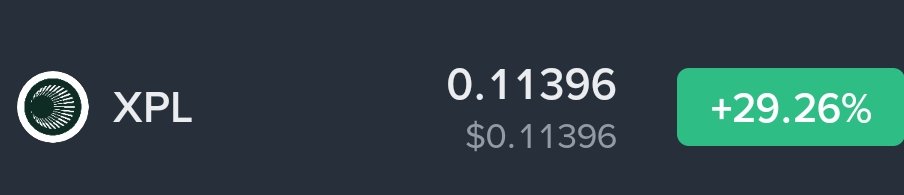
for one year, Plasma insiders + investors couldn't touch a huge chunk of their $XPL
that unlock is today
1.76 BILLION XPL became available
you'd expect dump
instead, XPL did the opposite
it pumped... 30%
and the reason might be more interesting than the pump itself.
XPL launched exactly a year ago with a 10B supply.
team got 25%.
investors got 25%.
a big chunk was locked for one year.
that year ends...
today.
roughly 1.76B XPL unlocks.
that's 17.6% of total supply.
but here's the crazier number:
pre-unlock circulating supply was around 2.78B.
meaning today's unlock alone equals roughly 63% of the previous float.
imagine 100 tokens are trading...
and overnight another 63 become available.
and where are they going?
roughly:
47.5% → private investors
47.5% → team/insiders
5.1% → ecosystem/community
so ~95% is tied to investors + insiders.
normally, that's exactly what traders hate.
early investors finally liquid.
team tokens available.
potential sellers everywhere.
except...
XPL went from ~$0.09 → ~$0.115.
around +28%.
so what the hell happened?
the important distinction:
unlock ≠ dump.
1.76B tokens becoming unlocked doesn't mean 1.76B tokens immediately hit exchanges.
it means they can.
and everyone knew September 25 was coming.
the cliff has been public since launch.
so traders could sell beforehand.
short the unlock.
position for the obvious collapse.
then unlock day arrives...
and the instant waterfall doesn't happen.
shorts cover.
buyers chase.
suddenly:
sell the rumour.
buy the unlock.
at least temporarily.
but here's why i wouldn't call this bullish confirmation yet.
previous monthly XPL unlocks were roughly 89M tokens.
today?
1.76 BILLION.
almost 20x larger.
same word — "unlock."
completely different animal.
and underneath today's green candle, the supply math changed dramatically.
before:
~2.78B circulating.
after today's unlock schedule:
~4.53B unlocked.
at $0.115, that's roughly:
$320M → $521M
in token value associated with those supply figures.
so yes...
XPL pumped 28%.
but simultaneously, a massive amount of previously locked supply became available.
and most of it belongs to people who have been waiting an entire year to access it.
that's why today's candle isn't the interesting part anymore.
the wallets are.
do those tokens stay put?
do they start moving?
do they hit exchanges?
because an unlock tells you when insiders can sell.
the next few days tell you whether they actually want to.
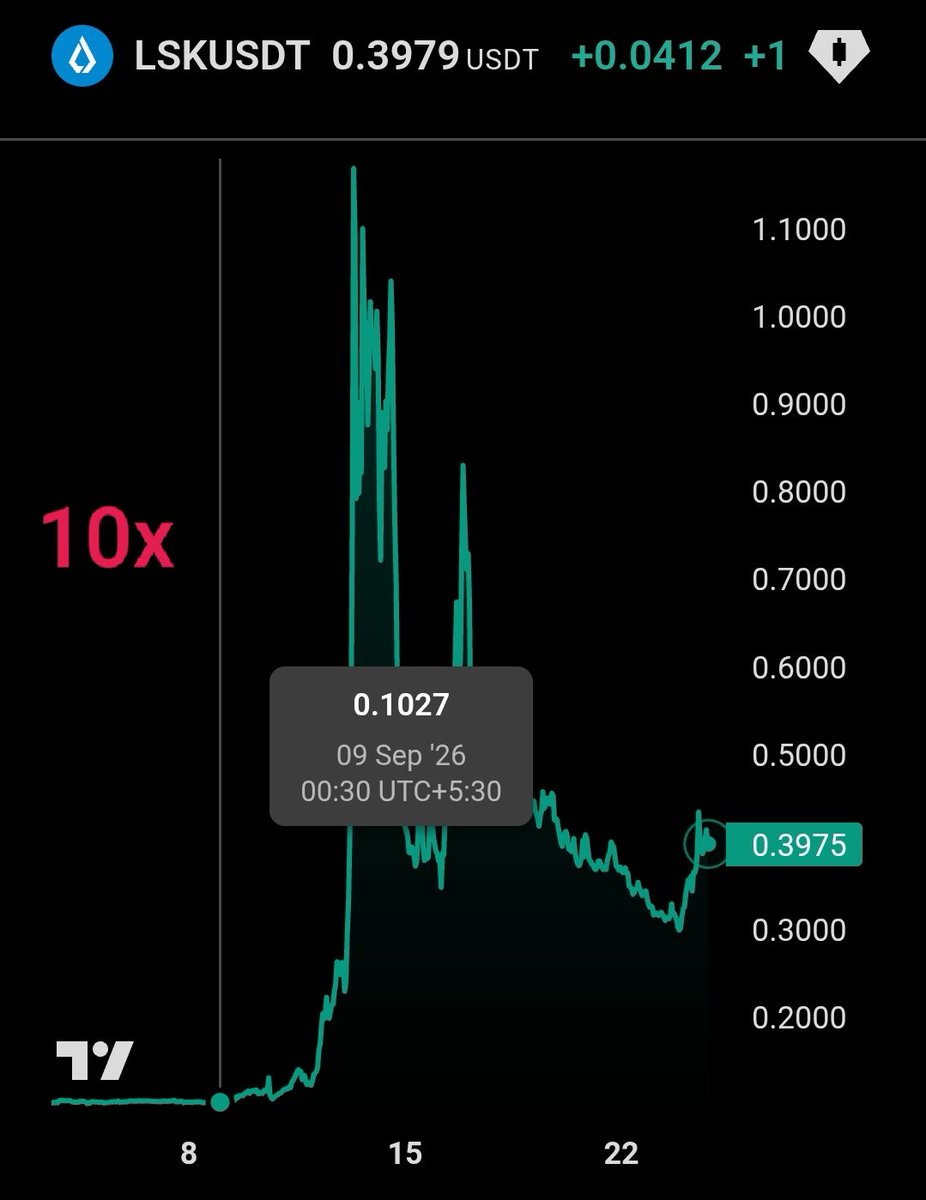
$LSK pumped 900%, yeah 10x
while its own blockchain is being killed
can u imagine
your token crashes to an all-time low.
the exchange puts it on a monitoring list.
the project announces it's shutting down its blockchain.
builders are told to migrate somewhere else.
and then...
the token pumps 900%+.
that's basically the LSK story rn.
and somehow it's up another 32% today.
so i went down to look for reasons
because this might be one of the strangest altcoin moves i've seen recently.
Lisk isn't some new project.
it launched in 2016.
almost a decade ago.
it started as its own Layer 1, built around making blockchain development easier.
then the thesis changed.
in 2023, Lisk announced it was leaving its standalone L1 behind and moving toward an Ethereum L2 built with the OP Stack.
that was already a massive pivot.
but it didn't stop there.
on July 24, 2026, Binance added LSK to its Monitoring Tag — essentially flagging it as a token requiring closer monitoring because it could potentially fail Binance's listing standards in the future.
LSK collapsed to around $0.074.
then came an even bigger announcement.
Lisk was shutting down its blockchain.
October 31, 2026.
users were told to withdraw their LSK, ETH, stablecoins and DeFi positions.
builders were offered a path to migrate to Celo.
after almost a decade...
the Lisk Chain was being switched off.
you'd expect the token to slowly disappear with it.
instead...
LSK went vertical.
from around the $0.20 area...
to above $2 at the peak.
900%+ in a matter of weeks.
and during one particularly violent move, roughly $41M of LSK positions were liquidated — around $33.7M of them shorts.
basically:
price rises.
shorts get liquidated.
forced buying pushes price higher.
more shorts get liquidated.
repeat.
then LSK crashed back down.
and now...
+32% again today.
but here's where the story gets even weirder.
because Lisk is killing the blockchain...
not the token.
the DAO approved burning:
100,000,000 LSK.
max supply:
400M → 300M
a straight 25% reduction.
most of those tokens were sitting in DAO allocations that could otherwise have entered circulation over time.
Lisk also says it will stop financing operations by selling DAO-held LSK.
so the tokenomics suddenly change:
less future supply.
less potential treasury sell pressure.
100M tokens gone.
and LSK itself is essentially being given a second life.
Lisk-the-blockchain is disappearing.
Lisk-the-company is pivoting toward a business money platform built around fiat + stablecoins, payments, accounts and treasury operations.
and LSK is supposed to become a loyalty/utility token around that ecosystem, with Ethereum becoming its primary network.
which creates one hell of a contradiction.
the old product is being shut down.
the builders are leaving.
the chain has an expiry date.
yet the token pumped 900%+.
maybe traders are betting on the new business.
maybe they're front-running the 100M burn.
maybe reduced future dilution changed the equation.
maybe thin liquidity + shorts simply created the perfect squeeze.
or maybe...
this is crypto doing what crypto does best:
making the token hottest exactly when the thing it was originally built for is dying.
October 31 is now the interesting date.
because that's when Lisk Chain goes to zero.
but LSK doesn't.
and we're about to find out whether a token can survive — and somehow become more valuable —
after the blockchain that created it no longer exists.
$SAGA is 3x up in 3 weeks
what the hell happened to SAGA?
because this isn't some brand-new AI token.
SAGA launched around a completely different idea
Chainlets.
developers could launch dedicated blockchains without building the entire stack themselves.
the narrative was big.
then it faded.
price collapsed.
attention disappeared.
and now the project is trying something very different:
AI.
Saga has been pushing toward AI agents and AI-native applications, effectively turning the old Chainlets story into a new AI Labs narrative.
so the timeline is pretty wild:
old SAGA
→ gaming
→ Chainlets
→ attention disappears
→ token gets crushed
→ AI pivot
→ suddenly 3x in weeks.
but here's the part i find more interesting.
the recent rally doesn't seem to be explained by one giant fundamental announcement. recent coverage points more toward momentum, social trading and technical breakout activity, while liquidity remains relatively thin.
so now there are two stories competing:
SAGA is simply catching a speculative bid...
or traders are front-running the AI pivot.
and there's an easy way to find out.
.
.
what i'd watch from here
1. volume after the momentum fades
a 3x move on thin liquidity is easy to create — and easy to unwind.
the real signal isn't today's candle.
it's what volume looks like a week after the excitement dies down.
if it collapses back to pre-rally levels, this was positioning.
if elevated volume sticks, that's more interesting.
2. AI Labs needs to produce numbers
not announcements.
usage.
actual AI agents.
actual applications.
actual developers.
that's the difference between “we pivoted to AI” as a narrative and “we pivoted to AI” as something happening on the network.
3. compare it with the old Chainlets cycle
SAGA has already had one big narrative.
big story → big rally → attention fades → token bleeds.
if AI produces the same shape, that's not a comeback.
that's a pattern repeating.
4. watch the AI-infra basket
NIL, NEAR, PHA and others have also been moving.
so some of this could simply be sector beta.
the interesting signal would be SAGA holding up when the rest of the basket cools.
that's when we can start separating SAGA-specific demand from AI-token beta.
3x on a forgotten token with a new story attached is exactly the kind of setup that can go either way.
a genuine second act…
or the same movie with a different narrative.
the last few weeks of price tell us people are watching SAGA again.
now we find out why.
$SAGA just jumped almost 20%.
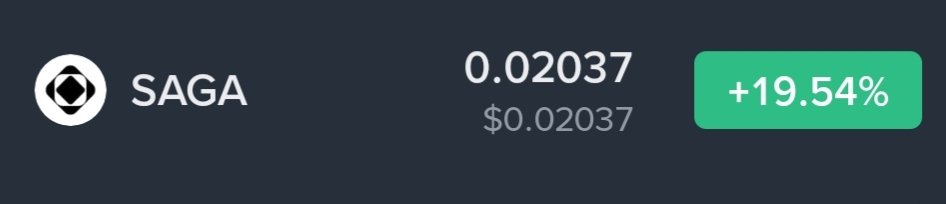
has a weird story though
bcz the project behind the token just sold its crypto division and pivoted toward AI.
wait… what?
SAGA wasn't sm random new token either.
Binance launched it thru Launchpool in 2024, giving it huge retail exposure from day one.
but the token eventually got crushed.
now SAGA is sitting around just a $7M market cap.
that's tiny.
so even relatively small amounts of buying can move it hard.
and suddenly, the market has a new story to trade
AI.
but there's baggage.
Saga's network suffered a $7M exploit earlier this year.
Binance also recently removed the SAGA/FDUSD pair because of low liquidity.
and then there's the next problem:
Oct 9 → 16.7M SAGA unlock.
half to investors.
half to insiders.
so what's happening here?
old Binance retail reach + tiny market cap + AI narrative + sudden volume.
that's a pretty explosive combination.
but the real question is
is retail rediscovering an old Binance Launchpool token...
or is crypto simply chasing another coin after someone slapped AI on the story?
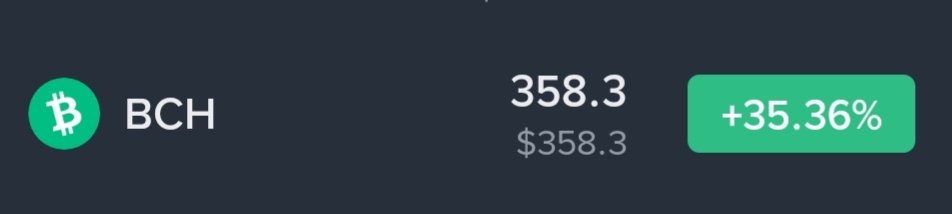
$BCH
the ghost is up 35% today
reason
CME is launching BCH futures on Oct19
n dont think it's sm new AI/infra coin we've been exploring this week
its not
its Bitcoin Cash
a coin that's almost nine years old.
back in 2017, Bitcoin had a civil war.
one side wanted small blocks and layered scaling.
the other wanted bigger blocks, cheaper fees, faster payments.. bitcoin as actual digital cash.
they couldn't agree.
so the chain split.
Bitcoin kept the name and the crown.
Bitcoin Cash walked away with the block-size argument and a promise:
this is what Bitcoin was supposed to be.
for a while, it mattered.
BCH hit almost $3,800 in December 2017 and became one of the biggest names in crypto.
then the story faded.
BTC won the narrative war.
“digital gold” beat “digital cash.”
BCH didn't disappear.
it just stopped being the story.
and then today…
CME announced Bitcoin Cash futures for October 19.
suddenly the ghost is moving again.
BCH ripped 30%+.
and that's what makes this interesting.
because unlike NIL, PHA or NEAR, this isn't a project suddenly discovering a new narrative.
BCH is almost the opposite.
the narrative is ancient.
what changed is access to liquidity and attention.
old coin
→ institutional futures
→ fresh attention
→ traders pile in
→ old liquidity wakes up.
but here's the question:
how much of this survives after the CME headline gets old?
because today's candle doesn't prove Bitcoin Cash has suddenly become relevant again.
it proves something simpler:
the market still remembers the name.
and sometimes, apparently, that's enough to wake the ghost up.
wrote about $MUBARAK on sep 2, was +30%
actually never dumped since then
rather
still 66% in profits but
the interesting part wasn't the pump.
it was how a single word...
mubarak
turned into a meme, then a token, then a $100M+ market.
now look at it again.
MUBARAK is around $0.045.
and that's what makes the follow-up interesting.
because the story didn't change.
the attention did.
the original hype faded.
the token crashed.
people stopped talking about it.
then suddenly...
MUBARAK starts waking up again.
and this is where meme coins get fascinating.
there's no earnings report to point to.
no new revenue stream.
no groundbreaking technology.
the asset is basically a live experiment in attention.
when enough people care at the same time...
liquidity follows.
when people stop caring...
the liquidity disappears.
that's exactly what happened with MUBARAK the first time.
and now we're getting to see whether the second wave works the same way.
because the real question isn't:
“can MUBARAK pump again?”
crypto has already shown us that it can.
the question is:
can the attention come back without the original catalyst?
CZ doesn't need to say “Mubarak” again.
Binance doesn't need to create another headline.
the community itself has to keep the story alive.
and that's much harder.
because the first rally had a very clear origin story:
$2B Binance investment
→ CZ says “Mubarak”
→ meme
→ token
→ Binance attention
→ liquidity
this time...
the token has to sell its own story.
and that's the part i'm watching.
because if MUBARAK can build another attention cycle from here...
then we've learned something interesting about meme coins.
they don't necessarily need a new fundamental catalyst.
sometimes they just need people to start caring again.
and if they stop caring?
well...
that's when you remember what you're actually holding.
not a company.
not cash flow.
a meme with a ticker.
after spending yrs building a crypto network around confidential computing
u realizing the bigger opportunity might be private AI.
that's $PHA.
and today it's up 38%.
but if you've followed PHA for a while, u already know the old story.
Polkadot parachain.
TEE computing.
privacy.
decentralized infrastructure.
that story has changed.
Phala closed its Polkadot parachain in nov 25 and moved PHA to Ethereum + Phala L2.
why? bcz old infra was built around Intel SGX while the confidential-computing market was moving toward TDX and GPU-based systems.
and that's where the new story gets interesting.
private AI.
because AI doesn't just need more compute.
it increasingly needs access to private data.
prompts.
financial information.
business data.
model weights.
agent memory.
the problem is obvious:
you want AI to work with sensitive information...
but you don't necessarily want the infrastructure running the AI to see everything.
Phala's answer is confidential computing, using hardware-backed environments where workloads can be processed privately while producing verifiable evidence of what actually ran.
and this isn't just a whitepaper anymore.
Phala says its 2025 infrastructure reached 2,529 confidential VMs, with 813 running, and processed more than 1.34B LLM tokens in a single day.
More recently, its own dashboard has reported much larger AI-token throughput.
there are also integrations around AI agents and confidential AI, including work with NEAR, Venice AI and Intel.
so the interesting question with PHA isn't:
“why is it up 38%?”
we already know crypto can pump an old token.
the better question is:
is PHA becoming something different from what the market remembers?
because there's a huge difference between:
old PHA
→ privacy-focused crypto infrastructure
and
new PHA
→ confidential GPUs
→ private AI inference
→ verifiable AI agents
→ Ethereum L2
→ compute infrastructure
that's a much bigger market to chase.
but here's the part i'd be careful with.
real usage doesn't automatically mean token value accrual.
Phala can process billions of AI tokens.
developers can use confidential GPUs.
enterprise workloads can grow.
and PHA can still fail to capture enough of that value.
that's the part that needs watching.
does actual compute demand keep growing?
does that demand translate into PHA usage?
does the decentralized compute network keep expanding?
and most importantly...
does the token become necessary because the network becomes useful?
because that's the difference between an AI narrative and an AI infrastructure business.
today's +38% doesn't answer that.
but it does give us a reason to look again.
the old PHA story was about private blockchain infrastructure.
the new one is about private computation for an AI-heavy world.
and if AI really does end up touching everyone's most sensitive data...
the ability to compute on that data without exposing it could become a pretty important piece of infrastructure.
now we just have to see whether PHA actually captures that opportunity.
wrote about $MUBARAK on sep 2, was +30%
actually never dumped since then
rather
still 66% in profits but
the interesting part wasn't the pump.
it was how a single word...
mubarak
turned into a meme, then a token, then a $100M+ market.
now look at it again.
MUBARAK is around $0.045.
and that's what makes the follow-up interesting.
because the story didn't change.
the attention did.
the original hype faded.
the token crashed.
people stopped talking about it.
then suddenly...
MUBARAK starts waking up again.
and this is where meme coins get fascinating.
there's no earnings report to point to.
no new revenue stream.
no groundbreaking technology.
the asset is basically a live experiment in attention.
when enough people care at the same time...
liquidity follows.
when people stop caring...
the liquidity disappears.
that's exactly what happened with MUBARAK the first time.
and now we're getting to see whether the second wave works the same way.
because the real question isn't:
“can MUBARAK pump again?”
crypto has already shown us that it can.
the question is:
can the attention come back without the original catalyst?
CZ doesn't need to say “Mubarak” again.
Binance doesn't need to create another headline.
the community itself has to keep the story alive.
and that's much harder.
because the first rally had a very clear origin story:
$2B Binance investment
→ CZ says “Mubarak”
→ meme
→ token
→ Binance attention
→ liquidity
this time...
the token has to sell its own story.
and that's the part i'm watching.
because if MUBARAK can build another attention cycle from here...
then we've learned something interesting about meme coins.
they don't necessarily need a new fundamental catalyst.
sometimes they just need people to start caring again.
and if they stop caring?
well...
that's when you remember what you're actually holding.
not a company.
not cash flow.
a meme with a ticker.
$MUBARAK is up 30% today.
It's story? Absurd but perfectly crypto.
A major investment happens.
A billionaire posts a single word.
The internet turns that word into a meme.
And within days, that meme becomes a $100M+ asset.
In March 2025, Abu Dhabi-based investment firm MGX announced a $2 billion investment in Binance.
It was a huge moment for crypto and for the growing influence of Middle Eastern capital in the industry.
Shortly afterwards, Binance founder CZ posted one word:
Mubarak
An Arabic word meaning blessed or congratulations.
The internet saw it.
Crypto did what crypto does.
Someone turned the word into a meme coin.
And suddenly, MUBARAK was born.
But the story didn't stop there.
CZ interacted with MUBARAK-related posts.
Then Binance Alpha listed it.
Then CZ publicly bought 1 $BNB worth of MUBARAK.
That tiny purchase wasn't important because of its dollar value.
It was important because of who made it.
And crypto understood the signal.
The token exploded.
Within days, MUBARAK went from a tiny community meme into a project worth well over $100 million.
Think about that for a second.
No revolutionary technology.
No breakthrough protocol.
No new blockchain.
A word.
A meme.
Community attention.
And one of crypto's most influential figures interacting with it.
That's enough to create millions of dollars in market value.
And that is perhaps the most important lesson behind MUBARAK:
In crypto, attention itself can become an asset.
A story begins.
People start talking.
Memes spread.
A community forms.
Liquidity arrives.
Influential accounts interact.
More people notice.
And eventually...
The attention gets a ticker.
MUBARAK is basically a case study in the financialization of internet culture.
∆ But here's the other side of the story.
After the hype came the inevitable crash.
Like many meme coins, MUBARAK gave back most of its spectacular early gains.
And now, it's moving again.
+29% today.
Which raises the same question crypto has been asking for years:
When a meme coin rallies...
Are you buying a technology?
Or are you buying a story?
With MUBARAK, the answer is pretty clear.
You're buying into one of crypto's most powerful and dangerous markets:
The attention market.
Because in traditional finance, value is usually connected to things like:
Revenue.
Assets.
Cash flow.
Growth.
In meme coins, value can sometimes be connected to something much stranger:
How many people care about the same joke at the same time.
And MUBARAK may be one of the best examples of that.
A $2 billion investment.
A single Arabic word.
A meme.
A tweet.
A 1 BNB purchase.
And suddenly, millions of dollars were chasing a digital token built around the word “blessed.”
That's why today's rally is interesting.
Not because MUBARAK suddenly became a technological breakthrough.
But because it reminds us of something the crypto market keeps proving:
> Attention is capital.
Narrative is leverage.
And sometimes, one word is enough to create an entire market.
MUBARAK is up nearly 30% today.
In crypto, that's just another green candle.
But the story behind it is a reminder of something much crazier:
Sometimes the most valuable asset isn't technology.
It's attention!
@SolVolumeBot yeaa, fair pt bro.. i was using 'thesis' too loosely there.
<want done> is the UX pitch..fr sure
the real question is if NEAR is bringing new users and activity, or just moving the same liquidity around.
thats what matters
imagine if the next big crypto battle isn't about which blockchain wins..
what if crypto bcms chainless
yes
no need to know if u're using ethereum, solana or bitcoin.
just tell crypto what u want done.
that's $NEAR.
n it's suddenly back with a pump
+85% in last 4 days
but the interesting part isn't the candle.
it's what NEAR has been quietly building underneath it.
the old NEAR story was simple:
fast L1.
sharding.
cheap transactions.
the new story is very different.
NEAR is increasingly betting on chain abstraction.
not qsking
which chain are you on? rather
what do you want to do?
a)
NEAR Intents has already processed more than $27B in cumulative vol across 34 chains as of early September.
b)
then there's the AI angle.
NEAR is building infrastructure for AI agents
payments, permissions, cross chain execution and private inference.
so an AI agent doesn't necessarily need to understand
ethereum
solana
bitcoin
near
it can simply say
execute this.
and the infrastructure handles the mess underneath.
that's a much bigger thesis than another "ethereum killer" narrative.
c)
but here's the catch.
the technology can work...
and the token can still struggle to capture that value.
native NEAR DeFi remains relatively small, while the AI-agent economy is still early.
.
.
so i'm not looking at today's +26% and saying
NEAR is back
i'm asking something more interesting
what happens if crypto eventually stops competing over which chain wins...
and starts competing over who can make all the chains feel like one?
bcz that's the bet NEAR appears to be making.
and here's the part most people won't do.
they'll post the pump, move on, and never check back.
d) let's make this falsifiable.
i) if the Intents thesis is real, NEAR shouldn't need the entire AI-token basket to stay green.
it should eventually be able to hold its move even when names like GRASS and other AI tokens cool off.
ii) if it's just AI-sector beta, NEAR fades when the basket rolls over.
same candle.
different reason.
so over the next 1–2 weeks, i'm watching three things:
→ does NEAR decouple from the AI-token basket?
→ does Intents volume stay strong after the pump?
→ does native NEAR activity start catching up, or does Intents remain the only real usage story?
if we get decoupling + sustained Intents volume + broader ecosystem activity, the thesis is actually playing out.
if not...
this might have just been a good story wearing a green candle.
NEAR doesn't need to be the biggest chain.
it just needs to become useful across all of them.
and unlike most crypto narratives...
this one gives us numbers to check.
fair point. honestly, i haven't checked the funding, OI and on-chain data deeply enough to call it a confirmed squeeze.
my take was mainly from the price action, migration timing and lack of a new catalyst.
so yeah, it's a hypothesis, not a conclusion.
if OI/funding are exploding while L1 activity stays flat, the squeeze theory gets much stronger.
that's definitely worth checking before calling this a real network comeback.
imagine a crypto project getting hacked so badly it decides to kill its own blockchain
that's basically $ONE rn
so, r they pumping it for an exit liquidity? bcz
no specific news
no upgrade
no catalyst
let's go over the mixed retail sentiment
a) in august, an exploit let an attacker forge over 3 trillion ONE
that's roughly 200x the entire circulating supply
one wallet moved 2.4 trillion of it in under two minutes
harmony rolled the chain back to undo it
that was patch one
then came the real move
b) shut down the L1 completely
after seven years running its own blockchain, harmony is migrating ONE to ethereum as an ERC 20
holders get the new tokens via a final snapshot and airdrop, no claim needed
but multisigs, LPs, anything sitting in a smart contract.. those don't make the trip.
users had until sept 10 to get out
harmony's own reason for all this wasn't not to rebuild stronger
it was: the threats from state actors and AI agents are too great
c) so what happens to the validators who secured this chain for years?
they get offered a spot in harmony's next thing
an AI video Remix Economy
creators post prompts, others remix them with AI.
validators become governors instead.
there's a payout pool for the ones who wind down their nodes properly
old harmony → dead L1
new harmony → ethereum token → AI pivot → completely different project
d) and don't mistake this for a scarcity play
circulating supply is already ~14.9B, past the original 12.6B cap
there's no scheduled unlocks left, but harmony says total supply and emissions stay unchanged
and new tokens will help fund the AI initiative
so there's no clean less supply, more demand story here
.
.
the market is being asked to price something that barely resembles the old harmony
some see a fresh start
others see a desperate reinvention after a historic security failure
this isn't even harmony's first big hack, the horizon bridge lost $100M back in 2022
and yet
ONE is up 60% today
still 99% below its ATH though
im wondering if a completely new harmony can give an almost forgotten token a reason to exist?
another trap?
+40%
do you remember $FTX Token ?
tanked half the crypto market
none of us can forget
because if you've been around crypto for a few years, you probably remember the name.
FTX
one of the biggest exchanges in the world.
SBF everywhere.
FTT everywhere.
then november 2022 happened.
the exchange collapsed.
FTT went from one of the biggest exchange tokens in crypto…
to basically a graveyard.
most people assumed that was the end.
and honestly?
it probably should have been.
but FTT has this weird habit of coming back from the dead.
every time someone mentions FTX coming back, FTT wakes up.
a) January 2023:
ftx's new ceo says a restart could be explored.
FTT jumps 32% in a day.
b) November 2023:
Gary Gensler says a new ftx could potentially happen if it follows the rules.
FTT jumps nearly 90%.
c) then last year…
something even crazier happens.
a dormant sbf-linked x account posts:
"gm"
that's it.
two letters.
FTT goes vertical.
it briefly jumps almost 60% in minutes.
active addresses go from a monthly average of around 56…
to more than 200.
think about that.
a two-letter post moved a token that had no functioning exchange behind it.
d) and now we're here again.
FTT is up 40%+ today.
.
.
so i started wondering:
what exactly are people buying?
because
the exchange is gone.
there's no new product suddenly generating revenue.
there's no army of new users arriving.
there's just the FTX name.
and the memory of what ftt used to be.
that's what makes this token fascinating.
retail doesn't always trade what something is.
sometimes they trade what they remember it being.
and FTT might be one of the purest examples of that.
every time the market hears...
"FTX comeback"
FTT wakes up.
so maybe the real FTT trade isn't
"FTX is coming back."
maybe it's simply
"people still remember."
and in crypto…
sometimes that's enough to move a dead token.
the token won't die.
the question is:
what happens when the memory finally does?