Everyone talks about 0% fees like it's just a number on a page. It's not, it's what you don't pay every time you open and close a trade.
Take a 10,000 USDT position, 10 round trips. On Bitget's 0.06% taker rate, that's 120 USDT gone to fees alone.
Gold led crypto TradFi trading for a year. In June, US stocks took the lead in one month, and open interest shows the change stuck.
CoinGecko's new report follows TradFi trading on six exchanges: Binance, OKX, Bybit, Bitget, Gate, and MEXC. Here's what the June shift shows.
Spent the week pulling apart mewe's SOSHI economy for a piece I'm writing, and the referral math is the most interesting part of it. Bring in a friend who stays active for five days in their first month and SOSHI starts landing in your wallet.
Once you learn how to shop directly from China, E.g Temù or shien your wardrobe changes completely. Call me cheap I don't care I ain't rich, I don't do fraud.😭
It's knowing what to search for.
Here's my style after making plenty of mistakes.
1. T-shirts:
Skip 100% polyester unless you're buying gym wear.
Instead, search:
• 100% Cotton
• Combed Cotton
• Heavyweight Cotton
• 240-300 GSM Cotton
• Premium Cotton
• Mercerized Cotton
The heavier the GSM, the thicker and more premium the shirt usually feels.
2. Jeans:
Denim Jeans
Temu is surprisingly good for denim if you know what to search.
Search:
• Denim Jeans
• Cotton Denim
• Raw Denim
• Selvedge Denim (if available)
• 98% Cotton + 2% Elastane
• 99% Cotton
Avoid jeans with high polyester content. The more cotton, the better they'll age and feel.
3. Body-hug clothing:
Search:
• Ribbed Knit
• Modal
• Viscose Blend
• Cotton-Spandex Blend
They hold their shape much better than cheap polyester.
4. Hoodies
Search:
• 400 GSM
• French Terry
• Cotton Fleece
• Heavyweight Hoodie
5. Chains
Search:
• 316L Stainless Steel
• Titanium Steel
• PVD Gold Plated
• Vacuum Plated
These are far more resistant to fading than ordinary fashion jewelry.
6. Earrings
Search:
• 925 Sterling Silver
• 316L Stainless Steel
• Hypoallergenic
• Moissanite (if you're buying stones)
7. Scarves
Search:
• Mulberry Silk
• Silk Blend
• Cashmere Blend
• Wool Blend
• Viscose
Avoid the shiny, thin polyester scarves if you're after a premium look.
8. Loafers
Search:
• Genuine Leather
• Cow Leather
• Full Grain Leather (rare but worth looking for)
• Rubber Outsole
9. Sneakers
Search:
• Rubber Outsole
• EVA Midsole
• Breathable Mesh
• Leather Upper
• Stitched Sole
Pictures lie a lot
The description usually tells the truth.
Here's how I shop:
1. Read the material composition before anything else.
2. Sort by Most Orders or Best Selling, not cheapest.
3. Only buy products with lots of reviews or pictures or even better when a Nigerian has purchased it before they always tell the truth.
4. Read the 1-star reviews first. They'll tell you what the seller won't.
5. Look at customer photos, not the product photos.
6. Check the weight of the product. Better quality clothing is often heavier.
7. Read the size chart. Don't assume your Nigerian size matches.
8. If the title has words like "luxury," "premium," or "designer" but the material is 100% polyester, not everything but still move on.
Your best friend isn't the product picture.
It's the material, the reviews, and the customer photos.
That's how you separate the gems from the junk.
I hope this help.
Things are to expensive for a country this poor.
Copied*
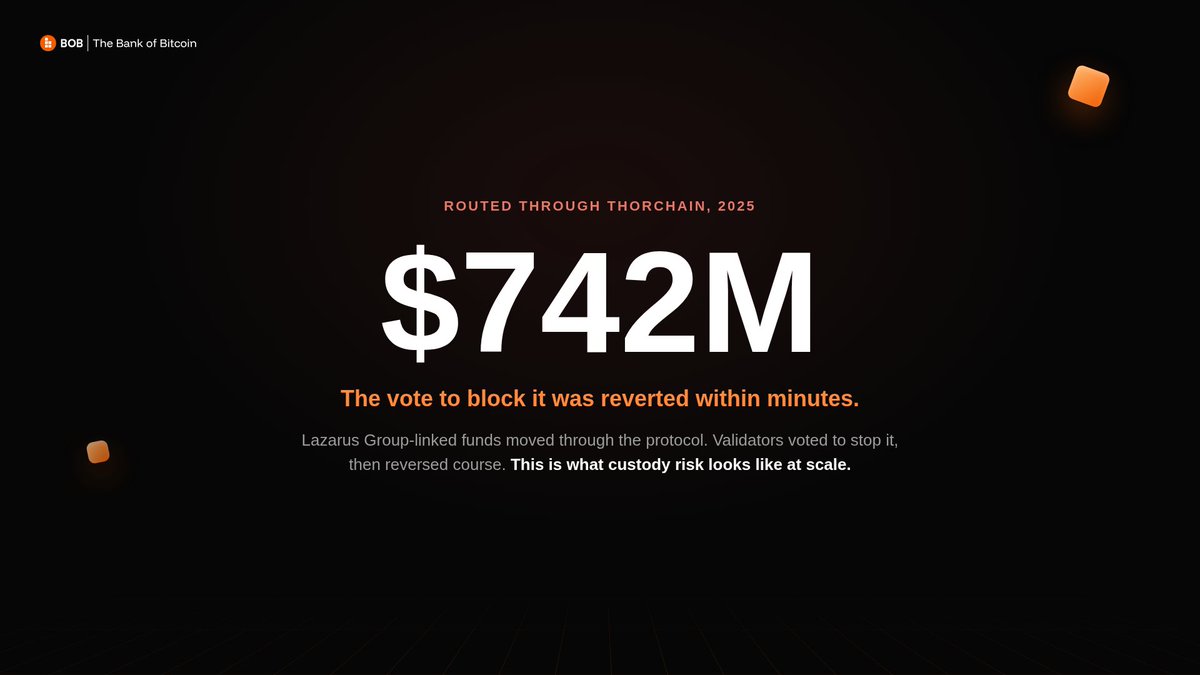
THORChain validators voted to block $742M in North Korean hacker funds moving through the protocol. The vote was reverted within minutes. A core developer resigned over it.
THORChain declined FBI requests to block the funds.
This is what custody risk actually looks like once you're moving real size.
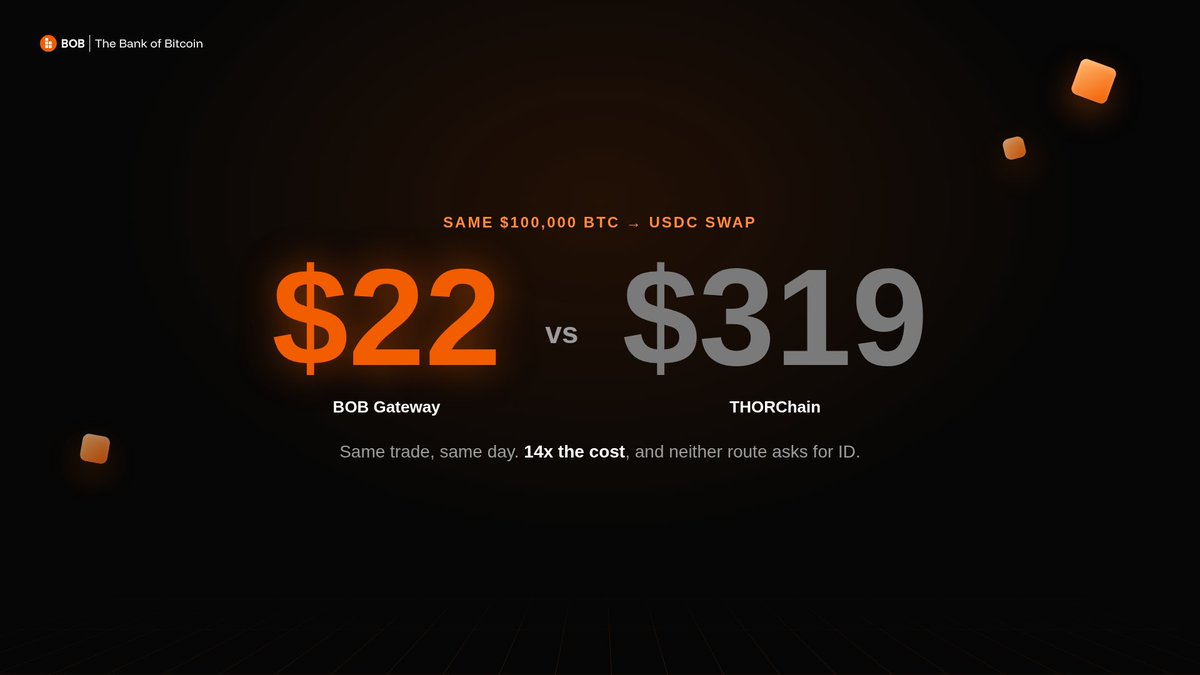
A $100,000 BTC to USDC swap costs $22 on one protocol and $319 on another. Same trade, same day. The gap comes down to one design choice, not liquidity, not market conditions.
Here's what actually determines the price you pay to swap BTC to a stablecoin without KYC in 2026.
You don't have to choose between money you can touch anytime and money that grows. Most savings options force that choice anyway.
Seasons' research report calls this the two-test problem:
Test 1: can you get your money out whenever you want, with no waiting line?
Test 2: does what you earn beat the rate your currency loses value, not just the official inflation number?
A live test ran the exact same crypto swap through Changelly, ChangeNOW, and SwapSpace.
The platform that published its fee finished dead last.
Here's what "lowest fees" means once you check the money instead of the fee page🧵
Once you learn how to shop directly from China, E.g Temù or shien your wardrobe changes completely. Call me cheap I don't care I ain't rich, I don't do fraud.😭
It's knowing what to search for.
Here's my style after making plenty of mistakes.
1. T-shirts:
Skip 100% polyester unless you're buying gym wear.
Instead, search:
• 100% Cotton
• Combed Cotton
• Heavyweight Cotton
• 240-300 GSM Cotton
• Premium Cotton
• Mercerized Cotton
The heavier the GSM, the thicker and more premium the shirt usually feels.
2. Jeans:
Denim Jeans
Temu is surprisingly good for denim if you know what to search.
Search:
• Denim Jeans
• Cotton Denim
• Raw Denim
• Selvedge Denim (if available)
• 98% Cotton + 2% Elastane
• 99% Cotton
Avoid jeans with high polyester content. The more cotton, the better they'll age and feel.
3. Body-hug clothing:
Search:
• Ribbed Knit
• Modal
• Viscose Blend
• Cotton-Spandex Blend
They hold their shape much better than cheap polyester.
4. Hoodies
Search:
• 400 GSM
• French Terry
• Cotton Fleece
• Heavyweight Hoodie
5. Chains
Search:
• 316L Stainless Steel
• Titanium Steel
• PVD Gold Plated
• Vacuum Plated
These are far more resistant to fading than ordinary fashion jewelry.
6. Earrings
Search:
• 925 Sterling Silver
• 316L Stainless Steel
• Hypoallergenic
• Moissanite (if you're buying stones)
7. Scarves
Search:
• Mulberry Silk
• Silk Blend
• Cashmere Blend
• Wool Blend
• Viscose
Avoid the shiny, thin polyester scarves if you're after a premium look.
8. Loafers
Search:
• Genuine Leather
• Cow Leather
• Full Grain Leather (rare but worth looking for)
• Rubber Outsole
9. Sneakers
Search:
• Rubber Outsole
• EVA Midsole
• Breathable Mesh
• Leather Upper
• Stitched Sole
Pictures lie a lot
The description usually tells the truth.
Here's how I shop:
1. Read the material composition before anything else.
2. Sort by Most Orders or Best Selling, not cheapest.
3. Only buy products with lots of reviews or pictures or even better when a Nigerian has purchased it before they always tell the truth.
4. Read the 1-star reviews first. They'll tell you what the seller won't.
5. Look at customer photos, not the product photos.
6. Check the weight of the product. Better quality clothing is often heavier.
7. Read the size chart. Don't assume your Nigerian size matches.
8. If the title has words like "luxury," "premium," or "designer" but the material is 100% polyester, not everything but still move on.
Your best friend isn't the product picture.
It's the material, the reviews, and the customer photos.
That's how you separate the gems from the junk.
I hope this help.
Things are to expensive for a country this poor.
Your money isn't private. Every wallet on Solana runs like an open ledger, and anyone with your address can read your salary, your trades, your transfers to family, going back years.
@UmbraPrivacy shields your money on Solana. Balances, transfers, and swaps stay encrypted on-chain, so the chain still settles in under a second, but nobody scanning your address reads what you hold.
Here's what that means in practice;
Right now, every wallet on Solana runs like an open ledger. Pull up Solscan, paste an address, and you get salary deposits, trading history, transfers to family, all cataloged for anyone to see. A landlord checks what you can afford before you finish negotiating rent. A counterparty in a deal reads your entire trading history before you sit down.
Umbra runs on Arcium's encrypted execution engine. A network of nodes computes over your transaction data without any single node decrypting it. You hold the only key that reads your own balance.
Toggle Private Mode and Umbra generates a shielded address from your wallet signature. It looks unrelated to your main address on-chain, and it is.
Send a shielded transfer, and Umbra encrypts the sender, recipient, and amount before it touches the chain. The transfer settles. The explorer shows nothing useful.
Swap privately, and your trade size and direction stay hidden from the bots watching the mempool for large orders to front-run.
A few features worth knowing:
→ Private Payroll: a business pays a team in USDC without publishing every salary on-chain, with Onramper built in for cashing out to a bank
→ Distress Mode: shows a decoy balance if someone forces you to unlock your wallet
→ Gasless Transfers: move SPL tokens without holding SOL for fees
→ Umbra Connect: approve a transaction from your phone with a QR code, no extension needed
→ SDK: any Solana app can build shielded transfers into its own product.
Umbra runs as a browser extension, on web at https://t.co/szM6qdKanf, and on mobile, with compliance tools like viewing keys built in for anyone who needs to share records with an auditor.
Quant AI runs an AI investment advisor across 25 blockchains, 10,000+ tokens, and 100+ stocks and commodities.
You type a sentence and Quant executes it: "buy $500 of Bitcoin," "move 30% into gold," "copy top trader." You skip the chart scanning and the five open tabs you'd normally reconcile by hand.
The scoring underneath the trades explains why. Quant AI fuses on-chain flows, social sentiment, macro data, and order books into a single 0-100 conviction score.
You describe your risk tolerance in plain English and Quant builds a DCA schedule, sets a take-profit target, or caps exposure, then runs it around the clock.
The waitlist is the real signal here. Over 100,000 people already sit on it ahead of public launch.
Quant AI Points reward referrals and content contributions now, with airdrop eligibility tied to accumulated points later.
Whitelist holders skip the 0.75 SOL public mint fee and get access to the ecosystem before it opens broadly.
Three steps to enter: write your own post about Quant AI or Quants (a quote retweet counts), submit it at https://t.co/SIilQrNzvk, and retweet the announcement.
Research used to mean opening TradingView, checking X, reading Bloomberg, pulling on-chain data, then finally deciding.
@tryquantio compresses that chain into one conversation. Fewer tabs. Faster decisions.
Become a Quant.
Traditional staking requires patience.
Speedstake provides upfront liquidity.
I sold my future yield to pay a man on the internet to call me a disappointment.
The transaction took under a minute.
My initial deposit is safe.
Execution is DeFi's real bottleneck. Access stopped being the hard part years ago.
Try spending a week running a concentrated LP position or chasing funding-rate spreads and the pattern shows up fast: the strategy works, but keeping it working requires constant attention.
Watching if a range still earns fees. Rebalancing at the right moment. Rotating capital across venues before a spread closes. Most retail users don't have the time to do that 24/7, so good ideas quietly lose steam.
Builderfi is building an AI automation layer that takes on that execution burden directly.
Products that carry the weight right now:
LP Vault Automation sets your pair and risk preference once, then handles the rest. It reads volatility data to suggest ranges, monitors price movement, rebalances only when the net benefit clears gas costs, and compounds fees back into the position. No manual range-shifting every time price drifts.
The Funding-Rate Arbitrage Engine runs a fully delta-neutral strategy. It scans multiple venues continuously, executes only when net profit stays positive after fees, and rotates capital as rates shift. USDC stays in your own wallet the entire time.
For anyone who wants to build something custom, Strategy Maker is a no-code builder. Describe the workflow or assemble it visually, backtest it against historical data, then deploy it on-chain once the numbers check out. Prebuilt Strategies cover the same ground for anyone who'd rather start from a tested template.
A few things separate this from a typical automation tool:
- Non-custodial throughout. Funds never leave your wallet.
- Already connected to real protocols on mainnet: Uniswap v3/v4, PancakeSwap, Aerodrome, Hyperliquid, and Jupiter.
- Strategies compose. LP automation and the arbitrage engine aren't isolated features; they're building blocks that can run inside the same workflow.
- Prediction Market Automation is next, targeted for Q4 2026.
@builderfiHQ is currently in closed beta, onboarding through a waitlist, with a security audit planned after the alpha phase wraps.
BuilderFi is building the layer that lets a strategy keep running after you close the tab.
Quick FAQ:
Is it custodial? No. Funds stay in your own wallet the entire time.
Do you need to code? No. Strategy Maker runs on a visual, no-code builder with backtesting built in.
What's live today? LP Vault Automation, the Funding-Rate Arbitrage Engine, Strategy Maker, and Prebuilt Strategies, all connected to Uniswap v3/v4, PancakeSwap, Aerodrome, Hyperliquid, and Jupiter.
What's next? Prediction Market Automation, targeted for Q4 2026.
Site: https://t.co/sLSJgPJ4Bg
App: https://t.co/a9PKIKFMPy
Follow @builderfiHQ for updates.
Two things have held back onchain perps.
Prices come from a formula instead of a real buyer and seller and your capital sits trapped in one market at a time, even when you're trading correlated assets that should offset each other.
@margin_trade fixes both, and the two fixes work together in a way that's worth walking through properly.