As someone who has hacked countless companies and received thousands of dollars in bounties, let me tell you this: the future of cybersecurity is genuinely scary if companies, governments, and international bodies do not take it seriously.
This week’s incidents w/ eMudhra, TiDB/PingCAP, PHP RCE, and the SBI data leak were just a trailer for the very dangerous future we are heading toward.
Soon, we may see cases where a city’s electric grid, water-supply systems, and physical infrastructure are sabotaged through cyberattacks carried out by adversaries.
eMudhra Security Breach Explained in Simple Terms 🔐
Here's what actually happened:
In April 2025, eMudhra, Indian Certificate Authority generated 8 intermediate certificates with very weak private keys. One of them was a single digit "4" lol. Others were like 56, 115, etc
Anyone could recover these keys in under a second and create fake HTTPS certificates for any website that browsers would trust.
One researcher reported this on 17 October 2026. Google, Mozilla, Apple, Microsoft has blocked the bad certificates within hours. This came to limelight to everyone today morning.
eMudhra is licensed by India's CCA/MeitY and works on government projects too.
What you should do:
🔹Update your browser and operating system right now (Chrome, Firefox, Edge, Safari, Windows, Android, iOS, etc as applicable)
🔹 On Linux, update your `ca-certificates` package
🔹If you run a website that uses an eMudhra/emSign certificate, get a new certificate from another CA as soon as possible
Most regular users are already protected once their browser is updated.
☄️ A simple explanation for Non-Tech people:
Basically emudhra gave some numbers as secrets to the internet. The numbers act as a security numbers. For example think of it like this, you are trying to enter a club and bouncer asks you for the secret number to enter the club. You ask the bouncer if the number is between 1 to 5. Bouncer says yes and you start guessing the numbers one by one. Since the set of numbers that you have to guess from is quite small, it's easier to guess. Now anyone can say "hey! I know the secret number and I own this club. Now everybody pay their money to me". This explanation is not entirely accurate but you get the point.
What can you do? Nothing. Browsers and tool makers have released a patch with utmost urgency. Just update everything that you have on your devices and you are good from now on. But what’s done is done so we don't know what got stolen from the club before we found out the numbers to guess is too small where it should be from 1 to 100 ton.
#eMudhra #cyberSecurity #securityThreat
Dear President Elon,
India is a sovereign country, not your personal business project. You run a private company, not a charity.
Just because you want to enter the Indian market doesn't mean you get to mock people and lecture India on what it should do.
And please stop selling this idea that you are coming to save poor Indians. Starlink is VERY expensive. It's not free internet that you are giving away out of kindness.
You are here to do business, just like every other company. So let's not pretend this is some social service.
Nobody is stopping you from making an offer. Make it affordable, follow Indian rules, and let the government decide. That's how it works.
Please keep attitude in check, you just sell internet. You don't own India.
I met a guy at a coworking space who vibe codes all day, every day.
I was shocked when I found out he knows more about system design and coding principles than most software engineers I know.
I asked him how.
He said every time Claude finishes coding something, he asks:
“Why did you do it this way?”
Claude explains it.
He learns.
He might actually be ready for interviews at Anthropic, Google or OpenAI.
Never thought vibe coding could teach someone like this.
अकाली बीजेपी सरकार में 22वें स्थान पर था, कांग्रेस सरकार में 27वें स्थान पर था, लेकिन आम आदमी पार्टी सरकार में शिक्षा में देश का नंबर-1 राज्य बन गया पंजाब।
शानदार @BhagwantMann 🔥🔥
It’s 10 years to UPI today. What a staggering run this has been.
Approx 450M monthly users
Approx 250M daily users.
Approx 100M new autopay mandates setup
Approx 500M autopay debits a month.
@NPCI_NPCI@dilipasbe
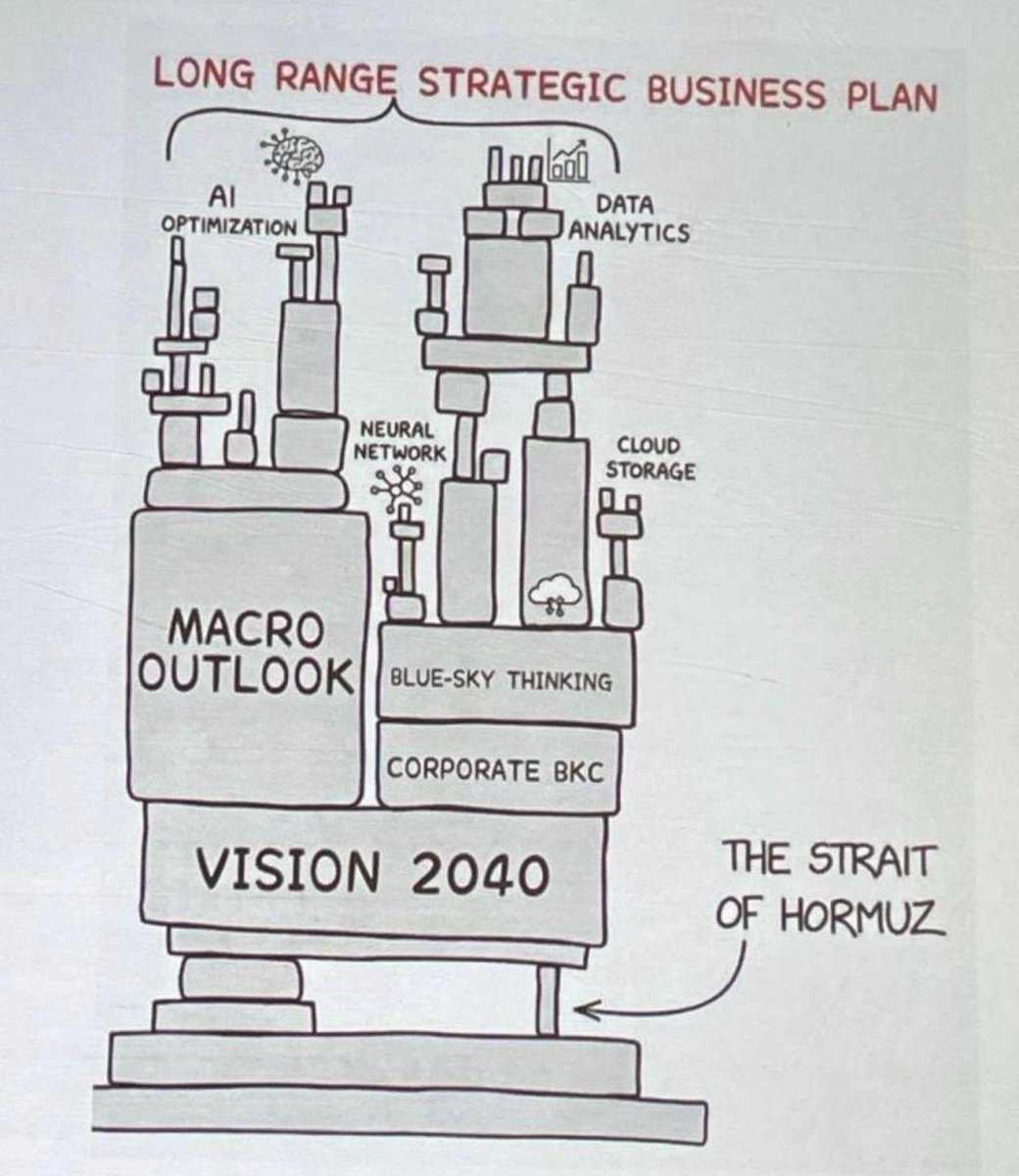
A historic shakeup of the world order, if true. Iran holds the cards on Hormuz, but China can put pressure. However, this deal will also secure Iran’s future which the Arabs, Israel, USA don’t want. If such an all-encompassing deal does materialize, Munir will become an even more important world leader.
I've stopped reading Gulf war headlines. Here's what I track instead.
We run an India-focused equity fund. 85% of India's crude comes from imports. Half of that normally passes through Hormuz. So yes — this crisis is personal.
But the information environment right now is garbage. Trump says the war ends tomorrow. Iran says Hormuz is shut forever. One analyst says $150 oil, another says $60. You can't build a portfolio view on this.
So I've narrowed it down to 4 signals. These are priced by people with real money on the line. They don't lie.
1. Ship insurance premiums through Hormuz
This is the single best signal. Lloyd's underwriters have billions at stake on every pricing call. Before the war, insuring a tanker through Hormuz cost 0.25% of the ship's value. Today it's 3.5–10% — and almost nobody is buying. A $100M tanker that cost $250K to insure now costs up to $10M. When this drops below 2%, the people with the most to lose are telling you it's getting safer. No press conference can replicate that.
2. How many ships are actually crossing
Every ship carries a GPS tracker (AIS). You can count exactly how many cross Hormuz each day. Before: 100+. Now: 8. That's a 92% collapse. You can't spin a ship being somewhere it isn't. Iran is letting some Chinese and Indian ships through, but it's a trickle. When this number crosses 30–40, trade is resuming. You can track this free on the WTO Hormuz Trade Tracker.
3. Paper oil vs real oil
This one most people miss entirely. Brent crude (the headline price) is at $112. But Dubai physical — what Asian buyers actually pay for delivered oil — is at $126. That's a $14 gap. It exists because Trump's comments keep pushing paper prices down. Traders call it jawboning. But the refiners buying cargo aren't getting any discount. If you're looking at Brent to assess India's oil bill, you're looking at the wrong number.
4. The mid-April cliff
Multiple emergency measures expire around the same time. The 400 million barrel SPR release runs dry ~April 15. The US waiver letting India buy Russian crude expires. Formosa Plastics has declared force majeure from April 1. Right now these stopgaps are keeping the supply gap at ~5 mb/d. Without them, BCA Research estimates it doubles to 10 mb/d — the largest crude disruption ever. If Hormuz doesn't reopen by mid-April, we're in uncharted territory.
Bottom line: track the insurance premium, the ship count, the paper-physical spread, and the April timeline. Everything else is noise.
Anthropic leaked 512,000 lines of Claude Code source code yesterday.
What happened in the next 12 hours is absolutely wild.
4 AM. Anthropic pushes an update to npm. Inside the package: their entire codebase. A 60 MB debugging file accidentally bundled in.
23 minutes later, researcher Chaofan Shou spots it. Downloads the zip.
Posts it on X. Within 6 hours: 3 million views.
By the time Anthropic’s team woke up, the code was forked 41,000+ times across GitHub. Anthropic started firing DMCA takedowns. Too late.
A Korean developer named Sigrid Jin woke up to his phone exploding. He’s Claude Code’s biggest power user.
WSJ reported he burned through 25 billion tokens last year.
He read the leaked code.
Rewrote the entire thing in Python in 8 hours. His repo hit 30,000 stars faster than any GitHub project in history.
Then he rewrote it again in Rust. That version now has 49,000 stars.
Someone mirrored it to a decentralized platform with one message: “will never be taken down.” The code is permanent. Anthropic cannot get it back.
Here’s the part I can’t stop thinking about: Anthropic built something called “Undercover Mode.” Its only job: prevent Claude from accidentally leaking internal secrets.
They shipped an entire anti-leak system in their own product. Then leaked their own source code in a .map file. Irony is beautiful
unpopular opinion: 16GB is plenty if software engineers actually cared about memory efficiency. chrome eating 4GB for 12 tabs is not a hardware problem its a software disgrace. docker consuming 2GB idle is not a feature its laziness. we live in an era where people optimize every single token to save $0.001 on API costs but happily ship electron apps that eat 500MB to display a todo list. if the industry treated RAM the way we treat inference compute - obsessively measuring every byte - 16GB would feel luxurious. the hardware isnt the problem, the software is @adxtyahq
new model for engineering team structure in 2026:
2 people only
one pirate and one architect
the pirate's job is to move as fast as possible to develop valuable, shipped product features by vibe coding.
the architect's job is to turn the product surface discovered by the pirate into a reliable, structured machine—also by vibe coding, but at a slower, more well-reasoned pace.
every product needs a pirate but most product's only need an architect once they some form of PMF, and in that case they usually don't need one full-time. architects can work across many codebases and solve interesting technical challenges. pirates go hard on a product that they own end-to-end.
Palantir AI + Claude was used to detect, prioritize, and strike over 1,000 targets in the first 24 hours of Operation against IRAN.
The success was so ridiculous, so game-changing, that the Pentagon didn’t even wait.
What used to be just a pilot project, just something they were testing out… suddenly became official, permanent, and everywhere.
Palantir is now the core AI brain of the entire U.S. military. It’s getting rolled out across ALL branches.
Meta's confirmed 15,000+ layoffs are just the cover story
I'm hearing the real number is closer to 23,000 when you count contractors and "voluntary departures"
Sources inside are saying they've been screen recording senior engineers' coding sessions for 8 months
Every prompt. Every debugging session. Every architectural decision. All of it logged and fed into their internal training models
One L7 told me he just realized the "productivity metrics dashboard" he helped build was actually profiling which engineers could be replaced first
The knowledge extraction is complete now
Meta's internal AI agents can replicate 73% of what their senior engineers do daily. The remaining 27% gets offshored to teams in Bangalore with access to the same prompt libraries
Those 15,000 people? They've been training their replacements since last summer and calling it "AI enablement"
The brutal math: $4.2B in annual salary costs eliminated. $800M in severance. Still a $3.4B savings that funds two more years of GPU clusters
One insider said the transition plan shows 4,200 engineers by end of 2026. They had 23,400 eighteen months ago
But sure, keep telling people this is about "efficiency"
The efficiency is human disposal
DMs open if you're still inside
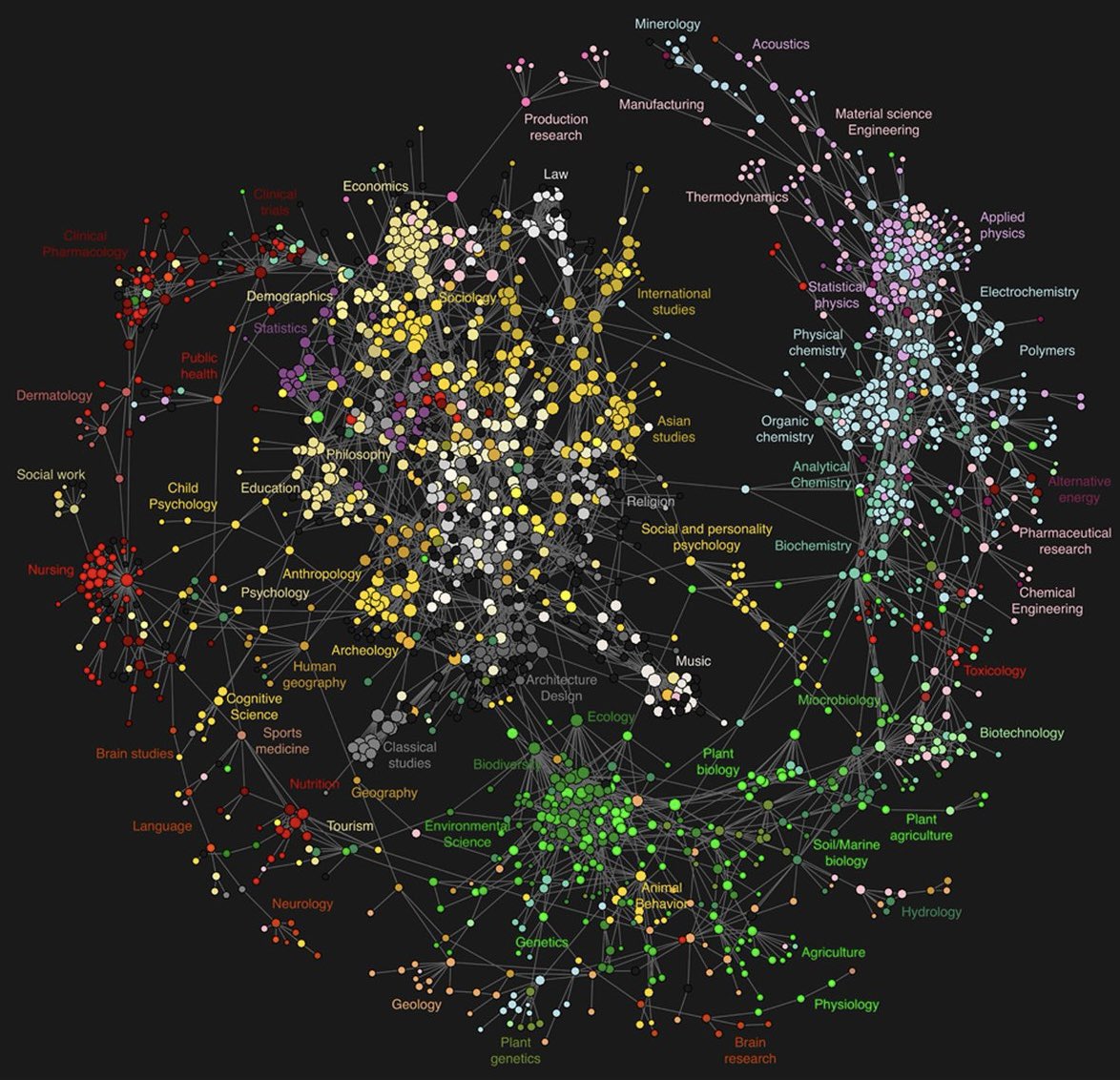
study one subject in interconnection with other subjects
knowledge is not isolated.
every serious field connects to many others.
study like this:
→ mathematics ↔ physics
math describes the structure.
physics applies it to reality.
→ physics ↔ engineering
physics explains the laws.
engineering turns them into machines.
→ electronics ↔ control theory
circuits sense and actuate.
control stabilizes and directs systems.
→ computer science ↔ mathematics
algorithms come from mathematical logic and structures.
→ biology ↔ engineering
nature contains optimized designs built by evolution.
→ history ↔ technology
technology shapes civilizations.
civilizations shape technology.
isolated learning produces shallow understanding.
interconnected learning produces insight.
the goal is not to know many subjects.
the goal is to see the structure connecting them.
The thing that has obviously confused the major AI labs is that they think adding layers (like Claude "skills", fine-tuning, RL, etc) is the path forward. Nope. It gives marginal gains. The true path forward is rethinking *actual* layers like the LSTM, Attention, or Transformer