Lead engineer shipping production code with AI daily @WalletConnect.
Helping devs go from stuck to high-performing engineers.
Ship, lead and live better ↓
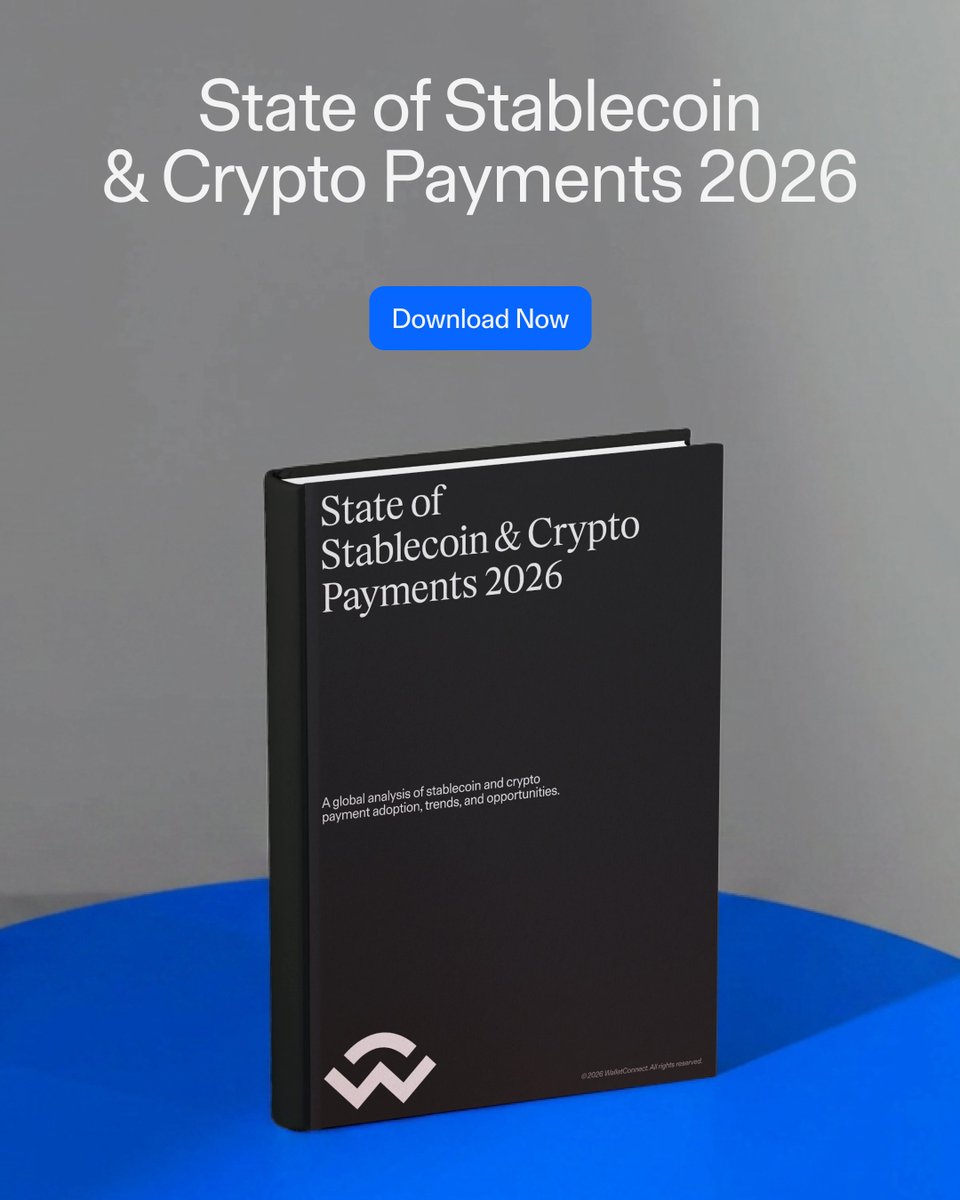
LIVE: The WalletConnect State of Stablecoin & Crypto Payments Report.
Last year, $400B transacted through the WalletConnect Network.
This data gave us insight on what's blocking adoption and how we can take stablecoin and crypto payments to everyday commerce.
Download ↓
NEW episode of the Payments Pulse is out.
Aurélie Dhellemmes, Head of Growth at @CantonNetwork talks to host @dee_centralized about:
> why institutional adoption is taking so long
> DeFi vs privacy
> why fragmentation isn't the real issue
Watch ↓
Wow if Apple gets access to Mythos, we might finally get a working search bar.
Jokes aside, I think a ton of software is about to get pwnd and re-written from scratch. https://t.co/ARLqO6VGqH
Introducing Project Glasswing: an urgent initiative to help secure the world’s most critical software.
It’s powered by our newest frontier model, Claude Mythos Preview, which can find software vulnerabilities better than all but the most skilled humans.
https://t.co/NQ7IfEtYk7
@boristane Are you using GPT 5.4 xhigh? Unlike Opus 4.6 I feel like it doesn’t cut corners and has more depth.
And do each of your plans have multiple phases?
I’ve been showing everyone how seamless and quick payments can be with @WalletConnect Pay using our latest SDK
It just works… Scan -> Approve -> Done!
My favorite Wallet to demo has been @moneda_com who did a great job with their iOS release supporting it natively 👌
Just tried @WalletConnect Pay for the first time. 🤯
Scan, pay, and that’s it.
No card.
No crazy process.
This is the future of finance.
Another epic WalletCon for the books.
AI-generated code tends to produce massive PRs so we deliberately fight that with small, phased PRs. Each one gets real attention, better tests, deeper review.
A 2000-line LGTM ships bugs but ten 200-line PRs ship quality.
The real risk of AI isn't that it replaces you.
It's that it makes you atrophy.
You stop thinking through decisions because the agent did it for you. Then someone asks "why?" and you've got nothing.
I write about AI-assisted engineering, the path from mid-level to staff, and building a life that sustains high performance. Join the newsletter if you're interested in this kind of content https://t.co/LBHOMw0WZA
Before anyone else sees the code, I review my own work with Claude Code.
I ask it why something was implemented a certain way. I ask it to review from an SRE perspective. I ask about test coverage gaps. I have a back-and-forth discussion and push improvements before the team review even starts.
If you take one thing from this: write the brief before you prompt.
3 sentences. What you want, what the constraints are, and what "done" looks like. Try it on one task this week and see what happens when you give AI your best input instead of your laziest.
Full breakdown in my latest newsletter (link in reply).
Then I break the work into phases. Each PR is small and digestible.
AI-generated code tends to produce massive PRs, so we've deliberately worked against that. The agent has clear context for each phase instead of juggling everything at once. Small PRs get real attention, better tests, and higher quality.
Most developers write a vague prompt in Claude Code,, skim the output, and ship it.
I did the same thing early on, and it cost me. A subquery that nearly exhausted our database. A technical doc I couldn't defend in front of my own team.
Here's what I do differently now. 🧵
After the design doc, I write an implementation plan as a markdown file and commit it to the repo.
This plan has code snippets, database migrations, the exact order PRs will be created, and a testing strategy. My first PR was the plan itself. My peers reviewed it, and we caught issues before a single line of implementation code existed.
Before I write a single prompt, I write a design doc.
Last week I built a merchant management API. I spent an hour exploring two architectural options with Claude Code, challenging assumptions and poking holes in trade-offs. Then I shared the doc with my team and we aligned before any code was written.
@Capetlevrai Si tu te retrouves a utiliser des prompts de manière récurrente, converti les en skills ou commande avec Claude Code. Sinon check Obsidian