Here's context for the Chinese tech company, CloudWalk, that built a facial recognition database for the Zimbabwe government.
This happened as the Chinese government built the world’s most intensive technology-powered domestic surveillance state that heavily relies on facial recognition.
But its tech wasn’t adept at identifying dark-complected faces because there are so few in China. This was problematic because Chinese surveillance especially focuses on minorities like the Uighurs and Tibetans who are usually darker skinned than typical majority Chinese.
One of the best ways to refine this problem out of the AI that drives facial recognition technology is to feed it images of as many black faces as possible. And where can China get that data? Africa, of course.
CloudWalk—which is integrated into China’s domestic surveillance apparatus—struck a 2018 deal to build a facial recognition database for the Zim government. As different reports note, CloudWalk was allowed to train its AI on the Zimbabwean faces it collected.
China's 2017 National Intelligence Law along with a bevy of similar laws requires all Chinese companies and individuals to cooperate with China's intelligence agencies.
China believes developing the best AI will empower it to topple US and Western global leadership and elevate itself to the center of the economic world, something the Chinese Communist Party believes is necessary to ensure its continued stay in power. So, winning the AI race is existential for Beijing. Meaning, everything is permissible.
It also prioritizes biotechnology development, which is why I suspect the Chinese government is collecting African genomic data—which is uniquely valuable—from the continent as well. Finally, China sucks up whatever data it can get, including through hacks of massive troves of US data.
It has also surveilled Africa, including by daily exfiltrating data from the African Union HQ’s ICT system, bugging the physical AU HQ building that it built and gave as a “gift,” and likely hacking into the AU’s camera system.
I suspect it’s doing the very same thing to the hundreds of sensitive buildings Chinese companies have built across the continent, including presidential residences, ministries of defense, etc.
So China has the capabilities, track record, and motivation to exfiltrate whatever African data it can get its hands on, including facial databases and genomic data.
First two links below are an essay (starts on p. 87) I wrote about the Chinese government likely acquiring African data, second is a report documenting some of the sensitive buildings Chinese companies have built in Africa. Other links document the CloudWalk deal in Zimbabwe and its link to Chinese domestic surveillance of minorities et al., Chinese tech companies illicitly gathering data, etc.
This isn't even close to an exhaustive list.
BREAKING: Cuba has been hit by another island-wide blackout, leaving roughly 10 million people without power.
Officials say the cause is under investigation as the country's aging electric grid continues to struggle and fuel reserves run low.
It's the second nationwide blackout this year, with hospitals and critical services among those impacted as Cuba faces an ongoing energy crisis.
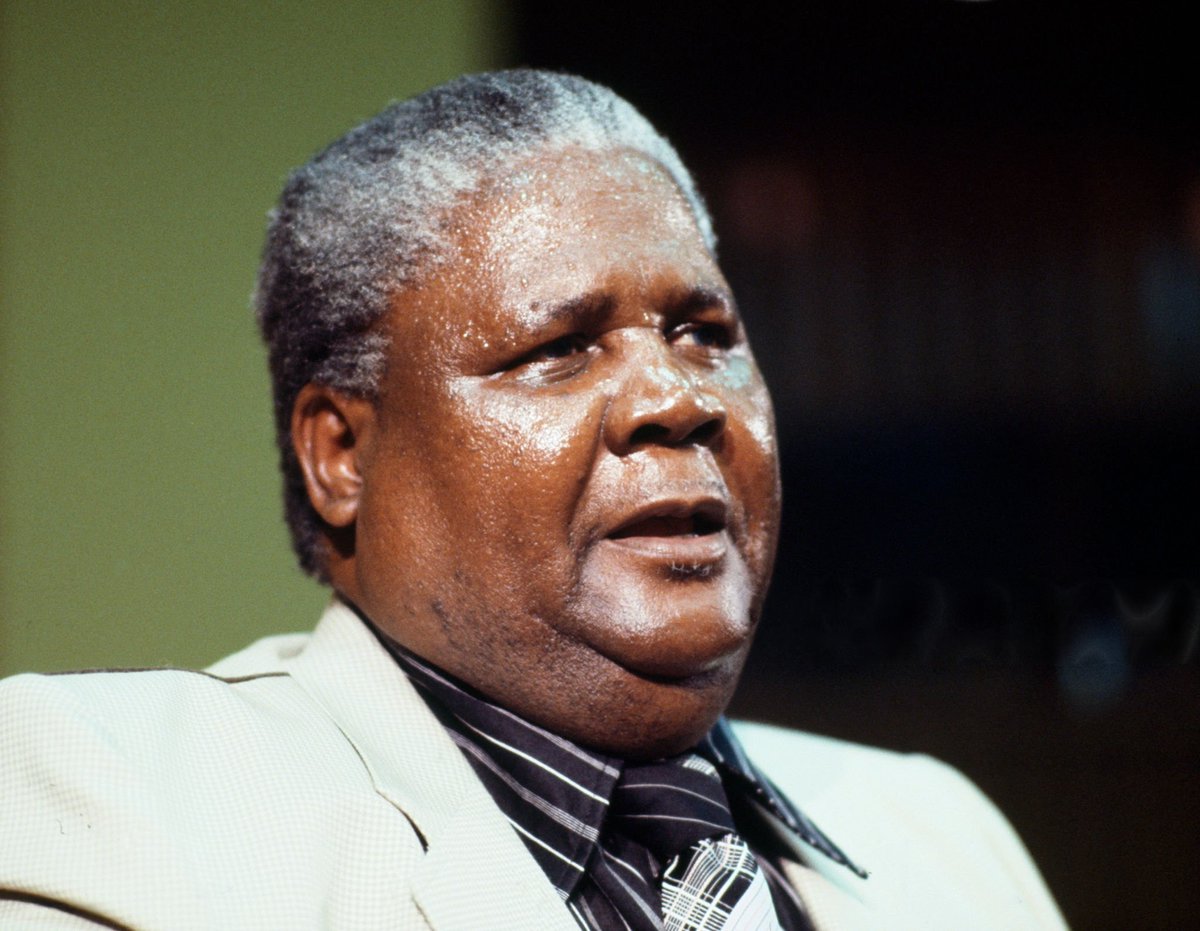
Just after midnight on 7 March 1983, Joshua Nkomo climbed into the back of a sandbagged pick-up truck and slipped out of Bulawayo under cover of darkness, fleeing Fifth Brigade soldiers who had come to kill him.
Crouched in the rear, surrounded by guards and guns, one of Zimbabwe's founding fathers disappeared into the Matabeleland night, running for his life.
The convoy headed west towards Plumtree, where about 2,000 government troops were stationed, and crept through the sleeping town before turning south for the Botswana border, gambling that the soldiers would not wake before they were gone.
Only ten kilometres remained, but the escape almost unravelled. They missed the border road and ended up at a rural school. After waking the teachers for directions, they took another wrong turn and found themselves back on the outskirts of Plumtree as dawn began to break. Every mistake brought daylight, roadblocks and capture closer.
Finally they reached the dry bed of the Ramokwebana River, where a woman collecting water pointed them towards the border. Nkomo climbed from the vehicle, crossed the riverbed and struggled over two barbed-wire fences, his companions pushing and hauling him over until, at exactly 6:20 a.m., he stepped onto Botswana soil.
Three decades of fighting for Zimbabwe's freedom had come to this.
ZANU-PF had nearly killed Father Zimbabwe.
The Telegraph says ED is facing a Chiwenga led coup via Muchena & others as his proxies, and predict a looming showdown.
It also refers to Chiwenga's Hezekiah satire, while questioning the extent of his military tentacles after ED strategically dismantled his network over time.
It also challenges the feasibility of that coup under current conditions.
These are themes that I have regularly addressed in the past.
Mugabe’s strongman faces a coup of his own in Zimbabwe https://t.co/heXc17TiwE