In fact, using multiple fingers to tap rapidly and irregularly on another person’s head creates a surprisingly strong massage effect, because the scalp is one of the least stimulated areas of the body. Except when pressed against a pillow during sleep, it usually remains in a state of relatively low tactile sensitivity.
This kind of light tapping works for almost anyone. By applying continuous, steady pressure in varied and unpredictable spots, it can be deeply relaxing. Couples who are close may use this as a simple way to de-stress in daily life, and if it continues for several minutes, it can even make the recipient feel drowsy.
In Chinese martial-arts fiction, a common idea is “inner power” aka Qi aka Qigong aka Chi. At advanced levels, masters are said to be able to move heat-like energy through their bodies. The channels through which it flows are called meridians.
Legendary masters are also said to project this power outward through their palms, hardening objects such as banknotes. At the highest level, they can release large bursts of energy to leap great distances, like the gravity-defying jumps in Crouching Tiger, Hidden Dragon, as if pushed by an invisible force.
Scientifically, no such energy has ever been detected or measured, which is why Chinese people cannot fly across treetops in reality. Still, if the video were genuine, the fact that his first two attempts failed would suggest that even this supposed “Qi” is unstable rather than fully controllable. For that reason alone, it could never function as a reliable weapon in the real world.
Yet in martial-arts fiction, Qi is routinely weaponized: protagonists can strike enemies from within about 10 meters (32 feet), delivering force comparable to a violent impact or even shotgun blasts. If such power truly existed at that scale, political history would look entirely different. CCP could not have survived the Cultural Revolution, the Great Famine, or even the COVID pandemic, because ordinary people could simply project Qi force to knock down officials, much like the American idea that “every citizen can bear arms.”
In Chinese martial-arts fiction, there is a very common concept called “inner power” (#內力).
When a martial artist reaches a high level of mastery, they can consciously move heat energy in and out of their body. This is not simply “body temperature,” but more like a flowing warm current, almost like an internal heat wind. A master can circulate this inner power throughout their body, both to train control over it and, in some stories, to heal themselves.
Even more advanced masters are said to be able to project this inner power through their palms into another person’s body, or extract harmful “sick energy” from them. The pathways through which this power flows are known as the meridians.
If a practitioner becomes powerful enough, they can release large amounts of this energy to leap higher and farther, like the gravity-defying jumps seen in Crouching Tiger, Hidden Dragon, as if propelled by an invisible counterforce.
However, it’s important to note that inner power is not necessarily “hot.” Heat often accompanies it in stories, but it is not its defining feature. From a scientific standpoint, this kind of inner energy has never been successfully detected or measured, which is why, in reality, modern Chinese people do not fly across treetops.
In modern times, the more familiar term for inner power is qigong, though its claimed strength and real-world effects are far weaker than in legend. Practices like those seen in such videos are still used by some qigong practitioners today, but their effectiveness remains unclear.
@MentallyBu49798 In the trailer, the final shot only shows him hanging onto the rock with both hands, so you have no idea how he’s supposed to get out of that situation.
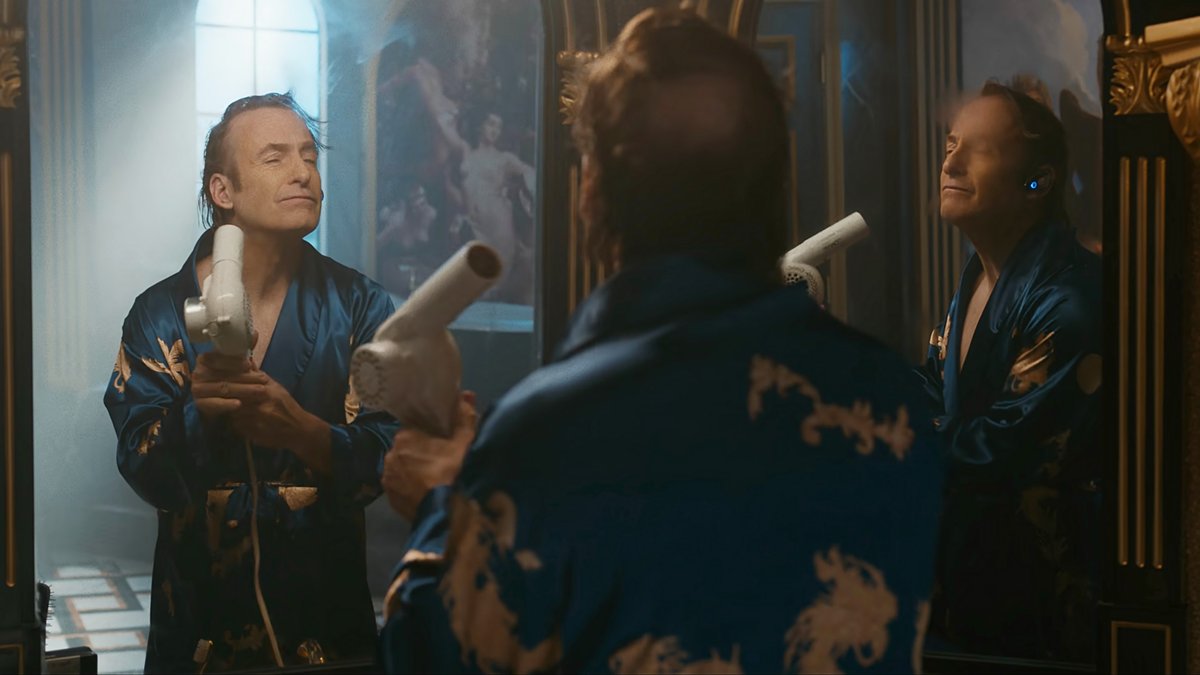
What bothers you isn’t the device, it’s how cheap everything looks. The black rubber handles, the white metal frame, that orange seat, the old woman’s clothes, the assistant’s outfit, even the lighting and color tone of the bathroom, all of it makes “being kept alive” feel like a kind of humiliation.
Every Taiwanese night market has grilled corn 烤玉米. Most foreigners, like Americans, might not care much at first, after all, they’ve grown up eating corn, some even have cornfields at home, so they already “know what corn tastes like.”
But Taiwanese grilled corn is different.
It’s a completely different texture, and it’s coated with uniquely Taiwanese sauces that are nothing like American or Japanese styles. It makes corn feel as if it has been reinvented. You’ll want to finish the whole cob in one go.
It’s delicious, but most Taiwanese people still only eat one cob at a time, because deep down everyone feels a little guilty about how rich and heavy the sauce is.
Here are two of the best stalls. They’re not international tourist night markets, they’re local ones, but both are reachable by MRT. If you go, double-check the Chinese characters on the sign.
Xingnan Night Market 興南夜市
Stall: 正碳烤玉米 (as the video shows)
Address: 中和區信義街1號
Sanhe Night Market 三和夜市
Stall: 萬里香烤玉米
Address: 三重區中央北路125-3號
For context, I’ve tried almost every well-known grilled corn stall in northern Taiwan. #TaiwanStreetFood #TaiwanNightMarket
In countries dominated by exam-driven education, every student is forced to study rote-memorization subjects for roughly six to twelve years. During that time, many students whose minds are not completely rigid are constantly looking for a chance to express themselves, not for grades or admission points, but simply to show their uniqueness.
After all, students at every level are still required to wear uniforms.
So when you see a move like this, you can be sure he has rehearsed it in his mind countless times, waiting for the right moment to use it.
And it isn’t only him. Many students carry this same desire to perform something distinctive. The difference is that outside of sports, such opportunities rarely appear.