Friday Flows 💧 | Groundwater
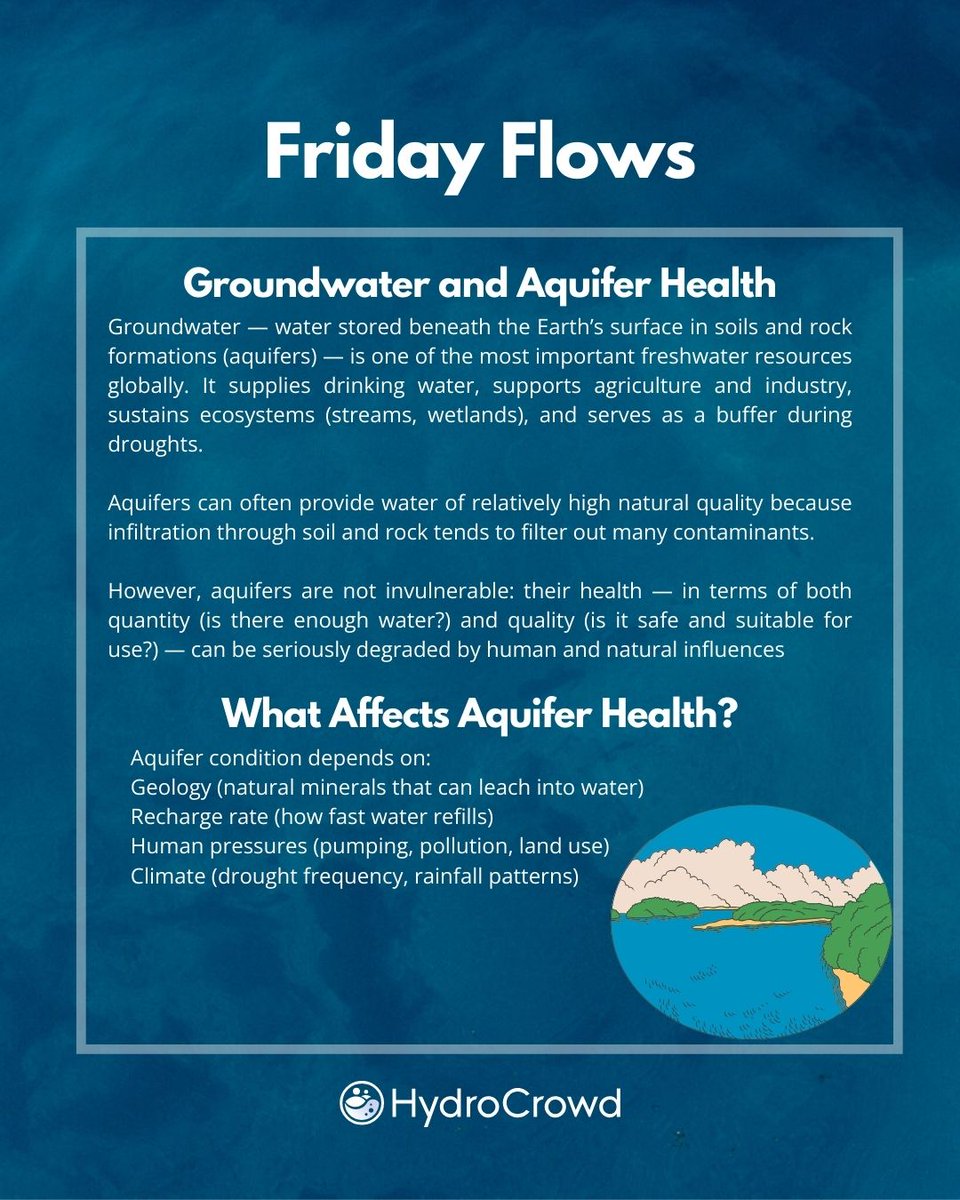
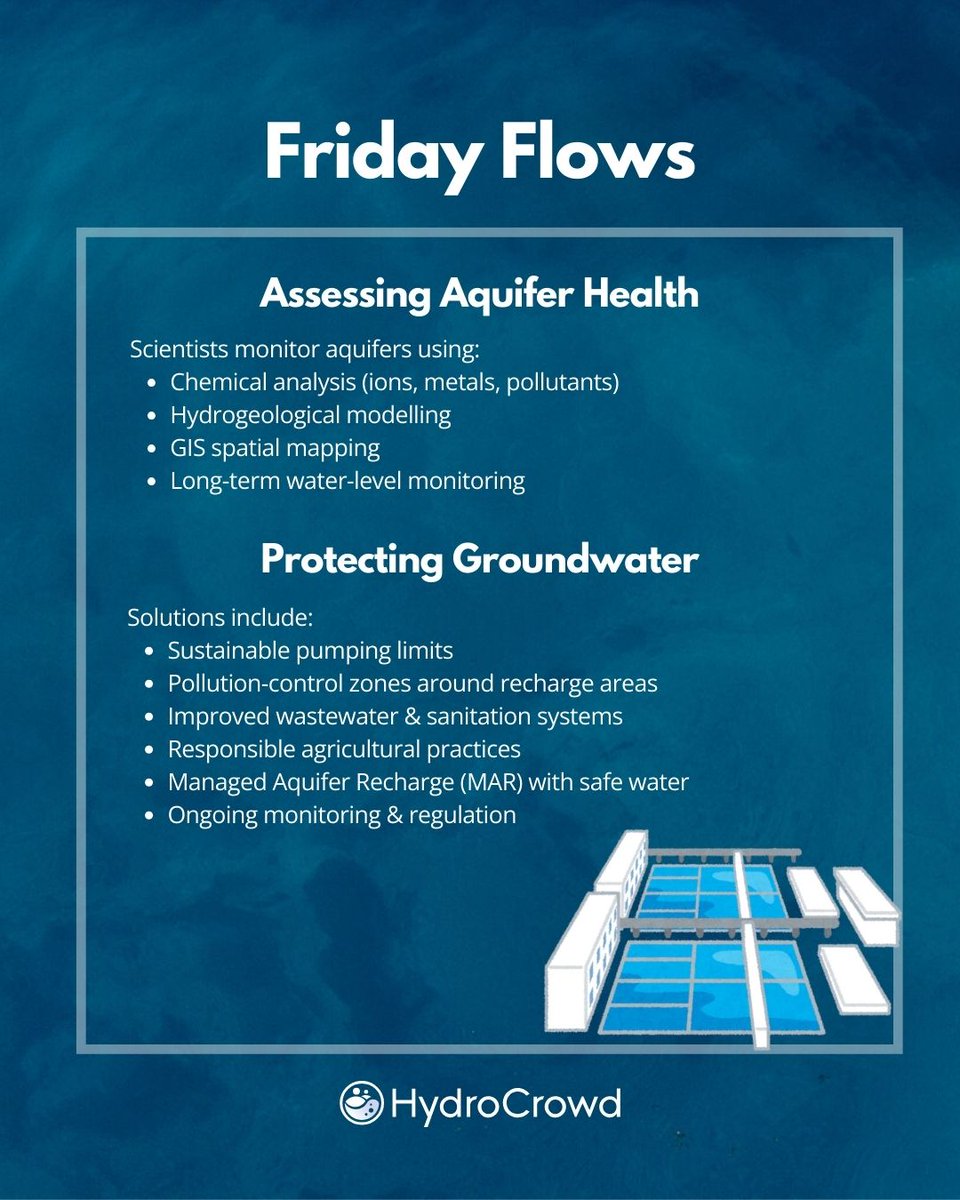
Hidden beneath our feet, groundwater supplies drinking water, food production, ecosystems, and drought resilience. But over-pumping and pollution threaten both its quantity and quality. Protecting aquifers means protecting future water security.
Friday Flows 🌿💧
Stable isotopes help us follow water’s journey.
Heavy vs. light isotopes give each drop a signature, shaping rainfall patterns, showing where plants take up water, and revealing transit times to rivers.
Tiny shifts, huge stories. 🌍
💧 Friday Flows | Water Footprint
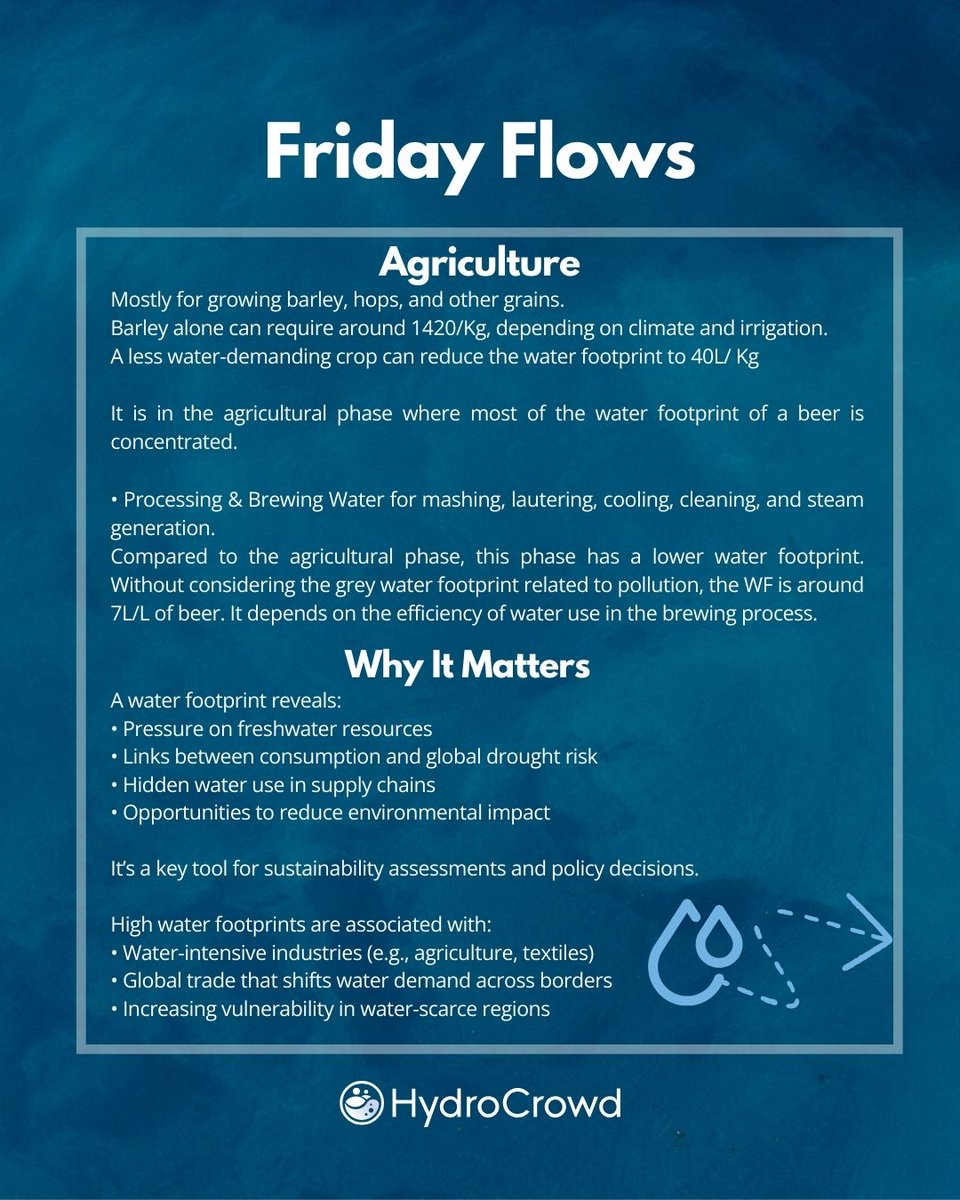
A water footprint measures all the freshwater used to make what we consume — food, clothes, energy.
🔵 Blue
🟢 Green
⚫ Grey
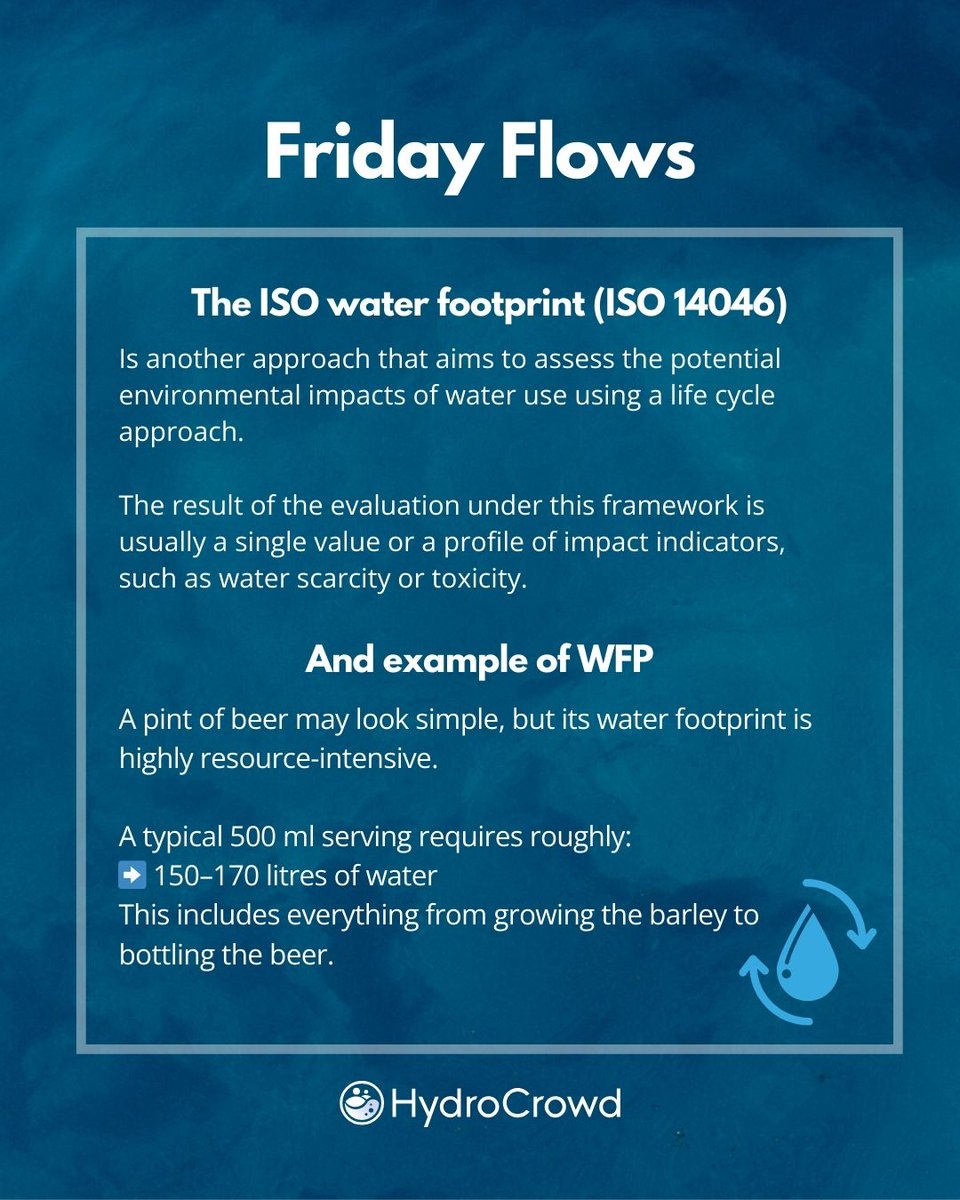
🍺 A 500 ml beer = 150–170 L of water.
Knowing this helps us choose sustainably. 🌍💧
#FridayFlows#HydroCrowd
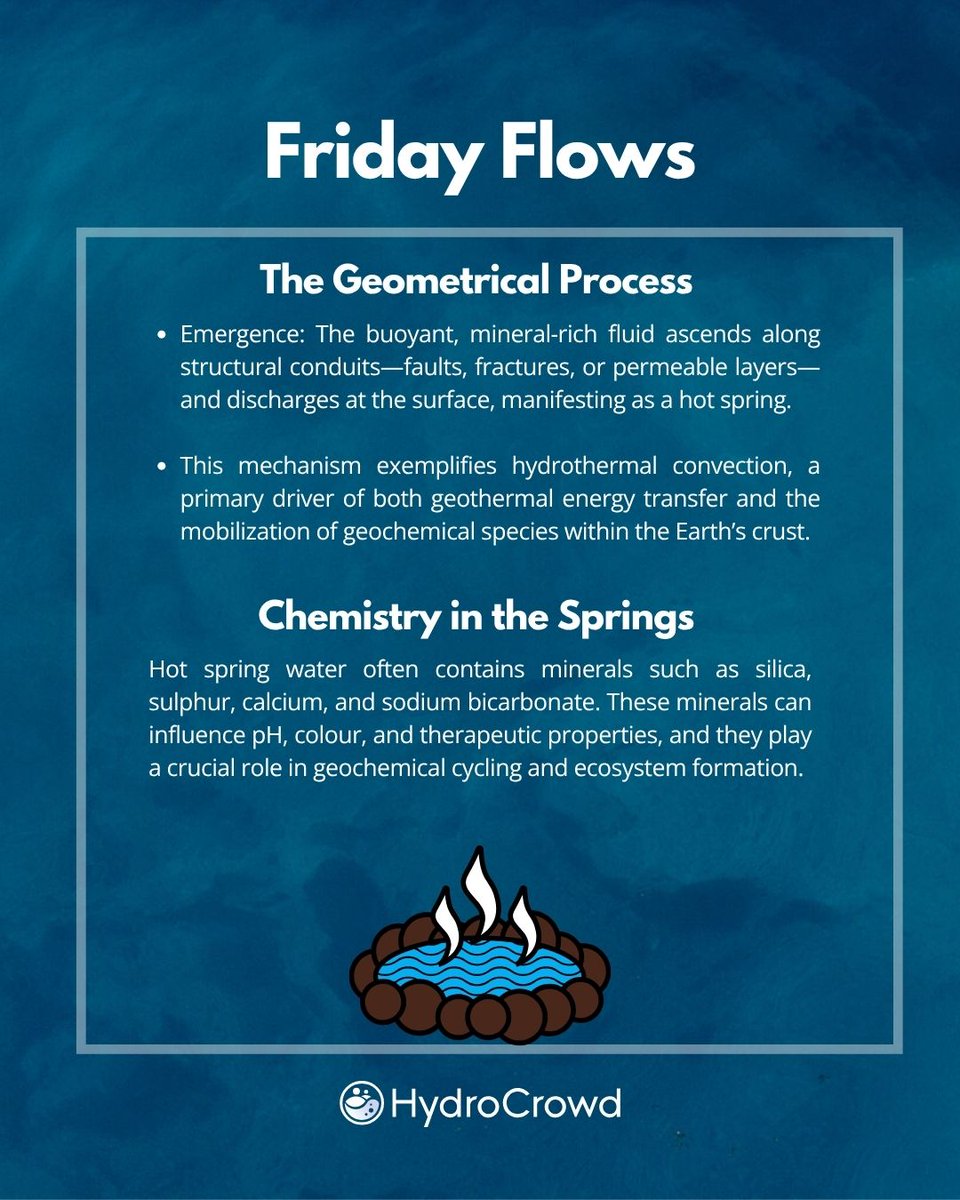
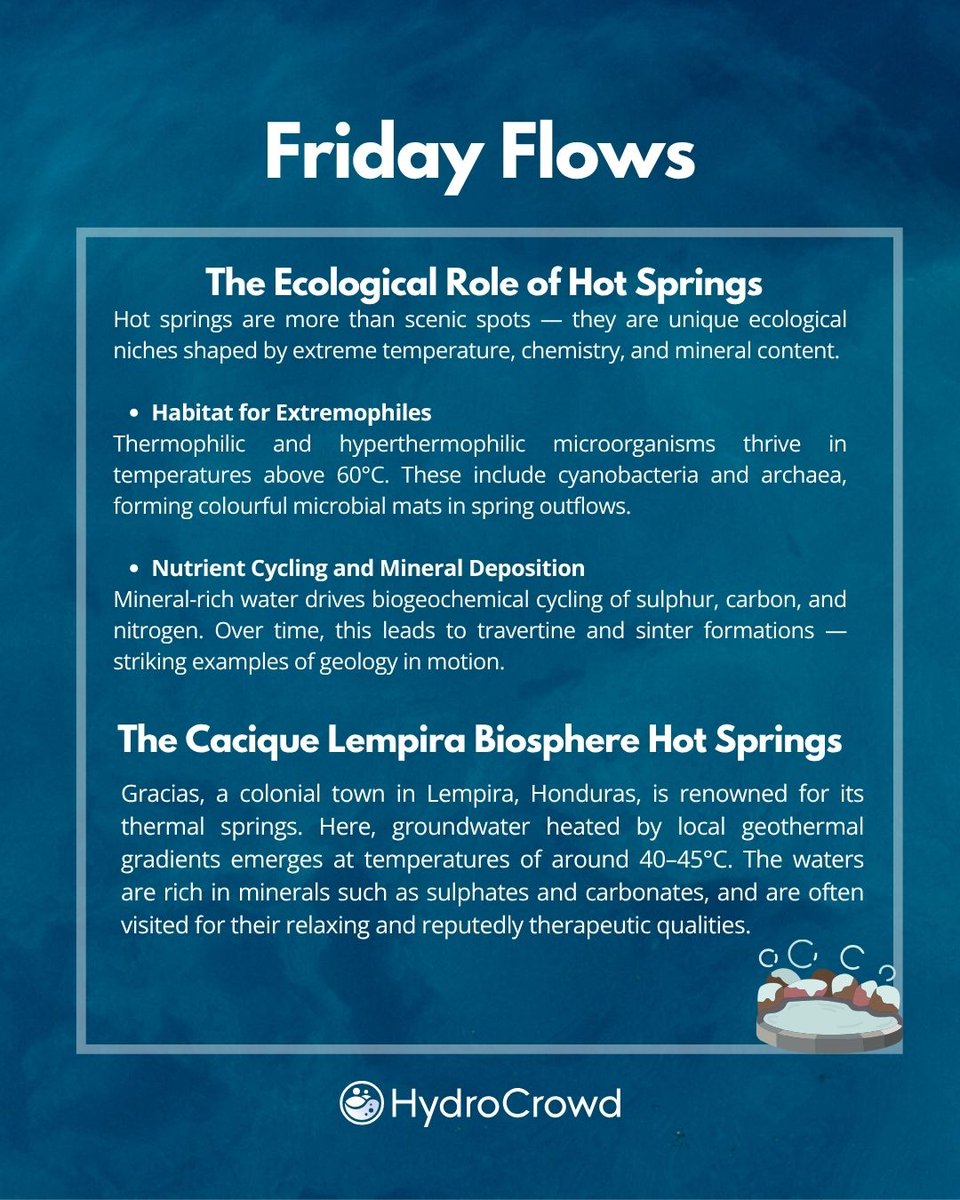
Friday Flow | Hot springs form when rainwater heats deep underground and rises back as warm, mineral-rich water.
🌡️ These geothermal pools host heat-loving microbes and create striking mineral formations.🌍
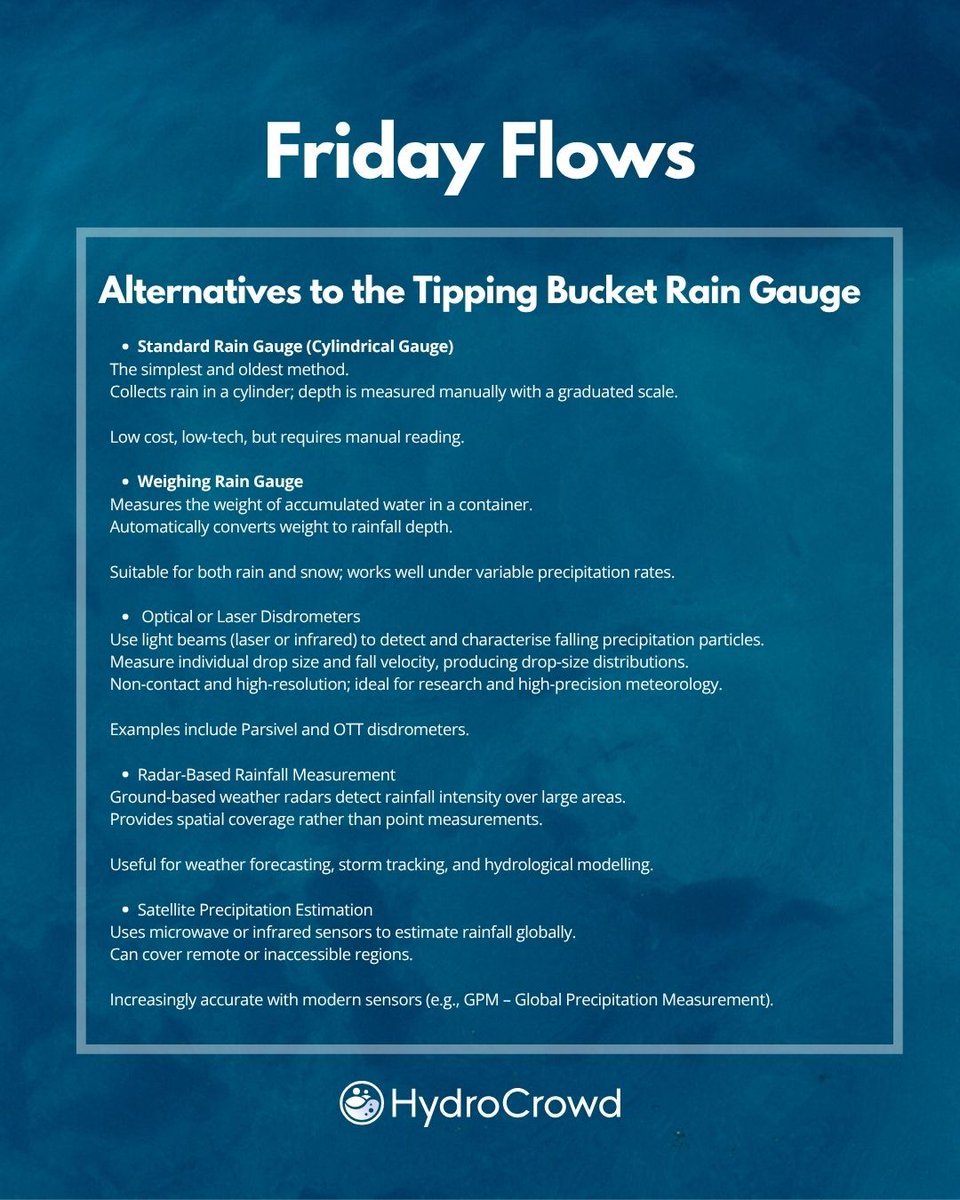
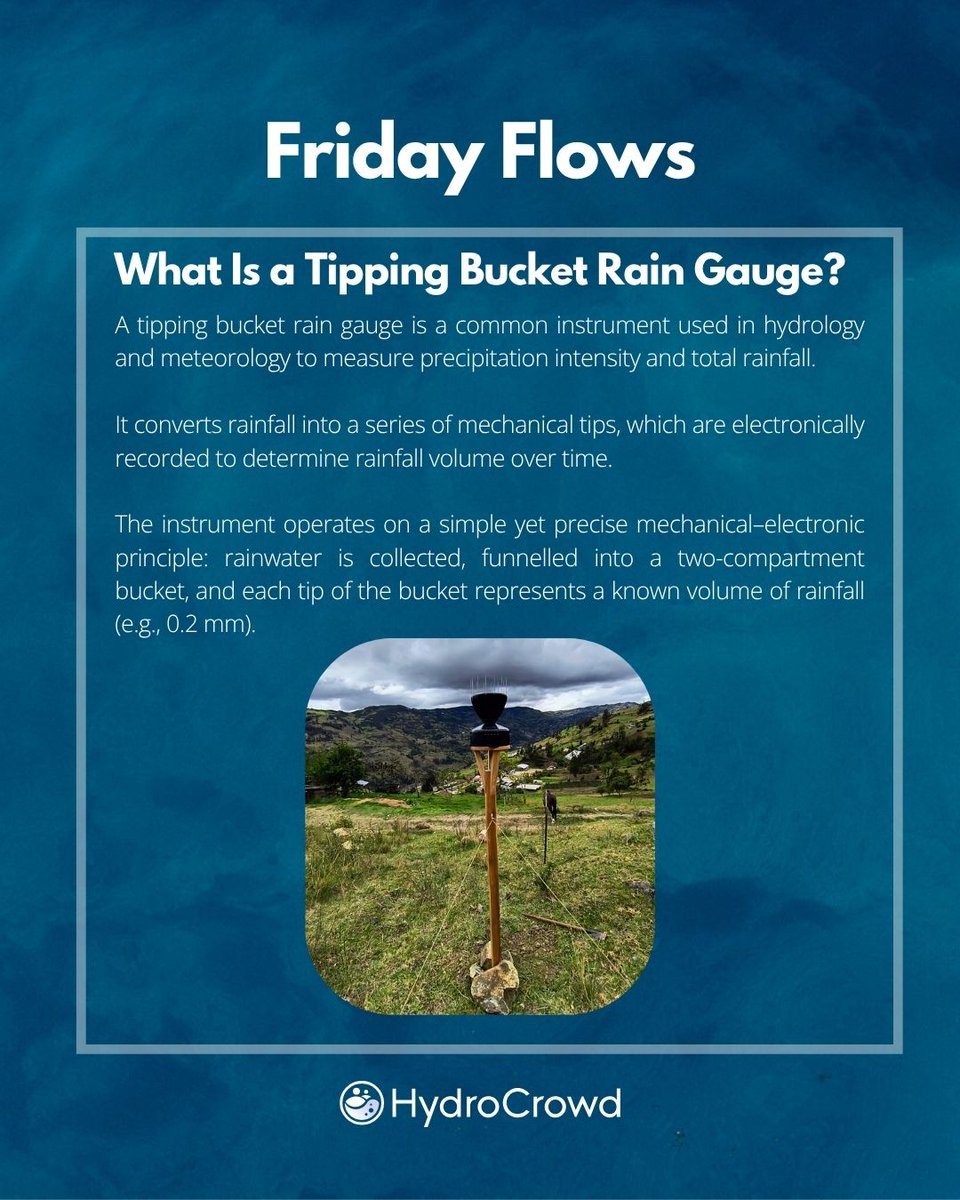
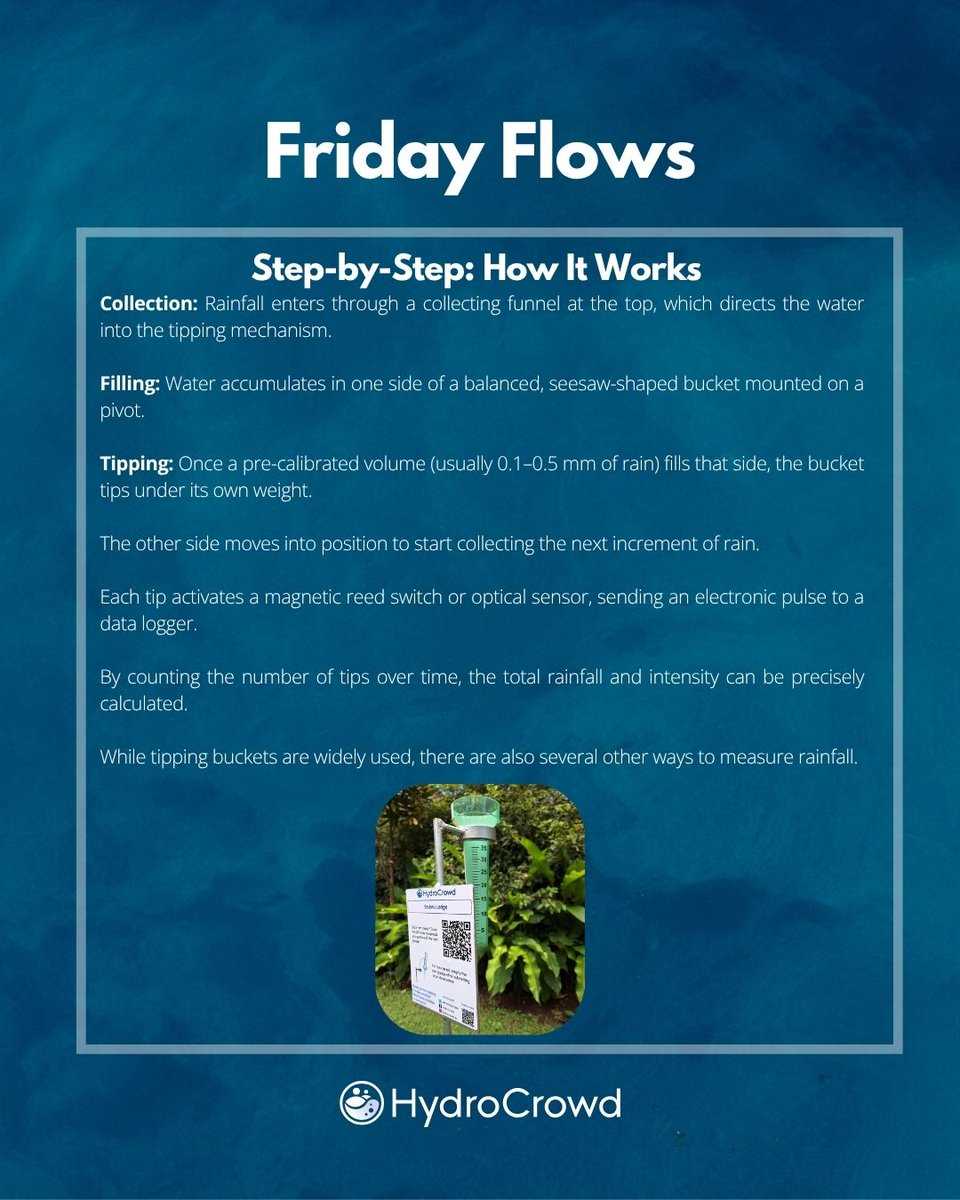
🌧️ Friday Flows: Ever wondered how we measure rain so precisely?
Meet the tipping bucket rain gauge, each tiny tip equals a set amount of rainfall 💧
Simple. Smart. Essential for real-time #WaterMonitoring & #CitizenScience.
🌍 #FridayFlow | Wetlands store up to 50x more carbon than rainforests, help regulate water, reduce floods & support 40% of global biodiversity.
From mangroves to marshes, they’re vital for climate, ecosystems & people.
🛠️ Protecting wetlands = protecting our future.
🌍 #FridayFlow | Urban heat islands are city areas hotter than nearby rural zones, day & night.
🌆 Caused by dark surfaces, lost vegetation & waste heat from traffic and AC.
🌡️ Leads to higher energy use, pollution & health risks.
🌳 Green roofs & trees can cool cities.
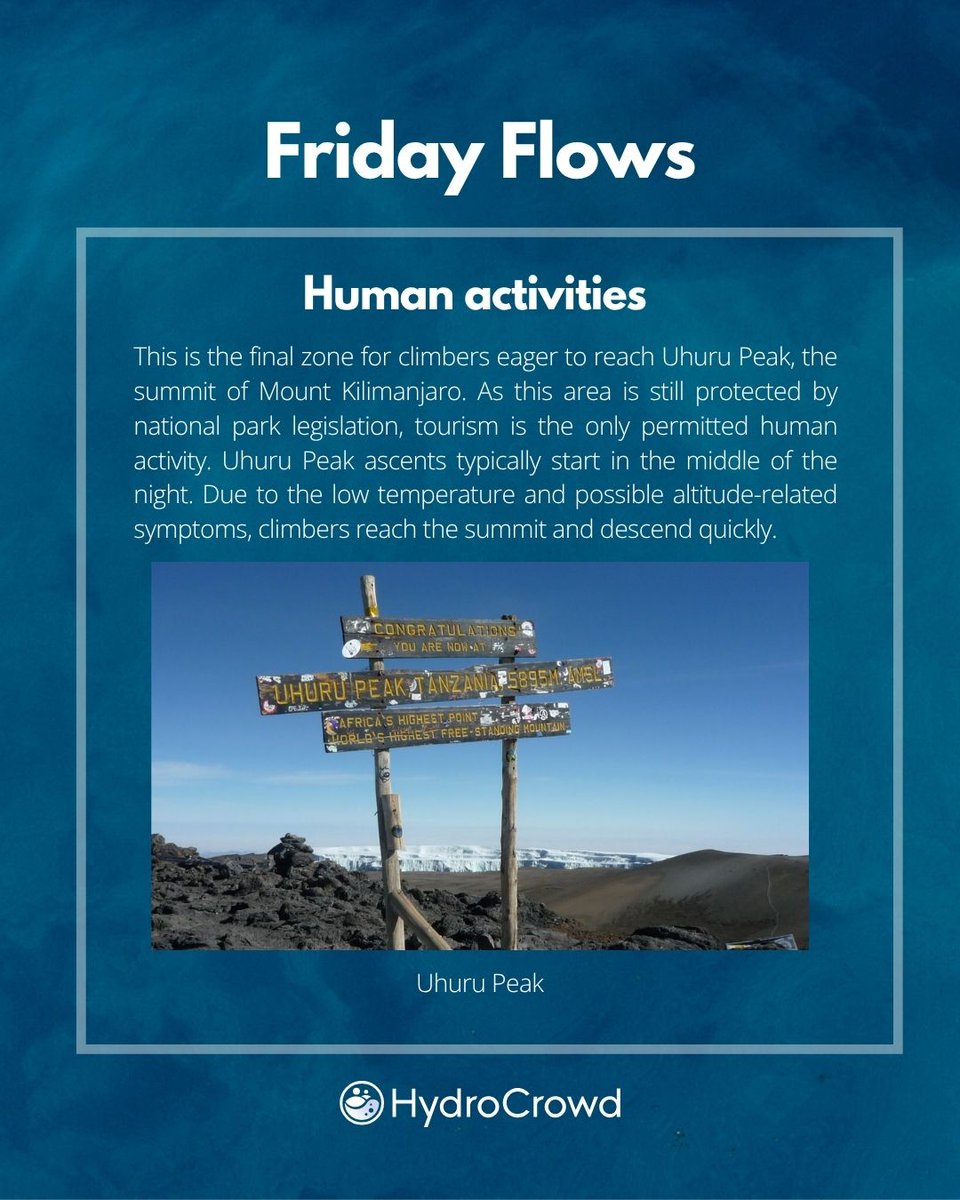
🌍 #FridayFlow | Kilimanjaro’s summit is an icy, arctic world of glaciers, scree & snow — too harsh for life, except a few lichens.
❄️ Uhuru Peak marks the final push for climbers & a visible sign of climate change as glaciers shrink.
📲 #HydroCrowd supports open data below!
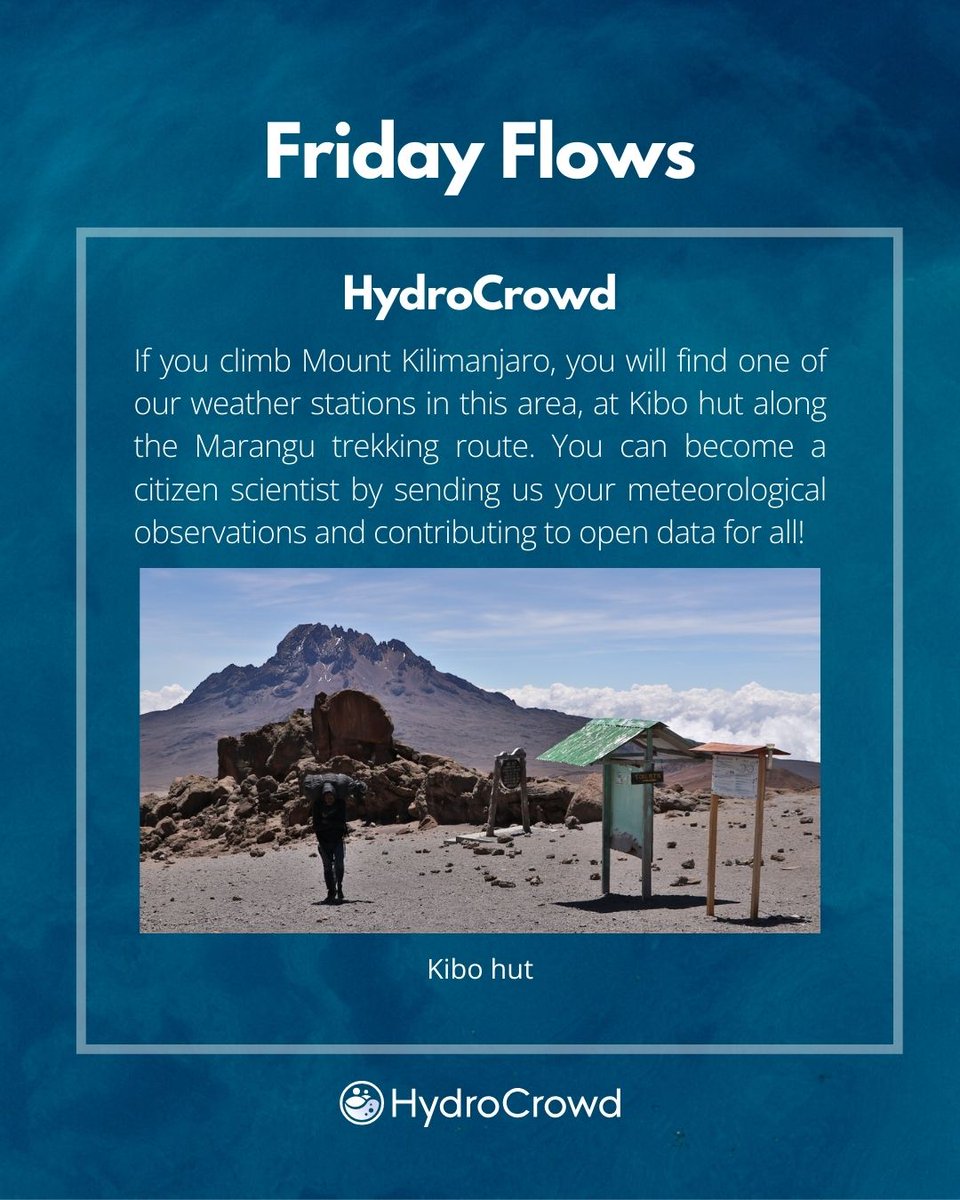
🌍 #FridayFlow | Kilimanjaro’s alpine zone is dry, rocky & extreme — hot days, freezing nights, and little rain.
🌾 Only tough plants like Helichrysum and a few birds and rodents survive here.
📲 #HydroCrowd’s Kibo Hut station supports open climate data & citizen science!
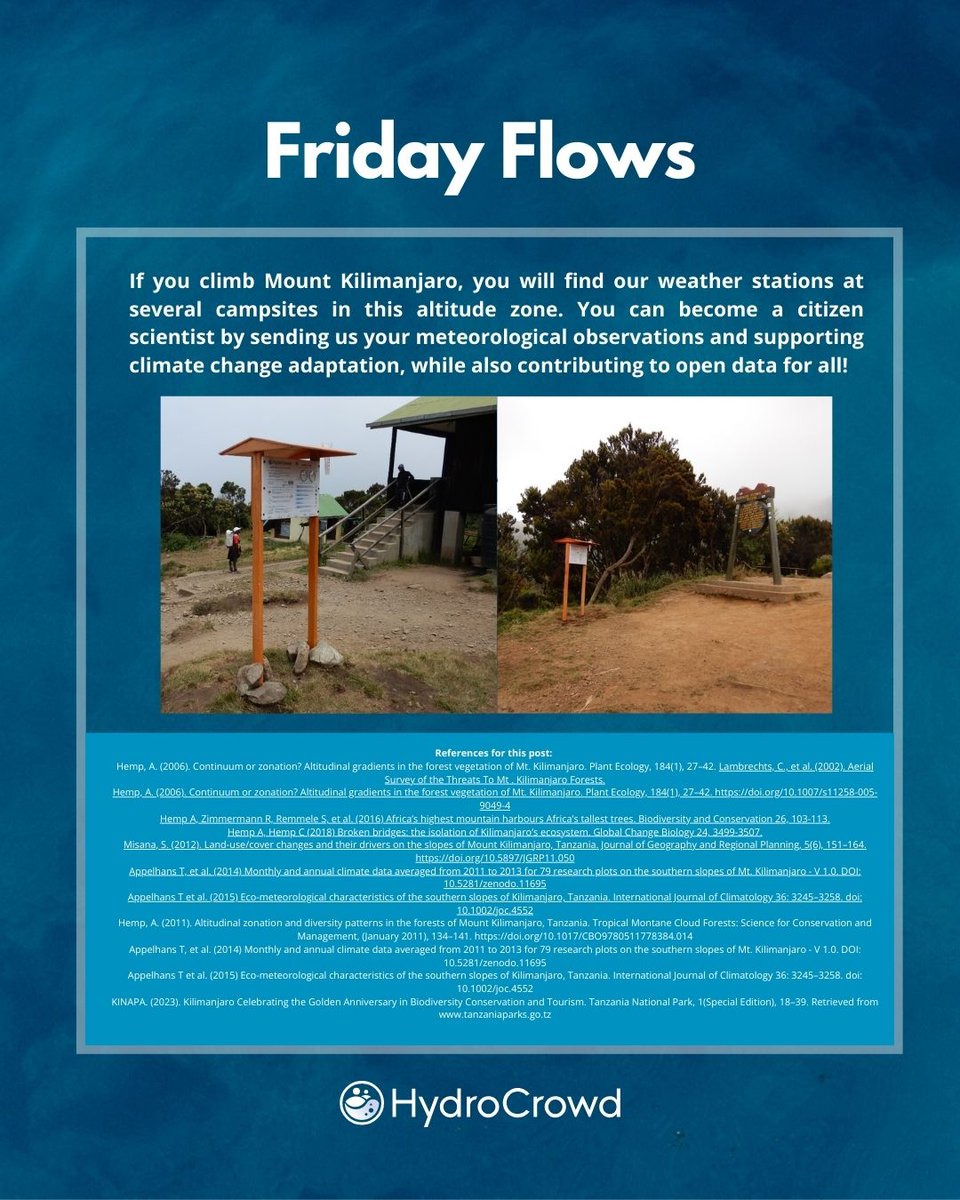
🌍 #FridayFlow | Kilimanjaro’s sub-alpine zone is cold, dry & fog-fed — a transition between forest & alpine desert.
🌾 Heather, Senecio & Giant Lobelia grow here, but fauna is scarce.
🔥 Fires shape the landscape.
📲 #HydroCrowd stations track climate & invite citizen science!
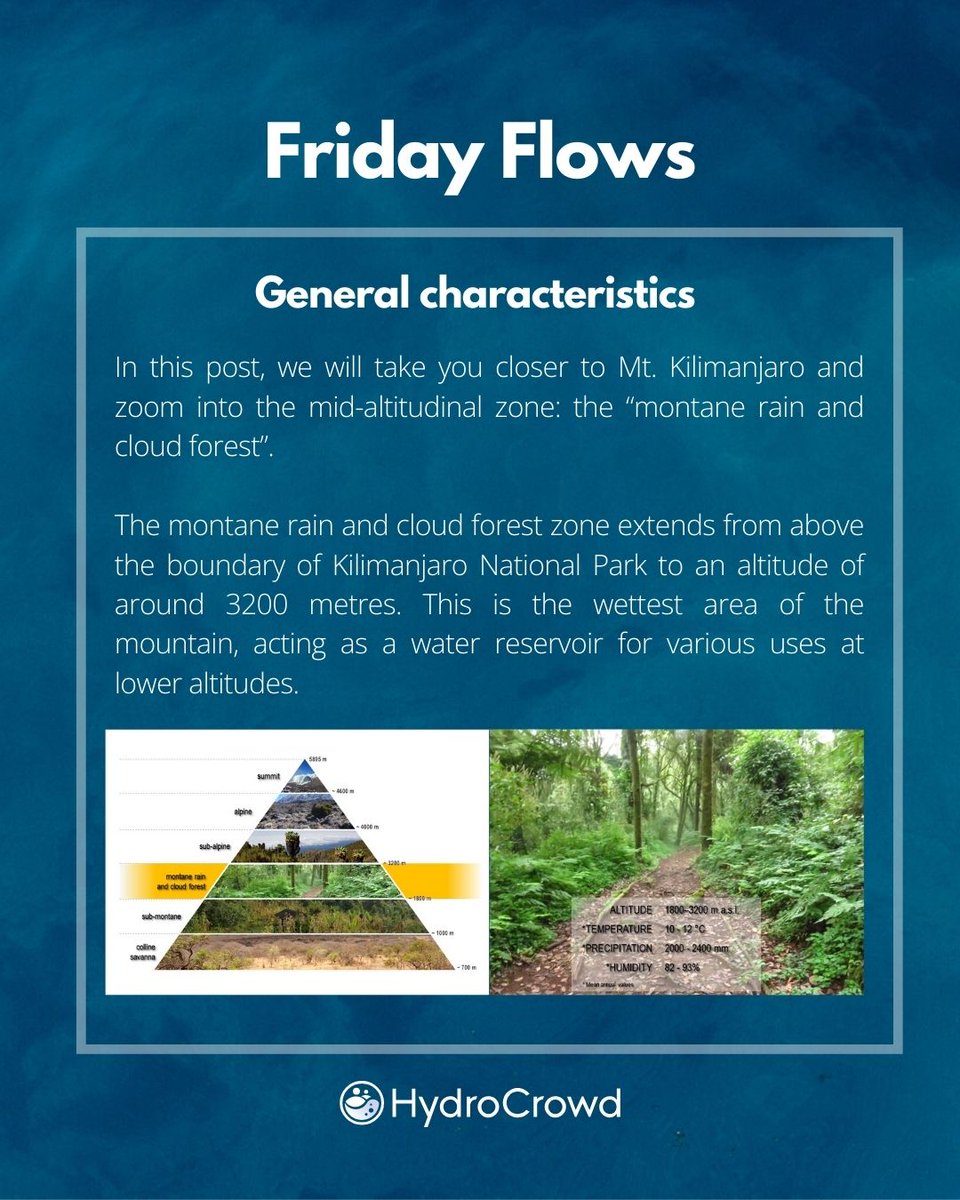
🌍 #FridayFlow | Kilimanjaro’s montane forest (up to 3200 m) is its wettest zone — a key water reservoir.
🌿 Giant camphor trees, orchids & blue monkeys thrive here. No farming allowed — only tourism.
📲 #HydroCrowd stations at Machame & Mweka camps support open climate data!