Check out this paper by Yan et al. on @HydroProcesses@WileyGlobal that developed a Bayesian-based integrated approach to quantitatively investigate uncertainties in meteorological inputs and model parameters using SWAT.
#Hydrology
https://t.co/pzg1skibdE
Check out this paper by Li et al. on @HydroProcesses@WileyGlobal that explored the influence of buliding patterns on the mitigation of urban flooding in Beijing.
#Hydrology
https://t.co/ZPnLQlnuzi
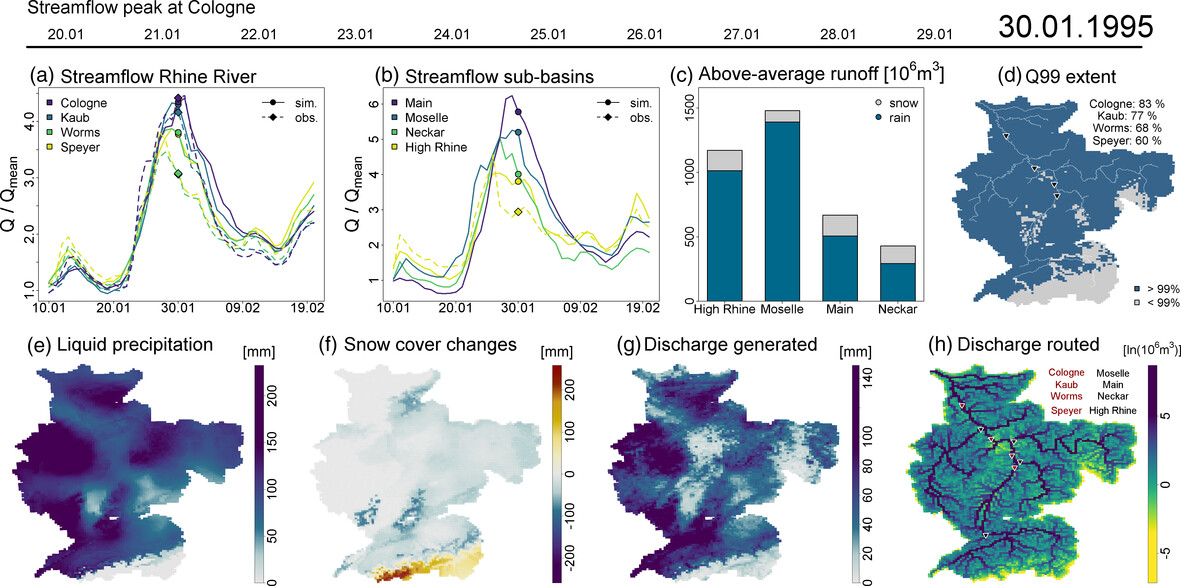
Check out this paper by Rottler et al. on @HydroProcesses@WileyGlobal that unravelled the genesis of historical floods via spatially distributed modelling in Rhine River basin. Flood prediction was also given based on projected climate forcing.
#Hydrology
https://t.co/nNvv03KMub
Check out this paper by Wang et al. on @HydroProcesses@WileyGlobal that revealed the frequency of potential streamflow drying up in multiple future scenarios using an integrated surface water-groundwater model.
#Hydrology
https://t.co/csE8TJOyLv
Check out this paper by Esparza et al. on @HydroProcesses@WileyGlobal that
partioned the ecohydrological fluxes into evaporation and transpiration using a distributed tracer-aided model STARR in a trophical catchment (2565 km2).
#Hydrology
https://t.co/22UcGljB15
Check out this paper by Chen et al. on @HydroProcesses@WileyGlobal that investigated water sources and groundwater recharge under different land covers using stable isotopes in the Loess Plateau, China.
#Hydrology
https://t.co/iDEGz0hnCb
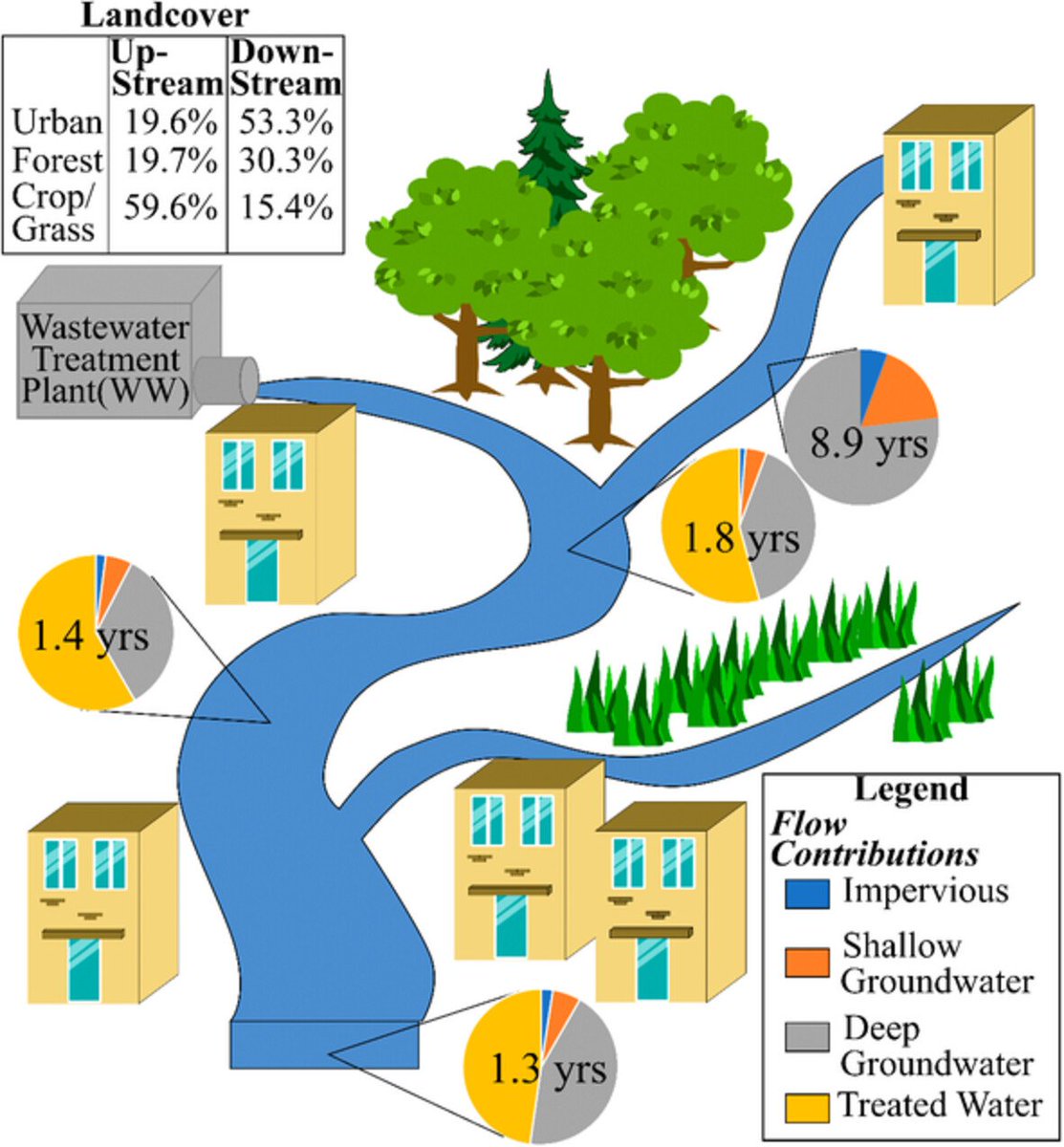
Check out this paper by Smith et al. on @HydroProcesses@WileyGlobal that used HEC-HMS with a tracer module and transit time modelling to evaluate the spatial and temporal variation of water flow paths and ages in Berlin, Germany.
#Hydrology
https://t.co/maQqAt5qC8
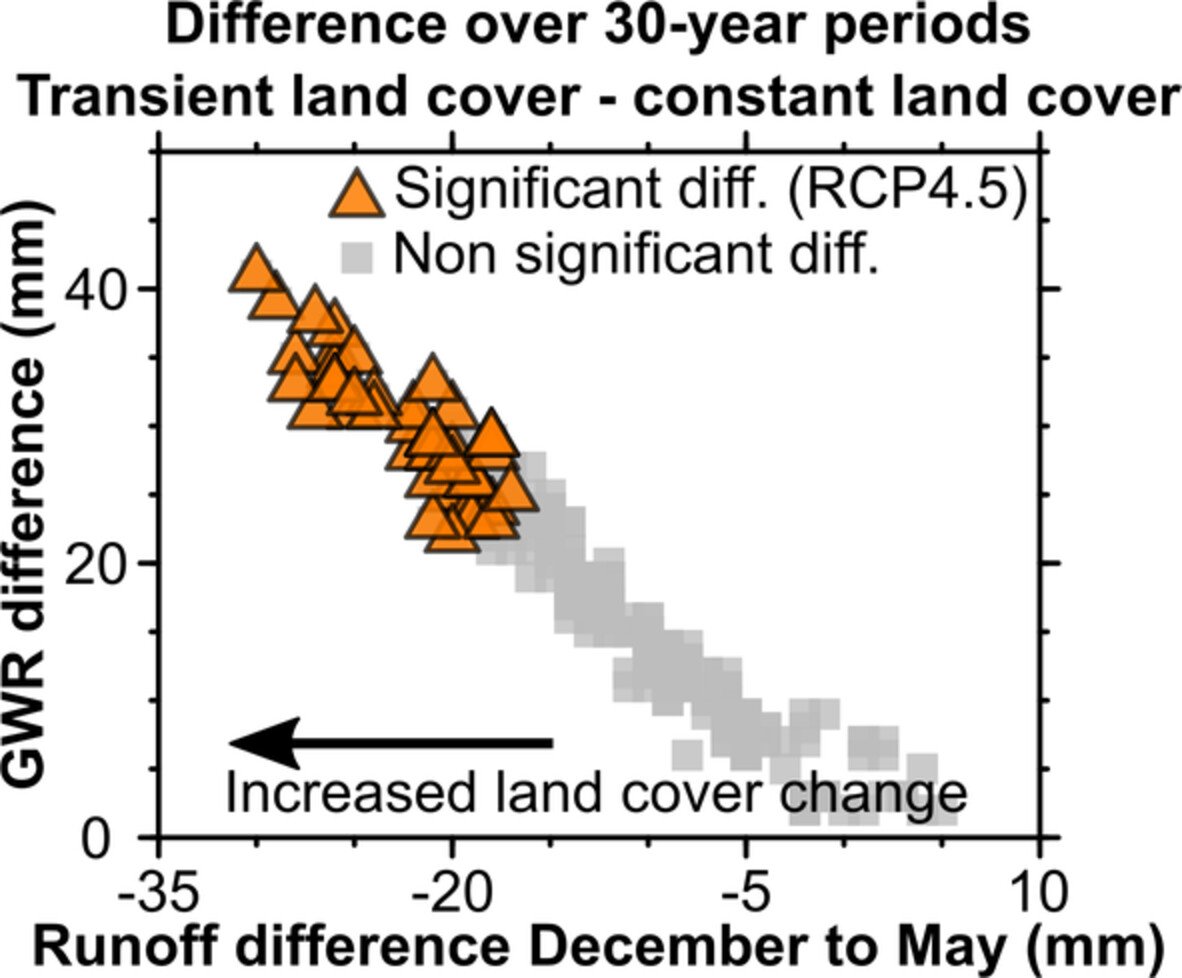
Check out this paper by Dubois et al. on @HydroProcesses@WileyGlobal that revealed the importance of including land cover changes to simulate groundwater recharge in an era of climate change.
#Hydrology
https://t.co/gFLhSDhtrE
Check out this paper by Riedel et al. on @HydroProcesses@WileyGlobal that modelled the response of recharge and plant physiology to climate change in a catchment used for drinking water production in western Germany (1971-2099).
#Hydrology
https://t.co/Ni51tsHLoA
Our 1st Editor’s choice award (selected per issue) goes to Holko et al. and their paper on runoff responses in hydrophobic soils. The article is also free to read for a period of 1 month on @HydroProcesses@WileyGlobal! https://t.co/ANfTPTddnU
Check out this paper by Bellagamba et al. on @HydroProcesses@WileyGlobal that investigated the atmosphere-hydrometeor isotopic exchange using the mechanism of acoustic levitation, where sound waves are projected vertically to levitate droplets.
#Hydrology
https://t.co/NWc6dbU3yp
Check out this paper by Requena et al. on @HydroProcesses@WileyGlobal that studied the effect of #climate change on maximum #precipitation which considered several temporal intervals for its incorporation into flood risk management in Spain.
#Hydrology
https://t.co/I94Z9GAcQO
Check out this paper by Gospodyn et al. on @HydroProcesses@WileyGlobal that investigated the young water fraction in three southern Ontario headwater catchments using the stable water #isotope.
#Hydrology
https://t.co/Tdu7nes4Kw
Check out this paper by Pelak et al. on @HydroProcesses@WileyGlobal that blended precipitation gauge observations with snowpack measurements to improve the basin-scale predictions of a spatially distributed, process-based model.
#Hydrology
https://t.co/VWZvNPQ3Sp
April 2023 was the 4th-hottest April for Earth in NOAA's 174-year record. Not only have the 10 hottest Aprils occurred since 2010 but April 2023 was also the 49th consecutive April and 530th consecutive month with global temps above the 20th-century ave.
https://t.co/hY0TnXOCrV
The World Meteorological Congress recognized the contribution of long-term weather observations to monitoring climate change, given the need for reliable historical records of the past to understand the present and prepare for the future. #MeteoWorld
🔗 https://t.co/bfpK1uxOih
Check our recent “hot topic” Special Issues; all papers enhancing hydrological process understanding incl. papers on Datascience Applications; Sediments in Rivers; Big data and ML; Soil-Plant-Atmosphere Interactions, Tropical Hydrology etc.
https://t.co/pYCZgW96H2
Remember to check out and submit to our HPEYE articles which is venue for presentations of short videos, animations or examples of data visualisation that focus on hydrological processes - great teaching tool as well @WileyGlobal https://t.co/iEdCEJ3scR
In a landmark decision at #MeteoWorld, the World Meteorological Congress has approved a new greenhouse gas monitoring initiative to support urgent action to reduce heat-trapping gases which are fuelling temperature increase.
🔗 https://t.co/bxp534aHXB
Attention all!!
IAH Lebanon is organizing a two-session webinar series on "The Use of Python in Groundwater Hydrology."
The webinars will be delivered on June 8th and 22nd, 2023 at 15:00 GMT.
For more details, refer to the poster.
@UN_Water@unescoWATER@iahgroundwater