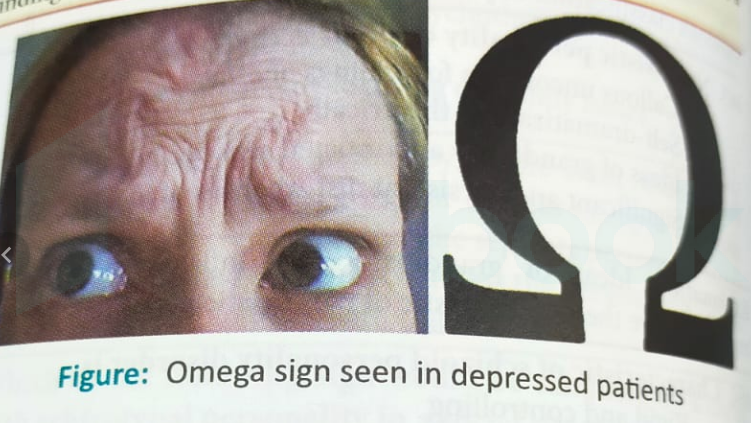
The mind recedes within,
In shadows of its own despair.
The light within cedes,
Space to the darkness bare.
Yet it never is snuffed out,
A pinprick does remain-
Akin an oasis in a desert,
The light within does prevail.
Tanta güevonada que se habla de este país y mírenlos, pura gente seria y comprometida, la próxima vez que hablen de la India recuerden que esa gente en pleno mierdero envió un hospital de campaña
I was fourteen, walking home from school in Paris with my French-American friend. Summer was around the corner and the heat was relentless.
‘You must be used to this heat,’ she said.
‘Not really,’ I replied. ‘We lived in the hills in India before we came to Paris.’
‘Hills? I didn’t know India had hills.’
‘We have the Himalayas,” I had replied. ‘The highest mountains in the world.’
She stopped dead.
‘You’ve got to be kidding! The highest mountains are in America.’
That expression of absolute certainty is etched into my memory even today.
Twenty years later, when I met her again in New York, I reminded her of that conversation. We couldn’t stop ourselves from laughing.
So anyway that afternoon we went home, and I opened my Philips Atlas and showed her the Himalayas.
‘You know,’ she said thoughtfully, ‘ I’d always wondered about that weird name. I just assumed it was some Native American name.’
A few weeks later, in geography class, while studying the Alps, our teacher announced they were the highest mountains in the world.
My newly enlightened friend proudly corrected her.
‘Actually, the Himalayas are.’
The teacher shot me a look that instantly identified the culprit behind this inconvenient fact.
Then, without missing a beat, she recovered.
‘Yes… but the Himalayas are the newest highest mountains. The Alps were the oldest highest mountains.’
Case closed.
At fourteen, I learnt one of life’s great lessons: The West doesn’t just write history, geography, science. It often decides it.
If something is ancient, extraordinary or foundational, somehow it must have originated in Europe or at the very least be explained through a European lens.
The Rig Veda became “Aryan.” A Middle Eastern Jew named Jesus acquired blond hair and blue eyes.
Even Panini, at one point, seemed to belong to everyone except India.
Now, apparently, Panini is Pakistani.
Progress, I suppose.
From ‘ that’s impossible’ to ‘it was ours all along.’
The script changes. The narrator doesn’t.
#SundayMusings
An Ideal Doctor—
Available 24 hours a day, 365 days a year.
Call him anytime -day or night. Send WhatsApp messages, reports, photos he should reply instantly.
Whenever you need him, whether it’s 5 a.m. or Diwali night, he must be available for treatment.
Every treatment he gives must be 100% accurate.
No disease should be missed.
No complications should ever occur.
Even the laws of nature should not apply to him.
OPD consultation fee should be almost nothing.
After all, we’re “just talking,” so why should there be any fee?
If admitted to the hospital, he should give huge discounts on operation charges,
so we can afford a Deluxe Room and order whatever we want from the canteen or Zomato for a party.
He should prescribe medicines that are easily available everywhere,
and one prescription should last for 4 years — no need for follow-ups, tests, or re-evaluations.
He should consider accepting even a single pen from a pharma company as a sin,
but somehow he must automatically stay updated with all the latest, most expensive, and most effective new medicines.
He must keep studying continuously,
attend conferences and CMEs regularly,
but his clinic should never be closed.
He should have the latest machines, state-of-the-art operation theatres, and the best staff,
but the treatment cost should be like that of a government hospital.
He must personally see every report,
give every patient enough time,
but we should never have to wait when our turn comes in OPD.
He should be available on phone, WhatsApp, video call, messages, and email on every platform,but should never expect that his time also has any value.
We should be able to question him on every piece of advice we get from Google, YouTube, neighbours, relatives, or social media,
but he should never feel bad about it.
He should have 15–20 years of education and experience,
but readily accept defeat in front of our 15-minute internet research.
His hospital should have five-star hotel-like facilities,
but when we see the bill, it should feel like government rates.
He should treat every patient like his own family,
but his own family should be used to the fact that the doctor stays more in the hospital than at home.
He should have no personal life.
No holidays.
No festivals.
No illness.
No tiredness.
And most importantly —
If everything goes well, it is God’s grace.
And if anything goes wrong,
it is only the doctor’s fault.
Because in the eyes of the public, an ideal doctor is someone who:
Carries the responsibility of God,
possesses the honesty of a saint,
and gives the availability of a machine.
Are you an ideal doctor?