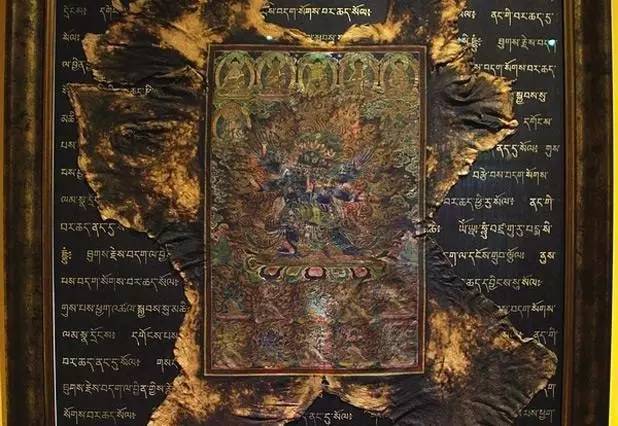
Once a death cult always a death cult.
Tibetan culture under Dalai lama:
Paintings made from the skin of a 16 year old girl, and drums made from skulls of slaves.
In 1872, an eighteen-year-old girl arrived in a remote gold mining camp in Idaho. Legally, she was not even considered a human being. She did not have money, she did not speak a word of English.
She had been sold by her starving family in China during a famine, smuggled across the ocean, and bought by a wealthy Chinese saloon owner to work as a slave.
Her birth name was Lalu Nathoy, but the miners quickly gave her a simpler name: Polly.
The odds against Polly were overwhelming. Under American law at the time, she was invisible. The local government considered her presence illegal, and the men in the camp viewed her as property.
But Polly possessed a quiet determination that no one saw coming.
While she spent long, exhausting hours scrubbing heavy canvas pants on a washboard, she listened. She memorized every word spoken around her.
She learned English in complete silence, without anyone realizing it until it was too late to stop her.
Polly looked at the rugged miners around her and noticed something crucial.
They had gold in their pockets, but absolutely nothing else.
They had no one to feed them properly, no one to nurse them when they fell ill, and no one to make the brutal survival in the canyon bearable.
She saw a massive void in the market and decided to fill it.
She started cooking, sewing, and providing basic medical care. Every single coin she earned from these side jobs went straight into the dirt floor underneath her bed.
While the men squandered their fortunes on gambling and alcohol, Polly was buying something much more permanent: her independence.
Her life took a dramatic turn when a local saloon keeper named Charlie Bemis was shot in the face during a gambling dispute.
The camp doctor took one look at the horrific wound and declared him a dead man. Polly refused to accept that. She boiled water, sterilized a common crochet hook, and spent hours carefully extracting the bullet from Charlie’s skull.
Against all medical logic, Charlie lived.
Eventually, Polly and Charlie left the mining camp together and moved to Hells Canyon, the deepest river gorge in North America.
The Snake River cut through granite walls so steep that sunlight only hit the valley floor for a few hours a day. On a piece of land that seemed impossible to cultivate, Polly planted a fruit orchard.
She grew cherry and apple trees against the harsh rock cliffs.
When miners down the river got sick with fever or suffered terrible injuries, Polly took them in, becoming the ultimate healer of the canyon.
But her greatest battle was yet to come. In 1892, the U.S. government passed the Geary Act, a harsh law requiring all Chinese residents to carry certificates of residence or face immediate deportation. Polly had no papers.
A federal official traveled down into the canyon specifically to deport her. But when he arrived, he saw the thriving orchard, the vegetable gardens, and the sick men Polly was actively nursing back to health.
Realizing she was the backbone of the entire canyon community, the officer sat at her table, filled out the residence paperwork, and signed it as her witness instead of arresting her.
Polly Bemis lived in her canyon until her death in 1933 at the age of eighty. Today, her cabin is protected as a National Historic Site, and the cherry trees she planted still bear fruit.
Polly Bemis proved that when your spirit is strong enough, human law becomes nothing more than a suggestion.
She began her life in America with absolutely nothing, yet she chose to fill the harsh canyon with sweet fruit, warm meals, and a safe place for people who had no one else to care for them.
Enslaved, isolated, and stripped of every legal right, Polly faced a harsh wilderness and an even harsher society with absolutely no fear. She chose to fight back not with malice, but by building a life of profound purpose and protecting those around her.
La gente realmente no tiene ni idea de que, en Asia, los japoneses fueron peores que los Naz1s y, a diferencia de los alemanes, los nipones no se arrepienten.
Nadie en el Este de Asia iba con Japón.
우리 외할머니 어릴때 위안부로 끌려가실뻔함 내 증조할아버지(할머니의 아빠)가 안된다고 사정을 하면서 그 일본순사들한테 집에 있는 돈 될만한 물건이랑 돈 죄다 내줘서 겨우 막으셨댔음 할머니 집이 어릴땐 좀 잘사셨어서... 자발적 창부 같은 소리하네 이 시발새끼들이 그냥 잘못을 인정하라고
Vocês de fato entendem de invasão, não é atoa que uma das suas maiores vergonha é conhecida como o Estupro de Nanquim, onde vocês estupraram, mataram, torturaram e brincaram de jogar bebês para o alto, tentando apará-los ou mutilá-los com suas lâminas.
São odiados com razão.
🚨 HOLY CRAP! Father GOES OFF against a Texas school giving out SHARIA pamphlets and Hijabs
"Hijabs, Qurans, Sharia? Sharia treats half this room like SH**! This is NOT A MUSLIM NATION. This is a CHRISTIAN NATION. FIRE the principal!"
REPEL ISLAM! 🔥
2600 mezquitas en Francia.
2800 mezquitas en Alemania.
150 mezquitas en Japón.
Ninguna Iglesia en Arabia Saudita.
Somos tolerantes con los intolerantes.
Tô vendo os japoneses tentando esculachar os brasileiros , falando de civilidade , moral, ética.
Amigos, vcs criaram a unidade 731 e fizeram atrocidades contra os seres humanos. Além disso, ainda tinham a prática bizarra das " mulheres de conforto".
O passado da ocupação japonesa é tenebroso e vem querer falar do meu país?
Menos
Florida Imam
“We convert 3 churches into mosques and we looking for more”
“One day Florida will become Muslim”
“May Allah give victory to Islam in this country”
What else do you need to wake up?
Os japoneses nessa briga mostraram que são mais fascistas e racistas que os argentinos e os americanos juntos, impressionante hahahahaha, realmente uma vez fascista sempre fascista