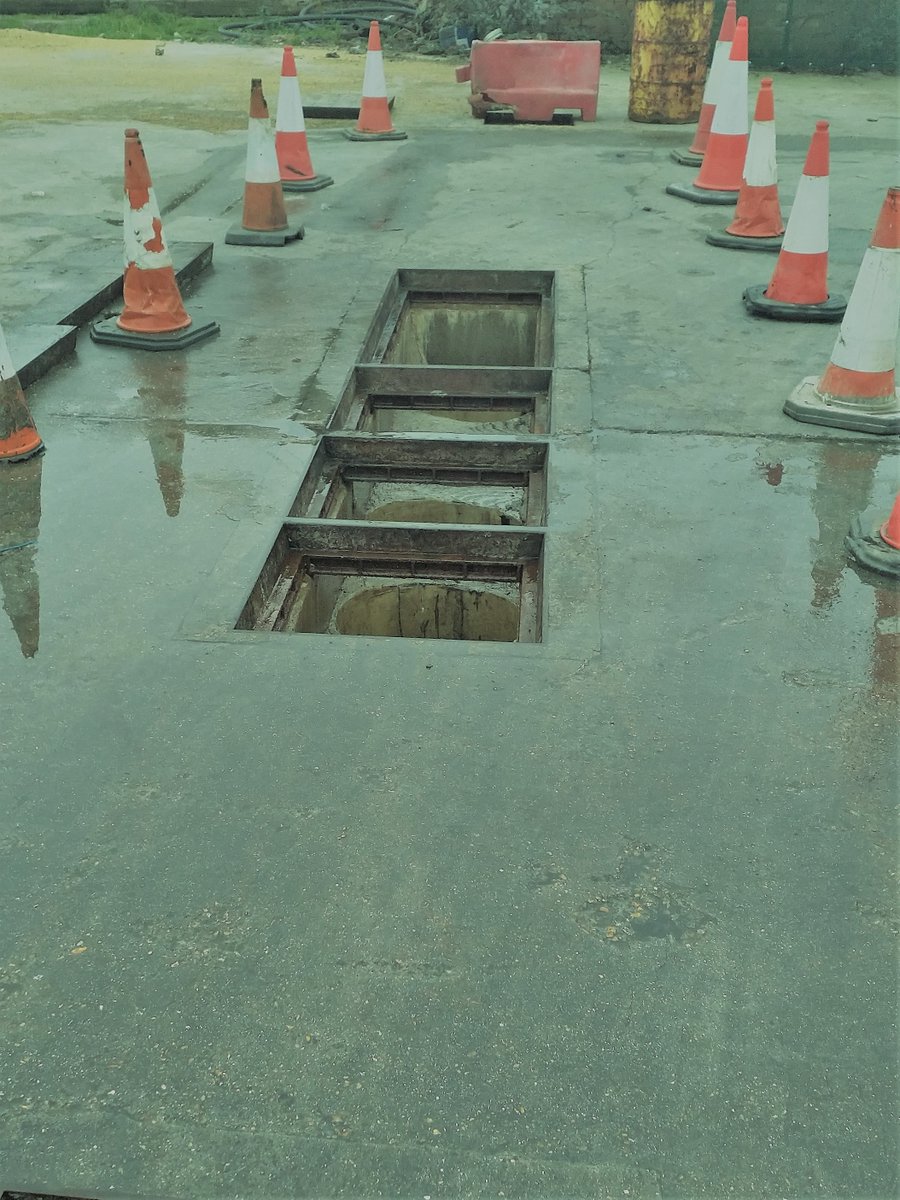
Many organisations are reviewing their pollution prevention routines to ensure they meet the industry standards. IAS Enviro support this with planned, evidence‑based maintenance and clear reporting after every visit.
IAS Enviro help sites across automotive, logistics, manufacturing, retail, and construction keep their interceptors, washbays, weighbridges, and bunded areas fully functional and compliant.
Pollution prevention is our overarching aim.
Interceptor cost-saving suggestion:
Getting an accurate, realistic quote - based on a recent inspection - is vital.
Guess work is a waste of time and money.
Fix a problematic tank the first time, with the national experts in interceptors and liquid waste.
Spades & elbow grease required!
The site generates large volumes of fine plastic material. Overlooked for too long + months of rain = the product filled the interceptor, until it was level with the covers.
This full retention interceptor before & after a full clean out.
Take notice of the small signs your interceptor is not functioning as it should:
Slow drainage/ pooling water
Strong oil/ fuel odours
High oil/silt levels
Alarms not activating (or activating constantly)
Oil sheen in downstream chambers
Damaged/ floating coalescer filters.
Do you work on a large industrial site?
In a SHEQ, facilities/operational management role?
Is your site located near a waterway? With heavy site traffic/pollutant filled product on site?
Save this post. To find us later.
Knowledgeable team - Nationwide liquid waste solutions
High‑level alarms and closure devices are the "distress flare" of any separator system.
If they don’t activate when needed, the consequences can be serious.
Testing them regularly is one of the simplest, most effective pollution‑prevention steps any site can take.
Every site has its own run-off fingerprint.
Understanding your site’s runoff profile is the first step in choosing the right containment, filtration & waste handling approach.
There’s no one‑size‑fits‑all in pollution prevention.
Bunds! They exist to contain a spill after something has already gone wrong — a leak, rupture or valve left open.
In one sense, a bund is the “catch‑all” safety net that prevents contamination & polluting spills.
They're not meant to prevent a spill - they're meant to contain it.
Most of the time, an interceptor service is straightforward. But, soemtimes we lift a lid & find something that isn’t liquid at all — compacted silt, damaged filters, cracked wall, or the occasional “mystery object” that no pump can touch. That’s usually when we get the call.
Interceptors on your site? Compliance v Cost - the conflicting priorities faced by many industrial facilities/operations managers.
https://t.co/aOR0tdON2O
If you wondered what we're doing down there>
This is the final chamber before the outlet — the last point in the system after all filtration stages. As part of the internal clean, we fully clear this chamber to remove any remaining build‑up & ensure clean, compliant discharge.
A 6‑monthly service keeps everything running smoothly. During each visit we:
• Assess waste levels
• Inspect chambers and filters
• Provide a clear service report for your records
Routine visits are the best way to avoid pollution incidents & keep sites operating safely.
Here’s a look inside the final chamber after the filters. You can see where fine sediment has made its way through. This step is one of the last phases of our internal clean, ensuring every chamber is cleared & the system is operational once again.
A separator failure is expensive.
A 5‑year integrity test isn’t.
With SFG20 now reflecting BS EN 858‑2:2003, the expectation is clear:
✔ Full empty
✔ Professional inspection
✔ Integrity test every 5 years
Prevention costs a little.
Clean‑up costs a lot.
IAS Enviro support FM & SHEQ teams across the UK who value clarity, reliability, and a partner who can handle both routine inspections and more challenging technical scenarios.
Your interceptor isn’t just another asset on a schedule.
BS EN 858‑2:2003 states that interceptors should be integrity‑tested at least every 5 years.
This ensures:
• Your system is watertight
• No pollutants escape
• You stay aligned with best practice
If you can’t remember the last time your tank was inspected, it’s time.
We provide a BS EN 858‑2:2003‑aligned audit delivered by experienced specialists.
A typical audit includes:
-Measuring oil/ silt levels
-Checking alarm & safety device functionality
-Reviewing coalescing elements & internal components
-Inspecting inlets, outlets, chamber
An interceptor that hasn’t been emptied or tested can leak silently for years before anyone notices.
The updated SFG20 guidance,sets a clear expectation:
👉 Integrity testing every 5 years.
👉 Routine emptying and maintenance.
Small actions. Big environmental protection.