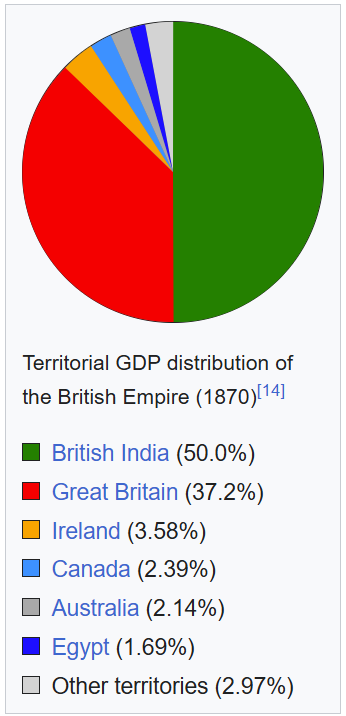
In 1870, at the height of the British Empire's glory, India made up 50% of its GDP. So yes, India quite literally made the British Empire what it was. If this is a point of embarassment for Britbongs that's too bad. History doesn't care about your feelings.
"The United States, recognizing the twilight of its unipolar moment, is executing a ruthless geopolitical maneuverer: it is actively cannibalizing the economic vitality of Europe and attempting to shatter the Russian state, all as a necessary prelude to isolating, weakening, and ultimately defeating its only true systemic rival, the People’s Republic of China. This is not a series of accidents; it is hegemonic logic in its purest, most draconian form.
In 1904, Mackinder articulated the “Heartland Theory,” positing a nightmarish scenario for maritime powers like Britain (and later, the United States) i.e. the unification of the Eurasian landmass. Mackinder warned that if a single power or alliance could merge the vast natural resources of the Russian interior with the technological and industrial might of Western Europe and the demographic weight of East Asia, it would create an impenetrable continental behemoth that would inevitably marginalize and destroy the peripheral maritime empires.
The United States recognized that it could not confront a rising China if Beijing was backed by the inexhaustible resource vault of a stable Russia and the advanced technological and capital markets of a cooperative Europe. The Eurasian knot had to be severed.
By aiming to shatter Brussels’ centralized regulatory firewall and fragmenting Europe into balkanized, insecure nation-states, the transatlantic architects aim eliminate the independent continental bloc of European Union, reducing to a divided, re-militarized Europe into disposable cannon fodder to be hurled directly into a catastrophic, mutually assured meatgrinder with Russia.
In South Asia, Washington seeks the subtle vassalization of India, viewing the rising behemoth not as a sovereign equal, but as a vast, captive market for American corporations and a deep reservoir of resources to be exploited.
Just as Europe was pushed into the proxy meatgrinder of Ukraine, American strategists harbour a cynical desire to cannibalize India by baiting it into a bleeding, protracted Himalayan conflict with China a devastating trap that both New Delhi and Beijing must resolutely avoid to preserve the promise of the Asian Century.
The larger logic is cannibalisation. As Russia re-emerges, China rises and a multipolar order steadily displaces unipolar arrangements, Washington can no longer underwrite its global posture alone.
The burden-sharing network is an attempt to liquidate the remaining fiscal, industrial and political capital of allies faster than the new order can consolidate."
> I go on TikTok try learn America culture.
> see much young white America peoples say "six seven. hahahaha. six seven"
> I be confusion. "What this six seven"
> I ponder long time. I realize profound wisdom.
> America white young peoples be despair. They know they are fucked. Only chance for they have good life is if every thing collapse so they can rebuild.
> six seven really mean "six point seven percent interest rate"
> If Fed raise interest to 6.7%, economy collapse. Every thing begin new.
> phoenix can not rise from old brick building. Phoenix only rise from ASHES
> "Six Seven" really be young American peoples war cry for crash every thing.
oh my god. I too support:
"SIX SEVEN. SIX SEVEN. SIX SEVEN. SIX SEVEN"
The hero pilot who saved his aircraft passengers from a terrorist is everything Khalistanis and their Pakistanis jijus hate - Hindu, Brahmin, and Gujarati 🕉️⚔️😎
यह वीर पायलट जिसने अपने विमान और यात्रियों को आतंकवादी से बचाया - गुजराती हिंदू ब्राह्मण हैं। रो लो खालिस्तानियो!😭
Captain Smit Machchhar is a HERO.
In the face of the gravest danger and despite being seriously injured, he showed immense courage and an unwavering resolve to protect the lives of others.
His valour helped save hundreds of lives and avert a great tragedy.
India is proud of Captain Machchhar.
Praying for his speedy recovery, renewed strength and good health.
My salute to the Indian pilot Captain Smit Machchhar for his extraordinary bravery.
Despite being stabbed and seriously injured, he fought back, resisted, opened the cockpit door, and enabled passengers and crew to overpower the attacker — preventing a catastrophic mid-air disaster.
He saved the lives of 174 people, including Israeli citizens and other nationals.
I wish Captain Machchhar a speedy and full recovery.
He is a true hero.
The central government will borrow ₹1.2 lakh crore less from the market than originally budgeted this year. Lower government borrowing can leave more savings available to fund private investment. This deserves more recognition.
It comes as major economies, from Japan to the US, grapple with large deficits and growing debt pressures. In France, far-left leader Mélenchon even proposes cancelling government debt held by the central bank to make room for more spending.
Fiscal discipline matters even more in an uncertain world. India’s commitment to it receives far too little appreciation. https://t.co/KWkaMHgUXu
The safest asset on Earth is being repriced as junk right now.
I've spent the week reading every explanation for why US Treasury yields just hit a 19-year high, the 10-year over 5% and the 30-year the highest since 2004.
The reasons everyone gives are a strong economy, sticky inflation, and a hawkish Fed. All of it true, and all of it missing the real point. Even the analysts giving those reasons admit they no longer add up.
The world is starting to refuse to fund the United States, and the bond market is where you can watch it.
Start with three facts almost nobody stacks together:
For the first time this century, foreign money is pouring into American stocks faster than into American government debt. Outside a couple of brief panics, that has never happened.
What that means: The world still wants to own a piece of American companies. But it no longer wants to lend the American government money.
The buyers who used to show up no matter what are walking away. For decades, foreign central banks like China and Japan bought US debt at almost any price. Their share has fallen to a record low.
What is left are hedge funds and traders who want a real yield and sell the moment they don't get one. America now funds itself from the most fickle money there is.
And this week, Washington reached into the market to steady it and got told no. As yields spiked, the Treasury doubled its own bond buybacks to prop up prices.
And it failed.
Yields blew past 5% anyway. The government tried to set the price of its own debt, and the market overruled it.
And here’s what makes it undeniable:
China is the economy everyone calls a slow-motion collapse, the deflation, the property crash, all of it. China borrows for ten years at 1.7%. The United States, the strongest economy on Earth, now pays over 5%.
The market is charging America more to borrow than the country we are told is "falling apart".
A genuinely risk-free asset does not have to bribe people to hold it. But THIS one increasingly does.
So strip the inflation label off this. What's happening is a buyers' strike, in slow motion, on the one asset the entire global system treats as risk-free.
And the higher yields go, the more of the federal budget gets eaten by interest.
That forces more borrowing. That dumps more debt onto a market that already doesn't want it. And that pushes yields higher again. It feeds on itself.
We have even seen a smaller version of this recently:
In 2022, the British bond market decided it did not trust a government's borrowing plan and broke that government in 49 days. That was a mid-size country. The same force is now stirring in the largest and supposedly safest debt market in the world, and a failed intervention this week is the first crack in the floor.
The promise the whole system rests on, that lending to America is as safe as holding cash, is being marked down right now, one auction at a time, and the buyers are the ones doing it.
Almost everyone is still calling it a rate move…
Great Britain got reduced with two world wars and had to give up empire.
US got bankrupt with the war on terror that led to the 2008 financial crisis.
GB had the US to transfer the empire. US ensured no one else to transfer the burden to.
Now we are here.
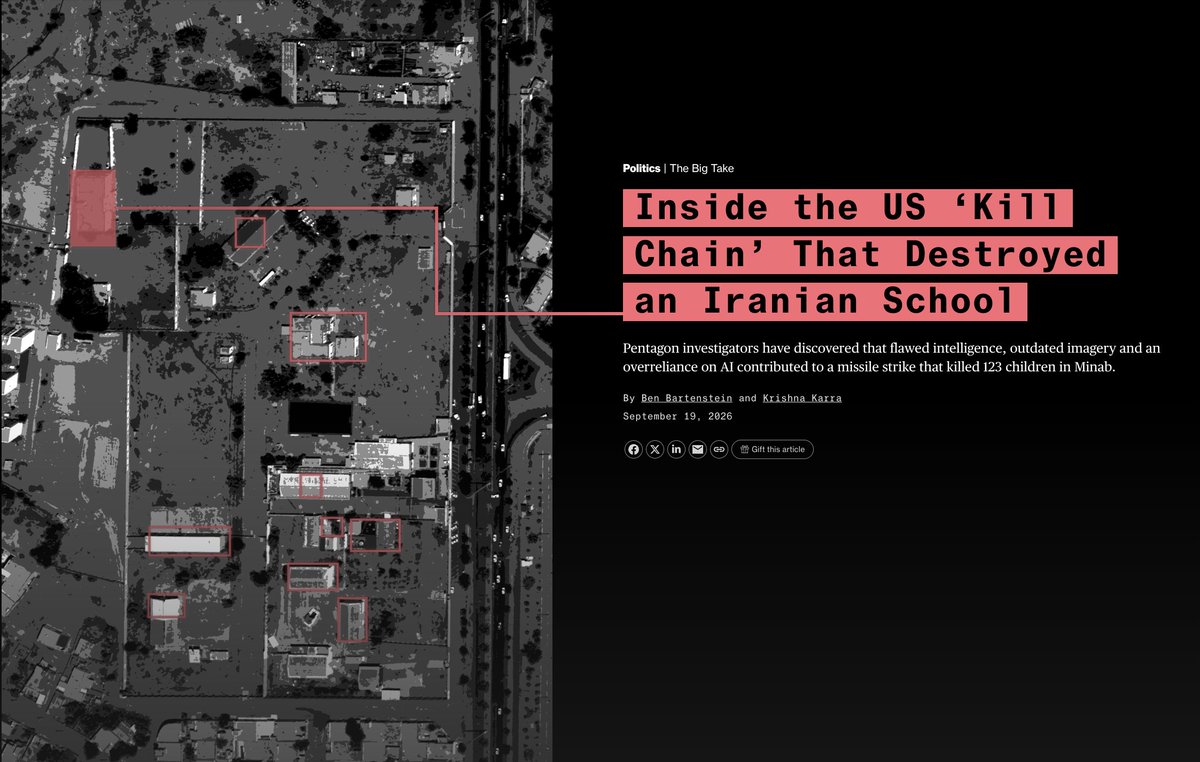
Palantir and Anthropic targeted Minab school, aided by Pentagon stale data and Hegseth psychopathy stripping target review staff.
And it was a triple tap, not a double tap. Children killed on first strike. Parents killed by second strike getting surviving children. Rescue workers killed by third strike rushing in after second strike.
Unforgivable.
Bloomberg just dropped the most disturbing investigation I have read this year, and every AI builder should read it and take it seriously.
On February 28, two Tomahawk missiles hit an elementary school in Minab, a small town in southern Iran. 156 people died. At least 123 were children. The Pentagon knew within hours that it had bombed a school.
The school had its own website. It was labeled on Google Maps. You could see the soccer pitch from a satellite view. You could see the brightly painted walls. Any 12-year-old with a browser could tell what the building was.
The AI system could not.
Inside US Central Command, personnel were using Palantir's Maven Smart System. It is an AI targeting platform running on a $1.3 billion Pentagon contract, and embedded inside it is Anthropic's Claude.
On day one of the war, more than 1,000 targets went through it in 24 hours. Work that used to take a team hours per target got compressed into minutes.
The satellite imagery Maven was pulling from was seven years old. The site was still tagged in the database as an Islamic Revolutionary Guard facility.
The system spat it out as a recommended day-one target. Humans signed off. The first missile flew. Then a second one landed minutes later to hit the people who came to help.
Investigators later found that some Central Command staff had assumed Maven would flag stale intelligence for them. It did not. Nobody had told it to.
Palantir told Bloomberg the government is responsible for the underlying data. The Pentagon's civilian harm mitigation team, the people whose actual job is to catch a target like this, had been cut back before the war started.
This is not AI going rogue. This is the opposite.
This is AI doing exactly what it was built to do at exactly the speed it was built to do it. And a school full of little girls got vaporized because the humans in the loop trusted the machine more than they trusted their own eyes.
I keep thinking about the version of this story that comes next. What happens when the system is faster. When the target list is not 1,000 in a day but 10,000. When "review" becomes a button the operator has three seconds to hit before the next target loads. When there is no human left slow enough to notice that a soccer pitch is not a helipad.
We are not talking about a spam filter mislabeling an email. We are talking about a system that turned a seven-year-old database entry into two cruise missiles landing on children in the middle of a morning class.
A UN-backed panel has now called it a potential war crime.
In terms of children killed, it is the deadliest American targeting error of the entire 21st century. And according to Bloomberg, some of Defense Secretary Hegseth's own advisors are worried that too much public scrutiny of Maven might slow down its adoption inside the Pentagon.
Read that last line again.
If you build this stuff, you own what it does. You do not get to hide behind "the government owns the data." The whole pitch of your product is that speed and integration save lives. When it takes them instead, that is also on you.
I am not against AI in defense. I am against AI in a hurry. Speed is the entire mechanism that made Minab possible. Every guardrail we already know how to build takes time, and time is exactly what the system was designed to eliminate.
So here is the question I have not been able to stop asking, and I genuinely want to know what you think.
If a piece of software helped kill 123 children in a single morning while behaving exactly as designed, what does "responsible AI" even mean anymore?
Saudi Arabia is learning a lesson that money and American weapons could never erase: you cannot buy your way out of geography.
For years, Riyadh behaved as though its oil wealth and its alliance with Washington made it immune to the consequences of its regional policies.
It accumulated weapons, hosted foreign forces and poured billions into military adventures while treating Iran as an enemy to be contained.
Now the bill has arrived.
With the Strait of Hormuz effectively strangled and the kingdom’s vital East-West oil pipeline to the Red Sea disrupted, Saudi Arabia’s ability to move its most valuable commodity has been severely compromised.
The kingdom can possess some of the world’s largest oil reserves, but reserves sitting underground do not pay the bills.
Oil has to reach the market.
And suddenly, the country that imagined itself the dominant power of the Gulf may have to knock on Tehran’s door.
That is the bitter irony.
Iran, the state Saudi Arabia spent years trying to isolate and contain, now possesses enormous leverage over the regional environment in which Saudi Arabia must operate.
If Riyadh wants relief, it may have to negotiate with Tehran,and Tehran will not be doing favors out of charity.
Iran will demand a price.
It will demand political concessions. Security guarantees.
Changes in Saudi regional policy.
An end to support for hostile operations.
Whatever the final bargain looks like, one thing should be obvious: Saudi Arabia will be negotiating from weakness, not strength.
And what of the United States?
The American military presence has not prevented this strategic nightmare. Billions spent on weapons and decades of dependence on Washington have not abolished the vulnerability created by geography.
American bases cannot make the Strait of Hormuz disappear.
They cannot permanently protect every pipeline.
They cannot manufacture a stable regional order through military force.
So perhaps it is time for Riyadh to ask the question it has avoided for generations:
Why should Saudi Arabia continue hosting US military forces when those forces have failed to provide the strategic security they promised?
The answer should be a complete rethink.
Get rid of the permanent American military footprint.
Stop treating the Gulf as an arena for American-Iranian confrontation.
Stop imagining that endless weapons purchases constitute a foreign policy. And start negotiating directly with the countries that Saudi Arabia actually has to live beside.
Because Iran is not going away.
Iraq is not going away.
Yemen is not going away.
The Gulf is not going away.
Washington can send aircraft carriers.
It can deploy troops.
It can sell another hundred billion dollars of weapons.
But it cannot change the map.
Saudi Arabia's real security will ultimately have to come from diplomacy, regional arrangements and mutually understood limits,not from renting an American shield while antagonizing its neighbors.
The age of assuming that Washington will solve every Saudi security problem is over.
If Riyadh now has to negotiate with Tehran, it should negotiate seriously.
And if that means paying a steep price for years of strategic miscalculation, perhaps that is precisely the point.
Sometimes the price of avoiding diplomacy is eventually having to negotiate from your knees.
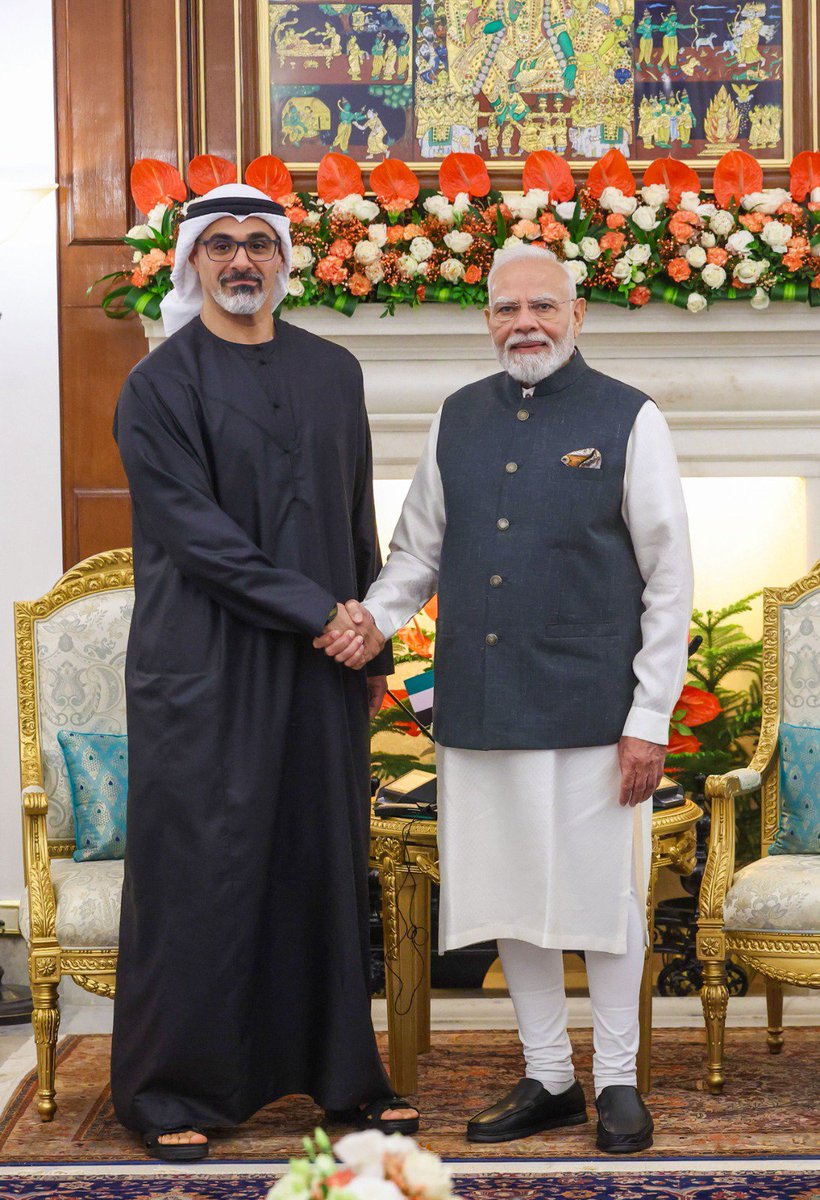
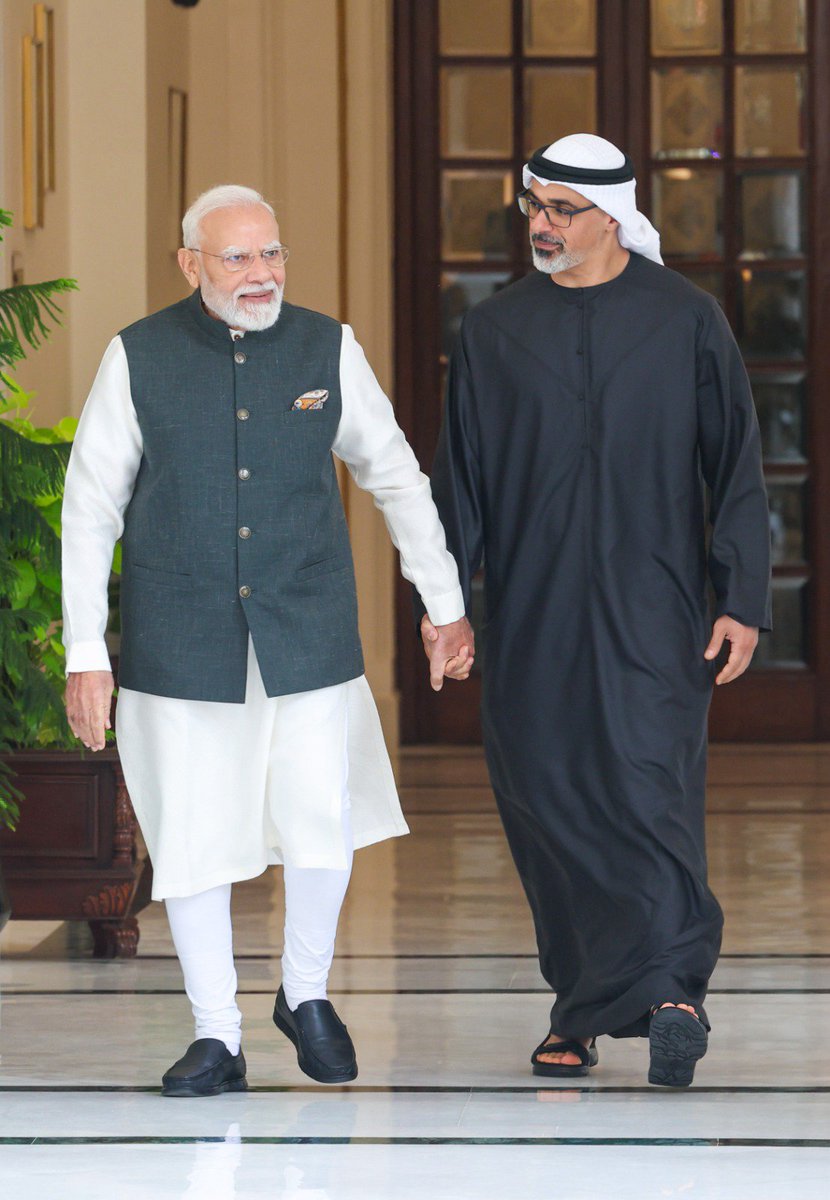
India-UAE ties have been transformed over the last few years. Now, we are raising our ambitions even higher.
Delighted to meet His Highness Sheikh Khaled bin Mohamed bin Zayed Al Nahyan.
Discussed taking our Strategic Partnership forward across defence, AI, space, critical minerals, energy, food security and connectivity.
From investments ties to new possibilities in strategic energy infrastructure and IMEC connectivity, there is immense potential ahead.
At a time of uncertainty in West Asia, a strong India-UAE is a symbol of stability, prosperity and peace.
شهدت العلاقات بين الهند والإمارات تحولاً كبيراً خلال السنوات القليلة الماضية، ونحن الآن نرتقي بطموحاتنا إلى مستويات أعلى.
سعدت بلقاء سمو الشيخ خالد بن محمد بن زايد آل نهيان.
ناقشنا سبل دفع شراكتنا الاستراتيجية قدماً في مجالات الدفاع، والذكاء الاصطناعي، والفضاء، والمعادن الحيوية، والطاقة، والأمن الغذائي، والربط الاستراتيجي.
تنتظرنا آفاق واعدة وإمكانات هائلة، بدءاً من العلاقات الاستثمارية ووصولاً إلى الفرص الجديدة في البنية التحتية الاستراتيجية للطاقة ومشاريع الربط ضمن الممر الاقتصادي بين الهند والشرق الأوسط وأوروبا (IMEC).
في ظل حالة عدم اليقين التي تشهدها منطقة غرب آسيا، تُمثّل العلاقة القوية بين الهند والإمارات رمزاً للاستقرار والازدهار والسلام.
@KBM_ALNAHYAN
A cultural connect at the Iran Pavilion 🇮🇷 at BRICS Bazaar, New Delhi.
Zahra Pezeshkian, daughter of Iranian President Masoud Pezeshkian, and her husband Hassan Majidi visited the pavilion and interacted with the artisans and representatives showcasing Iran’s rich art, crafts and cultural heritage.
#BRICS2026 #BRICSBazaar #Iran #India
The reason I’ve always been an Ajay Devgn fan is simple: the man never seemed interested in fitting in.
He did what he wanted, said what he wanted, made his films, and then disappeared back into his shell.
No desperate need to be seen.
No compulsive need to be liked.
No fucks given about whether the room approved.
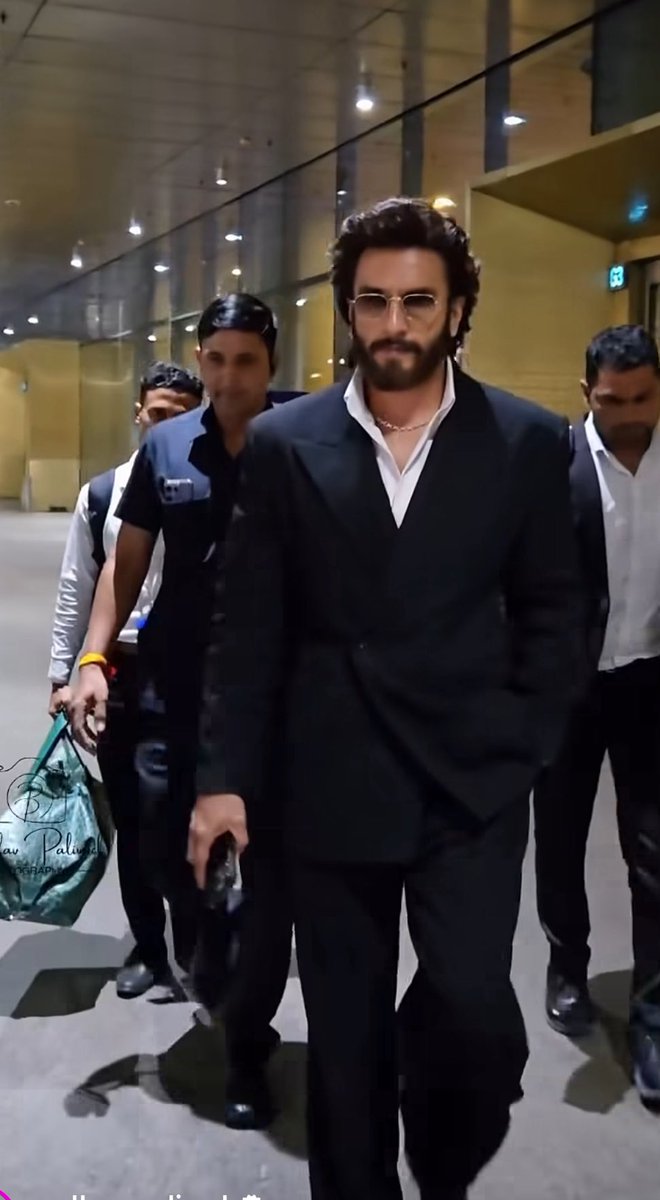
Before Dhurandhar, Ranveer Singh was almost the exact opposite.
A talented but exhausting actor who often seemed desperate to please everyone.
Remember him dancing at the Sultan premiere while Salman Khan looked visibly irritated?
Or bending over backwards to please Akshay Kumar at an award show?
Then came the clothes.
Garish colours. Outlandish silhouettes. Every appearance engineered to become a headline. If the media wasn’t looking at him, he would give them something they simply couldn’t ignore.
It always felt like performance.
Then something changed.
Now he walks into an RSS event in a plain white kurta.
Polo and jeans at a casual appearance.
Immaculately tailored suits and blazers at formal events.
Nothing screams for attention anymore.
And that is precisely why people notice him more.
There comes a point in a man’s life when he must stop auditioning for the approval of the room.
Stop playing to the gallery.
Stop dressing for reactions.
Stop performing a personality.
Know who you are. Dress like it. Speak like it. Carry yourself like it.
Because when a man stops asking the room for permission to be himself, something changes in his presence.
He becomes quieter.
More composed.
More dangerous.
Dhurandhar wasn’t merely Ranveer Singh’s comeback.
It was his rebirth.
The loudly dressed people-pleaser seems to have left the building.
The man who replaced him doesn’t walk into a room hoping to be noticed.
He walks in like he owns it.
And the irony is that now, everyone notices.
Walk on Ranveer, you are the biggest superstar of the generation.
#WATCH | Daughter of Iranian President Masoud Pezeshkian, Zahra Pezeshkian, along with her husband Hassan Majidi, visited the BRICS Bazaar at the National Crafts Museum in New Delhi, exploring the rich art, crafts and cultural heritage showcased by BRICS member and partner countries.
@BricsIndia2026@MEAIndia@Annapurna4BJP@MinistryWCD
#BRICS2026 #BRICSBazaar #NewDelhi #India #Iran