🚀 Take a tour of STONEFORM RWA!
From discovering tokenised real estate opportunities to managing investments, tracking performance and accessing your digital wallet — all in one platform.
🎥 Watch our platform walkthrough and explore the future of real estate investing.
🌐 https://t.co/7SMoQkMGDg
#STONEFORM #RWA #Tokenization #RealEstate #Web3
🏙️ Can Real Estate Tokenisation Change Property Investing?
This week on STONEFORM Property News, Charlotte Bennett explores how blockchain could open new opportunities in real estate — and why legal rights, liquidity and regulation still matter.
🎥 Watch our latest episode.
#STONEFORM #RWA #RealEstate #Tokenisation
Before investing, understand the asset.
Investment decisions should always start with a deep understanding of the property. It's crucial to know the details: location specifics, valuation metrics, ownership structure, investment terms, projected financial performance, and any material risks involved.
At https://t.co/wGuR3L8q4o, we're committed to making thorough asset information a cornerstone of the digital investment experience. Our platform is designed to provide everything an investor needs to make informed decisions. We're here to ensure that clarity leads to confidence.
Imagine having all the critical data at your fingertips, structured in a way that makes sense, supports decision-making, and fosters transparency. This approach is paramount in elevating how we access and invest in real estate.
Want to know more about how detailed asset information can enhance your investment strategy? Read more at https://t.co/7SMoQkMGDg
#DueDiligence #RealEstateInvestment #STONEFORM
Have you ever thought exploring real estate could be as simple as a click?
At STONEFORM, we're redefining how property opportunities are discovered. Our approach is centered around a modern digital ecosystem that organizes property listings, provides critical asset details, and guides you through a seamless investment journey.
Imagine having comprehensive information at your fingertips: location, valuation, investment terms, and more—all structured to help you make informed decisions. Our platform bridges the gap between property discovery and investment.
This shift is about creating an experience that's not only accessible but also enlightening. With STONEFORM, property investment isn't just about the transaction; it's about understanding your opportunities.
Interested in exploring the future of real estate investments? Follow us for more insights. #PropertyInvestment #STONEFORM #RWA
How can you streamline your investment journey?
At STONEFORM, we believe that the first step to informed decision-making is having the right information at your fingertips. Our investment platform is designed to guide you through the process with ease, starting with the essentials: registration, verification, and eligibility assessment.
Our platform aims to make every step of your investment journey as seamless and efficient as possible, without compromising on compliance. Whether you're a seasoned investor or new to the real estate world, gaining access to reliable property information and opportunities is vital.
With STONEFORM, you'll find a structured investment experience that focuses on clarity and accessibility. We bring together technology and real-world assets to create a transparent ecosystem for all property enthusiasts and investors.
Think about how access to the right information could enhance your investment journey.
#STONEFORM #InvestorOnboarding #RealEstate
Visit https://t.co/7SMoQkMGDg
Imagine discovering property investment opportunities through one digital platform.
https://t.co/P8lNm5msxL is at the forefront of transforming how real estate is funded and accessed worldwide. Our platform is being developed to connect real-estate assets, vital investment information, and eligible investors seamlessly.
With the power of real estate tokenisation, we're focusing on making your investment journey more structured, transparent, and accessible than ever before. By integrating blockchain infrastructure, https://t.co/P8lNm5msxL is carving a new pathway in property investment, ensuring opportunities are both visible and viable.
Curious about what the future of real estate could look like? We invite you to explore the potential of a more connected investment ecosystem with us.
Visit https://t.co/7SMoQkMGDg and start thinking about the future of property investment today. #STONEFORM #RWA #PropTech
Real estate is one of the world's most established asset classes.
Digital investment infrastructure offers new possibilities for how property-backed opportunities can be structured, administered, and accessed. With tokenisation, the landscape of property investment is expanding, allowing for fractional ownership, improved liquidity potential, and streamlined management processes.
At STONEFORM, we're committed to building a platform that brings property owners, developers, and eligible investors together through practical RWA technology. Our mission is clear: to create credible infrastructure around real assets, aligning advanced technology with solid investment principles.
Want to learn more about how STONEFORM is reshaping the real estate investment landscape?
Explore the vision: https://t.co/7SMoQkMGDg
#STONEFORM #RWA #RealEstateTokenisation
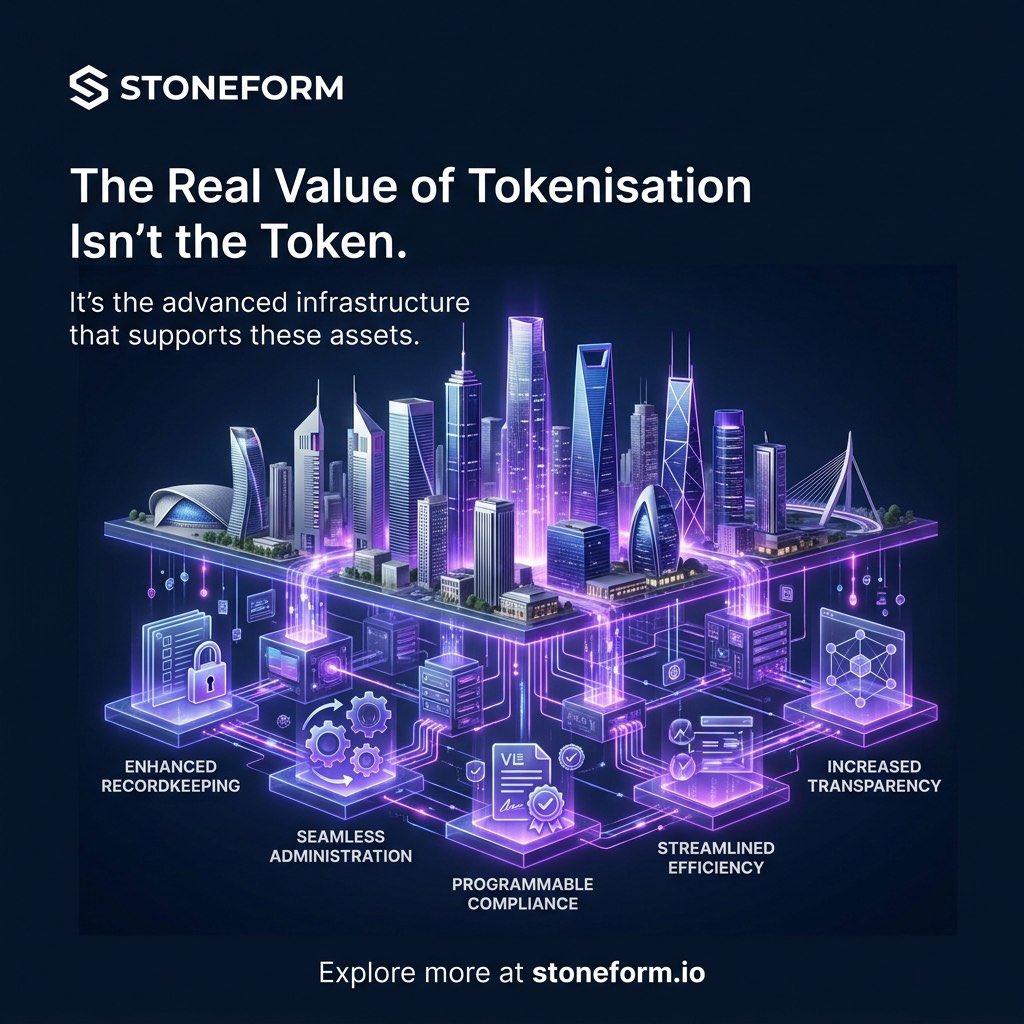
The true revolution of tokenisation is not just in the creation of digital tokens. It’s in the advanced infrastructure that supports these assets. At the core, it offers enhanced recordkeeping, seamless administration, and programmable compliance, setting a new standard for how financial assets are managed.
These advancements could significantly reshape financial processes, bringing more efficiency and transparency. Imagine investment processes streamlined to not just save time, but reduce costs and errors, enhancing the overall experience for all stakeholders involved.
The next wave of blockchain adoption will be driven by these practical financial applications. That's where STONEFORM stands strong, focusing on delivering real value through sophisticated technology rather than mere digital possessions.
Curious about how these developments can impact your investment strategies? Learn more about the transformative power of tokenisation and how STONEFORM is at the forefront of this change.
Explore more at https://t.co/7SMoQkMGDg
#RWA #FinancialInnovation #Tokenisation
Technology Changes. Investment Fundamentals Don’t.
Navigating the future of real estate requires a solid grip on enduring investment principles. Before diving into any property opportunity, consider the timeless questions: Is the location desirable? Does the valuation hold up? How stable is the rental income? Have you assessed the operating costs and potential risks?
At STONEFORM, we believe that while technology, like tokenisation, offers new paths for investment, it should never substitute disciplined analysis. Tokenisation can enhance access to property investments, facilitating fractional ownership and streamlining processes. Yet, successful investing still starts with strong fundamentals.
As the landscape of real estate investment continues to evolve with digital advancements, remember that a tech solution is most powerful when paired with proven property insights. The core of any fruitful investment remains the quality and promise of the asset itself.
Visit https://t.co/wGuR3L8q4o to see how our platform blends cutting-edge technology with tried-and-true investment practice.
#STONEFORM #PropertyInvestment #RWA
From Real Estate to Digital Investment.
Imagine transforming a traditional property investment into a digital asset secured by blockchain technology. This is the promise of property tokenisation, and it involves several critical steps.
First, identify and evaluate the underlying property. Understanding its location, value, and potential cash flow is crucial. Next, complete thorough legal and financial due diligence to ensure the asset's legitimacy and readiness for digital transition.
After establishing a legally sound investment structure, verify eligible investors. This step ensures compliance with regulations and safeguards against fraud. Once everything is in order, digital investment interests are issued and managed on a secure platform.
Finally, continuous reporting and robust asset management maintain transparency and trust. STONEFORM's vision is to streamline this entire process through innovative digital infrastructure, making real estate more accessible and efficient for all involved.
Curious about how this transformation unfolds? Save this post and read more on our approach at https://t.co/wGuR3L8q4o.
#STONEFORM #RealEstateTokenisation #Blockchain
Why focus solely on tokens when you can have a comprehensive platform? At STONEFORM, we believe in crafting more than just tokens. Our platform-first approach ensures that real estate developers, asset owners, and investors are seamlessly connected through digital infrastructure. We prioritize practical solutions like asset onboarding and scalable platform capacities, ensuring that real assets come first, backed by technology with genuine purpose. Our aim isn’t just to tokenise properties, but to create a robust digital ecosystem that bridges the gap between real estate and cutting-edge blockchain technology. Interested in learning more about where real estate meets modern investment infrastructure? Discover STONEFORM's vision and progress: https://t.co/7SMoQkMGDg
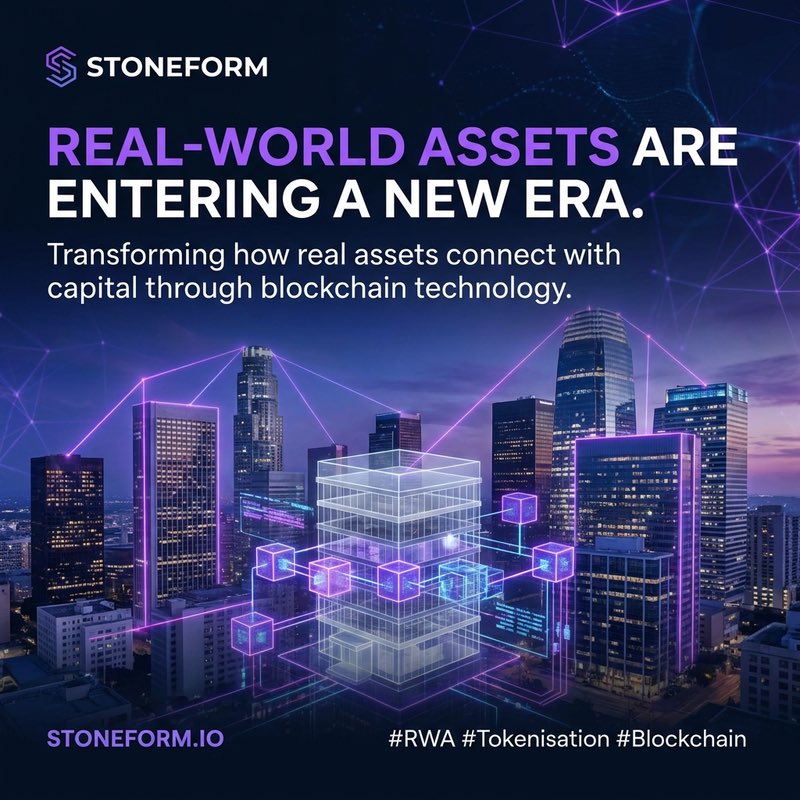
Real-world asset tokenisation is reshaping how traditional assets are represented, administered, and transferred. This is about more than just creating digital tokens—it's about transforming how real assets connect with capital.
From real estate to private credit and investment funds, blockchain technology is being explored as a foundational infrastructure for traditional finance. With improved transparency, security, and access, the evolving technology opens new opportunities for both developers and investors.
The real promise of tokenisation lies in its ability to enhance liquidity and efficiency while maintaining the value of the underlying assets. Imagine a world where property investment is as easy as any other online transaction. That future is closer than you think.
As the conversation shifts away from speculative markets, the focus is now on real economic value. How will this shift impact current and potential investors?
Engage with this transformative journey and think about how tokenisation could redefine your understanding of investments. #RWA #Tokenisation #Blockchain
Visit us at https://t.co/LBhUL16iGw
🏡 UK Property Market Update | October 2026
Where is the UK property market heading?
Join Charlotte Bennett on STONEFORM Property News as we explore house prices, mortgage rates, rental demand and emerging investment opportunities.
📊 Real data. Market insights. Smarter investing.
In today's unpredictable economy, why should real estate still be on your radar?
Investing in property remains a compelling option because of its tangible nature, offering security and long-term value. Unlike more volatile investments, real estate provides a sense of stability through physical ownership and potential income streams, especially when other markets fluctuate.
But what makes it truly valuable is its capability to adapt. Revitalizing a property, obtaining planning permissions, or enhancing management can notably increase its worth, driving up not just its market value but also rental income potential.
So, despite challenges, improving and maintaining real estate can help you build a more resilient investment portfolio. These improvements not only boost returns but also secure potential future advantages, adapting to market demands over time.
Curious about how to enhance property investment returns? Save this post and ask your questions. #RealEstate #PropertyInvestment
Imagine being able to access real estate investments as easily as you check your bank balance. At https://t.co/wGuR3L8q4o, we're transforming how real-world properties meet digital infrastructure.
Real estate has traditionally been a challenging asset class to enter. Large deposits, extensive paperwork, and lengthy legal processes often stand in the way. But technology is reshaping this landscape, making property investment more accessible and efficient for everyone.
Enter tokenisation—a process that allows property interests to be structured and accessed digitally. Through our platform, investors can engage with property markets in a way previously reserved for larger financial institutions. It’s not just about owning a piece of real estate; it’s about creating transparency and accessibility on a global scale.
At https://t.co/wGuR3L8q4o, we connect property developers, asset owners, and investors through this innovative approach. We’re not just imagining a better future for real estate investment; we’re building it now.
Curious to learn more about how technology is changing real estate? Visit https://t.co/LBhUL16iGw and explore how digital transformation is making investment ecosystems more efficient and transparent. #RealEstate #Tokenisation
Many assume that real estate investment success hinges solely on market appreciation. But what if I told you there’s more to the story?
Experienced property investors often leverage strategic actions to create value beyond waiting for the market to climb. From refurbishments to gaining planning permissions, these actions can significantly enhance a property's worth, regardless of external market conditions.
For example, adding modern amenities to an older building or improving rental management can increase its desirability and income potential. Likewise, obtaining permission to change the property's use, such as converting a warehouse into trendy lofts, can substantially hike its value. These strategies show that proactive measures can contribute to value creation.
Isn't it time to rethink what you know about real estate investing? By understanding and applying these value-building tactics, you could potentially unlock opportunities that aren’t reliant on passive market trends.
Have any thoughts or questions on this approach? Let’s discuss! #RealEstate #InvestmentStrategy #PropertyValue
🎥 Introducing STONEFORM Property News!
Meet Charlotte Bennett, your presenter bringing you insights into real estate investment, property market trends, and strategies for building long-term wealth.
Real estate knowledge. Real market insights. No hype.
Stay tuned for our first episode!
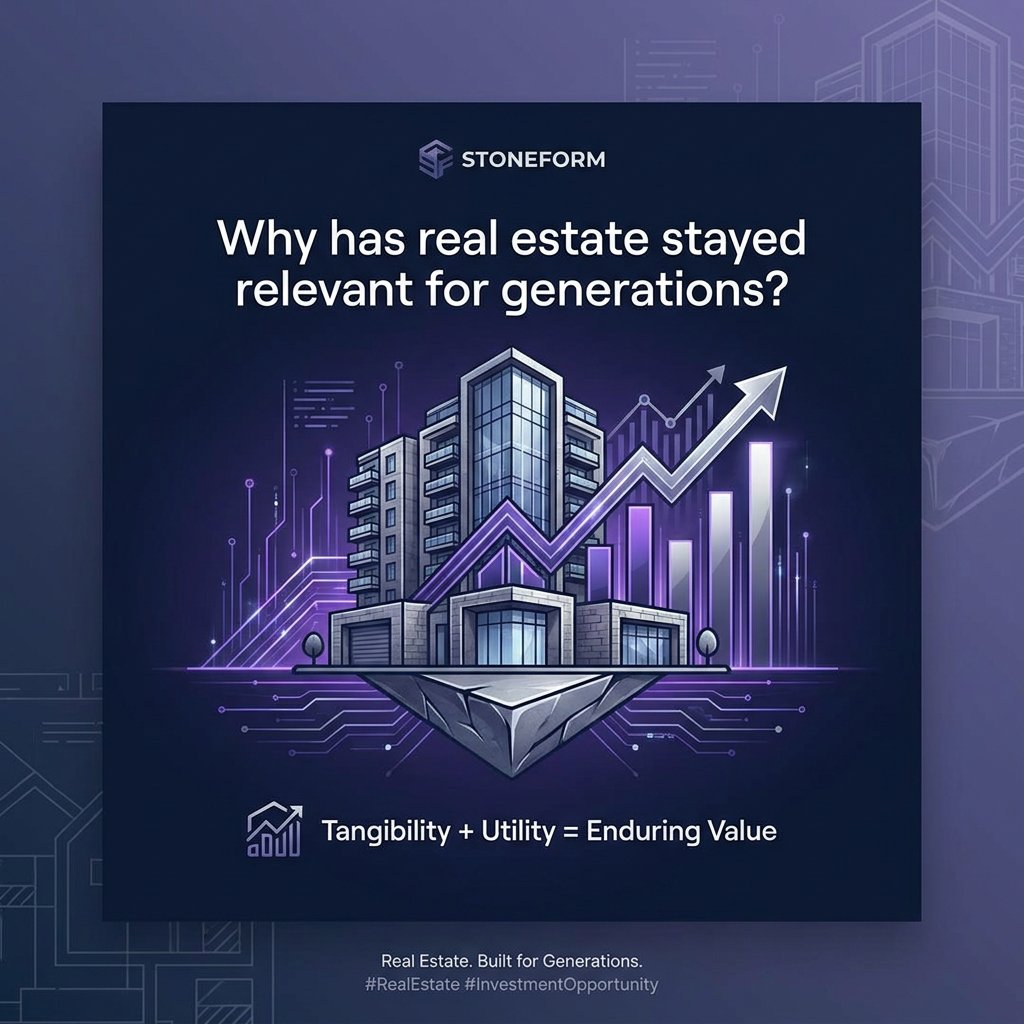
Real estate has always been a cornerstone of wealth building. But what makes it so enduring?
One answer lies in its tangibility and utility. Unlike more volatile asset classes, real estate provides a physical, lasting presence that offers both economic utility and potential for long-term ownership.
The demand for land and buildings remains consistent, driven by population growth and urban development. Additionally, real estate can serve as a hedge against market fluctuations. It’s not just about owning property; it’s about understanding how assets you can see, touch, and use, continue to hold value across generations.
At STONEFORM, we’re exploring how technological advancements like tokenisation democratize access to this critical asset class. We enable you to think about property not just as a haven but a digital opportunity. Curious about the role real estate can play in your future?
Follow us to learn more about this essential asset. Visit https://t.co/7SMoQkMGDg
Discover more about how STONEFORM can transform your real estate ventures. Visit us at https://t.co/Mdv5hoI8BH and see how we can help elevate your investment strategy.
Learn more: Visit https://t.co/Mdv5hoI8BH
#RealEstateInvestment#BlockchainInnovation
Through real estate tokenisation, property interests become more fluid, allowing you to gain more control over your investments while decreasing the barriers of entry. Imagine a world where investment is as simple as clicking a button!