Why does privacy matter even if you have nothing to hide
Because privacy is about control
You choose who can see your messages
You choose who can access your bank account
Your onchain activity should be no different
Fluton is building a way for users to interact with blockchains without exposing more information than necessary
The transaction still gets verified
The network still works
But your sensitive data does not have to become public for everyone to analyze
Good privacy is not about hiding
It is about giving people a choice
@FlutonIO@cryptoperseus_@JEAMSETH07
Why does Fluton talk so much about confidential execution
Because privacy is not just about hiding a transaction
It is about protecting everything that happens while the transaction is being processed
With Fluton, your intent stays encrypted from the moment it is created until the final settlement
That means routers, relayers, and validators do not get to see your strategy, amounts, or routing details
The network still does its job
It just does it without exposing information that doesn't need to be public
That is a different way of thinking about privacy
And it is what makes Fluton more than just another privacy tool
@FlutonIO@cryptoperseus_@JEAMSETH07
What problems is @FlutonIO actually solving
Here are 5 that matter 👇
1/
Too much information is public
Today, anyone can track wallet activity, balances, and transaction history
Fluton helps reduce unnecessary data exposure with confidential execution
2/
MEV and front running
When transaction details are visible before execution, bots can take advantage
Keeping sensitive information private makes this much harder
3/
Privacy is difficult for developers
Building privacy features from scratch takes time and effort
Fluton gives developers the tools to add privacy without starting over
4/
Moving between chains can expose more data
Cross chain activity often leaves information scattered across different networks
Fluton is building a privacy layer that works across ecosystems instead of being limited to one chain
5/
Privacy usually comes with trade offs
Many solutions ask users to move to a separate privacy network
Fluton takes a different approach by bringing confidential execution to the chains people already use
Privacy should not feel complicated
It should simply be part of the experience
That is the direction Fluton is building toward
@FlutonIO@cryptoperseus_@JEAMSETH07
Why do people keep saying privacy is the missing piece in Web3
Let's break it down 👇
1/
Every blockchain transaction leaves a trail
Wallets
Transfers
Balances
Activity
That information stays public for anyone to explore
2/
Transparency is great for verification
But not everything needs to be visible forever
There is a difference between proving a transaction happened and exposing every detail behind it
3/
This is where @FlutonIO comes in
Fluton is building a privacy layer that works with existing blockchains instead of replacing them
The goal is simple
Keep sensitive data private while keeping blockchain verification intact
4/
One of the key ideas is encrypted intents
Instead of exposing every instruction, users only describe the result they want
The network handles the rest while important details stay protected
5/
This is useful for more than trading
Private payments
Cross chain transfers
AI agents
Business applications
All of them can benefit from better privacy
6/
For developers, it also makes life easier
They don't need to build privacy systems from scratch
They can focus on creating better products for users
7/
Privacy shouldn't make crypto more complicated
It should quietly work in the background while everything else feels familiar
That is the experience Fluton is aiming for
8/
Fast blockchains matter
Cheap transactions matter
But giving people control over their own data matters too
That is why privacy could become one of the biggest conversations in the next phase of Web3
@FlutonIO@cryptoperseus_@JEAMSETH07
Why does blockchain need privacy in the first place
Let's start with a simple example 👇
1/
Imagine paying with your bank account
Now imagine anyone in the world being able to see every payment you've ever made
Sounds strange, right
That is how most blockchains work today
2/
Privacy is not about hiding something
It is about deciding what should stay private
Just because a transaction happens onchain doesn't mean every detail has to be public forever
3/
This is the problem @FlutonIO is trying to solve
Instead of asking people to move to a new blockchain, Fluton adds a privacy layer that works with existing ecosystems
4/
One idea behind Fluton is encrypted intents
You say what you want to do
The network figures out how to do it without exposing unnecessary information along the way
5/
That matters for more than just trading
Private payments
Business transactions
AI agents
Cross chain activity
All of these can benefit when sensitive data stays protected
6/
For developers, it also removes a big headache
They don't have to build privacy tools from scratch every time
They can focus on building better apps instead
7/
Privacy doesn't have to make crypto harder to use
The best privacy is the kind most people never notice
It simply works in the background
8/
Web3 has spent years making blockchains faster
The next step is making them smarter about what they reveal
That is why projects like @FlutonIO are worth watching
@cryptoperseus_@JEAMSETH07
Why does Fluton use encrypted intents instead of normal transactions
Because a normal transaction can reveal more than you think before it is even confirmed
It can expose details that help bots and other observers understand what you are trying to do
With Fluton, you only share the outcome you want
The network handles the execution while your intent stays protected throughout the process
That means users get better privacy without learning a new way to use Web3
Good privacy should work quietly in the background
That is exactly what Fluton is building
@FlutonIO@cryptoperseus_@JEAMSETH07
Every blockchain already has applications
What many of them still lack is native privacy
That often forces developers to build complex privacy solutions on their own or sacrifice user confidentiality
Fluton changes that with a developer friendly Confidential Execution Layer
Instead of rebuilding an entire application, builders can integrate privacy into existing workflows through Fluton's SDK, intents, and execution infrastructure
Less time solving infrastructure challenges
More time building products users actually want
The easier privacy is to integrate, the faster it can become the standard across Web3
@FlutonIO@cryptoperseus_@JEAMSETH07
Every blockchain already has applications
What many of them still lack is native privacy
That often forces developers to build complex privacy solutions on their own or sacrifice user confidentiality
Fluton changes that with a developer friendly Confidential Execution Layer
Instead of rebuilding an entire application, builders can integrate privacy into existing workflows through Fluton's SDK, intents, and execution infrastructure
Less time solving infrastructure challenges
More time building products users actually want
The easier privacy is to integrate, the faster it can become the standard across Web3
@FlutonIO@cryptoperseus_@JEAMSETH07
Imagine building a Web3 app where users never have to choose between privacy and usability
That is the problem Fluton is solving
Instead of asking developers to build complex privacy systems from scratch, Fluton provides the infrastructure needed to bring confidential execution into existing applications
The result is simple
Users get a familiar onchain experience
Builders get the tools to create applications where sensitive data stays protected throughout execution
The best technology is often the part users never notice
Privacy should feel exactly like that
@FlutonIO@cryptoperseus_@JEAMSETH07
Imagine building a Web3 app where users never have to choose between privacy and usability
That is the problem Fluton is solving
Instead of asking developers to build complex privacy systems from scratch, Fluton provides the infrastructure needed to bring confidential execution into existing applications
The result is simple
Users get a familiar onchain experience
Builders get the tools to create applications where sensitive data stays protected throughout execution
The best technology is often the part users never notice
Privacy should feel exactly like that
@FlutonIO@cryptoperseus_@JEAMSETH07
Why does Fluton use intents instead of traditional transactions
A traditional transaction tells the blockchain exactly how to execute every step
That means routes, amounts, strategies, and other details can become visible before execution
Fluton changes this with encrypted intents
Instead of revealing every instruction, you simply define the outcome you want
The network securely finds a way to achieve that outcome while the intent stays encrypted throughout routing, execution, and settlement
This approach gives users stronger privacy without changing the experience of using existing blockchains
Sometimes the smartest transaction is the one that never reveals its strategy
@FlutonIO@cryptoperseus_@JEAMSETH07
What does Fluton actually do
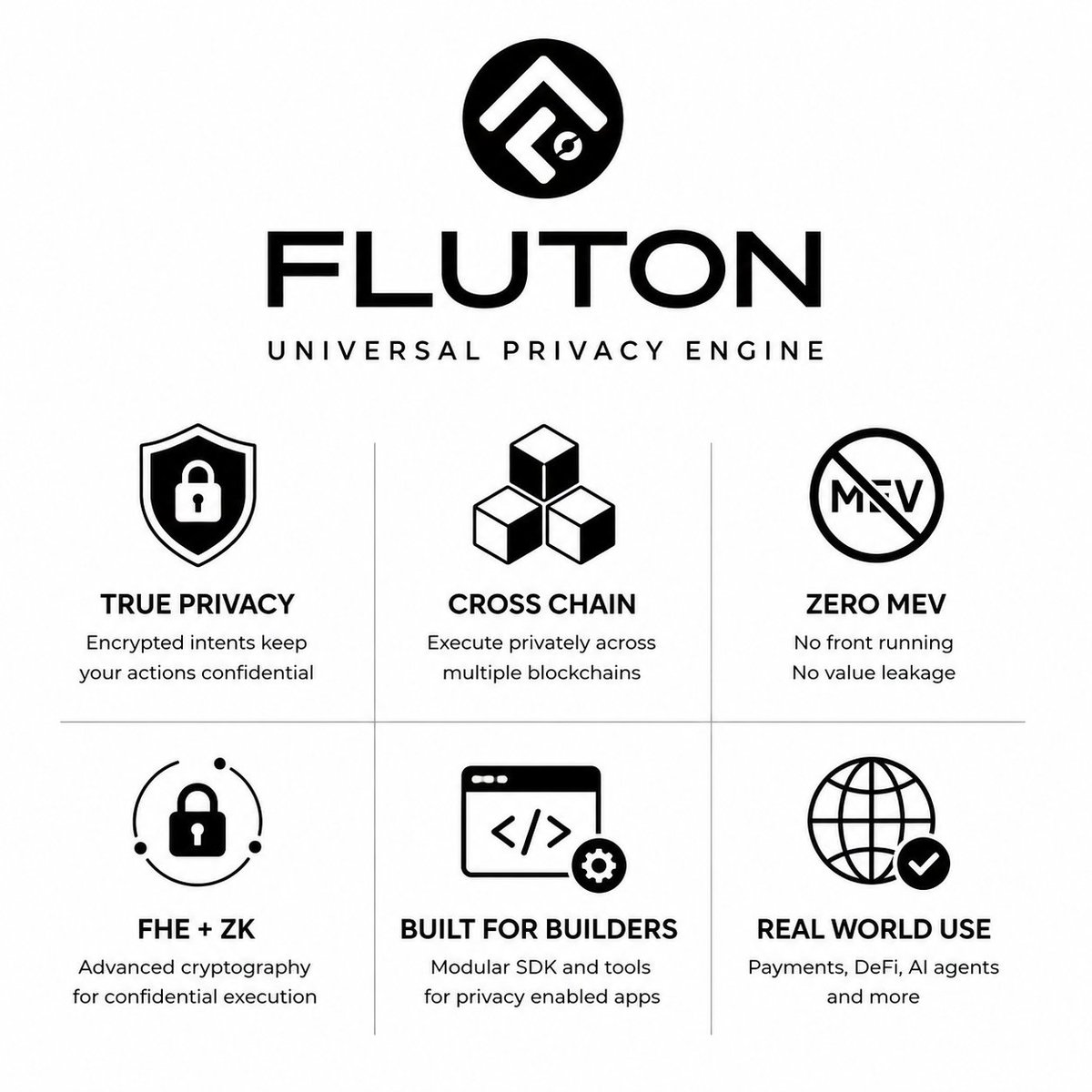
Think of Fluton as a privacy layer that works across existing blockchains
Instead of sending a public transaction that exposes your balance, trading strategy, routing, or payment details, Fluton lets you submit an encrypted intent
You simply describe the outcome you want
The network securely handles how it gets done while keeping sensitive information confidential throughout routing, execution, and settlement
This means developers can build private swaps, payments, bridging, and yield applications without asking users to move to a separate privacy chain
Fluton is not trying to replace existing blockchains
It brings confidential execution to the ecosystems people already use, making privacy a built-in feature instead of an optional add-on
@FlutonIO@cryptoperseus_@JEAMSETH07
What does Fluton actually do
Think of Fluton as a privacy layer that works across existing blockchains
Instead of sending a public transaction that exposes your balance, trading strategy, routing, or payment details, Fluton lets you submit an encrypted intent
You simply describe the outcome you want
The network securely handles how it gets done while keeping sensitive information confidential throughout routing, execution, and settlement
This means developers can build private swaps, payments, bridging, and yield applications without asking users to move to a separate privacy chain
Fluton is not trying to replace existing blockchains
It brings confidential execution to the ecosystems people already use, making privacy a built-in feature instead of an optional add-on
@FlutonIO@cryptoperseus_@JEAMSETH07
One of the biggest misconceptions in Web3 is that privacy only matters after a transaction is confirmed
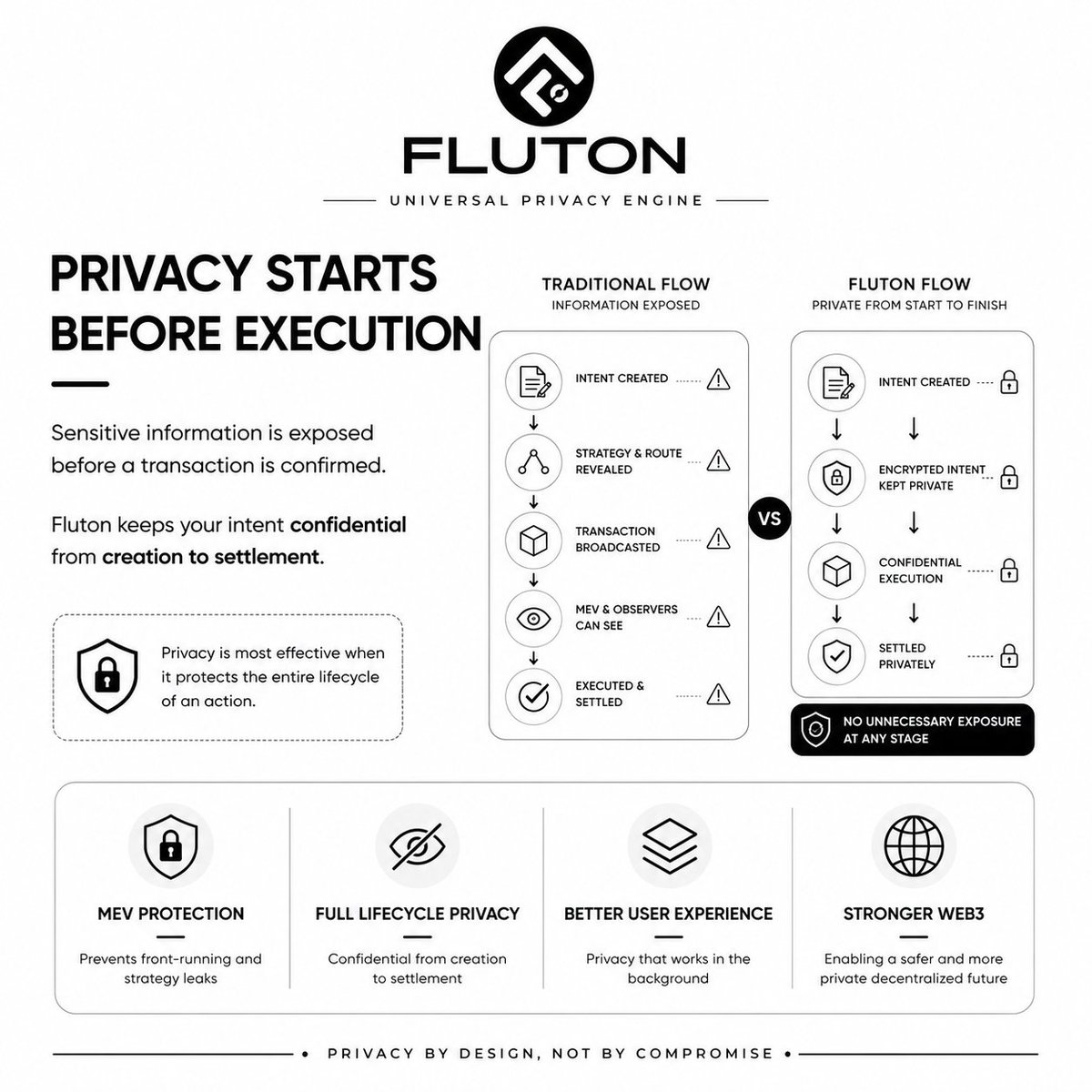
In reality, the most sensitive information is exposed before execution even begins
Your intent, trading strategy, route, and transaction details can all become valuable signals for MEV bots and other observers
Fluton approaches this differently with encrypted intents, keeping transaction details confidential from creation through settlement instead of exposing them during execution
Privacy is most effective when it protects the entire lifecycle of an action, not just the final result
The future of onchain privacy is not hiding transactions after they happen
It is preventing unnecessary exposure from the very beginning
@FlutonIO@cryptoperseus_@JEAMSETH07
One of the biggest misconceptions in Web3 is that privacy only matters after a transaction is confirmed
In reality, the most sensitive information is exposed before execution even begins
Your intent, trading strategy, route, and transaction details can all become valuable signals for MEV bots and other observers
Fluton approaches this differently with encrypted intents, keeping transaction details confidential from creation through settlement instead of exposing them during execution
Privacy is most effective when it protects the entire lifecycle of an action, not just the final result
The future of onchain privacy is not hiding transactions after they happen
It is preventing unnecessary exposure from the very beginning
@FlutonIO@cryptoperseus_@JEAMSETH07
One of the biggest misconceptions in Web3 is that privacy only matters after a transaction is confirmed
In reality, the most sensitive information is exposed before execution even begins
Your intent, trading strategy, route, and transaction details can all become valuable signals for MEV bots and other observers
Fluton approaches this differently with encrypted intents, keeping transaction details confidential from creation through settlement instead of exposing them during execution
Privacy is most effective when it protects the entire lifecycle of an action, not just the final result
The future of onchain privacy is not hiding transactions after they happen
It is preventing unnecessary exposure from the very beginning
@FlutonIO@cryptoperseus_@JEAMSETH07
Privacy should not force developers to choose between security and usability
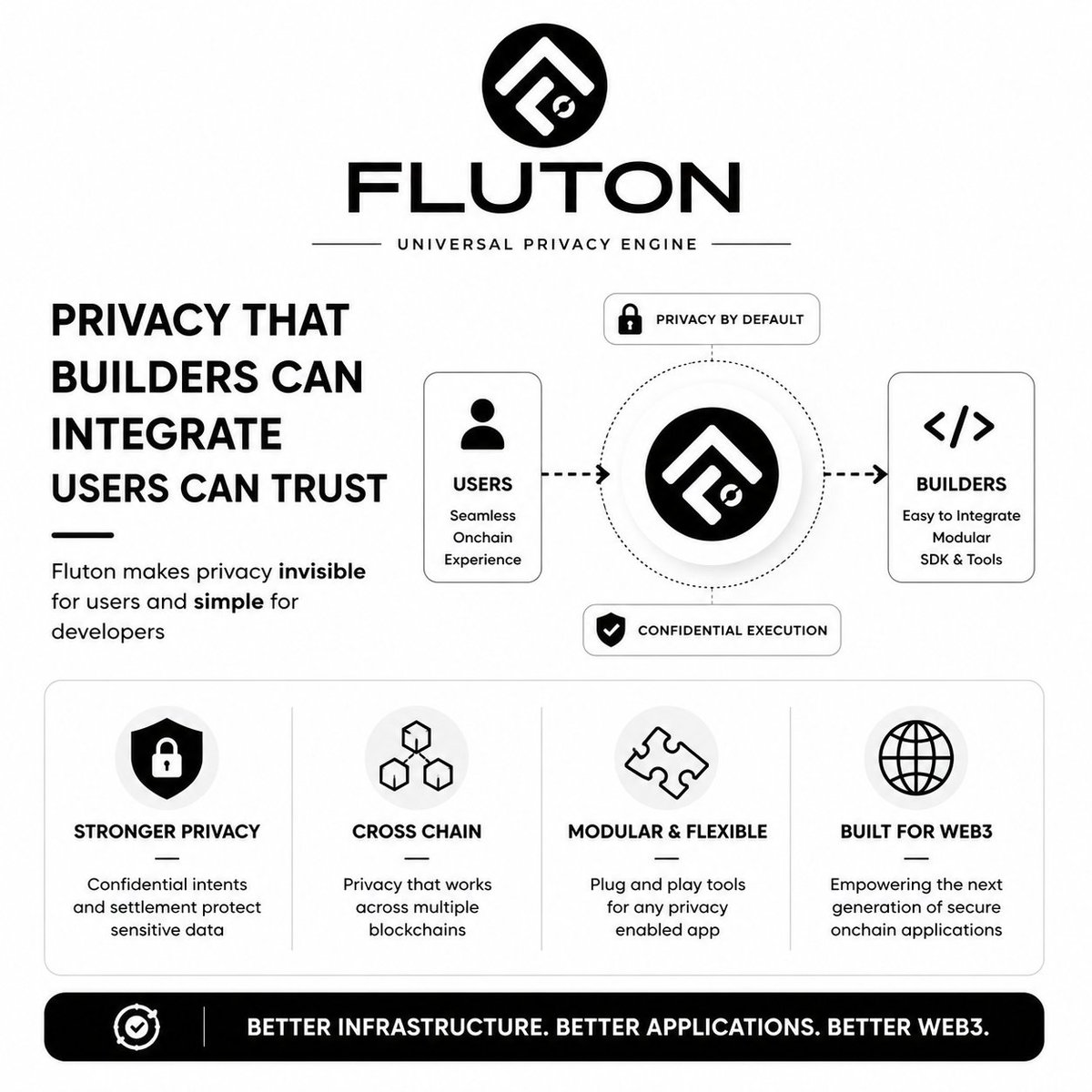
The best infrastructure makes privacy feel invisible to the end user while remaining simple to integrate for builders
That is why developer experience matters just as much as cryptography
When privacy tools are modular and easy to adopt, more applications can protect users without changing how people interact onchain
Better infrastructure creates better applications
And better applications help privacy become the standard instead of the exception
@FlutonIO@cryptoperseus_@JEAMSETH07
Privacy should not force developers to choose between security and usability
The best infrastructure makes privacy feel invisible to the end user while remaining simple to integrate for builders
That is why developer experience matters just as much as cryptography
When privacy tools are modular and easy to adopt, more applications can protect users without changing how people interact onchain
Better infrastructure creates better applications
And better applications help privacy become the standard instead of the exception
@FlutonIO@cryptoperseus_@JEAMSETH07
Most people focus on private transactions
The bigger shift is private settlement
Even if a trade is successful, exposed balances, positions, and execution history can reveal far more than the transaction itself
Fluton introduces confidential settlement so sensitive execution data is protected instead of becoming permanent public intelligence
For traders this means stronger strategy protection
For developers it opens the door to applications where confidentiality is built into the execution flow instead of being added later
Privacy is strongest when it stays invisible from start to finish
@FlutonIO@cryptoperseus_@JEAMSETH07
Privacy in Web3 is often treated as a feature
Fluton shows why it should be part of the execution layer itself
When transaction intent stays confidential until execution, users gain stronger protection against front running, unnecessary exposure, and value leakage
Better privacy is not about hiding activity
It is about giving users control over when and how information becomes visible
That is the direction a mature onchain experience should move toward
@FlutonIO@cryptoperseus_@JEAMSETH07
Privacy in Web3 is often treated as a feature
Fluton shows why it should be part of the execution layer itself
When transaction intent stays confidential until execution, users gain stronger protection against front running, unnecessary exposure, and value leakage
Better privacy is not about hiding activity
It is about giving users control over when and how information becomes visible
That is the direction a mature onchain experience should move toward
@FlutonIO@cryptoperseus_@JEAMSETH07
Privacy in Web3 is often treated as a feature
Fluton shows why it should be part of the execution layer itself
When transaction intent stays confidential until execution, users gain stronger protection against front running, unnecessary exposure, and value leakage
Better privacy is not about hiding activity
It is about giving users control over when and how information becomes visible
That is the direction a mature onchain experience should move toward
@FlutonIO@cryptoperseus_@JEAMSETH07
One of the hardest parts of building Web3 isn't creating a new protocol
It's convincing developers to adopt it
Builders already have products, users, and infrastructure that work today They rarely want to replace everything just to gain one new capability
That's why I think Fluton's long-term approach is worth paying attention to
Instead of treating privacy as an isolated feature, the project is exploring ways to make confidential computation easier to integrate into existing applications This lowers the barrier for experimentation and gives developers a practical path toward building privacy-preserving products without unnecessary complexity
Small improvements in developer experience often create much bigger effects across an ecosystem
When integration becomes simpler, more teams are willing to test ideas More applications get built More users discover the technology naturally
Adoption doesn't always begin with end users
Sometimes it begins with giving builders the confidence to create something they couldn't build before
That is where infrastructure can quietly make the biggest difference
@FlutonIO@cryptoperseus_@JEAMSETH07
One of the hardest parts of building Web3 isn't creating a new protocol
It's convincing developers to adopt it
Builders already have products, users, and infrastructure that work today They rarely want to replace everything just to gain one new capability
That's why I think Fluton's long-term approach is worth paying attention to
Instead of treating privacy as an isolated feature, the project is exploring ways to make confidential computation easier to integrate into existing applications This lowers the barrier for experimentation and gives developers a practical path toward building privacy-preserving products without unnecessary complexity
Small improvements in developer experience often create much bigger effects across an ecosystem
When integration becomes simpler, more teams are willing to test ideas More applications get built More users discover the technology naturally
Adoption doesn't always begin with end users
Sometimes it begins with giving builders the confidence to create something they couldn't build before
That is where infrastructure can quietly make the biggest difference
@FlutonIO@cryptoperseus_@JEAMSETH07