In ship design, hull space is king: batteries take space from cargo or passengers. Xing Mobility's cell-to-pack design ditches module casing and submerges cells in oil to save room. The density gains look great on paper, but will they hold up on the water? https://t.co/5kbHZPYhqS
X-Labs asks: If AI and quantum tools have changed what science can attempt, how should funding and research structures catch up? https://t.co/dwIsqkU2bI
Beta Technologies is developing electric aircraft that dramatically reduce fuel requirements, noise levels, and pollution for air transport. They aim to create short-haul freight planes that could recharge along the way to their destination. https://t.co/Kg0z4Txqt7
How do you wind, heat-treat, and sign off on 250 nickel-tin superconducting magnet coils when a single stray metal speck can force you to scrap an entire magnet? https://t.co/yEXrrshLeb
Can AI robots succeed without massive training data? UC Berkeley and NVIDIA think so. Their new “agentic robotics” framework uses AI coding agents to write and refine software inside simulations—cutting retasking times from eight hours to two minutes. https://t.co/tWdlViCIJi
A wireless implant zapped excess glucose from blood in mice, hinting at a new path for treating Type 2 diabetes and other health conditions. https://t.co/SERAwu62Qk
Solar panel efficiency can drop by as much as 25 percent in the hot sun. To get more out of photovoltaics, researchers in Baghdad are testing solar panels that cool themselves and simultaneously provide cool air for buildings. https://t.co/WdMbbyFK84
With permission, Benjamin Skuse submitted an AI-generated paper to an engineering journal to see how it would get caught. As AI tools become widespread, academic journals are struggling to deal with the overload. https://t.co/b3HTam2gLJ
TARS is working on a dataset of human motion that any humanoid robot can train on. IEEE Spectrum got to test out their data capture system at ICRA 2026.
To learn more about upcoming RAS conferences, visit: https://t.co/FTNbsQD9o9
And visit the RAS site: https://t.co/Opx2WJ69dC
Japan's #MMX mission will attempt to land a rover and a spacecraft on the Martian moon Phobos, where the gravity is so weak that even a gentle touchdown could end in a bounce. @JAXA_en@mmx_jaxa_jp https://t.co/GN5RTBLRrc
A brain stimulation headband for women's health just cleared a regulatory step in Europe, opening new options for treating period-related anxiety. https://t.co/JvOePq8bM6
A $100 magnetic imaging tile, a Teensy 4.1, and some code (available for free on our Hands On GitHub page) can turn a simple craft box into a programmable magnetic lock that you can open with just a hand gesture. #DIY https://t.co/g6H0MNaCpX
During the 2026 solar eclipse, Miloslav Druckmüller’s team used lenses, interference filters, and intensive numerical processing to turn a couple of thousand eclipse exposures into awesome images that could help reshape our understanding of solar physics. https://t.co/f2DZDytQg4
Producing glass fibers in microgravity using a heavy-metal fluoride glass called ZBLAN creates stronger fibers than when produced on Earth. But economically, is it worth it? https://t.co/ZkCyVKk1mv
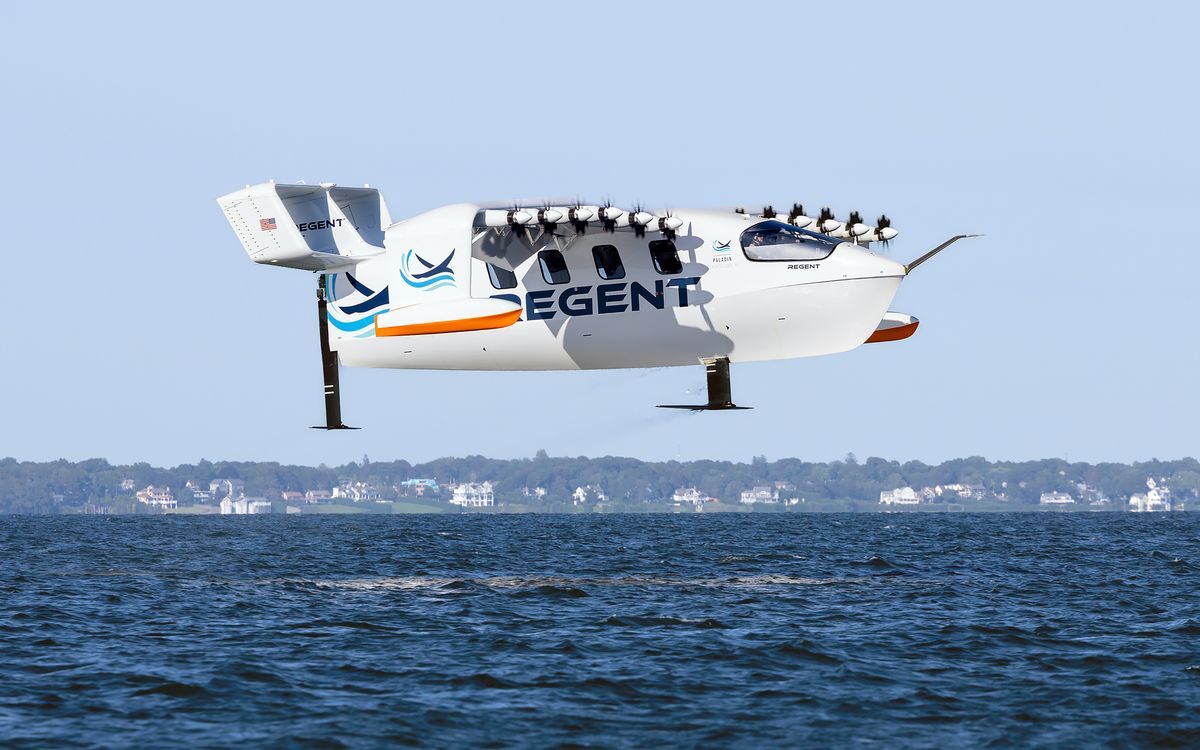
The Regent Viceroy Seaglider has undergone a successful test flight with humans aboard. This wing-in-ground aircraft aims to be a sustainable solution for coastal passenger transport, defense, and cargo transport. https://t.co/CaPjTbN7k8